Tourism is booming, but complaints over overcharging, transport, hospitality and service standards show why visitor experience is becoming the next big test for Kashmir’s tourism economy
By: News Desk | 03 October 2026
Srinagar, Oct. 4: Kashmir’s tourism story is often told through visitor numbers.
Millions arrive.
Hotels fill.
Flights land.
Roads to Gulmarg, Pahalgam, Sonamarg and emerging destinations become crowded.
But behind those impressive footfall figures is another number that deserves attention: 241.
That is the number of tourist complaints received by Jammu and Kashmir Tourism Enforcement between January 1 and October 1, 2026.
Of these, 140 complaints have been disposed of, while 101 remain under process. The department says it imposed ₹16.95 lakh in fines on erring service providers and facilitated ₹36.43 lakh in refunds to tourists.
Together, fines and refunds amount to ₹53.39 lakh.
The figure should not be presented as ₹53.39 lakh “recovered” by the government. A fine is a penalty, while a refund is money returned to a tourist. Economically and administratively, they are different things.
But together they tell a larger story.
Kashmir is attracting tourists in large numbers, yet the authorities are still having to intervene when visitors encounter service failures, overcharging or other violations.
And that raises an important question for a destination increasingly dependent on tourism:
Is Kashmir’s next tourism challenge no longer attracting visitors, but ensuring that every visitor leaves with a reason to return?
241 complaints against more than 15.6 lakh arrivals
According to the Tourism Enforcement data reported on October 3, J&K recorded 15,45,347 domestic tourist arrivals and 16,020 foreign arrivals during the period from January 1 to October 1.
That puts the reported total at 15,61,367 arrivals.
Against that figure, 241 complaints represent approximately 0.015 per cent of reported arrivals, or around 15 complaints per 100,000 recorded visits.
So the department is technically correct that complaints account for far less than one per cent of tourist footfall.
But there is an important statistical caveat.
Tourist-arrival figures generally count visits or arrivals, not necessarily unique individuals. A person visiting Kashmir multiple times may be represented more than once.
The complaint figure, meanwhile, represents grievances actually brought to the enforcement mechanism.
That means the data cannot tell us how many tourists experienced a problem but never complained.
And that is the gap policymakers should not ignore.
A low complaint rate is encouraging.
It is not proof that every visitor had a flawless experience.
The more revealing number is 101 pending cases
Of the 241 complaints received, 140 have been disposed of and 101 remain pending.
In percentage terms, about 58 per cent have been disposed of, while nearly 42 per cent are still under process.
That does not necessarily mean the system is slow.
Some cases may require verification, statements, inspections, financial reconciliation or action by another department.
But from the tourist’s perspective, the clock starts when the problem occurs.
A visitor who has already returned home may not be particularly reassured by knowing that the complaint is still moving through an administrative process.
This is where grievance redressal becomes part of the tourism product itself.
A good destination is not one where no complaint ever occurs.
That is unrealistic.
A good destination is one where complaints are easy to register, investigated quickly, resolved fairly and used to prevent the same problem from happening again.
The ₹53.39 lakh figure tells two different stories
The department’s enforcement figures are significant.
Fines: ₹16,95,700
Refunds: ₹36,43,440
Combined value: ₹53,39,140
The larger component is actually the refund amount.
That matters because refunds represent money that tourists had paid and subsequently got back after grievances were examined or resolved.
The fines, meanwhile, indicate that enforcement action was taken against service providers found to have violated regulations.
The economic message is straightforward.
There are businesses and operators in the tourism ecosystem whose conduct has generated sufficient complaints to trigger financial consequences.
But the figure should also be placed in perspective.
₹53.39 lakh is not a measure of the total amount tourists may have lost through problematic services.
It represents only cases that reached the enforcement mechanism and resulted in the reported fines or facilitated refunds.
There could be other disputes resolved privately, complaints abandoned by tourists, cases handled by consumer commissions or grievances never formally registered.
That makes the complaint mechanism itself extremely important.
Kashmir’s tourism authorities are admitting there are hospitality gaps
Senior Superintendent Tourism Enforcement S.D. Choudhary has acknowledged that some service providers are falling short of basic hospitality expectations.
According to his comments reported by KNS, the department is engaging with tourists and service providers to identify gaps and obtain feedback. An outreach programme was also organised to discuss appropriate conduct and responsibilities with stakeholders.
That admission is significant.
Because tourism is not simply scenery.
The mountains cannot control a taxi fare.
Dal Lake cannot issue a hotel bill.
Gulmarg cannot decide whether a restaurant provides what it promises.
The visitor’s memory of Kashmir is built from hundreds of small interactions.
The driver who picks them up.
The hotel receptionist.
The restaurant waiter.
The guide.
The pony operator.
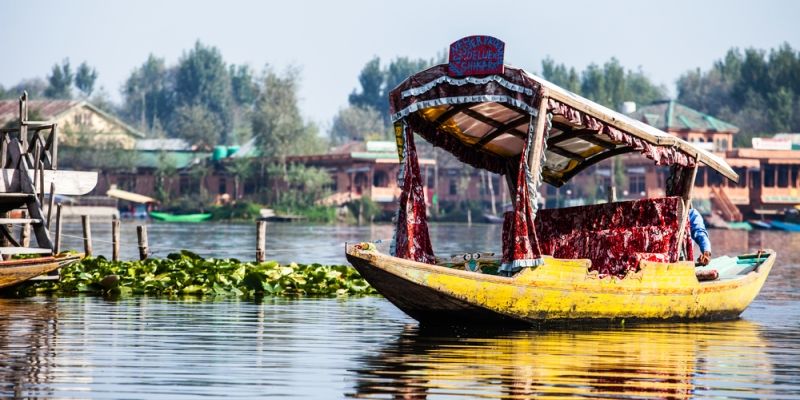
The shikara operator.
The shopkeeper.
The photographer.
The travel agent.
The roadside service provider.
One unpleasant interaction can overshadow an otherwise beautiful holiday.
The overcharging problem has not disappeared
The strongest evidence that enforcement remains necessary comes from the ground.
In June, tourists visiting Gurez complained about what they described as excessive charges by some hotels, restaurants and shops. The allegations emerged during a period of heavy tourist inflow to the north Kashmir destination.
In September, authorities took action in Tangmarg after complaints of harassment and overcharging involving commercial passenger vehicles.
Police seized six vehicles during a special enforcement drive. In a separate case, police registered an FIR against a commercial vehicle accused of charging tourists ₹5,000 for the Tangmarg-Gulmarg route against a prescribed fare cap of ₹2,500.
Earlier this year, police in Ganderbal also registered a case over alleged unauthorised collection of a sanitation fee from tourist vehicles at Sonamarg.
These are not statistics sitting inside a government file.
They are examples of how the visitor experience can go wrong on the ground.
And they explain why enforcement remains necessary even when the overall complaint-to-arrival ratio is extremely low.
The government itself has been trying to standardise tourism prices
The administration has recognised that inconsistent pricing can damage Kashmir’s tourism reputation.
In September, authorities moved toward fixing and publicly displaying rates for hotels, houseboats, shikaras, taxis, ponies and other tourism-related services.
The stated aim was to ensure that visitors know the applicable rates before hiring a service and to reduce the scope for overcharging and overbilling.
This is an important intervention.
Tourists unfamiliar with local geography are often at an information disadvantage.
A local resident may know what a taxi should cost.
A first-time visitor may not.
A family arriving from another state may not know whether a quoted hotel rate is reasonable.
A foreign tourist may have even less ability to distinguish an official charge from an inflated one.
Price transparency therefore becomes a form of consumer protection.
The simplest solution is also one of the most effective:
Tell the tourist the price before the transaction.
Display it.
Publish it.
Make it easy to verify.
Why 241 complaints should not be treated as a tourism crisis
There is a temptation in tourism reporting to go to one extreme or the other.
Either Kashmir is presented as a flawless paradise where every tourist receives perfect hospitality.
Or a handful of complaints are portrayed as evidence that the entire tourism sector is exploiting visitors.
Neither interpretation is supported by the available evidence.
The complaint rate reported by the department is very low compared with total arrivals.
At the same time, actual enforcement cases demonstrate that service violations do occur.
The appropriate conclusion is more balanced:
Kashmir’s tourism sector is attracting large numbers of visitors, but maintaining service quality at that scale requires stronger regulation and professionalisation.
That is a very different story from saying tourism is failing.
In fact, it is precisely because tourism is growing that the problem becomes more important.
Tourism has become too large to depend on informal practices
For decades, Kashmir’s tourism economy operated through a mixture of formal businesses and informal networks.
Family-run guesthouses.
Local taxi operators.
Pony handlers.
Guides.
Small restaurants.
Handicraft sellers.
Houseboats.
Shikara operators.
Seasonal businesses.
That informal ecosystem has helped distribute tourism income across communities.
But mass tourism changes the equation.
When visitor numbers rise into the millions, informal practices that might have survived at a smaller scale can create reputational problems.
A taxi operator overcharging one tourist can generate a social-media post seen by thousands.
A hotel failing to honour a booking can become a consumer complaint.
A misleading online listing can travel across the country within hours.
The tourism economy has therefore entered an era where reputation itself has economic value.
The online review has become Kashmir’s new word of mouth
Earlier, a tourist returned home and told relatives about a bad experience.
Today, the same tourist can publish it immediately.
Google reviews.
Instagram.
YouTube.
Travel forums.
Consumer websites.
Social media groups.
A complaint that once reached 20 people can now reach 20,000.
This is particularly important for international tourists.
Foreign visitors often rely heavily on online reviews when selecting destinations, hotels, transport providers and tour operators.
A destination’s image is therefore no longer controlled entirely by tourism departments or promotional campaigns.
Visitors themselves are part of the marketing machinery.
Every positive experience can become free promotion.
Every serious service failure can become negative publicity.
The tourism economy needs more than footfall
There is another economic point hidden inside the complaint figures.
Tourist arrivals are important.
But tourist spending, length of stay and repeat visits are equally important.
A tourist who spends more because services are transparent, reliable and professionally delivered contributes more to the local economy.
A tourist who is overcharged may spend less next time.
A tourist who feels uncomfortable may not return.
A tourist who has a good experience can bring family and friends.
This is why the quality of the tourism experience has a direct economic value.
Kashmir does not merely need visitors.
It needs satisfied visitors.
Kashmir’s tourism numbers remain substantial
The wider official record confirms how important tourism has become to J&K’s economy.
The Ministry of Tourism, citing J&K Tourism Department data, reported 2.35 crore domestic tourist visits and 65,452 foreign tourist visits in 2024. The figures had risen steadily from the post-pandemic period.
The J&K Tourism Department’s own historical data shows the enormous scale of the tourism economy, with annual visitor totals reaching into the tens of millions when Jammu and Kashmir destinations are combined.
That scale brings opportunity.
It also brings responsibility.
When millions of visitors interact with thousands of service providers, even a tiny percentage of problematic transactions can produce hundreds of complaints.
That is why the goal cannot realistically be “zero complaints”.
The better goal is zero tolerance for proven exploitation and fast resolution when something goes wrong.
Travel planning itself can prevent many disputes
One part of the tourism equation is also within the tourist’s control.
Visitors should confirm hotel bookings directly, check cancellation terms, ask for written or digital fare details, use authorised transport where possible and verify government-prescribed rates before paying for destination services.
This is particularly important in peak season.
A traveller who knows the approximate taxi fare to a destination is less vulnerable to arbitrary demands.
A traveller who has a written hotel booking is in a stronger position if a dispute arises.
A traveller using a registered travel operator has a clear point of contact when plans change.
For visitors planning a Kashmir holiday, JKL Travels can be considered for organised travel arrangements, transport and Kashmir trip planning, giving travellers an option to plan key elements of their journey in advance rather than negotiating every service after arrival.
Likewise, Kashmir Travels offers another travel-planning option for visitors looking to organise Kashmir itineraries, accommodation and transport through a dedicated travel service.
For families and first-time visitors, advance planning can reduce uncertainty over transport, hotel selection and sightseeing logistics.
But the responsibility cannot be shifted entirely to tourists
There is a danger in telling tourists simply to “be careful”.
Consumer protection ultimately requires responsible businesses and effective regulation.
A tourist should not need to become an expert in local taxi fares before visiting Kashmir.
A family should not have to negotiate aggressively with a hotel over a price that should already be transparent.
A foreign visitor should not have to understand every local regulation to avoid being overcharged.
That is precisely why the government has enforcement agencies.
J&K Police’s tourist-safety guidance specifically recognises issues including cheating, overcharging, harassment, pestering and touting, and directs tourists toward Tourism Enforcement and Tourist Police mechanisms.
The existence of such mechanisms is positive.
Their effectiveness will ultimately be judged by how quickly and consistently they work.
There is a lesson here for Kashmir’s tourism industry
Kashmir has something that many destinations spend enormous sums trying to create.
A powerful natural brand.
Snow-covered mountains.
Lakes.
Meadows.
Houseboats.
Gardens.
Adventure tourism.
Pilgrimage routes.
Heritage.
Cuisine.
Handicrafts.
And a global emotional association with beauty.
But natural beauty gets the tourist to the destination.
Service quality determines what happens next.
A tourist may forgive rain.
They may forgive traffic.
They may even forgive a delayed flight.
What is harder to forgive is feeling cheated.
That is why the ₹53.39 lakh figure matters more as a warning signal than as a financial statistic.
It shows that the enforcement machinery is being used.
It shows that tourists are willing to complain.
It shows that some complaints result in financial consequences.
And it shows that the administration itself recognises gaps in hospitality.
The next step should be prevention, not just punishment
Fines and refunds are necessary when violations occur.
But an efficient tourism system should eventually need fewer enforcement interventions because service providers understand the rules before a dispute arises.
That requires regular training.
Clear rate cards.
Digital payment records.
Transparent hotel pricing.
Standardised transport fares.
Visible complaint numbers.
Tourist help desks.
Fast grievance resolution.
And consistent action against repeat offenders.
The government has already indicated that outreach programmes are being used to engage service providers and tourists and improve awareness of tourism guidelines.
The challenge is to make such initiatives continuous rather than seasonal.
Tourism does not operate only during July and August.
Kashmir is increasingly promoting autumn, winter and off-season travel.
Every season will bring a new group of visitors.
The 241 complaints are a small number. But they are not an irrelevant number.
The strongest reading of the latest data is neither alarmist nor complacent.
241 complaints out of more than 15.6 lakh reported arrivals is a very small proportion.
That supports the Tourism Enforcement Department’s argument that grievances remain a tiny fraction of overall tourist footfall.
But 101 pending cases show that the grievance system still has work to do.
The ₹16.95 lakh in fines shows that violations have financial consequences.
The ₹36.43 lakh in refunds shows that tourists have suffered financial grievances serious enough to warrant money being returned.
And the recent enforcement actions in Gurez, Sonamarg and Tangmarg demonstrate that overcharging and service-related disputes remain live issues on the ground.
So the real headline is not that Kashmir’s tourism sector is in trouble.
It is that Kashmir’s tourism economy has grown large enough that visitor experience can no longer be treated as a secondary issue.
The mountains may bring the tourist.
The hospitality will decide the memory.
The price transparency will decide the trust.
The enforcement will decide the credibility.
And the experience will decide whether the visitor comes back.
For a tourism-dependent economy, that final decision can be worth far more than the ₹53.39 lakh reflected in this year’s fines and refunds.

