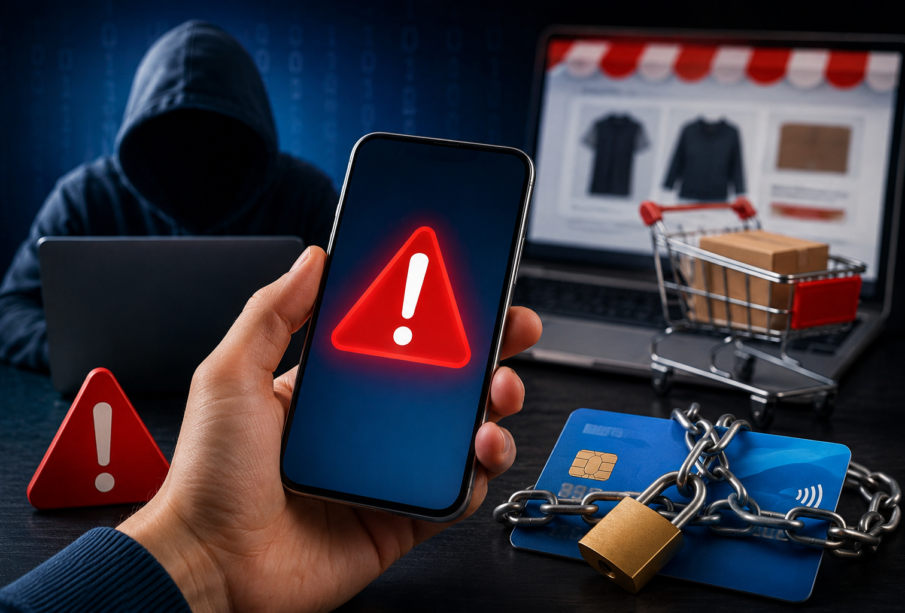
Cybercriminals Exploit Online Shopping Frenzy with Fake Discounts, Flashy Ads and Phishing Scams
By: Javid Amin | 25 May 2026
Rising Wave of E-Commerce Fraud Targets Digital Shoppers
As online shopping continues to grow rapidly across India and worldwide, cybercriminals are increasingly exploiting consumers through fake discounts, flashy advertisements, phishing websites, and fraudulent payment schemes.
Cybersecurity experts warn that fraudsters are weaponising urgency, excitement, and “limited-time deals” to manipulate shoppers into revealing sensitive personal and financial information.
The latest wave of online shopping scams reflects a broader evolution in cybercrime tactics, where fake e-commerce portals are becoming more sophisticated, visually convincing, and psychologically manipulative.
From counterfeit product listings to cloned websites mimicking trusted brands, scammers are creating digital traps that are often difficult for ordinary users to identify.
Authorities and cybersecurity professionals say consumers must now treat online shopping safety as seriously as banking security.
How Cybercriminals Trap Online Shoppers
Fraudsters typically rely on a combination of emotional triggers, aggressive advertising, and fake urgency to lure victims.
Fake Discounts and Unrealistic Offers
One of the most common tactics involves advertising products at unbelievably low prices.
Scammers often display:
- Smartphones at half price
- Luxury brands at massive discounts
- Flash sales with countdown timers
- “Last few items left” alerts
These offers are specifically designed to trigger impulsive buying behaviour.
Cybersecurity analysts say consumers tend to lower their guard when they believe they are getting an extraordinary bargain.
The phrase “too good to be true” remains one of the most important warning signs in digital commerce.
Flashy Ads and Fake Promotions Fuel the Scam Ecosystem
Fraudulent campaigns often appear through:
- Social media ads
- Pop-up banners
- Fake sponsored posts
- Messaging app forwards
- SMS promotional links
These advertisements are intentionally designed with bright colours, urgency-driven language, celebrity images, and professional branding to appear legitimate.
Many users unknowingly click these links believing they are being redirected to trusted online stores.
Instead, they land on phishing websites controlled by cybercriminals.
Phishing Websites Mimic Trusted Brands
Cybercriminals increasingly create lookalike websites that closely resemble genuine e-commerce platforms.
These fake portals may copy:
- Logos
- Product images
- Website layouts
- Customer reviews
- Checkout pages
Some even use domain names that differ by only one character from original websites, making them difficult to detect at first glance.
For example, fraudsters may replace letters, add extra symbols, or slightly alter spellings in URLs to deceive users.
Once shoppers enter login credentials, card details, or OTP-related information, scammers can steal both money and sensitive personal data.
Payment Scams Leave Buyers with Empty Wallets
Many fraudulent sellers demand:
- Advance payments
- Wallet transfers
- UPI transfers to personal accounts
- Direct bank payments
After receiving the payment, the seller disappears, blocks communication, or sends counterfeit products.
In several cases, victims never receive any order confirmation or shipment details after payment.
Cybercrime investigators say scammers prefer payment methods that are difficult to reverse or trace quickly.
The Hidden Dangers Behind Online Shopping Scams
Financial Losses Are the Immediate Impact
The most visible consequence is direct monetary loss.
Victims may lose:
- Entire purchase amounts
- Banking balances
- Credit card funds
- Wallet money
Some scams also involve repeated unauthorised transactions after payment credentials are stolen.
Personal Data Theft Creates Long-Term Risks
Cyber fraud is no longer limited to stealing money.
Fraudsters also collect:
- Phone numbers
- Email addresses
- Home addresses
- Banking information
- Passwords
- Aadhaar-linked details
- Login credentials
This stolen data can later be used for identity theft, phishing attacks, blackmail attempts, or illegal resale on dark web marketplaces.
Malware and Spyware Infections Are Increasing
Clicking on malicious advertisements or downloading fake shopping apps can infect devices with:
- Spyware
- Trojans
- Keyloggers
- Ransomware
These malicious programs can secretly monitor user activity, steal passwords, track banking sessions, or lock devices until ransom payments are made.
Cybersecurity experts warn that many users do not realise their phones or laptops are compromised until significant damage has already occurred.
Why These Scams Are Becoming More Effective
Psychological Manipulation Drives Consumer Behaviour
Modern cyber fraud relies heavily on behavioural psychology.
Fraudsters exploit:
- Fear of missing out (FOMO)
- Limited-time urgency
- Discount obsession
- Festival shopping rush
- Emotional impulse buying
During festive seasons, mega sales, and flash shopping events, users are more likely to make quick decisions without verifying authenticity.
This makes large-scale sale periods especially attractive for cybercriminals.
AI and Automation Are Making Fraud More Sophisticated
Cybersecurity analysts say scammers are increasingly using automation tools and AI-generated content to create realistic fake advertisements, customer reviews, and phishing messages.
This has significantly reduced the visual gap between genuine and fake shopping platforms.
As a result, even digitally aware consumers sometimes struggle to differentiate between legitimate and fraudulent websites.
Shopper’s Safety Guide: How to Stay Safe While Shopping Online
✅ Verify Website URLs Carefully
Always inspect the website address before entering personal or payment information.
Look for:
- Correct spelling of domain names
- HTTPS security lock icon
- Official brand URLs
- Verified seller information
Avoid websites with unusual spellings, random numbers, or suspicious extensions.
✅ Avoid Clicking Flashy Pop-Ups and Random Ads
Do not trust advertisements simply because they appear professional.
Avoid clicking on:
- Unknown social media ads
- Pop-up banners
- Forwarded shopping links
- SMS-based sale alerts from unknown numbers
Instead, manually visit the official website of the brand or platform.
✅ Use Secure Payment Methods
Cybersecurity professionals recommend:
- Cash on Delivery (COD) when possible
- Trusted payment gateways
- Credit cards with fraud protection
- Verified UPI IDs linked to businesses
Avoid direct transfers to unknown personal accounts.
✅ Cross-Check Discounts with Official Platforms
Before purchasing, compare offers across:
- Official brand websites
- Trusted marketplaces
- Verified retailer platforms
If one website offers extreme discounts unavailable elsewhere, treat it as suspicious.
✅ Enable Transaction Alerts
Activate:
- SMS banking alerts
- Email notifications
- Real-time transaction updates
Immediate alerts can help users detect fraudulent activity quickly and block accounts if necessary.
✅ Keep Devices Updated
Regularly update:
- Browsers
- Shopping apps
- Antivirus software
- Operating systems
Security patches help protect devices against malware and phishing attacks.
⚠️ Online Shopping Don’ts
- Don’t share OTPs or banking credentials
- Don’t save card details on unknown websites
- Don’t trust unrealistic discounts
- Don’t click suspicious links from social media forwards
- Don’t install unofficial shopping apps
✅ Online Shopping Do’s
- Shop only from trusted platforms
- Use two-factor authentication (2FA)
- Keep digital payment limits enabled
- Save receipts and order IDs
- Report suspicious websites immediately
Cybercrime and the Future of Digital Commerce
The rapid expansion of e-commerce has created enormous convenience for consumers, but it has also opened new opportunities for cybercriminals.
Experts believe online shopping fraud will continue evolving as scammers adopt more advanced technologies, including AI-generated scams, fake customer support systems, and deepfake-based impersonation tactics.
This growing threat highlights the urgent need for:
- Stronger cyber awareness campaigns
- Better digital literacy
- Faster fraud reporting systems
- Improved platform verification mechanisms
Ultimately, cybersecurity in e-commerce is no longer only the responsibility of companies or governments. Consumers themselves have become the first line of defence.
In today’s digital marketplace, caution is just as important as convenience.