
Muted Markets on Eid-ul-Adha Eve in Kashmir: Festive Spirit Remains Strong, But Spending Takes a Back Seat
By: Javid Amin | 26 May 2026
Kashmir’s Eid Markets See Lower Footfall as Families Prioritize Essentials
As Kashmir prepares to celebrate Eid-ul-Adha, markets that would traditionally be bustling with shoppers and festive activity have presented a noticeably subdued picture this year. Across Srinagar, Baramulla, Anantnag, Sopore, Pulwama, and several other towns, traders reported slower-than-usual business in the final days before the festival, highlighting the growing impact of economic pressures on household spending.
While mosques, homes, and communities remain immersed in spiritual preparations for one of Islam’s most significant festivals, the commercial excitement usually associated with Eid shopping has been considerably restrained. From apparel stores and footwear outlets to household goods retailers and livestock traders, many businesses have witnessed lower customer turnout compared to previous years.
The trend reflects a broader reality facing many families in Kashmir: balancing religious obligations and festive traditions with rising living costs and economic uncertainty.
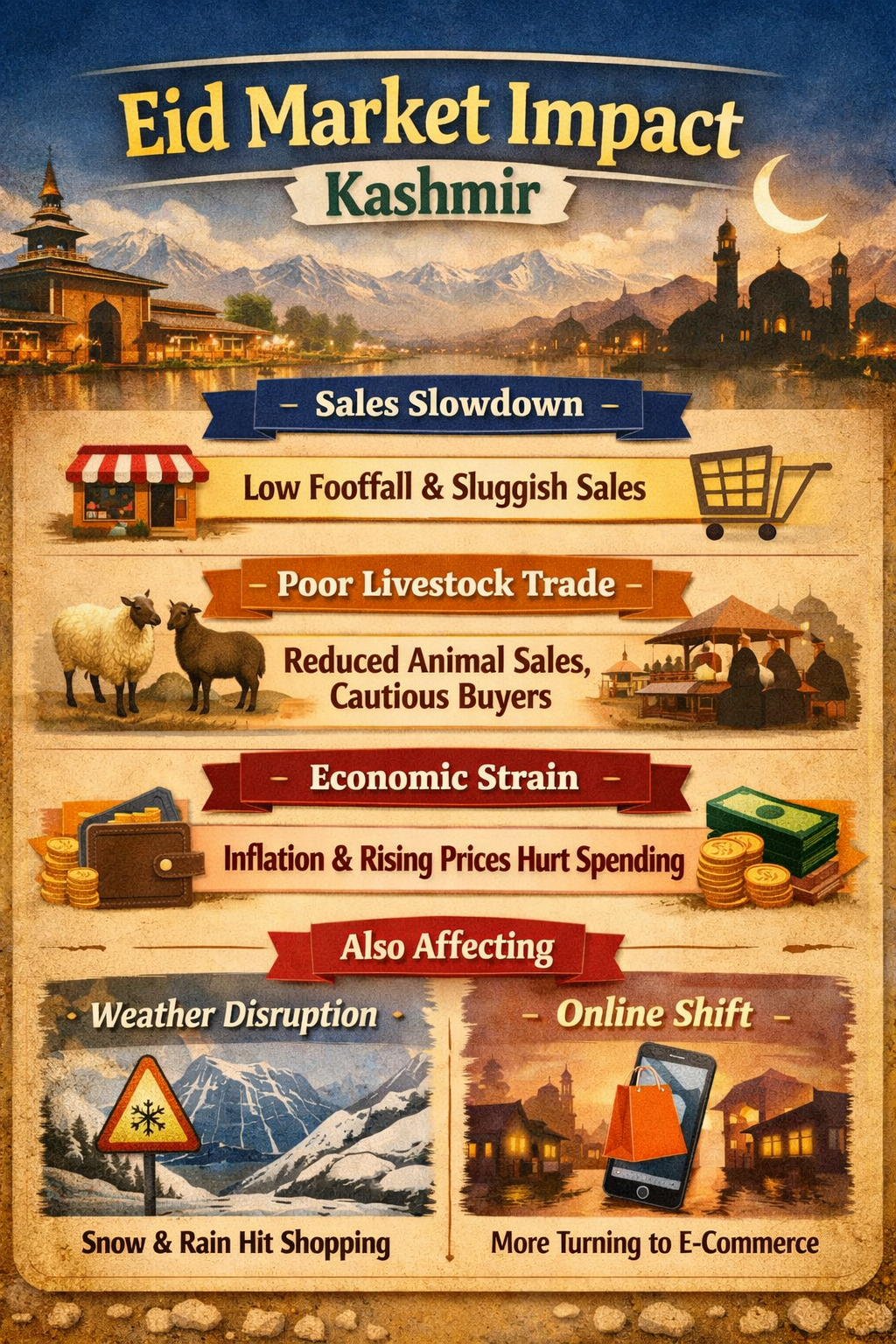
Eid Markets Missing Their Traditional Festive Rush
Traders Report Sluggish Sales Across Major Towns
For generations, the days leading up to Eid-ul-Adha have been among the busiest periods for Kashmir’s retail sector. Markets in Srinagar’s commercial hubs, as well as busy shopping centers in Baramulla, Anantnag, and other districts, would typically remain crowded late into the evening as families purchased clothes, footwear, gifts, household items, and sacrificial animals.
This year, however, many traders say the expected rush never fully materialized.
Shopkeepers dealing in ready-made garments, traditional attire, footwear, cosmetics, and home décor products reported significantly lower footfall. Although customers visited markets, many were observed spending cautiously, focusing primarily on essential purchases rather than discretionary items.
Several traders noted that shoppers appeared more price-conscious than in previous years, often comparing prices carefully before making purchases or postponing non-essential spending altogether.
Inflation Continues to Squeeze Household Budgets
Rising Cost of Living Impacts Festive Spending
One of the primary reasons behind the muted market activity is the growing pressure of inflation on household finances.
Over the past year, families have faced rising costs across multiple categories, including food items, cooking essentials, transportation, electricity, education, healthcare, and daily household necessities. The recent increases in fuel prices have further intensified concerns about future expenses, leaving many households with limited disposable income.
For middle-income and lower-income families, Eid shopping now involves difficult choices between maintaining traditional festive spending patterns and managing everyday financial responsibilities.
Many consumers interviewed in local markets indicated that they were prioritizing essential purchases while reducing spending on luxury items, branded products, and additional clothing purchases that would typically form part of Eid preparations.
Livestock Markets Witness Cautious Buying Trends
Families Opt for Smaller Sacrifices Amid Economic Constraints
The impact of economic pressures has been particularly visible in livestock markets, which play a central role in Eid-ul-Adha celebrations.
Traditionally, sheep and goat markets across Kashmir witness intense activity during the final days before the festival. This year, traders have reported that while buyers are still participating in the sacrificial tradition, many families are approaching purchases with greater caution.
Rather than opting for larger and more expensive animals, a growing number of buyers are seeking smaller, more affordable options that fit within constrained household budgets.
Livestock dealers observed that customers are spending more time negotiating prices and carefully assessing their financial capacity before finalizing purchases. In some cases, families are choosing to share sacrifices or pool resources with relatives to reduce the overall financial burden.
Despite these adjustments, the religious significance of Eid-ul-Adha remains strong, with most families determined to fulfill the spirit of the festival within their means.
Weather Disruptions Add to Market Challenges
Rain and Snowfall Affect Travel and Shopping Activity
Economic factors have not been the only challenge facing Kashmir’s markets this season.
Recent spells of rain and unseasonal snowfall in several upper reaches disrupted transportation and affected movement between districts. Adverse weather conditions reduced the number of shoppers traveling to major commercial centers, particularly from rural and remote areas.
Retailers say weather-related disruptions came at a critical time when businesses typically depend on strong pre-Eid sales to boost revenues.
In several parts of the Valley, intermittent rainfall also shortened shopping hours and discouraged families from spending extended periods in crowded marketplaces.
For small traders already dealing with reduced consumer demand, the weather added another layer of uncertainty during what is usually considered a peak sales period.
The Growing Influence of Online Shopping
Digital Commerce Reshaping Consumer Behavior
Another factor influencing traditional market activity is the steady rise of online shopping among younger consumers.
Increasing internet penetration and smartphone usage have encouraged many shoppers to browse and purchase products through digital platforms rather than visiting physical stores. Apparel, footwear, accessories, electronics, and household products are increasingly being ordered online, especially by urban consumers.
However, the transition to digital commerce has not been entirely smooth.
Concerns regarding cyber fraud, fake online sellers, delayed deliveries, and product quality continue to make some consumers cautious about relying exclusively on online marketplaces. Nevertheless, the convenience offered by digital platforms is gradually changing shopping habits, particularly among younger generations.
Retail analysts believe this shift is likely to continue, forcing traditional retailers to adapt to changing consumer preferences.
Small Businesses Feel the Pressure
Retail Sector Faces Another Challenging Festive Season
For many small and medium-sized businesses, Eid seasons represent a critical opportunity to generate revenue that supports operations throughout the year.
Lower-than-expected sales during a major festival can therefore have significant implications for local businesses, particularly those already dealing with higher operating costs, rent expenses, transportation charges, and fluctuating consumer demand.
Several traders expressed concern that continued economic uncertainty could affect profitability and business sustainability, especially for family-run enterprises that depend heavily on seasonal shopping periods.
The subdued market response also highlights broader challenges facing Kashmir’s retail sector as businesses navigate changing consumer behavior and evolving economic realities.
Devotion Remains Strong Despite Economic Challenges
Spiritual Preparations Take Center Stage
While commercial activity may have slowed, the spiritual significance of Eid-ul-Adha remains unchanged across Kashmir.
Mosques, religious institutions, and communities continue preparations for congregational prayers, charitable activities, and acts of sacrifice that define the festival. Families are focusing on the religious values of devotion, gratitude, sacrifice, and helping those in need.
Community leaders note that while economic challenges may influence spending patterns, they have not diminished the essence of the festival.
Many families are choosing simpler celebrations, emphasizing faith, family gatherings, and community solidarity over material displays.
In many neighborhoods, preparations for distributing sacrificial meat among relatives, neighbors, and economically disadvantaged households remain a key part of Eid observances, reinforcing the social and humanitarian spirit of the occasion.
What the Muted Markets Reveal About Kashmir’s Economy
The subdued pre-Eid market activity offers an important glimpse into the broader economic mood prevailing across Kashmir.
Consumer confidence appears cautious, with households increasingly prioritizing financial stability amid rising living costs and uncertain economic conditions. The combination of inflation, higher fuel prices, weather-related disruptions, and shifting shopping habits has created a challenging environment for both consumers and businesses.
Although the festive atmosphere remains alive in homes, mosques, and communities, spending patterns suggest that many families are carefully managing resources and making practical financial decisions.
Conclusion
As Kashmir welcomes Eid-ul-Adha, the contrast between spiritual enthusiasm and economic caution is clearly visible. Markets across Srinagar, Baramulla, Anantnag, and other districts may not have witnessed the traditional festive rush, but the deeper values of the festival continue to resonate strongly among the people.
This year’s Eid reflects a changing economic landscape where devotion remains steadfast, yet consumer behavior is increasingly shaped by inflation, rising costs, weather disruptions, and financial prudence. The muted markets are not merely a retail story—they are a reflection of the broader economic realities facing Kashmiri households in 2026.


