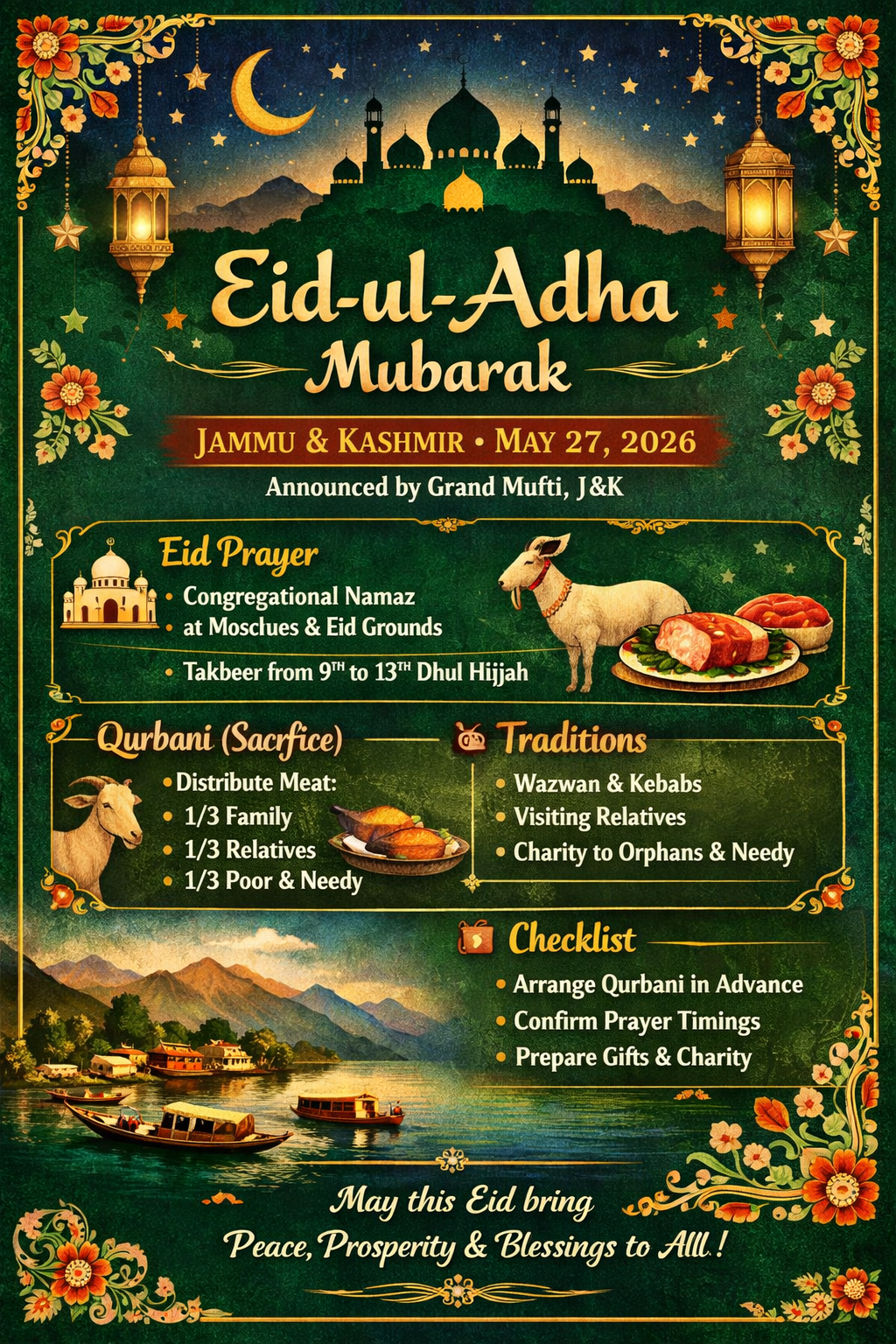
Eid-ul-Adha 2026 in J&K on May 27 After Dhul Hijjah Moon Sighting Announcement
By: Javid Amin | 17 May 2026
Eid-ul-Adha 2026 to Be Celebrated Across J&K on May 27
The Grand Mufti of Jammu & Kashmir has officially announced that the crescent moon marking the beginning of Dhul Hijjah has been sighted in the region, confirming that Eid-ul-Adha will be observed on Wednesday, May 27, 2026, across Jammu & Kashmir.
The announcement carries deep religious and social significance for Muslims throughout the Valley and other parts of the Union Territory, as families, mosques, markets, and local communities begin preparations for one of Islam’s most important festivals.
Also known as Bakrid or the Festival of Sacrifice, Eid-ul-Adha is observed on the 10th day of Dhul Hijjah — the final month of the Islamic calendar.
The declaration by the Grand Mufti is considered the authoritative religious confirmation for the region, guiding local mosques, Eidgahs, religious institutions, and the public regarding prayers and observances.
The Spiritual Meaning of Eid-ul-Adha
Eid-ul-Adha commemorates the extraordinary faith and obedience of Prophet Ibrahim (AS), who was willing to sacrifice his beloved son after receiving Allah’s command in a dream.
According to Islamic tradition, Allah replaced the sacrifice with a ram before it was carried out, rewarding Prophet Ibrahim’s unwavering devotion and submission.
The festival therefore symbolizes:
- Faith and obedience to Allah
- Sacrifice and selflessness
- Compassion for the poor
- Gratitude and humility
- Unity within families and communities
For Muslims, Eid-ul-Adha is not merely a celebration centered around rituals or feasts; it is a reminder to strengthen one’s relationship with Allah while extending kindness and support to others.
Dhul Hijjah: One of the Holiest Months in Islam
Dhul Hijjah holds immense importance in Islam because it includes both Hajj and Eid-ul-Adha.
The first ten days of Dhul Hijjah are regarded among the most sacred days in the Islamic calendar. Muslims increase acts of worship during this period through:
- Fasting
- Recitation of the Quran
- Charity and sadaqah
- Dhikr and Takbeer
- Voluntary prayers
- Helping the needy
The Day of Arafah, observed on the 9th of Dhul Hijjah, is especially significant for pilgrims performing Hajj and for Muslims worldwide who observe fasting and prayers.
Preparations Begin Across Kashmir
Following the moon sighting announcement, preparations for Eid-ul-Adha have begun across several towns and districts of Jammu & Kashmir, including Srinagar, Anantnag, Baramulla, Pulwama, and Kupwara.
Markets are expected to witness increased activity as people purchase essentials, clothing, bakery items, spices, and sacrificial animals. Local mosques and Eidgah committees are also preparing arrangements for large congregational Eid prayers.
Authorities are likely to issue advisories related to sanitation, traffic management, and proper disposal of animal waste to ensure smooth celebrations.
Step-by-Step Eid-ul-Adha 2026 Guide for Jammu & Kashmir
1. Begin Takbeer From the Evening of 9th Dhul Hijjah
Muslims are encouraged to recite Takbeer from the evening before Eid until the 13th of Dhul Hijjah.
Common Takbeer:
Allahu Akbar, Allahu Akbar, La ilaha illallahu Wallahu Akbar, Allahu Akbar wa lillahil hamd.
Takbeer reflects gratitude, remembrance of Allah, and the spirit of Eid.
2. Prepare for Eid Prayer (Eid Namaz)
Eid-ul-Adha begins with special congregational prayers held in mosques and Eidgah grounds.
Sunnah Preparations Before Prayer
- Wake up early
- Perform Ghusl (ritual bath)
- Wear clean or modest new clothes
- Apply perfume if available
- Eat after returning from Eid prayer (common practice during Eid-ul-Adha)
- Walk to the Eidgah if possible
- Recite Takbeer on the way
Eid Prayer in Kashmir
Large congregations are traditionally held at:
- Eidgah grounds
- Central mosques
- Jamia Masjids
- Local neighborhood mosques
Religious scholars will deliver the Eid Khutbah after the prayer, focusing on sacrifice, patience, brotherhood, and social responsibility.
3. Qurbani (Sacrifice) and Its Importance
Qurbani is one of the central rituals of Eid-ul-Adha and symbolizes Prophet Ibrahim’s devotion to Allah.
Animals commonly sacrificed include:
- Sheep
- Goats
- Cows
- Camels (in some regions)
The sacrifice is performed only after Eid prayers.
Distribution of Meat
Islam encourages balanced sharing:
- One-third for family
- One-third for relatives and friends
- One-third for poor and needy people
This distribution promotes equality, compassion, and community welfare.
4. Follow Cleanliness and Municipal Guidelines
Authorities in Jammu & Kashmir usually urge residents to maintain hygiene during Eid celebrations.
People are advised to:
- Use designated areas for sacrifice
- Dispose of waste responsibly
- Avoid dumping remains in public places or water bodies
- Ensure cleanliness around neighborhoods and mosques
- Follow veterinary and health advisories
Islam places strong emphasis on cleanliness, environmental care, and respect for public spaces.
5. Celebrate Eid With Simplicity and Gratitude
Religious scholars often remind people that the true essence of Eid-ul-Adha lies in sincerity, humility, and helping others — not extravagance.
In many Kashmiri households, simple celebrations remain deeply meaningful.
Ways to Keep Eid Simple Yet Meaningful
- Prioritize prayers and family time
- Avoid unnecessary spending
- Help struggling families quietly
- Share food with neighbors
- Visit elders and relatives
- Spend time with children
- Focus on gratitude instead of display
The spirit of Eid becomes more beautiful when celebrations remain inclusive and compassionate.
Kashmiri Eid Traditions and Family Gatherings
Eid-ul-Adha in Kashmir is marked by warmth, hospitality, and strong family connections.
Traditional dishes prepared during the festival often include:
- Wazwan specialties
- Rogan Josh
- Kebabs
- Yakhni
- Gushtaba
- Kashmiri bakery items
Families gather for meals, children receive gifts and Eidi, and relatives visit one another throughout the day.
Beyond festivities, many people also dedicate time to charity by supporting:
- Orphans
- Widows
- Daily wage workers
- Poor families
- Elderly people living alone
Eid-ul-Adha Preparation Checklist for Families
Before Eid Day
✔ Confirm Eid prayer timing from your local mosque
✔ Arrange sacrificial animal in advance
✔ Prepare charity or sadaqah contributions
✔ Purchase essential groceries early
✔ Prepare children for the spiritual meaning of Eid
✔ Keep waste disposal arrangements ready
✔ Plan a simple and peaceful family gathering
Importance of Charity During Eid-ul-Adha
Islam strongly encourages helping those facing hardship.
Scholars emphasize that Eid celebrations should include:
- Feeding the poor
- Donating clothes
- Financial assistance
- Sharing qurbani meat
- Visiting sick and elderly people
For many underprivileged families, Eid support from neighbors and communities brings dignity and joy.
Regional Moon Sighting Differences Possible
While Jammu & Kashmir will celebrate Eid-ul-Adha on May 27 following the Grand Mufti’s announcement, other Indian states or countries may observe Eid on different dates depending on local moon sighting confirmations.
Moon sighting variations are common in the Islamic world and are respected within Islamic jurisprudence.
A Festival Rooted in Faith, Sacrifice, and Humanity
Eid-ul-Adha remains one of the most spiritually uplifting occasions for Muslims worldwide. In Jammu & Kashmir, the festival is expected to bring together families, neighbors, and communities in an atmosphere of prayer, generosity, and togetherness.
As preparations begin after the official moon sighting announcement, religious leaders are encouraging people to embrace the true message of Eid — sacrifice, compassion, patience, humility, and care for humanity.
This year once again, many families across Kashmir are expected to celebrate Eid with simplicity, prayer, and heartfelt gratitude rather than extravagance, reflecting the deeper spirit of the occasion.


