Tourism as a Bridge for Peace and Prosperity: KCCI Highlights Kashmir’s Roadmap for Sustainable Growth at Srinagar-Nalanda Dialogue 2026
By: Javid Amin | 21 June 2026
Kashmir Tourism Beyond Travel: KCCI Presents Tourism as a Pathway to Peace, Jobs and Sustainable Development
Tourism in Kashmir has always been more than a holiday experience. It represents cultural exchange, economic opportunity, community empowerment and a connection between people across regions.
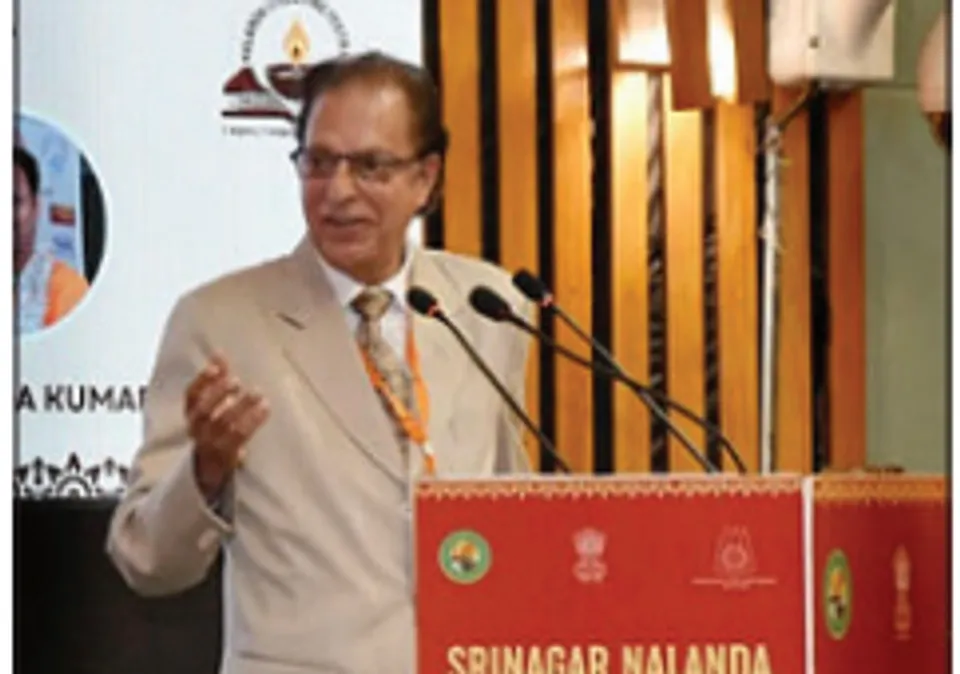
This larger vision was highlighted during the Srinagar-Nalanda Dialogue 2026, where the Kashmir Chamber of Commerce and Industry (KCCI) placed tourism at the centre of discussions on peace, governance and sustainable development.
The event, inaugurated by Lieutenant Governor Shri Manoj Sinha, brought together policymakers, academics, tourism professionals, civil society representatives and cultural voices to discuss how heritage, governance and development can shape Kashmir’s future.
KCCI Calls Tourism a “Bridge” Between Communities and Economies
During a panel discussion titled “Tourism as a Bridge: Reimagining Peace & Governance in Kashmir,” KCCI Secretary General Faiz Ahmad Bakshi highlighted how tourism can become a powerful force for:
- Peace-building
- Employment generation
- Cultural preservation
- Local entrepreneurship
- Inclusive economic growth
He emphasised that tourism should not be viewed only as an industry dependent on visitor numbers, but as a social ecosystem connecting communities, traditions and livelihoods.
Srinagar’s Heritage Recognition: From Crafts to Creative Cities
Highlighting Kashmir’s cultural strength, Bakshi pointed towards Srinagar’s growing global recognition.
Srinagar’s inclusion in the UNESCO Creative Cities Network in 2021 and recognition as a World Crafts City by the World Crafts Council in 2024 reflect the city’s historic craftsmanship, traditional skills and living cultural heritage.
From Kashmiri handicrafts to traditional art forms, the city represents centuries of creativity passed through generations.
According to KCCI, protecting this heritage while connecting it with modern tourism can create new opportunities for artisans, youth and local businesses.
Guryul Ravine: Kashmir’s Untapped Geological Tourism Potential
A major focus of the discussion was the geological significance of Guryul Ravine at Khonmoh near Srinagar.
The site is considered globally important for understanding the Permian-Triassic extinction event, one of the largest biological crises in Earth’s history.
Bakshi highlighted that Kashmir missed opportunities for international recognition of this geological treasure due to earlier challenges related to peace and stability.
He called for greater attention towards developing and protecting the site as a potential:
- Fossil tourism destination
- Research centre
- Educational attraction
- International scientific tourism hub
Such initiatives, he said, could attract researchers, students and international visitors while expanding Kashmir’s tourism beyond traditional landscapes.
Kashmir Tourism Revival: From Crisis Years to New Growth
Tracing the journey of Kashmir’s tourism sector, Bakshi recalled that the region attracted around 7.81 lakh tourists in 1988, including nearly 87,000 foreign visitors.
However, prolonged instability affected tourism growth for several years.
The sector has witnessed a major revival in recent years, with tourist arrivals reaching nearly 30 lakh in 2024, reflecting renewed interest in Kashmir’s natural beauty, culture and hospitality.
The revival has also encouraged investment in tourism infrastructure and local entrepreneurship.
Tourism Infrastructure Expansion: Hotels, Homestays and Local Participation
KCCI highlighted the expansion of tourism infrastructure across Jammu and Kashmir.
The region now has thousands of accommodation facilities, including:
- Hotels
- Guest houses
- Homestays
- Houseboats
These facilities provide thousands of rooms and beds for visitors.
A major shift has been the growth of homestays, which have changed the traditional tourism model by allowing local families to directly participate in the tourism economy.
Homestays help:
- Generate household income
- Preserve local culture
- Provide authentic visitor experiences
- Spread tourism benefits beyond major tourist centres
Tourism as a Solution to Youth Employment Challenges
One of the biggest challenges facing Kashmir is youth unemployment.
Bakshi highlighted concerns around employment opportunities and pointed towards tourism as a sector capable of generating sustainable livelihoods.
He suggested greater focus on:
Rural Tourism
Promoting villages, local traditions and community experiences can create income opportunities outside major tourist destinations.
Heritage Tourism
Historic sites, architecture, crafts and cultural traditions can become economic assets.
Eco-Tourism
Nature-based tourism can support conservation while creating jobs for local communities.
Craft Tourism
Connecting artisans directly with visitors can strengthen traditional industries.
A Development Model Rooted in Culture and Sustainability
During his address, Bakshi referred to the teachings of Lal Ded and Sheikh-ul-Alam (Nund Rishi), describing their philosophy as relevant for balancing development with human values and environmental responsibility.
He called for a model where:
- Heritage is protected
- Nature is respected
- Communities benefit
- Economic growth remains inclusive
The vision, he said, should be to make Srinagar a city where modern development and cultural identity exist together.
Dr. Shashi Tharoor Highlights Tourism’s Role in Peace and Understanding
Member of Parliament Dr. Shashi Tharoor, speaking at the Dialogue, highlighted Kashmir’s extraordinary potential due to its:
- Natural beauty
- Cultural richness
- Historical identity
- Hospitality traditions
He described tourism as a bridge that can promote understanding, economic opportunity and stronger connections between people.
He called for renewed efforts to strengthen tourism in Kashmir and unlock its full potential.
Experts, Policymakers and Cultural Leaders Participate
The Srinagar-Nalanda Dialogue brought together several prominent personalities from government, academia, culture and tourism sectors.
Those present included senior officials, academics, literary personalities, university leaders, tourism representatives and civil society members.
The participation reflected the importance of collaborative thinking in shaping Kashmir’s future development strategy.
The Road Ahead: Making Kashmir a Global Sustainable Tourism Destination
The future of Kashmir tourism depends not only on attracting visitors but also on creating a sustainable ecosystem where local communities become active partners.
A successful tourism model must focus on:
- Skill development
- Better connectivity
- Heritage protection
- Environmental conservation
- Youth participation
- Responsible tourism practices
Conclusion: Tourism Can Become Kashmir’s Strongest Connector
The message from the Srinagar-Nalanda Dialogue 2026 was clear: tourism is not only about destinations — it is about people.
For Kashmir, tourism represents a pathway to economic growth, cultural preservation and social connection.
With its landscapes, heritage, crafts and traditions, Kashmir has the potential to emerge as a global example of how tourism can support peace, prosperity and sustainable development.
Press Release
KCCI highlights tourism as a bridge for peace, employment and sustainable development at Srinagar-Nalanda Dialogue
The Kashmir Chamber of Commerce and Industry (KCCI) participated in the Srinagar-Nalanda Dialogue 2026, inaugurated by Lieutenant Governor Shri Manoj Sinha, which brought together policymakers, academics, tourism experts, literary personalities and civil society representatives to deliberate on issues of culture, governance and sustainable development.
Speaking during a panel discussion on the theme “Tourism as a Bridge: Reimagining Peace & Governance in Kashmir,” KCCI Secretary General Faiz Ahmad Bakshi , highlighted the transformative role of tourism in fostering peace, economic opportunity, cultural preservation and inclusive growth.
Bakshi noted that Srinagar’s inclusion in the UNESCO Creative Cities Network in 2021 and its recognition as a World Crafts City by the World Crafts Council in 2024 were acknowledgements of the city’s rich heritage, craftsmanship and living cultural traditions.. He also drew attention to the globally significant fossil repository at Guryul Ravine in Khonmoh, which contains one of the world’s most complete geological records of the Permian-Triassic extinction event. He observed that Kashmir lost an opportunity for international recognition of the site due to the absence of peace and stability.He sought Mr. Tharoor’s , DG Tourism’s and other Civil Servants support in protecting, developing and promoting Fossil Park which had the potential of attracting huge number of domestic/ Foreign Tourists , Researchers and scientists.
Tracing the evolution of Kashmir’s tourism sector, Bakshi recalled that the region attracted around 7.81 lakh tourists, including nearly 87,000 foreign visitors, in 1988 before years of turmoil disrupted its growth trajectory. He said the sector has witnessed a remarkable revival, with tourist arrivals reaching nearly 30 lakh in 2024, reflecting renewed global interest in Kashmir’s natural beauty, culture and hospitality.
He further highlighted the significant expansion of tourism infrastructure, stating that Jammu and Kashmir today has 4,622 accommodation units comprising hotels, guest houses, homestays and houseboats, offering nearly 39,769 rooms and over 79,500 beds. Referring to the rapid growth of homestays, Bakshi said the model has helped democratise tourism by directly connecting visitors with local communities, generating household incomes and promoting cultural exchange at the grassroots level.
Describing tourism as a social ecosystem rather than merely an economic sector, Bakshi stressed its potential to address youth unemployment and create sustainable livelihoods. Citing official statistics showing an unemployment rate of 32.8 percent among those aged 15 to 29 years, he advocated the promotion of rural tourism, heritage destinations, craft clusters and eco-tourism circuits to generate employment, strengthen community-based income generation and support environmental conservation.
Emphasising the importance of culture and sustainability in governance, he invoked the teachings of Lal Ded and Sheikh-ul-Alam (Nund Rishi), describing them as enduring guides for balancing development, human well-being and ecological preservation. He called for a development model rooted in culture, sustainability and inclusivity, enabling Srinagar to emerge as a model city where heritage and modernity coexist.
Member of Parliament Dr. Shashi Tharoor, speaking during the Dialogue, highlighted the immense potential of tourism in a region blessed with extraordinary natural beauty, rich cultural heritage and warm hospitality. He described tourism as a powerful bridge for peace, understanding and economic opportunity, and called for renewed efforts to revive tourism in Kashmir.
Among those present were Dr. Karan Singh , Padma Shri Prof. Shafi Shauq; Shri Suman Billa, Director General, Ministry of Tourism,Secretary Govt of India , Niteshwar Kumar, Addl . Secretary, Government of India; Prof. Siddharth Singh, Vice Chancellor, Nava Nalanda Mahavihara University; Shri Chittaranjan Tripathy, Director, National School of Drama; Ms D. Aaliya, Chairperson, Nalanda Literature Festival; Shri Ganga Kumar, Festival Director; Prof. A. Ravinder Nath, Vice Chancellor, Central University of Kashmir; Prof. Nilofer Khan, Vice Chancellor, University of Kashmir; Dr. G.V. Sundeep Chakravarthy, SSP Srinagar; Shri Akshay Labroo, Deputy Commissioner Srinagar, Athar Amir , Deputy Commissioner, Budgam, Ms. Idrissa Qadri besides senior officials, academics, literary personalities, Students prominent citizens and youth.
The Kashmir Chamber of Commerce & Industry INC.
2ND FLOOR, MOHIDIN TRUST BUILDING, RESIDENCY ROAD, SRINAGAR-KASHMIR-190001
TEL: 0194-2455446/2482176
FAX : 0194: 2452517
E-MAIL : thekashmirchamber@gmail.com
Website : www.thekcci.in


