Omar Abdullah Calls Article 370 Abrogation Government’s Biggest Policy Mistake
By: Javid Amin | 05 May 2026
As Statehood Campaign Gathers Pace, Omar Abdullah Reopens the Constitutional Debate That Continues to Define Jammu & Kashmir Politics
Omar Abdullah Sharpens NC’s Constitutional Narrative
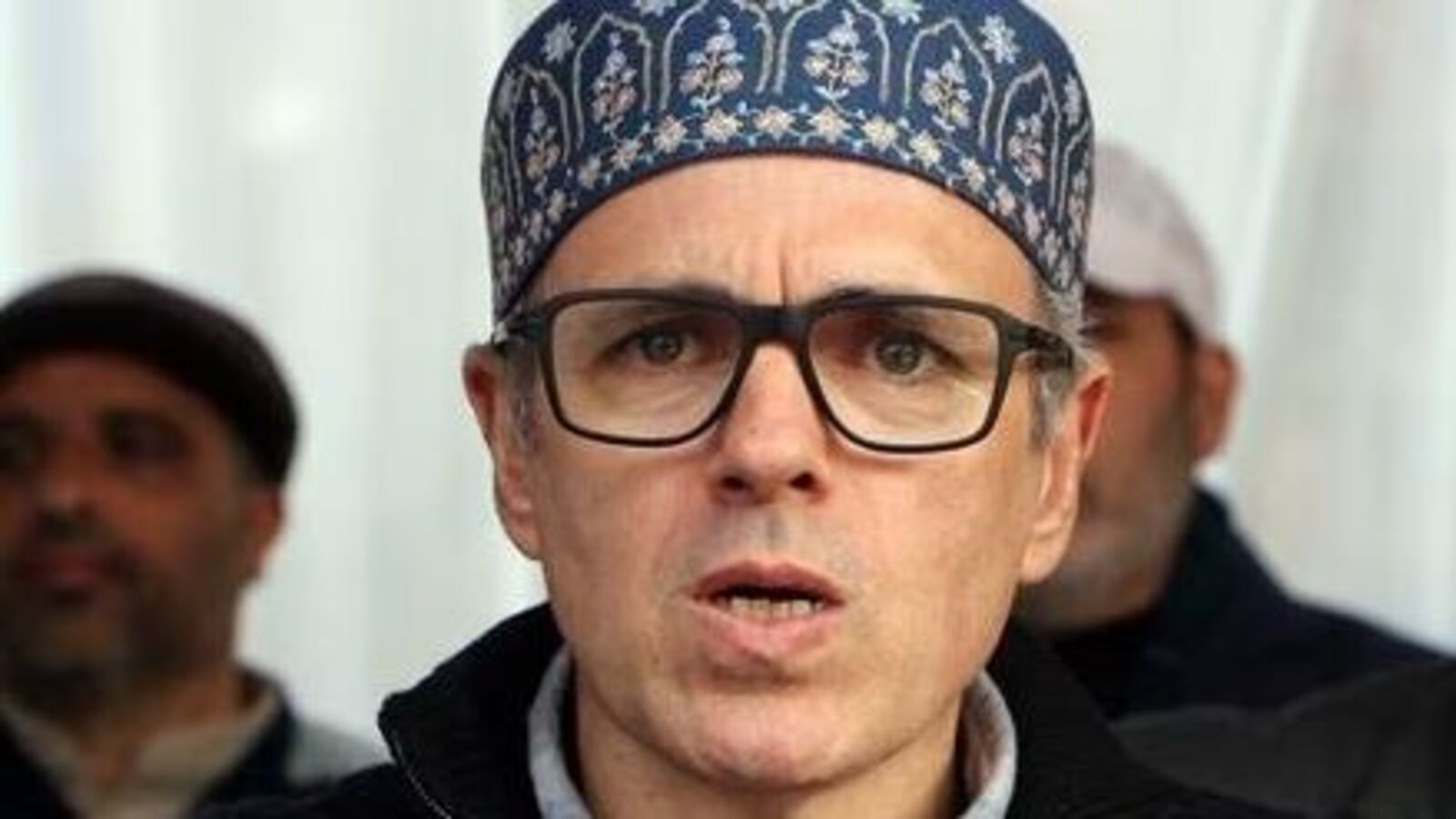
Jammu and Kashmir Chief Minister Omar Abdullah has reignited one of the most consequential political debates in contemporary Indian politics, describing the abrogation of Article 370 in August 2019 as the government’s “biggest policy mistake.”
The statement is not merely another criticism of the constitutional changes that transformed Jammu and Kashmir’s status. It represents a calculated political intervention at a time when the National Conference is attempting to reposition itself as the principal political voice on questions of statehood, constitutional rights and democratic restoration.
Coming just days after National Conference president Dr. Farooq Abdullah declared that Article 370 is inseparable from Kashmir’s identity and vowed to continue the struggle “till the end,” Omar Abdullah’s remarks signal a coordinated effort by the party leadership to place constitutional issues back at the centre of political discourse.
The message is clear: while statehood restoration may be the immediate political objective, the National Conference does not want the larger debate surrounding Article 370 to disappear from public consciousness.
Why Omar’s Statement Matters
For the National Conference, Article 370 has always represented more than a legal provision.
The party has consistently argued that it embodied the constitutional relationship between Jammu and Kashmir and the Union of India, while also serving as a framework for regional autonomy and democratic participation.
By calling its abrogation the government’s “biggest policy mistake,” Omar Abdullah is making a broader political argument.
According to the National Conference’s position, the decision:
- Deepened political alienation.
- Weakened institutional trust.
- Altered the federal relationship between J&K and the Union.
- Created a prolonged period of political uncertainty.
- Failed to resolve underlying political questions.
Supporters of the 2019 move, including the BJP, strongly reject this assessment and maintain that the constitutional changes accelerated integration, governance reforms and development.
The divide remains one of the sharpest fault lines in Jammu and Kashmir politics.
Why Is NC Raising Article 370 Again?
The timing of Omar Abdullah’s remarks is politically significant.
Over recent weeks, political debate in Jammu and Kashmir has revolved around:
- Statehood restoration.
- The National Conference’s Dachigam retreat.
- Cabinet expansion demands.
- Internal party dynamics.
- Opposition criticism from BJP, PDP and Peoples Conference.
In that environment, the National Conference faces a strategic challenge.
If political discussion remains confined to governance performance alone, the party risks being drawn into a debate where every government faces scrutiny over delivery and administration.
By emphasizing Article 370, Omar Abdullah shifts the conversation toward constitutional and historical questions where the NC enjoys stronger ideological ownership.
It is a reminder to supporters that the party’s political identity extends beyond day-to-day governance.
Alignment With Farooq Abdullah’s Message
The significance of Omar Abdullah’s remarks becomes clearer when viewed alongside recent statements by Dr. Farooq Abdullah.
Farooq Abdullah recently declared that:
“Article 370 is linked to Kashmir’s existence.”
Omar Abdullah has now described its removal as:
“The biggest policy mistake.”
Together, the two statements create a unified party narrative.
One focuses on identity.
The other focuses on political consequences.
Taken together, they reinforce the National Conference’s long-standing argument that Article 370 was central both symbolically and constitutionally.
The coordinated messaging also arrives at a time when observers have raised questions about cohesion within the broader party ecosystem following debates surrounding the absence of MP Aga Ruhullah Mehdi from the Dachigam retreat.
Statehood and Article 370: Related but Distinct
A notable feature of recent political discourse is the tendency to merge the statehood debate with Article 370.
Politically, however, the two issues remain distinct.
Statehood Restoration
Statehood concerns administrative powers, governance structures, legislative authority and democratic representation.
Many political observers consider it the more immediately achievable demand.
Article 370
Article 370 relates to constitutional arrangements, autonomy, federal relations and identity.
It occupies a deeper symbolic and ideological space within Kashmir’s political landscape.
By speaking forcefully on Article 370 while simultaneously advancing the statehood campaign, Omar Abdullah appears intent on ensuring that the party does not narrow its political agenda to a single issue.
The Challenge for NC: Turning Rhetoric Into Strategy
While strong statements generate attention, the National Conference faces a more difficult challenge.
Citizens increasingly want clarity on:
- What practical steps will follow?
- How will the party advance its demands?
- What engagement is planned with New Delhi?
- What outcomes are realistically achievable?
This challenge is particularly important because public frustration is not limited to constitutional issues.
Many voters remain concerned about:
- Employment opportunities.
- Development projects.
- Drug addiction.
- Infrastructure gaps.
- Administrative delivery.
As a result, the NC must balance constitutional advocacy with governance performance.
Opposition Will Push Back
Omar Abdullah’s statement is also likely to trigger sharp political responses.
BJP
The BJP continues to regard the 2019 constitutional changes as a historic correction and is unlikely to alter its position.
Party leaders are expected to argue that development, investment and governance have benefited from the changes.
PDP
The PDP may welcome renewed discussion on constitutional rights while continuing to insist that broader political unity is necessary for meaningful progress.
Peoples Conference
The Peoples Conference is expected to continue emphasizing governance outcomes and accountability rather than constitutional symbolism alone.
This ensures that the debate will remain politically contested in the months ahead.
The Bigger Political Calculation
Beyond the immediate controversy, Omar Abdullah’s remarks reveal a larger political strategy.
The National Conference appears to be attempting three things simultaneously:
Reclaim Constitutional Leadership
Position itself as the primary political vehicle for constitutional and democratic aspirations.
Consolidate Support Base
Reconnect with voters who expect stronger advocacy on issues of identity and political rights.
Shape the Delhi Conversation
Ensure that future discussions about Jammu and Kashmir include not only governance and development but also constitutional and political questions.
This strategy reflects an understanding that elections may be fought on governance, but political identities are often built around larger causes.
Conclusion
By describing the abrogation of Article 370 as the government’s “biggest policy mistake,” Omar Abdullah has done more than criticize a past decision.
He has signaled that the National Conference intends to place constitutional politics back at the center of its political agenda.
Together with Farooq Abdullah’s recent remarks and the party’s renewed focus on statehood, the statement marks an effort to redefine the political conversation in Jammu and Kashmir.
Whether that strategy succeeds will depend on the National Conference’s ability to combine constitutional advocacy with tangible governance outcomes.
For now, however, one thing is evident: the battle over Article 370 may no longer dominate daily headlines, but it remains one of the most powerful and enduring fault lines in Jammu and Kashmir’s political landscape.