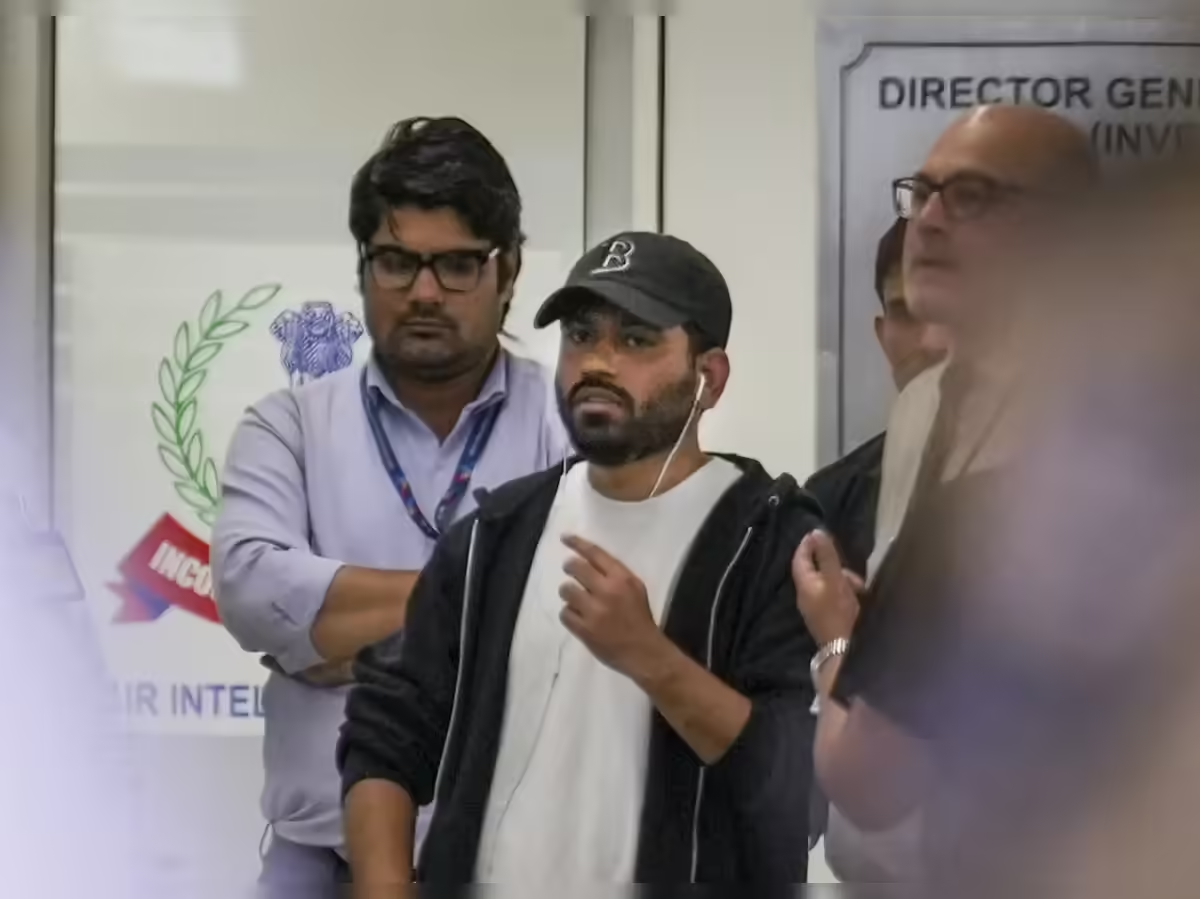
Cockroach Janta Party Founder Dipke Arrives in Delhi, Calls for Peaceful Protest at Jantar Mantar
By: Javid Amin | 06 May 2026
Fledgling Political Outfit Seeks Visibility Through Symbolic Demonstration in the National Capital
Dipke, founder of the newly formed Cockroach Janta Party (CJP), has arrived in the national capital and called upon supporters to gather for a peaceful protest at Jantar Mantar, one of India’s most recognized venues for public demonstrations.
The announcement marks the first significant public mobilization effort by the fledgling political outfit, which has been attempting to position itself as a platform for citizens who feel overlooked by mainstream political parties.
Addressing supporters shortly after reaching Delhi, Dipke emphasized that the protest should remain peaceful and disciplined, urging participants to avoid confrontation and focus on conveying their message through democratic means.
A Protest Built Around Symbolism
The decision to hold the demonstration at Jantar Mantar is being viewed as a strategic move.
For decades, the venue has served as a focal point for citizen movements, social campaigns, and political demonstrations. By choosing Jantar Mantar, the Cockroach Janta Party appears to be seeking legitimacy through association with India’s long tradition of peaceful public protest.
Political observers note that the choice of location allows emerging groups to gain visibility while operating within established democratic norms.
For a new political organization seeking recognition, symbolism can often be as important as numbers.
Dipke’s Message: Peace Over Confrontation
According to party representatives, the protest is intended to highlight issues that the organization believes have been ignored by established political parties.
Dipke urged supporters to maintain order and avoid any actions that could lead to disruptions or clashes.
“Our purpose is to make our voice heard peacefully and responsibly,” party workers quoted him as saying during interactions with supporters.
The emphasis on non-violence appears aimed at portraying the movement as issue-based rather than confrontational, a strategy often adopted by emerging political groups seeking broader public acceptance.
Who Is the Cockroach Janta Party?
Although still largely unknown in national politics, the Cockroach Janta Party has attracted attention because of its unconventional name and anti-establishment messaging.
Party leaders claim the organization seeks to represent ordinary citizens who feel neglected by traditional political structures.
Supporters argue that the name symbolizes resilience and survival despite adversity, while critics dismiss the party as a publicity-driven experiment struggling to establish political relevance.
Regardless of the interpretation, the branding has succeeded in generating curiosity and media attention.
Challenges Ahead
While the party’s Delhi mobilization may attract public interest, significant challenges remain.
Limited Organizational Presence
Unlike established political parties, the Cockroach Janta Party currently lacks a widespread organizational network.
Public Skepticism
Many voters remain cautious about new political formations, particularly those relying heavily on symbolic politics and unconventional branding.
Converting Visibility into Support
Generating headlines is one thing; translating attention into sustained public support is another challenge altogether.
Political analysts note that new movements often gain initial curiosity but struggle to build long-term grassroots structures capable of influencing electoral outcomes.
Why Jantar Mantar Matters
Jantar Mantar occupies a unique place in India’s democratic culture.
Over the years, the site has hosted demonstrations by social activists, student groups, farmers, workers, and political organizations from across the ideological spectrum.
By staging its first major public action there, the Cockroach Janta Party is attempting to place itself within that broader tradition of citizen-led political expression.
The venue’s symbolic value may help amplify the party’s message beyond the immediate gathering itself.
Public Reaction Mixed
Initial reactions to Dipke’s call have been mixed.
Some observers see the move as an example of grassroots democratic participation and welcome the party’s emphasis on peaceful protest.
Others remain skeptical, questioning whether the organization represents a serious political alternative or merely seeks publicity through unconventional methods.
On social media, discussions have focused as much on the party’s unusual name as on its stated objectives.
The Road Ahead
For Dipke and the Cockroach Janta Party, the success of the Jantar Mantar protest may ultimately be measured less by turnout and more by visibility.
The demonstration represents an opportunity to introduce the party to a wider audience, test its organizational capabilities, and communicate its message to citizens beyond its existing support base.
Whether the movement develops into a lasting political force or remains a symbolic protest platform will depend on its ability to move beyond slogans and present a credible policy agenda.
Conclusion
Dipke’s arrival in Delhi and his appeal for a peaceful protest at Jantar Mantar mark an important moment for the Cockroach Janta Party’s efforts to enter the public conversation.
By emphasizing non-violence, democratic participation, and visibility through a historic protest venue, the party is attempting to carve out a space in India’s crowded political landscape.
For now, the event is as much about symbolism as substance. But in politics, symbolic moments can sometimes become the foundation for larger movements—provided they resonate with the public beyond the headlines.


