Delhi on High Alert as CJP Defies Protest Ban: Supreme Court Pushes Back Against Blanket Transport Curbs
By: Javid Amin | 10 October 2026
Jantar Mantar mobilisation over CEC Gyanesh Kumar and SIR faces heavy security, Metro restrictions, cancelled trains and preventive detentions as the Cockroach Janata Party turns a youth protest into a national debate over electoral accountability and civil liberties
New Delhi, October 10: Central Delhi woke up under an extraordinary security blanket on Saturday as the Cockroach Janata Party (CJP), a youth-led protest movement, prepared to press ahead with its planned demonstration at Jantar Mantar despite Delhi Police denying permission.
The protest, promoted by organisers as “Jantar Mantar 2.0” and a “Save Democracy” mobilisation, seeks the resignation of Chief Election Commissioner Gyanesh Kumar, a halt to the Special Intensive Revision (SIR) of electoral rolls, an independent inquiry into alleged irregularities and reforms to the process of appointing Election Commissioners.
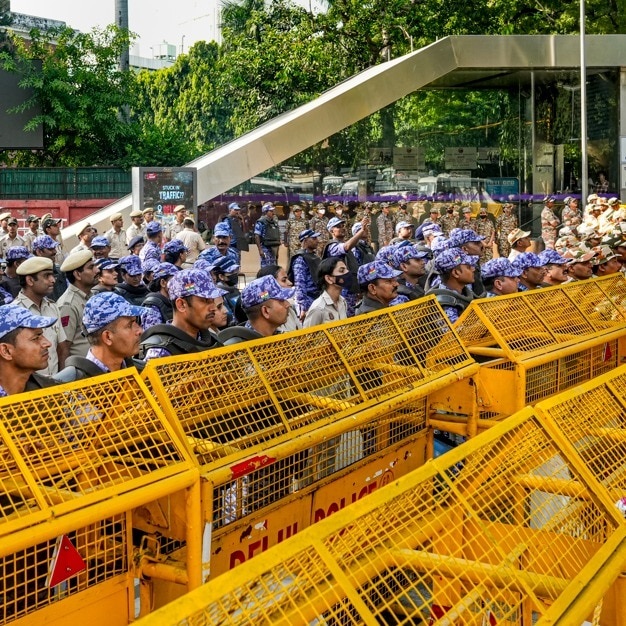
By the morning of October 10, the dispute had moved well beyond the original demands. Heavy police and paramilitary deployment, barricades across central Delhi, restrictions at dozens of Metro stations, cancelled or rescheduled trains, mobile internet suspension in parts of the capital and reports of preventive detentions had made the protest a major public-order issue.
The Supreme Court intervened on October 9, directing authorities not to impose a complete prohibition on Metro and train services and stressing that public inconvenience must be considered while managing security. Yet, early on Saturday, reports continued to describe extensive restrictions on transport and movement. citeturn165988view0turn165988view2turn165988view1
The confrontation has brought several competing questions into sharp focus: how should authorities manage a protest for which permission has been refused, how far can restrictions extend before they disproportionately affect the public, and how should allegations against a constitutional institution be examined?
What Is the Cockroach Janata Party?
The Cockroach Janata Party, also called the Cockroach Janta Party, began as an online satirical movement and subsequently evolved into a youth-led protest platform.
Its name traces back to a judicial remark reported during a Supreme Court proceeding in May 2026, when Chief Justice of India Surya Kant compared unemployed young people who criticised judges online to “cockroaches”. The remark provoked a reaction among young people, and the satirical label was adopted as the name of a protest movement.
The group later gained wider recognition during protests over alleged irregularities and paper leaks involving the NEET medical entrance examination. Its campaign became part of a larger student mobilisation over examination integrity, recruitment prospects and the pressures faced by young people competing for limited educational and employment opportunities.
The earlier agitation culminated in the resignation of Union Education Minister Dharmendra Pradhan in July 2026 amid the controversy. The movement subsequently continued to raise broader questions about accountability and the treatment of young protesters. citeturn909146news45turn909146search12
The CJP’s current campaign marks a shift from examination-related grievances to electoral accountability.
Its organisers argue that the integrity of voter lists is fundamental to democratic representation and that alleged irregularities must be investigated independently. Their present demands centre on Gyanesh Kumar, the SIR process and changes to the Election Commission’s appointment framework.
The organisation’s rapid rise has also highlighted how online satire can develop into a vehicle for street mobilisation, particularly when it connects with concerns about unemployment, examinations, public institutions and political representation.
Why Is the CJP Demanding Gyanesh Kumar’s Resignation?
The immediate trigger is the controversy surrounding the Special Intensive Revision of electoral rolls and reports that disagreements arose within the Election Commission over decisions linked to the exercise.
Opposition parties and the CJP have alleged that the revision process risks removing eligible voters from electoral rolls and have questioned the way certain decisions were taken. They want the CEC to resign and an independent inquiry to examine the allegations.
The dispute intensified after reports that Election Commissioners Sukhbir Singh Sandhu and Vivek Joshi had raised objections to decisions associated with the revision process. The issue has since moved into the judicial arena.
The Supreme Court on October 5 declined to suspend Gyanesh Kumar at the interim stage but issued notices seeking responses from the Election Commission, the Centre and other respondents. The Court indicated that it would examine the relevant statutory framework and records rather than act solely on allegations or media reports. citeturn165988view0turn165988view2
The distinction is important: the opposition’s allegations have not, by themselves, established that the CEC acted unlawfully or that voter lists were manipulated.
The Election Commission and the BJP have rejected the opposition’s characterisation of the process. The BJP has argued that opposition parties are politicising the controversy, while the Commission’s position is that electoral-roll revision falls within its statutory responsibilities.
The CJP’s protest is therefore taking place amid an unresolved dispute, not after a judicial finding that the allegations are proven.
Why Delhi Police Denied Permission
Delhi Police refused permission for the planned CJP demonstration at Jantar Mantar.
According to reports, police cited the late submission of the application, concerns about compliance with conditions imposed during earlier demonstrations, and the need to maintain public order and manage traffic in the capital.
Authorities also invoked prohibitory orders under Section 163 of the Bharatiya Nagarik Suraksha Sanhita (BNSS) in the New Delhi area. Such orders can restrict gatherings and certain activities when authorities consider them necessary to prevent a breach of peace or other specified risks.
Police have said that the protest could create serious law-and-order and traffic-management challenges, particularly given the number of people expected to travel to central Delhi.
The CJP has rejected the decision and maintained that peaceful protest is a fundamental democratic right. Its leaders, including founder Abhijeet Dipke, have said they intend to proceed despite the denial of permission.
The disagreement has now become a dispute about both the protest’s original demands and the conditions under which people can exercise their right to demonstrate.
A refusal of permission does not automatically settle every constitutional question surrounding a protest. Equally, the right to assemble does not mean every proposed gathering can take place at any location or without reasonable regulation. The legality and proportionality of particular restrictions depend on the applicable law, the circumstances and the measures imposed.
Delhi’s Security Blanket: Thousands of Personnel, Multiple Checkpoints
The security operation has extended across central Delhi and major routes leading towards the protest area.
Media reports have cited differing deployment estimates, ranging from approximately 25,000 personnel to substantially higher figures when police, paramilitary forces and reinforcements are counted together. The exact total varies by report and should not be treated as a single independently established number.
Delhi Police has prepared a multi-layered plan involving barricades, checkpoints, personnel from different districts, detention facilities and monitoring of major approaches to Jantar Mantar. The Indian Express reported that the police plan included 37 blocking points and dedicated detention facilities across the capital’s districts. citeturn165988view3turn909146search2
Security measures have affected areas around Jantar Mantar, Parliament Street, Connaught Place, Janpath and other central locations. Additional checks have also been reported at Delhi’s borders and at routes used by people travelling into the capital.
The authorities’ stated objective is to prevent an unauthorised gathering from turning into a wider law-and-order problem.
The practical effect, however, has been a major security presence in public spaces, with consequences for commuters, workers, visitors and residents who may have no connection with the protest.
Metro Restrictions and Train Cancellations Disrupt Commuters
One of the most consequential aspects of the security operation has been its impact on public transport.
Reports on Friday and Saturday described entry and exit restrictions at dozens of Metro stations, with the number varying across advisories and media accounts. Some reports cited 45 stations, while others referred to 57 or a larger figure depending on the time and scope of the restriction.
Several long-distance trains to and from Delhi were also cancelled or rescheduled. Railway disruptions were reported on routes connecting the capital with parts of Uttar Pradesh, Maharashtra and other regions.
Mobile internet services were ordered suspended for a limited period within a specified radius around the Janpath–Kartavya Path crossing, according to reports citing the government order. Traffic diversions and checks were also announced for several major roads. citeturn165988view0turn909146search3turn909146search11
These measures have a direct impact on people who are not participating in the protest.
A commuter may be unable to enter a station near a workplace, a passenger may discover that a long-distance train has been cancelled, and a visitor may face significant delays reaching central Delhi. Businesses and service providers may also experience disruption when movement through commercial areas is restricted.
The scale of the restrictions has therefore raised a question beyond the protest itself: how can authorities manage a security risk without unnecessarily disrupting essential transport and everyday activity across the capital?
Supreme Court Intervention: No Complete Shutdown of Metro or Trains
The Supreme Court’s intervention on October 9 became a central development in the dispute.
A bench led by Chief Justice Surya Kant directed that there should be no complete prohibition on Metro or train movement. Authorities were told to allow services to operate in a regulated manner so that the wider public would not face unnecessary inconvenience, and to issue appropriate public advisories.
The Court stressed proportionality while discussing the restrictions, using the analogy that authorities should not use “a hammer to kill a fly”. citeturn165988view2turn909146news41
The observation reflects an important principle in public-order management: security arrangements should be tailored to the risk rather than automatically imposed at the maximum possible level.
The Court did not thereby endorse every aspect of the CJP’s protest or determine the merits of the allegations against the Election Commission. Its intervention concerned the restrictions on public transport and the need to avoid a complete shutdown.
Nor should the order be read as an instruction that all stations and services must operate without any security controls. The Court’s reported direction allowed regulated movement, leaving authorities to manage genuine safety concerns while avoiding a blanket prohibition.
The key issue on Saturday morning was whether the transport restrictions on the ground had been adjusted sufficiently to comply with the Court’s direction. Reports continued to describe extensive closures and disruption, making the implementation of the order an important point to watch.
Early Detentions and the Standoff at Jantar Mantar
Before the planned gathering began, reports emerged of protesters being detained or stopped near central Delhi.
Police had warned that anyone violating prohibitory orders or attempting an unauthorised gathering could face legal action. Teams were deployed at key approaches, while organisers maintained that they intended to continue the mobilisation despite the denial of permission.
The CJP’s leadership has framed the issue as one of democratic rights, arguing that the denial of permission and restrictions on travel have become part of the dispute itself.
Police, by contrast, have maintained that they must enforce applicable orders and prevent a breach of peace.
The situation remained fluid on the morning of October 10, with different reports describing detentions and restrictions at different locations. The number of people detained, the grounds for individual detentions and whether particular people were released could not be treated as fully established from the available reports.
The distinction between preventive detention, temporary police custody and formal arrest is also important. These terms have different legal implications and should not be used interchangeably without confirmation.
The immediate test for both sides is whether the day proceeds without violence, avoidable injury or further disruption to people who are not involved in the demonstration.
Claims of Preventive Detentions Across Several States
The dispute has extended beyond Delhi.
CJP representatives and allied student or activist groups have alleged that supporters were stopped from travelling to the capital, questioned by police or detained preventively in several states.
Reports have described police contact with activists in Maharashtra, including Mumbai, Thane, Nagpur and Pune, as well as alleged interceptions at railway stations. Other reports have referred to incidents involving activists travelling through Madhya Pradesh and Rajasthan, alongside claims from supporters in Gujarat, Uttar Pradesh, West Bengal and Telangana.
The CJP has alleged that thousands of potential participants were prevented from reaching Delhi. One figure circulated by organisers was approximately 10,000 people, but an independently verified total was not available in the reporting reviewed.
Claims involving individual detentions, threats, the use of force or the alleged assault of activists must be assessed separately against police statements, eyewitness accounts and available documentation. They should not be treated as established merely because they have been circulated by organisers.
The broader issue is whether law-enforcement action outside Delhi has been limited to specific, lawful preventive measures or has been used more broadly to obstruct peaceful participation. Answering that question requires verified information about individual incidents, the legal grounds cited and the circumstances in which police intervened.
A Protest Movement With National Reach
The CJP’s emergence is notable because it has connected two areas of public concern: examination integrity and electoral accountability.
The movement first gained attention through anger over alleged examination irregularities and the pressure faced by students competing for scarce educational opportunities. Its present campaign takes up a different institutional issue but retains the same emphasis on accountability.
That shift has helped the group attract attention beyond its original base.
Student organisations and activist groups have joined or expressed support for the planned mobilisation. Some opposition parties have also staged related demonstrations over the SIR process and the CEC’s role.
The scale of support remains difficult to measure. Organisers’ estimates of expected turnout are not equivalent to confirmed attendance, and the number of people stopped from travelling cannot be established solely from campaign statements.
Nevertheless, the protest has drawn national attention because it places a youth-led movement at the centre of a dispute involving electoral administration, the police, the judiciary and the right to public assembly.
The Opposition’s Role and the BJP’s Response
The CJP’s protest is taking place alongside a wider opposition campaign against alleged irregularities in electoral-roll revision.
Congress and other opposition leaders have called for Gyanesh Kumar’s resignation and have raised concerns about voter deletions and the conduct of the SIR exercise. Some have also sought an independent inquiry and changes to the process by which Election Commissioners are appointed.
The BJP has rejected the allegations, arguing that opposition parties are attempting to discredit the Election Commission because of their electoral performance. The Commission has also disputed the opposition’s account of the revision process.
These competing claims must be distinguished from established findings.
The opposition’s concerns about electoral rolls are political allegations requiring evidence and institutional examination. The BJP’s rejection of those allegations is likewise a political position; it does not, by itself, resolve the factual questions being raised.
The Supreme Court’s proceedings provide a separate channel for examining the specific legal issues before it. The Court’s decision to seek responses from the authorities is not a finding that the CEC is guilty of wrongdoing.
The protest’s significance therefore lies not in treating any side’s claims as settled, but in the way the dispute has moved across political mobilisation, public-order decisions and judicial scrutiny.
The Right to Protest and the Limits of Public-Order Restrictions
The events in Delhi have revived a fundamental question in a constitutional democracy: how should the state balance the right to peaceful assembly with the responsibility to maintain public order?
The right to assemble peacefully is constitutionally protected, subject to reasonable restrictions under the law. Authorities can regulate the location, timing and conditions of demonstrations, particularly where there are credible risks to safety or where public services may be affected.
But restrictions also need to be justified by the circumstances. Their scope, duration and practical consequences matter.
A targeted restriction around a specific location is different from shutting entry and exit at dozens of Metro stations. Preventing a gathering from blocking a sensitive site is different from imposing measures that substantially hinder movement across a large part of a city.
The Supreme Court’s intervention underscores the need for proportionality. Authorities must account for the public’s need to travel while maintaining the ability to respond to a genuine security threat.
The same principle applies to preventive action outside Delhi. Where police intervene against people intending to travel to a protest, the grounds and legal basis for each action matter. General assertions of security cannot substitute for scrutiny of specific decisions.
At the same time, protest organisers have a responsibility to comply with lawful directions and ensure that their mobilisation remains peaceful.
Why the SIR Controversy Matters Beyond One Protest
Electoral rolls are foundational to representative democracy. If eligible voters are incorrectly removed, they may be unable to exercise their voting rights; if ineligible entries remain, the credibility of the roll can also be questioned.
That is why changes to voter lists require transparent procedures, clear opportunities for correction and accessible mechanisms for affected citizens to raise objections.
The SIR controversy has raised questions about the scale of revisions, the decision-making process and the safeguards available to voters. Opposition parties have alleged that the changes could disproportionately affect certain voters, while the Election Commission and BJP have rejected claims of manipulation.
The allegations need to be assessed through actual records, applicable rules, the reasons for individual deletions and the procedures available to voters who believe their names have been wrongly removed.
The claim that approximately 130 million names were removed has featured in reporting on the dispute. However, the number alone does not establish that all those names belonged to eligible voters or that their removal was unlawful. Electoral-roll revisions can include removals for different reasons, and the underlying data and classifications are essential to understanding what happened.
The key questions are how many eligible voters were affected, what safeguards were followed, whether corrections were accessible and whether the process complied with the law.
Those are matters for evidence and institutional scrutiny, not political slogans alone.
What Happens Next?
The immediate focus is whether the CJP’s planned demonstration proceeds, how police respond to attempts to gather and whether transport restrictions are adjusted in line with the Supreme Court’s direction.
Authorities will also need to communicate clearly with commuters about station closures, train schedules, traffic diversions and the duration of any remaining restrictions. The Delhi Traffic Police has issued an advisory for October 10 warning of possible disruption on affected routes. citeturn165988view4
For protesters, the challenge will be to sustain public attention on their demands while keeping the mobilisation peaceful and making their allegations through verifiable evidence.
For the Election Commission, the wider test is to answer the questions raised about the SIR process and its decision-making framework through records and transparent explanations.
For the courts, the specific legal issues before them will be examined through the applicable statutes and evidence. The outcome cannot be inferred from the fact that notices have been issued or that the Court has intervened on transport restrictions.
The situation remains dynamic, and reports of detentions, station closures and travel disruption may change throughout the day. Commuters should check current official Metro, railway and traffic advisories before travelling through central Delhi.
Conclusion: A Test of Security, Public Rights and Electoral Accountability
The CJP’s October 10 mobilisation has become more than a demonstration demanding the resignation of Chief Election Commissioner Gyanesh Kumar.
It has developed into a wider confrontation over electoral-roll revision, the independence and accountability of the Election Commission, the right to protest and the limits of public-order restrictions.
The security operation reflects the authorities’ determination to prevent an unauthorised gathering from disrupting the capital. The Supreme Court’s intervention, however, makes clear that managing a protest does not remove the obligation to consider the needs of the wider public.
The CJP’s allegations about voter deletions and the Election Commission remain contested and require evidence. Equally, the legality and proportionality of restrictions imposed on protesters and commuters require scrutiny under the law.
The outcome of the day will be measured not simply by whether a crowd reaches Jantar Mantar, but by whether authorities can maintain public safety without unnecessary disruption, protesters can exercise their rights peacefully, and the underlying questions about electoral-roll revision receive credible answers.
As Delhi braces for the day’s developments, the central issue is no longer only who will reach Jantar Mantar. It is whether security, democratic participation and public accountability can be protected together.