Silence of Global Institutions on Iran Crisis: Paralysis, Power Politics & the Erosion of Global Governance
By: Javid Amin | 22 March 2026
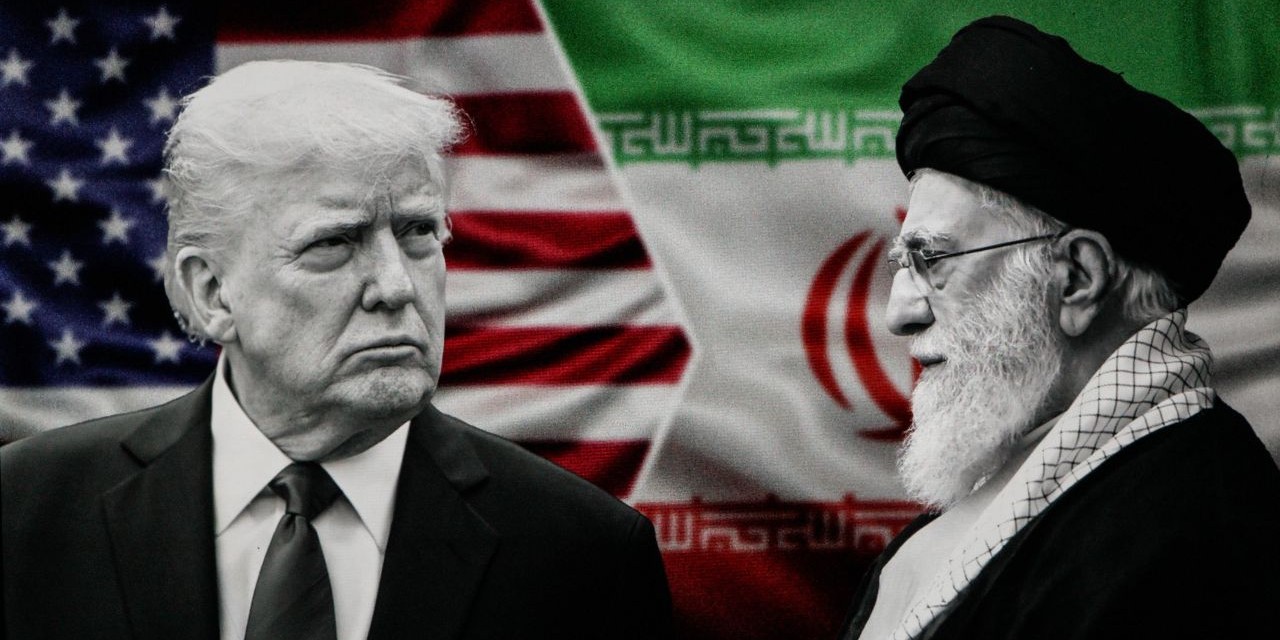
As US–Iran tensions escalate, the muted response of the world’s top institutions raises urgent questions about credibility, neutrality, and the future of international order
When the World’s Referees Go Quiet
In moments of global crisis, the world looks to its institutions for clarity, coordination, and restraint. Whether it is war, economic collapse, or humanitarian disaster, bodies like the United Nations, NATO, and European Union are expected to step in—not just as observers, but as stabilizers.
Yet, as tensions surrounding Iran intensify and the specter of a wider regional conflict looms, these institutions appear muted, divided, or strategically silent.
This silence is not occurring in a vacuum. It is unfolding amid rising geopolitical fragmentation, competing narratives, and a shifting global order where consensus is increasingly elusive.
The result: a crisis that is not only about conflict in the Middle East—but about the credibility of global governance itself.
The United Nations: Paralysis at the Core
A Security Council Divided
At the center of the global governance architecture lies the United Nations Security Council, designed to act decisively in moments of international crisis.
But in the Iran situation, familiar fault lines have re-emerged:
- The United States and United Kingdom align on one side
- Russia and China stand on the other
- Veto power ensures that no meaningful resolution passes
This is not new—but its consequences are increasingly severe.
The Cost of Inaction
The UN’s muted response is often framed as neutrality. In reality, it reflects institutional paralysis.
Key Consequences:
- Erosion of credibility: The UN’s founding purpose—to prevent conflict—appears compromised
- Diplomatic vacuum: Without UN leadership, mediation efforts lack legitimacy
- Signal to actors: Silence can be interpreted as tacit acceptance
In geopolitical terms, the UN is not absent—it is immobilized by its own structure.
NATO: Strategic Ambiguity in a Divided Alliance
The North Atlantic Treaty Organization has historically acted as a unified military and political bloc. But in the current scenario, it reflects strategic ambiguity rather than cohesion.
Fragmented Alignment
- The United Kingdom has taken visible steps, including military deployments
- Other NATO members remain cautious
- The alliance has not formally endorsed broader escalation
This creates a layered reality:
👉 Individual states act
👉 The alliance hesitates
Why NATO Holds Back
- Risk of wider war involving multiple fronts
- Lack of consensus among members
- Desire to avoid direct confrontation with Iran
The result is a partial engagement model, where NATO’s institutional voice is softer than the actions of its key members.
European Union: Unity Under Strain
The European Union presents a different kind of challenge—not paralysis, but internal fragmentation.
Diverging Positions
- Some member states quietly align with Washington
- Others emphasize diplomacy and restraint
- Public messaging lacks coherence
This reflects the EU’s structural reality:
👉 A union of states with diverse strategic interests
Implications
- Weakens Europe’s role as a diplomatic mediator
- Reduces pressure for de-escalation
- Signals uncertainty to global markets and partners
In effect, the EU is present—but not unified enough to lead.
OIC: A Collective Voice That Struggles to Project Power
The Organization of Islamic Cooperation represents over 50 Muslim-majority nations. In theory, it should be a powerful platform for collective response—especially on issues involving Iran and Palestine.
Reality: Symbolism Over Substance
- Statements issued, but largely measured and non-confrontational
- No unified strategic action
- Limited diplomatic leverage exercised
Why the OIC Hesitates
- Internal divisions among member states
- Strategic ties with Western powers
- Economic dependencies (energy, trade, security)
For many observers, this creates a perception gap:
👉 Expectations of solidarity
vs
👉 Reality of cautious diplomacy
IOC: The Politics of Avoiding Politics
The International Olympic Committee occupies a unique space—nominally apolitical, yet historically vocal when conflict impacts sports.
Silence in Context
- No major statement on the Iran crisis
- No visible intervention regarding athletes or events
Strategic Calculation
The IOC’s silence reflects:
- Reluctance to politicize sport
- Desire to maintain neutrality across member nations
However, this neutrality raises questions:
👉 At what point does silence become complicity?
Why This Silence Matters
1. Legitimacy Crisis
Institutions derive authority from action. When they fail to respond:
- Trust erodes
- Relevance is questioned
- Alternative power structures emerge
2. Narrative Advantage
Silence is not neutral—it is interpreted.
For Iran, the lack of strong condemnation can be framed as:
- Implicit acknowledgment
- Validation of its geopolitical narrative
3. Humanitarian Risk
Without mediation:
- Conflicts escalate unchecked
- Civilian populations bear the cost
- Humanitarian corridors become harder to negotiate
4. Economic & Strategic Fallout
- Oil markets destabilize
- Shipping lanes become vulnerable
- Global trade routes face disruption
This transforms a regional crisis into a global economic risk.
Structural Reasons Behind Institutional Paralysis
Understanding the silence requires looking beyond the moment.
Core Drivers:
1. Geopolitical Polarization
Major powers are increasingly divided, making consensus rare
2. Institutional Design Flaws
Veto systems and consensus rules slow decision-making
3. Economic Interdependence
States avoid positions that could harm trade or energy security
4. Preference for Backchannel Diplomacy
Public silence may mask private negotiations
A Changing World Order
The Iran crisis reflects a broader transformation:
- Decline of multilateral consensus
- Rise of regional power blocs
- Increasing reliance on unilateral action
Global institutions are no longer uncontested arbiters—they are arenas of competition.
Editorial Insight: Silence Is a Decision
It is tempting to interpret institutional silence as absence. But in geopolitics, silence is often strategic.
It can mean:
- Avoiding escalation
- Preserving alliances
- Waiting for clearer outcomes
But it also carries risk:
👉 It creates space for conflict to expand
Conclusion: A Test Beyond the Battlefield
The Iran crisis is not just a military or diplomatic confrontation. It is a stress test for global governance.
- The United Nations faces questions about relevance
- NATO and European Union confront internal divisions
- The Organization of Islamic Cooperation struggles to project unity
- Even the International Olympic Committee reflects the limits of neutrality
If these institutions cannot act decisively in moments like this, their foundational promise—to maintain peace, stability, and cooperation—comes under scrutiny.
History may not judge this moment solely by the outcome of the conflict—but by the silence that surrounded it.