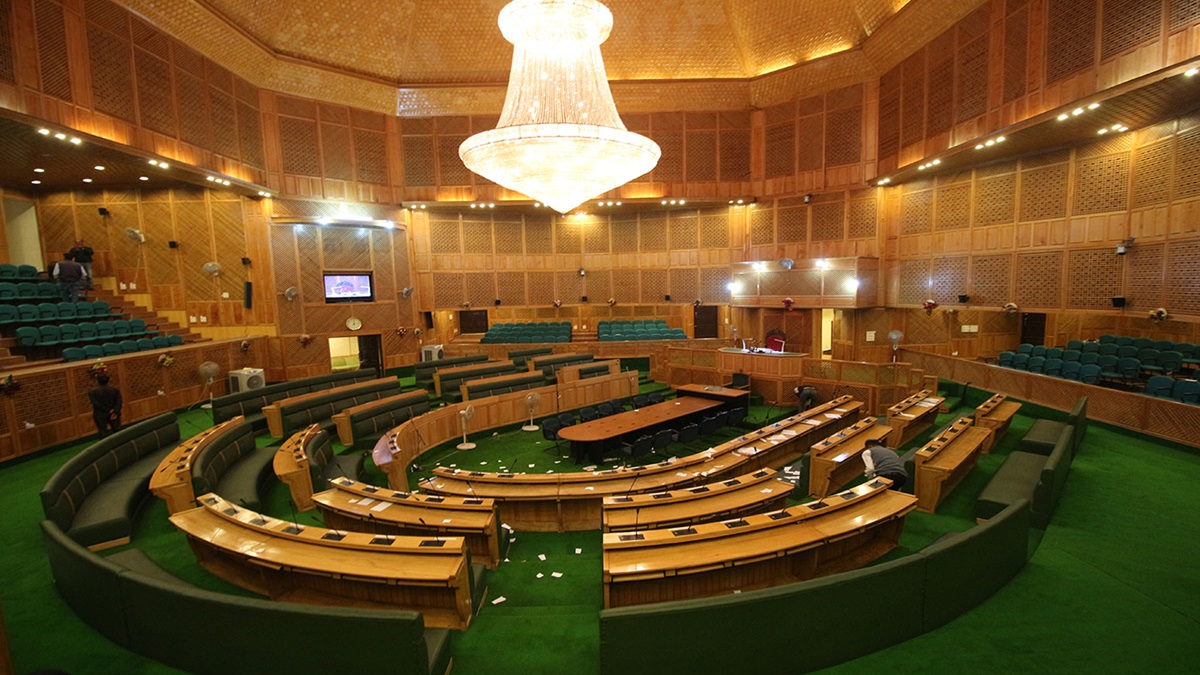
Jammu & Kashmir’s Invisible MLAs: Democracy Without Power
By: Javid Amin | 17 May 2026
In Post-Article 370 J&K, Elected Representatives Exist — But Do They Still Govern?
In Jammu and Kashmir today, democracy appears visible on paper yet strangely absent in practice.
There are elected representatives. Constituencies have MLAs. Political rallies continue. Public meetings take place. But beneath these outward symbols lies an uncomfortable and increasingly debated question:
What power do these elected leaders actually possess?
Across the Union Territory, many legislators privately admit that they struggle to influence administration, shape policy, or deliver meaningful governance outcomes. Citizens, meanwhile, are beginning to ask why elected representatives seem unable to intervene even in local developmental and administrative matters.
This growing disconnect has produced what many observers now describe as the era of Jammu and Kashmir’s “invisible MLAs” — representatives who occupy office without exercising substantial authority.
The crisis is not merely political. It strikes at the core of democratic legitimacy itself.
The Mirage of Representation
Democracy functions not simply through elections, but through the continuous exercise of public representation.
People vote believing their representatives can:
- Raise public grievances
- Influence policy decisions
- Question the executive
- Secure accountability
- Shape development priorities
- Participate in lawmaking
In Jammu and Kashmir, critics argue that this chain of democratic functioning has weakened significantly since the revocation of Article 370 in August 2019.
While electoral structures continue to exist, decision-making has become increasingly centralized within bureaucratic and administrative systems.
As a result, many MLAs now appear politically visible yet institutionally powerless.
This paradox has deepened public frustration, especially among voters who expected elected governance to restore political agency after years of uncertainty.
From Legislature to Administrative Governance
Before 2019, Jammu and Kashmir operated with its own state legislature, political executive, and a comparatively stronger framework of regional decision-making.
The post-Article 370 reorganization fundamentally altered that structure.
The former state was bifurcated into Union Territories, and governance became more directly linked to the Centre through the office of the Lieutenant Governor and an expanded bureaucratic framework.
Critics argue that this transformation shifted practical authority away from elected representatives and toward administrative institutions.
Today, bureaucrats, advisors, and departmental officials often wield greater operational influence than legislators themselves.
For many citizens, this has created the perception that governance is increasingly managed through files and directives rather than democratic debate.
The MLA Without Instruments of Power
In many parliamentary systems, legislators derive relevance from the tools available to them.
These include:
- Legislative debates
- Question Hour
- Budget scrutiny
- Committee oversight
- Policy intervention
- Departmental accountability
- Local development influence
Without these mechanisms functioning meaningfully, elected office risks becoming symbolic rather than substantive.
This is precisely the concern emerging in Jammu and Kashmir.
Several MLAs have publicly or privately expressed frustration over limited administrative access and reduced influence over district-level governance.
Many now spend more time attending ceremonial events, public grievances, funerals, and ribbon-cuttings than shaping legislative outcomes.
The result is a growing perception that elected representatives have become intermediaries without authority.
Bureaucratic Dominance and Centralized Decision-Making
One of the strongest criticisms emerging from political circles in J&K is the increasing dominance of bureaucracy over democratic structures.
District Commissioners, administrative secretaries, and centrally aligned governance mechanisms are often viewed as exercising greater practical control over policy implementation than elected legislators.
Supporters of centralized governance argue that bureaucratic efficiency has improved project execution, reduced political instability, and strengthened administrative discipline.
Critics, however, warn that governance without strong political accountability creates democratic imbalance.
In representative democracies, bureaucracy is traditionally meant to implement policy — not politically substitute elected authority.
This distinction has become central to debates in Jammu and Kashmir’s evolving governance model.
Public Disillusionment: “What Did Our Vote Change?”
Perhaps the most politically consequential aspect of this crisis is growing voter disillusionment.
In many constituencies, citizens increasingly question whether elections meaningfully influence governance outcomes.
Voters who waited in long queues, participated in campaigns, and placed faith in democratic restoration now ask:
- Can MLAs influence transfers?
- Can they stop unpopular policies?
- Can they shape development priorities?
- Can they question executive decisions effectively?
- Can they legislate independently?
When the public begins doubting the practical value of electoral participation, democracy itself enters a zone of vulnerability.
Political scientists often warn that democratic legitimacy weakens not only through authoritarianism, but also through perceived irrelevance.
The “invisible MLA” has therefore become more than a political metaphor — it reflects anxiety over democratic efficacy.
Governance Without Debate
Another major consequence of weakened legislative functioning is the shrinking space for public debate.
Legislatures are not merely lawmaking institutions. They are also arenas where competing visions, regional concerns, and public grievances are publicly negotiated.
Debates inside elected houses perform several democratic functions:
- Exposing policy flaws
- Holding governments accountable
- Reflecting regional diversity
- Building political consensus
- Publicly recording dissent
When governance shifts primarily toward administrative channels, many of these democratic functions become less visible.
Critics argue that Jammu and Kashmir increasingly suffers from “executive governance without political conversation.”
This absence of robust legislative engagement has intensified concerns about transparency and accountability.
The Psychological Impact on Political Leadership
The current situation has also altered the psychology of politics in Jammu and Kashmir.
Traditionally, MLAs derived political legitimacy from their ability to influence governance outcomes for constituents.
Today, many representatives reportedly struggle with public expectations they lack institutional power to fulfill.
This produces a difficult political cycle:
- Citizens grow frustrated with MLAs
- MLAs feel constrained by bureaucracy
- Political trust weakens further
- Cynicism toward democracy expands
Over time, such dynamics can discourage serious political participation and reduce public faith in constitutional processes.
Is This a Transitional Phase or a Structural Shift?
Supporters of the current governance framework argue that Jammu and Kashmir remains in a transitional phase following constitutional reorganization and security challenges.
They contend that centralized administration was necessary to stabilize governance, improve coordination, and integrate systems more effectively.
According to this perspective, democratic institutions will gradually regain fuller functionality over time.
Critics, however, fear the opposite.
They argue that prolonged centralization risks normalizing a governance culture where elections exist but meaningful political authority remains limited.
This debate now lies at the heart of J&K’s democratic future.
Why Legislative Restoration Matters Beyond Politics
Restoring robust legislative functioning is not merely about political symbolism.
It affects:
- Public trust
- Institutional accountability
- Regional representation
- Policy responsiveness
- Democratic participation
- Conflict management
In politically sensitive regions like Jammu and Kashmir, representative institutions also perform an important emotional and psychological role.
They give citizens the feeling that governance is participatory rather than imposed.
Without that perception, even efficient administration may struggle to generate long-term political legitimacy.
The Risk of Democracy Becoming Performative
One of the deepest fears expressed by constitutional observers is the possibility of democracy becoming largely performative — visible during elections but weak between them.
A functioning democracy requires more than ballots.
It requires:
- Decision-making power
- Institutional accountability
- Public scrutiny
- Political negotiation
- Representative influence
When elected leaders cannot substantially shape governance, democratic structures risk appearing ceremonial rather than functional.
That perception can gradually weaken civic trust.
The Way Forward: Rebuilding Democratic Confidence
Political analysts and constitutional experts suggest several steps to restore confidence in representative governance in Jammu and Kashmir:
Strengthening Legislative Authority
Empowering elected representatives with meaningful oversight and policy roles.
Restoring Robust Assembly Functioning
Ensuring regular legislative sessions, debates, committee work, and public accountability mechanisms.
Decentralizing Governance
Reducing over-centralization by strengthening local democratic institutions.
Enhancing Transparency
Making administrative decision-making more publicly accountable.
Rebuilding Political Trust
Encouraging participatory governance rather than purely bureaucratic administration.
Many experts argue that democracy in Jammu and Kashmir cannot stabilize sustainably without restoring institutional relevance to elected leadership.
Democracy Cannot Survive on Optics Alone
The crisis of Jammu and Kashmir’s “invisible MLAs” is ultimately about more than legislative procedure.
It is about whether citizens feel genuinely represented.
Democracy cannot function indefinitely through symbolism alone. Elections without effective representation risk creating political fatigue, public cynicism, and institutional detachment.
A legislature is not meant to be a ceremonial backdrop to governance. It is meant to be its democratic conscience.
For Jammu and Kashmir, the challenge ahead is not simply restoring political structures — it is restoring faith that those structures still matter.
Because when elected voices become invisible, democracy itself begins to fade from public view.

