Thajwas Glacier Shrinks by 95%: Kashmir’s Sonmarg Faces Climate Crisis and Ecological Threat
By: Javid Amin | 18 May 2026
Kashmir’s Vanishing Ice: Thajwas Glacier Reduced to Mere Remnants Amid Escalating Climate Crisis
The iconic Thajwas Glacier near Sonmarg — once among Kashmir’s most celebrated snow landscapes — is now on the verge of disappearance.
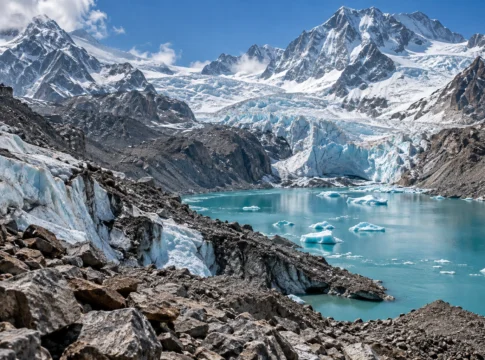
Scientists and environmental experts studying the glacier say nearly 95% of the glacier has already vanished, leaving behind fragmented ice patches and shrinking snowfields where a massive glacier once dominated the valley.
What tourists now witness in Sonmarg is no longer the mighty glacier that generations of Kashmiris remember. Instead, experts describe it as the fading remains of an ancient ice system collapsing under the pressure of climate change.
Prof. Ghulam Jeelani from the Earth Sciences Department at University of Kashmir summarized the situation bluntly, stating that Thajwas is now “a relict of a glacier,” with only remnants surviving from what was once a vast glacier system stretching across the valley.
A Glacier That Defined Sonmarg’s Identity
Located near Sonmarg, the Thajwas Glacier has long been one of Kashmir’s most recognizable natural attractions.
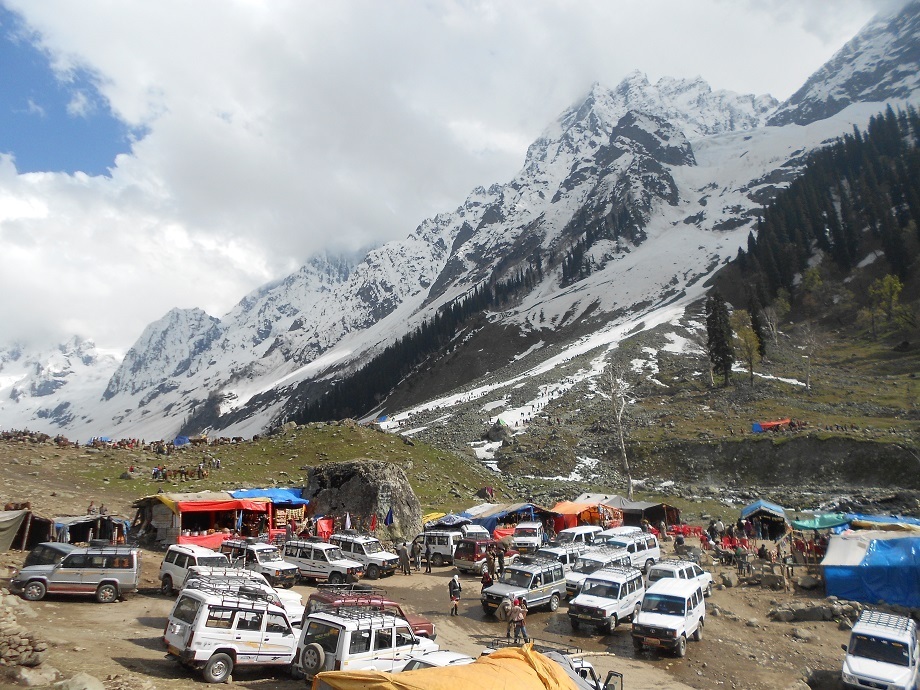
For decades, visitors traveled to Sonmarg to experience its permanent snowfields, glacial streams, alpine meadows, and trekking routes leading toward the glacier. Pony rides to Thajwas became part of Kashmir’s tourism identity, particularly during summer when snow remained visible despite rising temperatures elsewhere.
The glacier also played a critical ecological role.
Its meltwater sustained streams, contributed to local water systems, supported agriculture downstream, and helped maintain fragile Himalayan ecosystems dependent on seasonal glacial flow.
Today, however, the landscape is changing rapidly.
Areas once buried under thick snow and ice are increasingly exposed as barren rock, unstable slopes, and muddy terrain.
Why Thajwas Glacier Is Melting So Fast
Scientists say the destruction of Thajwas Glacier is not the result of a single factor but a combination of interconnected climate and human pressures.
1. Rising Temperatures Across the Himalayas
The Himalayan region is warming faster than many global averages, making glaciers particularly vulnerable.
Longer and hotter summers are accelerating surface melting, while warmer nights reduce the glacier’s ability to recover naturally.
Heatwaves that were once rare in Kashmir are now becoming more frequent and intense.
2. Snowless Winters Have Reduced Ice Formation
Traditionally, glaciers survive through a balance:
- Winter snowfall adds fresh ice.
- Summer melting removes part of it.
But recent winters in Kashmir have witnessed significantly reduced snowfall, weakening the glacier’s annual recharge cycle.
Without sufficient snow accumulation, glaciers lose more ice each summer than they gain during winter.
Scientists warn this imbalance is now pushing several smaller Himalayan glaciers toward irreversible decline.
3. Erratic Rainfall and Reduced Precipitation
Climate variability has disrupted traditional weather patterns across Jammu & Kashmir.
Rainfall deficits and irregular precipitation reduce moisture availability and weaken long-term glacier regeneration.
In some cases, rainfall is replacing snowfall even at higher altitudes — a dangerous trend for glacier survival because rain accelerates melting instead of building ice reserves.
4. Tourism Pressure Is Adding Ecological Stress
Environmentalists also point to increasing tourism pressure around Sonmarg.
Rapid infrastructure growth, unregulated tourist activity, vehicular emissions, waste generation, and ecological disturbance are intensifying stress on the fragile mountain ecosystem.
While tourism remains economically important for local communities, experts say sustainable tourism policies are urgently needed to reduce environmental damage in glacier-sensitive zones.
The Environmental Consequences Could Be Severe
The disappearance of Thajwas Glacier is not only a visual or tourism-related loss. Scientists warn it could trigger long-term ecological and water-related consequences across the region.
Threat to Water Security
Glaciers act as natural freshwater reservoirs.
During summer, glacial melt helps sustain streams and rivers that communities depend upon for:
- Drinking water
- Irrigation
- Livestock
- Hydropower generation
As glaciers shrink, river flows initially increase due to rapid melting, but eventually decline sharply once glacier mass becomes critically low.
This creates serious long-term risks for water availability in downstream regions.
Impact on Agriculture
Farmers in many Himalayan regions depend indirectly on glacier-fed water systems.
Reduced meltwater can affect:
- Crop irrigation
- Orchard productivity
- Soil moisture
- Rural livelihoods
Environmental researchers warn that glacier retreat could worsen future drought vulnerability in Kashmir.
Loss of Biodiversity
The glacier ecosystem supports unique alpine vegetation, microorganisms, and wildlife adapted to cold environments.
As snowlines retreat upward, these ecosystems face disruption, habitat loss, and ecological imbalance.
Sonmarg’s Tourism Identity Is Changing
Sonmarg’s reputation as a snow destination is deeply tied to the Thajwas Glacier.
Tour operators and locals increasingly report shorter snow seasons and reduced glacier visibility compared to previous decades.
If the glacier disappears entirely, the region could face:
- Declining tourist appeal
- Economic losses for local communities
- Reduced seasonal employment
- Changing tourism patterns
A Cultural and Emotional Loss for Kashmir
Beyond science and economics, glaciers hold deep emotional and cultural significance in Kashmir.
For generations, glaciers symbolized permanence, purity, and the enduring beauty of the Himalayas. Many locals remember summers when snowfields stretched widely across Sonmarg and icy winds dominated the valley.
The rapid disappearance of Thajwas has therefore become a painful symbol of environmental transformation unfolding across Kashmir.
Older residents increasingly describe the glacier’s decline as something unimaginable during earlier decades.
Scientists Warn the Glacier Could Disappear Within a Decade
Researchers monitoring Himalayan glacier systems say Thajwas may completely vanish within the next decade if current warming trends continue.
Environmental experts are now calling for:
- Stronger climate adaptation policies
- Scientific glacier monitoring
- Sustainable tourism regulation
- Reduced ecological pressure in mountain regions
- Greater public awareness about Himalayan climate vulnerability
Monitoring initiatives led by institutions including University of Kashmir are attempting to document glacier retreat and understand how changing climate patterns are reshaping the region’s hydrology.
Kashmir’s Glaciers Are Sending a Warning
The collapse of Thajwas Glacier is not an isolated environmental event.
Across the Himalayas, glaciers are retreating at alarming speeds due to global warming, threatening millions of people who depend on mountain water systems across South Asia.
Scientists increasingly describe Himalayan glaciers as “water towers of Asia” because they sustain major river systems critical for agriculture, drinking water, and energy production.
The shrinking of these glaciers therefore represents not only an ecological emergency but also a future human security challenge.
Conclusion
The near disappearance of Thajwas Glacier marks one of the clearest signs yet of Kashmir’s accelerating climate crisis.
What was once a vast river of ice defining the landscape of Sonmarg has now been reduced to scattered remnants struggling to survive rising temperatures and changing weather patterns.
For scientists, the glacier’s collapse is a warning.
For local communities, it is a visible transformation of their homeland.
And for policymakers, it is a reminder that climate change in the Himalayas is no longer a distant threat — it is unfolding now, in real time, across the mountains of Kashmir.