Sidhra Demolition Row Turns Political Flashpoint as NC MP Aga Ruhullah and PDP’s Iltija Mufti Target Government Over Accountability Crisis
By: Javid Amin | 21 May 22026
The controversy surrounding the recent demolition drive in Sidhra has intensified into a major political confrontation in Jammu & Kashmir, with Aga Ruhullah Mehdi openly criticizing the government led by Omar Abdullah for what he described as a troubling silence over the incident.
At the same time, Iltija Mufti escalated the attack by branding the demolition exercise a “Yogi model” being replicated in Jammu & Kashmir — a reference to the controversial bulldozer politics associated with Yogi Adityanath.
The issue has now evolved beyond a local demolition dispute into a wider debate over governance, accountability, public distrust, suppression of dissent, and the changing political character of post-2019 Jammu & Kashmir.
Aga Ruhullah Questions Government Silence
“People Cannot Be Left Without Answers”
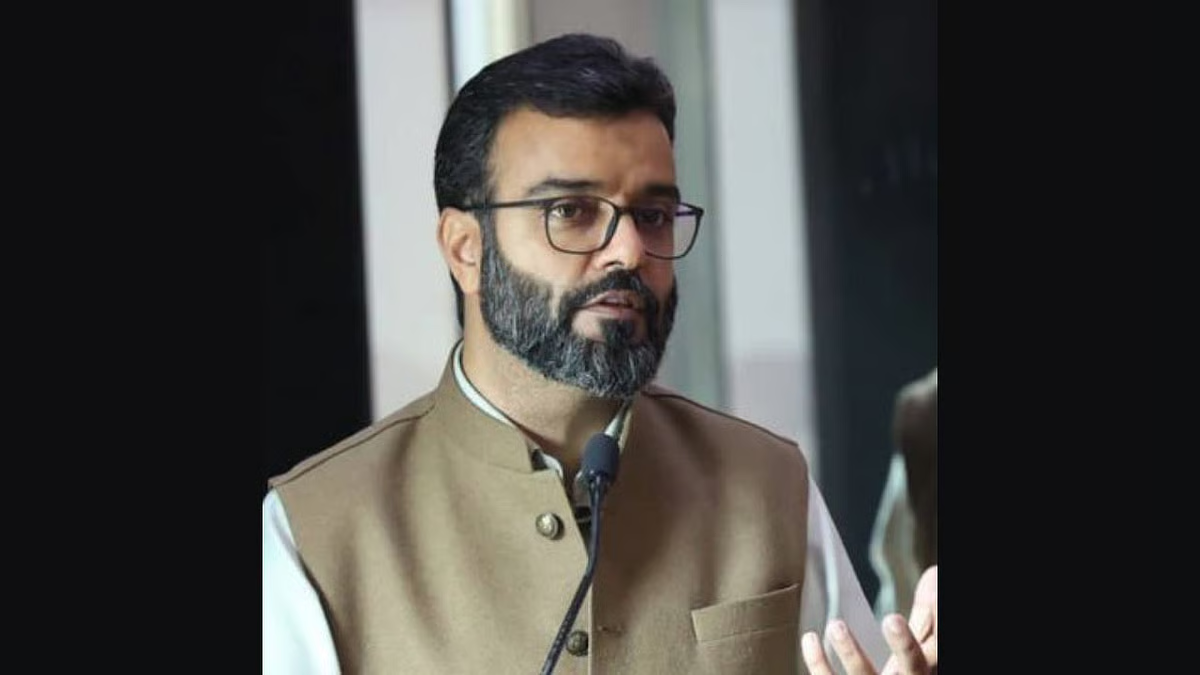
Aga Ruhullah Mehdi, who represents Srinagar in Parliament and belongs to the National Conference, delivered one of the strongest internal criticisms yet against the Omar Abdullah administration.
Ruhullah argued that the government’s failure to communicate immediately after the demolition has deepened public suspicion and anger.
According to him, elected representatives cannot remain silent while citizens demand answers.
He said the administration should have:
- Issued an official statement immediately
- Sent ministers or representatives to the affected area
- Clarified who ordered the demolition
- Explained the legal and administrative basis behind the action
Instead, he suggested, silence has created an atmosphere of confusion and mistrust.
“If Government Cannot Stop It, At Least Name Those Responsible”
One of Ruhullah’s most striking remarks was his demand for accountability even if the government claims limited control over such actions.
He questioned why authorities repeatedly fail either to prevent controversial demolitions or transparently explain who authorized them.
According to Ruhullah, if elected governments cannot intervene, they must at least clearly identify the agencies or officials responsible so citizens know whom to hold accountable.
This argument touches a sensitive political nerve in Jammu & Kashmir, where governance structures after 2019 are often criticized for blurred lines of authority between elected representatives and administrative institutions.
Repeated Demolitions Fueling Public Distrust
Ruhullah warned that incidents involving demolitions, evictions, and administrative crackdowns are no longer viewed as isolated events by the public.
Instead, many residents increasingly perceive them as part of a recurring governance pattern.
Trust Deficit Growing
The NC MP argued that repeated silence from institutions is creating a widening trust deficit between citizens and political leadership.
For many people, he implied, the issue is no longer only about property or legality — it is about whether elected governments still possess the ability or willingness to protect public interests.
This perception could become politically dangerous for mainstream parties attempting to maintain public credibility in an already fragile political environment.
Rise of “Cockroach Janata Party”: Ruhullah Points to Gen-Z Anger
In a politically symbolic remark, Ruhullah referred to the emergence of the so-called “Cockroach Janata Party” — an online youth satire trend reflecting growing cynicism toward political institutions.
Satire as Political Protest
Ruhullah described the phenomenon as a form of creative resistance by frustrated Gen-Z citizens who feel alienated from traditional political structures.
The use of satire, memes, parody slogans, and symbolic digital activism has become increasingly common among younger Kashmiris.
According to Ruhullah, such expressions should not be dismissed lightly because they reveal deeper emotional frustration with governance systems and political representation.
His remarks reflect a growing concern among mainstream politicians that younger voters are losing faith not just in governments, but in the broader democratic process itself.
Allegations of Suppression of Dissent
Ruhullah also alleged that peaceful criticism and dissenting voices are increasingly facing pressure through:
- Police interventions
- Legal restrictions
- Social media suspensions
- Administrative intimidation
He suggested that attempts to suppress non-violent criticism risk worsening alienation rather than restoring public order.
The remarks add to ongoing debates in Jammu & Kashmir about balancing security concerns with democratic freedoms and civil liberties.
PDP’s Iltija Mufti Intensifies Attack
While Ruhullah criticized the government from within the broader NC ecosystem, the sharpest external attack came from PDP leader Iltija Mufti.
“Yogi Model” Charge Against NC Government
Iltija Mufti accused the Omar Abdullah government of importing Uttar Pradesh-style “bulldozer politics” into Jammu & Kashmir.
By invoking the “Yogi model,” she drew a direct comparison with governance methods associated with Uttar Pradesh Chief Minister Yogi Adityanath, where demolition drives have often been projected as symbols of strong state action.
Her remarks framed the Sidhra demolition not as an isolated administrative exercise, but as part of a broader shift toward what she described as authoritarian governance.
PDP’s Political Strategy Behind the Attack
The PDP appears to be using the controversy to reposition itself politically.
Framing NC as Complicit
By accusing the NC government of adopting BJP-style governance tactics, PDP is attempting to:
- Portray NC as politically compromised
- Reclaim space as the stronger “resistance-oriented” regional voice
- Tap into public anger over administrative actions
- Differentiate itself from NC before future elections
The “Yogi model” phrase is politically loaded because it links local governance controversies directly with national ideological battles.
Why the Sidhra Demolition Has Become Politically Explosive
The intensity of political reactions reflects deeper anxieties within Jammu & Kashmir’s current political climate.
1. Governance Credibility Crisis
The controversy has revived questions about who truly controls decision-making in Jammu & Kashmir.
Critics argue that when governments fail to publicly explain controversial actions, citizens perceive elected leadership as powerless or disconnected.
2. Post-2019 Political Sensitivities
Since the abrogation of Abrogation of Article 370, administrative decisions involving land, demolitions, and enforcement have become especially sensitive.
Many residents view such actions through a larger political lens involving identity, representation, and autonomy.
3. Youth Alienation
Ruhullah’s comments about satire and Gen-Z frustration highlight a growing generational shift.
Young people increasingly use digital culture to express political disappointment, often bypassing traditional party structures entirely.
This creates new political challenges for mainstream parties struggling to maintain relevance among younger voters.
The Growing Narrative of Institutional Distrust
One recurring theme uniting both Ruhullah’s and Iltija Mufti’s criticism is distrust.
Silence as Political Damage
Opposition leaders argue that silence from institutions often causes greater damage than the original controversy itself.
Without transparent communication:
- Rumors spread rapidly
- Political polarization intensifies
- Public anger deepens
- Institutions lose legitimacy
This is especially significant in Jammu & Kashmir, where public trust in governance structures remains highly fragile.
NC Government Under Pressure
The Omar Abdullah administration now faces pressure from multiple fronts:
- Opposition criticism from PDP
- Internal discomfort voiced by leaders like Aga Ruhullah
- Public scrutiny over accountability
- Youth dissatisfaction amplified online
The government’s response in the coming days could determine whether the Sidhra demolition remains a localized controversy or evolves into a broader political movement around governance and accountability.
Broader Political Implications
Opposition Narrative Strengthening
The demolition issue may increasingly be used by opposition parties as evidence of governance failure and democratic disconnect.
Public Trust Becoming Central Election Issue
Future political battles in Jammu & Kashmir may revolve less around traditional slogans and more around questions of:
- Accountability
- Transparency
- Institutional responsiveness
- Protection of civil rights
Digital Youth Politics Emerging
The reference to satire movements indicates that political communication in Kashmir is changing rapidly, with younger generations using humor and online culture as tools of dissent.
Mainstream parties may struggle to engage this demographic unless they respond more transparently to public concerns.
Conclusion
The Sidhra demolition controversy has quickly transformed into a major political and governance flashpoint in Jammu & Kashmir.
Aga Ruhullah Mehdi’s criticism of government silence reflects growing anxiety within mainstream political circles about rising public distrust and institutional credibility.
Meanwhile, Iltija Mufti’s “Yogi model” attack has added a sharper ideological dimension to the debate, portraying the demolition as part of a broader authoritarian trend in governance.
At its core, the controversy is no longer only about a demolition drive. It is about accountability, communication, democratic legitimacy, and whether elected governments in Jammu & Kashmir still possess the public trust needed to govern effectively.
Without transparency and clear answers, the political fallout from the Sidhra issue is likely to continue expanding far beyond the original incident.


