Iran Missile Strikes Near Dimona Nuclear Site Injure 180: Escalation Risks Surge
By: Javid Amin | 22 March 2026
Direct Strike Near a Nuclear Site: A Dangerous New Phase
The Iran–Israel conflict has crossed into one of its most dangerous thresholds yet.
Missile strikes launched by Iran landed near Dimona and Arad in southern Israel, close to the highly sensitive Shimon Peres Negev Nuclear Research Center.
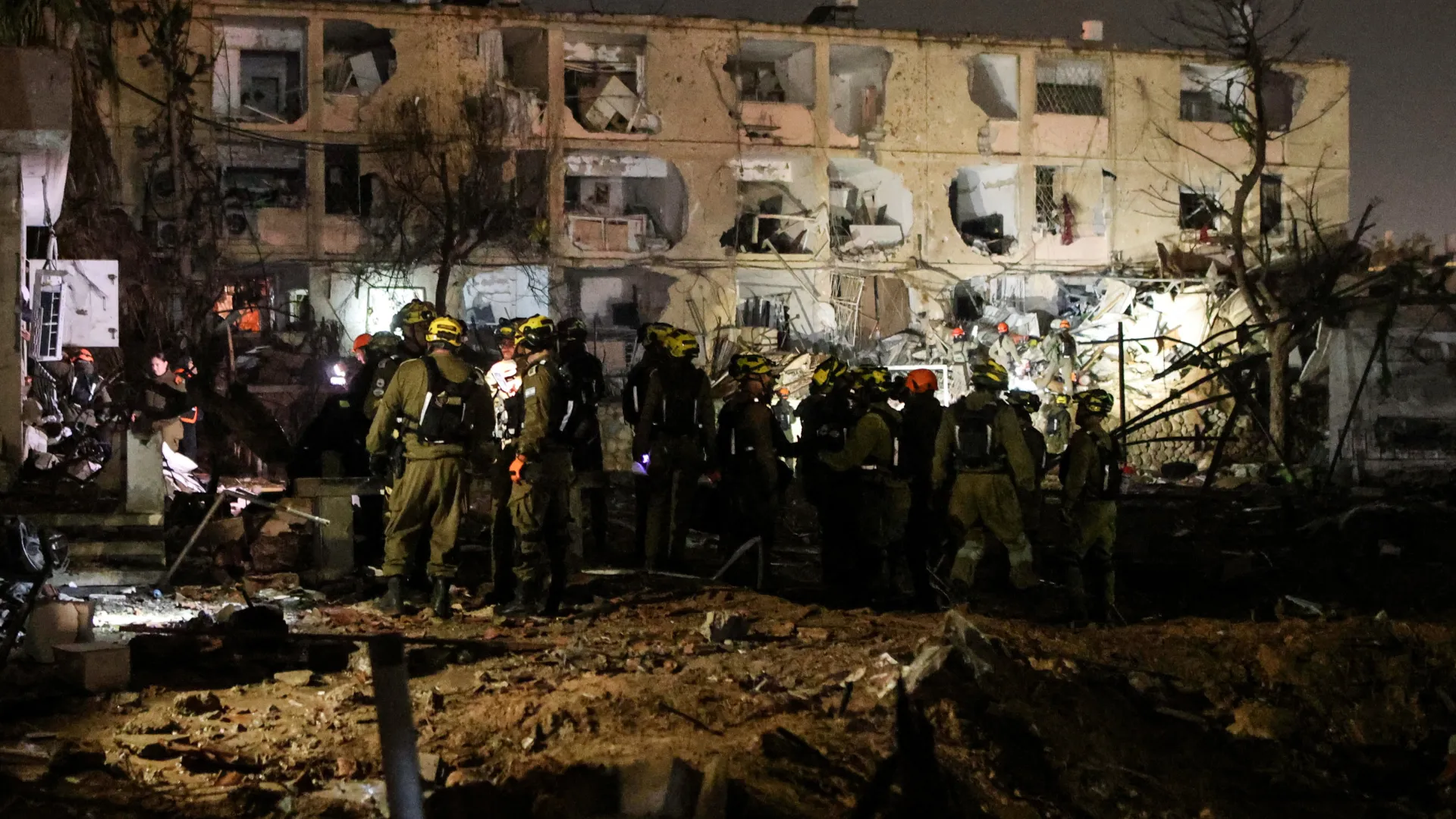
At least 180 people were injured, most of them civilians, as residential areas suffered heavy damage.
This is not just another missile exchange.
It is the closest the current war has come to a nuclear-risk scenario.
What Happened: Ground Reality of the Strikes
Location and Impact
- Date: March 21, 2026
- Primary targets: Dimona and Arad
- Casualties:
- 116 injured in Arad (7 serious)
- 64 injured in Dimona (1 serious)
Missiles struck:
- Residential neighborhoods
- City centers
- Areas in proximity to nuclear-linked infrastructure
Eyewitness accounts described:
- “Fireballs falling from the sky”
- Massive shockwaves
- Panic across civilian zones
Damage Profile
- Multiple buildings destroyed
- Infrastructure damage in urban areas
- Emergency services overwhelmed
Importantly:
There are no confirmed reports of direct damage to the nuclear facility itself—but proximity alone has triggered global alarm.
Why Dimona Matters: The Nuclear Factor
The Shimon Peres Negev Nuclear Research Center is widely believed to be central to Israel’s strategic deterrence capability.
A strike near such a site introduces several risks:
1. Accidental Escalation
Even a near miss could be misinterpreted as a deliberate nuclear targeting attempt.
2. Environmental Hazard
Any damage to sensitive infrastructure could risk radiological contamination.
3. Strategic Red Lines
Nuclear-linked sites are often considered “no-go zones” in conflict.
Crossing that threshold—even indirectly—changes escalation dynamics.
Trigger: Retaliation for Natanz Strike
Iran framed the attack as retaliation for strikes on its own nuclear infrastructure, particularly the Natanz Nuclear Facility.
This reflects a dangerous symmetry:
- Israel/U.S. target Iran’s nuclear assets
- Iran responds near Israel’s nuclear site
This creates a tit-for-tat pattern involving nuclear-sensitive locations
Strategic Context: War Entering Week 4
The broader conflict between:
- Iran
- Israel
- United States
has now entered its fourth week, with escalating intensity.
At the same time:
- US leadership, under Donald Trump, has threatened strikes on Iranian power plants
- The Strait of Hormuz remains contested
- Gulf energy infrastructure continues to face attacks
Civilian Toll: The Hidden Cost
The Dimona–Arad strikes highlight a consistent pattern:
Civilians are bearing the brunt of escalation
In Israel:
- Injuries and trauma
- Urban damage
- Constant missile threat
In Iran:
- Airstrikes affecting cities
- Economic pressure
- Infrastructure damage
Across the region:
- Fear and instability are spreading
- Civilian infrastructure is increasingly exposed
Strategic Implications: Why This Changes Everything
1. Nuclear Risk Enters the Equation
This is the most critical shift.
Even without direct damage, proximity to nuclear infrastructure:
- Raises global alarm
- Increases miscalculation risk
- Shortens decision timelines for retaliation
2. Escalation Ladder Is Narrowing
Earlier phases allowed for:
- Controlled strikes
- Indirect retaliation
Now:
- Targets are more sensitive
- Consequences are less predictable
3. Psychological Warfare Intensifies
Striking near Dimona sends a message:
No strategic asset is beyond reach
This has implications for deterrence on both sides.
Global Reaction: Alarm and Division
Diplomatic Fallout
- Calls for restraint increasing globally
- Concerns over nuclear escalation rising
- Major powers divided on response
Market Reaction
- Oil prices remain volatile
- Energy markets reacting to heightened risk
- Investors shifting to safe assets
Risk Outlook: What Comes Next
🔴 Scenario 1: Nuclear Escalation Risk (Low Probability, High Impact)
- Further strikes near nuclear facilities
- Misinterpretation leads to extreme retaliation
🟡 Scenario 2: Intensified Conventional War (Most Likely)
- Continued strikes on cities and infrastructure
- Rising civilian casualties
- Prolonged conflict
🔴 Scenario 3: Regional Expansion
- Gulf states further targeted
- Multi-front war involving proxies
🟢 Scenario 4: Forced De-escalation
- International pressure leads to talks
- Reduced targeting of sensitive sites
Strategic Conclusion: A Red Line Has Been Approached
The strikes near Dimona mark a turning point.
Not because of physical damage—but because of what they represent.
The war is now dangerously close to involving nuclear-sensitive thresholds.
Final Takeaway
- Iran has demonstrated willingness to strike near critical Israeli infrastructure
- Israel continues targeting Iran’s strategic assets
- The United States is raising stakes with escalation threats
And the most important reality:
The margin for error is shrinking rapidly.
One miscalculation—from either side—could shift this conflict from a high-intensity war to a catastrophic regional crisis with global consequences.