Iran Rejects “US Talks” Claim as Pakistan Delivers Trump’s 15-Point Ceasefire Plan: Inside the High-Stakes Diplomatic Chessboard
By: Javid Amin | 25 March 2026
A War of Words Before a War of Decisions
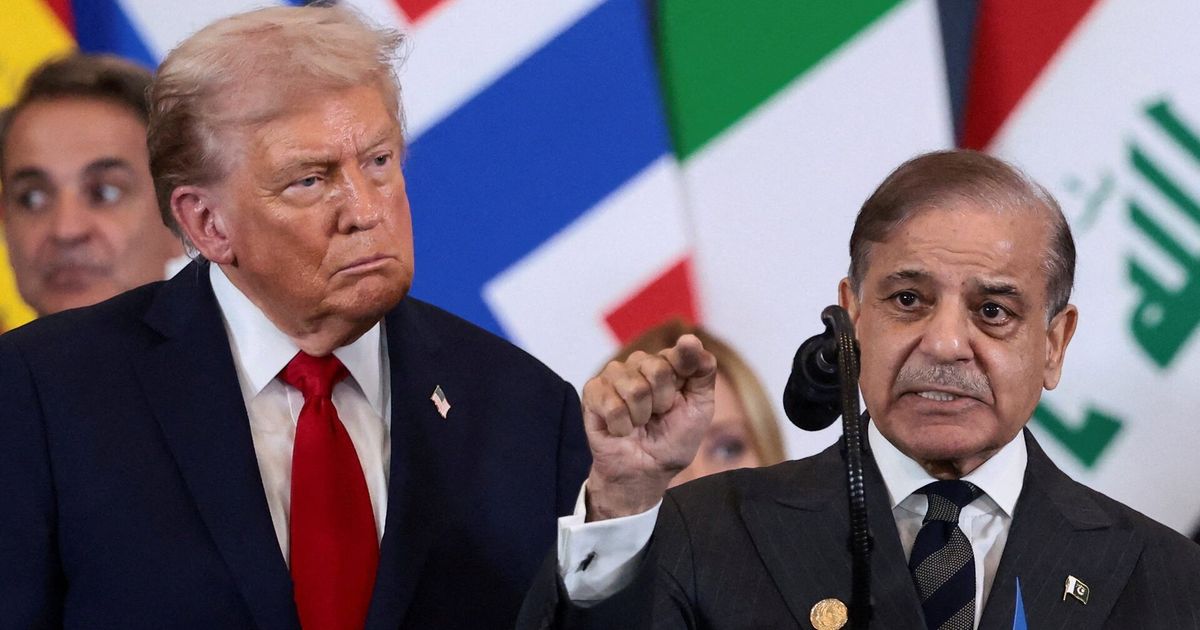
In one of the most consequential geopolitical developments unfolding in West Asia, Iran has firmly denied claims made by Donald Trump that Tehran and Washington engaged in “productive talks.” At the same time, a surprising diplomatic channel has emerged—Shehbaz Sharif’s government has stepped forward, delivering what is being described as a 15-point ceasefire proposal reportedly drafted under Trump’s direction.
The contradiction is striking. On one side, Washington signals progress. On the other, Tehran shuts the door on even indirect engagement. Between them stands Pakistan—attempting to transform itself into a bridge in one of the world’s most volatile conflicts.
This is not merely a disagreement over facts. It is a layered geopolitical moment—defined by signaling, positioning, and strategic ambiguity—where every statement carries implications far beyond diplomacy.
Iran’s Firm Denial: Drawing Red Lines Before Dialogue
At the center of the controversy is a categorical denial issued by Reza Amiri Moghadam, who stated unequivocally that no direct or indirect negotiations have taken place between Iran and the United States.
This denial serves multiple purposes.
First, it reinforces Iran’s longstanding diplomatic posture: negotiations cannot occur under pressure or after aggression. Iranian officials maintain that any pathway to dialogue must begin with Washington acknowledging its role in initiating hostilities.
Second, it prevents the perception of weakness domestically. In Iran’s political ecosystem, appearing open to talks—especially under military pressure—can be interpreted as strategic concession.
Third, it reframes the narrative. By rejecting Trump’s claim, Tehran is signaling that any diplomatic progress must occur on its terms, not through unilateral announcements from Washington.
Yet, in the same breath, Iran has acknowledged receiving the ceasefire proposal—suggesting that while talks may not be happening, communication channels remain open.
This distinction—between “talks” and “messages”—is where the real diplomacy is unfolding.
The Trump Doctrine: Signaling Progress Without Negotiation
When Donald Trump claimed that “productive talks” had taken place, it was less a factual statement and more a strategic signal.
In international relations, such signaling serves several objectives:
- Projecting control: Suggesting diplomatic progress can stabilize markets and reassure allies.
- Shaping narrative dominance: It positions the US as proactive and solution-oriented.
- Testing adversary response: Iran’s denial itself becomes a data point in understanding Tehran’s red lines.
The reported 15-point ceasefire plan fits neatly into this approach. It allows Washington to appear engaged in conflict resolution without making immediate concessions.
However, the disconnect between rhetoric and reality also risks eroding credibility—particularly when contradicted so publicly.
Pakistan Steps In: The Rise of a “Bridge State”
The most unexpected development in this unfolding crisis is Pakistan’s emergence as a mediator.
Under Shehbaz Sharif, Islamabad has positioned itself as a neutral facilitator—offering to host talks and physically delivering the ceasefire proposal to Tehran.
This move reflects a broader strategic recalibration.
Why Pakistan Matters Now
- Trusted by Tehran: Pakistan maintains relatively stable relations with Iran, allowing for diplomatic access.
- Acceptable to Washington: While not a formal ally in this conflict, Pakistan remains within the US diplomatic orbit.
- Geostrategic Location: Positioned at the crossroads of South Asia and the Middle East, Pakistan is uniquely placed to act as an intermediary.
By stepping into this role, Pakistan is attempting to elevate its global diplomatic standing—transforming from a regional actor into a “bridge state” capable of facilitating high-stakes negotiations.
However, mediation comes with risks. Failure could damage credibility, while success would significantly reshape Pakistan’s international profile.
Inside the 15-Point Ceasefire Plan: What We Know
While the full details of the proposal remain undisclosed, diplomatic sources suggest that the framework addresses multiple layers of the conflict:
1. Immediate De-escalation
- Suspension of military strikes
- Reduction in troop mobilization
2. Security Guarantees
- Mechanisms to prevent escalation between Iran, the US, and Israel
- Potential monitoring frameworks involving third parties
3. Regional Stability Measures
- Engagement with Gulf states
- De-escalation of proxy conflicts
4. Economic Considerations
- Protection of energy routes
- Stabilization of oil exports
5. Future Dialogue Pathways
- Indirect negotiation channels
- Gradual confidence-building measures
Yet, one critical issue remains unresolved: accountability.
Iran insists that any ceasefire must include acknowledgment from Washington regarding the initiation of hostilities. Without this, even the most comprehensive plan may fail to gain traction.
Diplomatic Channels: The Era of Indirect Negotiations
The current situation highlights a key feature of modern geopolitics—negotiations without negotiation tables.
Iran’s emphasis on “friendly countries” facilitating dialogue suggests a model of shuttle diplomacy, where intermediaries carry messages between adversaries.
Countries likely to play roles include:
- Pakistan
- Turkey
- Qatar
This approach allows both sides to maintain political distance while still exploring diplomatic options.
It is a method rooted in precedent. From Cold War backchannels to Middle East peace processes, indirect communication has often preceded formal agreements.
In this case, however, the absence of trust makes the process significantly more fragile.
Military Calculations: Pressure Without Full-Scale War
Iran’s rejection of talks does not necessarily signal an immediate escalation—but it does indicate a willingness to sustain pressure.
Iran’s Likely Strategy
- Maintain defensive readiness
- Leverage regional allies and proxy networks
- Avoid actions that could trigger full-scale war
US and Israeli Approach
While not officially detailed here, strategic logic suggests:
- Continued targeted strikes to limit Iran’s capabilities
- Controlled escalation to avoid broader conflict
- Monitoring Pakistan’s mediation efforts
This creates a delicate equilibrium—where all sides apply pressure but stop short of crossing thresholds that would trigger uncontrollable escalation.
Economic Shockwaves: Oil, Trade, and Global Anxiety
Beyond diplomacy and military calculations lies the economic dimension—arguably the most immediate global impact.
The Strait of Hormuz, a critical chokepoint for global energy supplies, remains at the center of concern.
Even the perception of instability can trigger:
- Rising oil prices
- Supply chain disruptions
- Inflationary pressures worldwide
For countries like India, heavily dependent on energy imports, the stakes are particularly high.
A successful ceasefire framework would not only reduce military tensions but also stabilize global markets—a key incentive for international stakeholders to support mediation efforts.
Ground Reality: Positioning Over Progress
Despite the flurry of diplomatic activity, the situation on the ground remains largely unchanged.
Iran’s Position
- No talks with the US
- Open to mediation through friendly nations
US Position
- Signals willingness for dialogue
- Promotes ceasefire framework
Pakistan’s Role
- Active mediator
- Facilitator of communication
Outcome So Far
- No breakthrough
- Continued strategic positioning
This phase of the conflict is less about resolution and more about defining the terms of eventual negotiation.
The Regional Factor: Who Else Could Step In?
The trajectory of this crisis may ultimately depend on whether other regional powers join the mediation effort.
Countries such as Saudi Arabia, Turkey, and Qatar have both the influence and the incentive to push for de-escalation.
Their involvement could:
- Broaden the legitimacy of mediation
- Introduce additional diplomatic leverage
- Increase pressure on both Iran and the US to compromise
However, competing interests among these states could also complicate the process.
Strategic Takeaways: What Happens Next?
The coming weeks will likely revolve around three critical questions:
1. Will Iran Accept Pakistan as a Credible Mediator?
Iran’s openness to “friendly countries” suggests a possibility—but acceptance is not guaranteed.
2. Will the US Adjust Its Ceasefire Proposal?
Incorporating Iran’s demand for acknowledgment could be key to unlocking negotiations.
3. Will Regional Powers Join the Process?
A broader coalition could transform a bilateral standoff into a multilateral peace effort.
Until these questions are answered, the situation will remain in a state of controlled uncertainty.
Conclusion: A Conflict Defined by Signals, Not Settlements
What we are witnessing is not yet diplomacy in its traditional sense—it is pre-diplomacy.
Statements, denials, proposals, and mediation offers are all part of a larger process of testing boundaries and establishing leverage.
Iran’s rejection of talks is not the end of dialogue—it is the setting of conditions.
The US’s claim of progress is not evidence of negotiation—it is an attempt to shape momentum.
Pakistan’s mediation is not a solution—it is an opening.
The real negotiations, if they come, will likely emerge quietly—through backchannels, intermediaries, and incremental trust-building.
Until then, the world watches a high-stakes geopolitical chess game unfold—where every move is calculated, every message is strategic, and every silence speaks volumes.
