Kashmir Climate Crisis 2026: Vanishing Snow, Glacier Retreat & Extreme Weather Threaten Valley
By: Javid Amin | 23 May 2026
From Snowy Winters to Scorching Summers, Kashmir’s Climate Balance Is Rapidly Breaking Down
Kashmir’s Climate Script Is Being Rewritten
For generations, Kashmir’s identity has been deeply tied to its seasons — harsh snow-filled winters, cool springs, mild summers, and colorful autumns. But that familiar climate rhythm is now breaking apart.
Winters are arriving late or fading altogether. Summers are growing hotter and longer. Rainfall has become increasingly unpredictable, while glaciers that once sustained rivers and agriculture are retreating at dangerous speeds.
Across Jammu & Kashmir, scientists, farmers, and environmental experts are warning that the region is entering a new climatic reality — one that threatens water security, agriculture, biodiversity, tourism, and even the cultural fabric of the Valley.
What was once viewed as gradual environmental change is now unfolding as a visible crisis affecting everyday life across Kashmir.
Kashmir’s Winters Are No Longer Predictable
The Valley’s iconic winters have become increasingly erratic over the last decade. Traditionally, the harshest winter period known as Chillai Kalan — the 40-day deep winter stretch beginning in late December — brought consistent snowfall, frozen lakes, and prolonged cold waves.
Today, that pattern is changing dramatically.
Snowfall is often delayed, weaker than normal, or concentrated in sudden intense bursts instead of gradual seasonal accumulation. Plains that once remained covered in snow for weeks now sometimes witness barely any snowfall during entire winter seasons.
In some years, heavy snowfall arrives abruptly after prolonged dry periods, disrupting transport, power supply, and daily life rather than replenishing water reserves steadily.
Environmental observers say these fluctuations are a sign of weakening winter stability across the western Himalayan region.
The consequences extend far beyond aesthetics or tourism. Snowfall in Kashmir acts as a natural water reservoir, feeding rivers, springs, groundwater systems, and agricultural networks during warmer months. Reduced or irregular snowfall directly affects water availability throughout the year.
Rainfall Patterns Have Turned Increasingly Erratic
Kashmir’s rainfall cycle is also becoming less predictable.
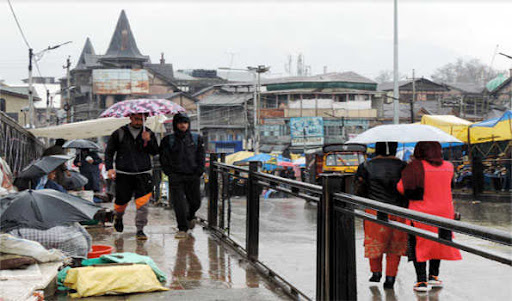
Rains now frequently arrive at unusual times, damaging orchards and crops during sensitive agricultural periods. At the same time, critical spring precipitation — essential for farming and groundwater recharge — often remains insufficient.
This imbalance creates a dangerous cycle where some areas face sudden flooding while others struggle through prolonged dry spells.
Farmers across the Valley report growing uncertainty around sowing seasons, irrigation planning, and crop management. Traditional agricultural calendars that communities relied upon for generations are losing reliability as climate patterns shift unpredictably.
The erratic rainfall is also increasing the frequency of flash floods, landslides, and urban waterlogging incidents, particularly in vulnerable areas with poor drainage and unchecked urban expansion.
Kashmir’s Summers Are Becoming Hotter and Longer
The Valley, once known for its mild summers, is now witnessing rising temperatures and prolonged heat periods.
Longer dry spells and unusually warm conditions are becoming increasingly common, especially during peak summer months. Urban centers are experiencing intensified heat stress, while rural areas face mounting pressure on water supplies and agricultural productivity.
Environmental experts warn that rising temperatures are accelerating soil moisture loss, increasing evaporation rates, and placing additional strain on rivers and wetlands.
The warming trend is especially alarming because the Himalayan ecosystem is highly sensitive to temperature change. Even small increases in average temperatures can trigger large-scale ecological disruptions.
Scientists studying the Himalayan region have repeatedly warned that the mountains are warming at nearly twice the rate of the broader Indian subcontinent, amplifying weather instability and precipitation extremes.
Glacier Retreat Is Emerging as Kashmir’s Biggest Climate Threat
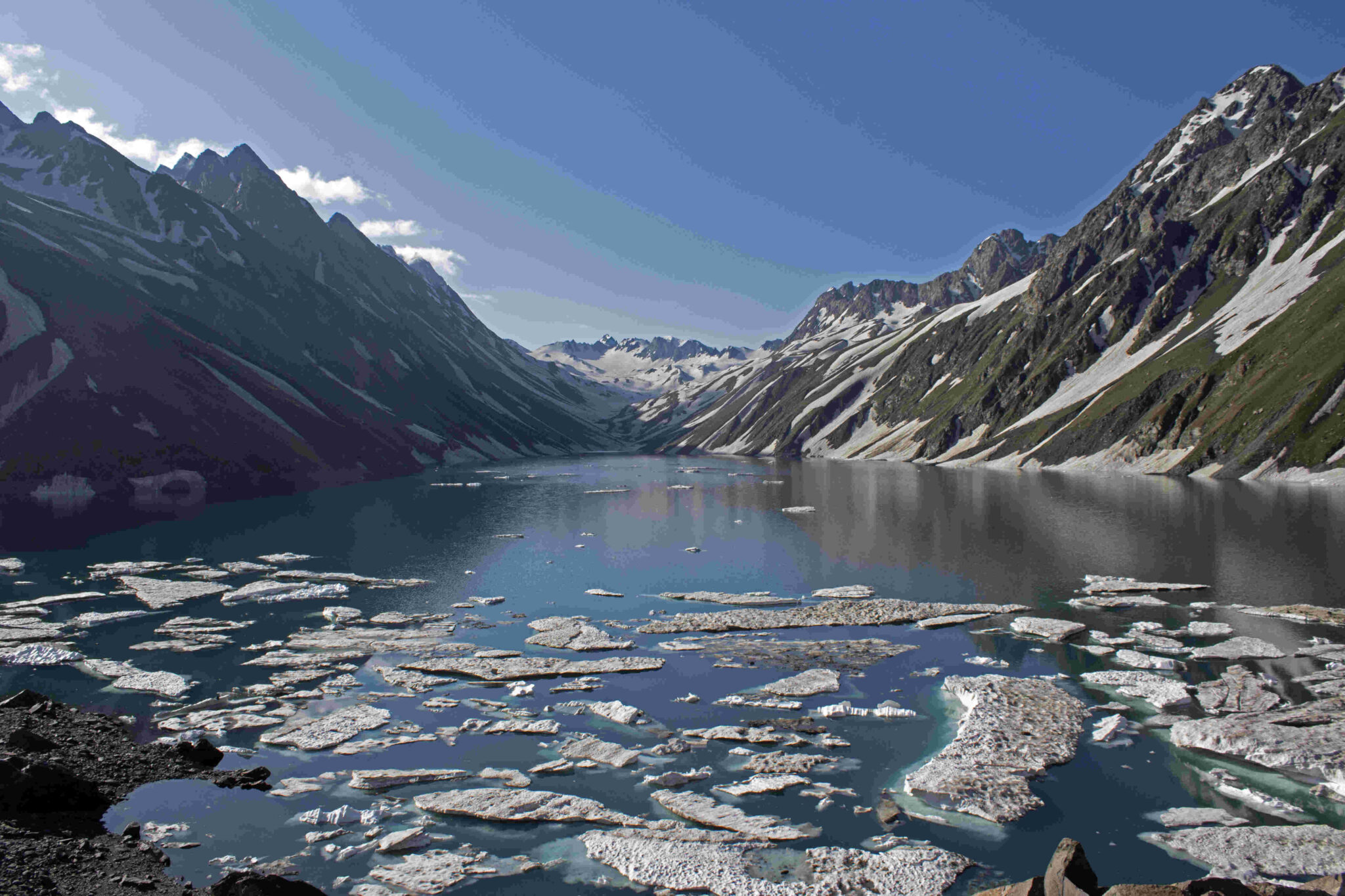
One of the clearest indicators of Kashmir’s climate emergency is the rapid retreat of glaciers.
Research and environmental monitoring suggest that nearly 30 per cent of glacier cover in the region has disappeared over the last six decades. Among the most concerning examples is the famous Kolahoi Glacier, often referred to as Kashmir’s “water tower.”
Scientists estimate that Kolahoi Glacier is shrinking by roughly 35 meters annually.
The glacier feeds vital river systems including the Jhelum River and contributes indirectly to broader Himalayan hydrology connected with the Chenab River basin.
As glaciers retreat, river flows initially become unstable due to accelerated melting. Over time, however, declining glacier mass threatens long-term water availability for millions of people dependent on Himalayan rivers.
Experts warn that if warming trends continue unchecked, parts of the western Himalayan cryosphere could face severe depletion by the end of the century.
Extreme Weather Events Are Increasing Across J&K
The growing climate crisis is already visible in the rising number of extreme weather events across Jammu & Kashmir.
Between 2010 and 2022, the region reportedly recorded thousands of climate-related incidents, including floods, flash floods, cloudbursts, avalanches, landslides, and severe storms. Hundreds of lives were lost during this period, while infrastructure, homes, roads, and agricultural lands suffered repeated damage.
The devastating 2014 floods remain one of the strongest reminders of Kashmir’s climate vulnerability. Since then, experts say weather systems have become increasingly volatile.
Glacial lake outburst floods (GLOFs) are also emerging as a serious long-term concern. As glaciers melt rapidly, unstable glacial lakes form at high altitudes. If these lakes burst, they can unleash catastrophic floods downstream with little warning.
Apple Orchards and Agriculture Under Severe Stress
Climate instability is directly threatening Kashmir’s agriculture-driven economy.
The Valley’s globally recognized apple industry depends heavily on consistent winter chilling hours. Apple trees require prolonged cold conditions for healthy flowering and fruit development. Warmer winters and erratic snowfall are reducing these chilling periods, affecting both yield and fruit quality.
Farmers say changing weather has increased disease outbreaks, pest attacks, and moisture stress in orchards.
Meanwhile, rice cultivation is also under pressure due to irregular irrigation supply and fluctuating rainfall patterns. Saffron farmers in areas like Pampore continue to struggle with declining productivity linked to reduced autumn moisture and rising temperatures.
Agricultural experts warn that if current trends continue, farmers may eventually be forced to shift crop varieties, alter sowing cycles, or abandon traditional farming patterns altogether.
Water Security Risks Are Growing Across Kashmir
The climate crisis is also becoming a water crisis.
Many natural springs across Kashmir are witnessing declining discharge levels, while reduced snow accumulation threatens summer water availability. Rural communities that depend on spring-fed systems are increasingly vulnerable during dry periods.
Shrinking glaciers and unstable precipitation patterns also threaten hydropower generation, irrigation systems, and drinking water infrastructure.
As river flows become more unpredictable, both energy production and agricultural planning face rising uncertainty.
Environmental experts warn that future conflicts over water access may intensify if conservation and adaptation measures are not implemented urgently.
Climate Change Is Reshaping Kashmir’s Culture and Identity
Beyond environmental and economic impacts, climate change is also affecting Kashmir’s cultural identity.
Traditional winter experiences — frozen lakes, thick snow cover, kangris, winter gatherings, and seasonal rhythms — have long shaped Kashmiri life, folklore, cuisine, and social traditions.
As winters weaken and weather becomes increasingly unstable, many residents fear that future generations may grow up disconnected from the seasonal patterns that once defined life in the Valley.
The emotional and cultural impact of disappearing winters is becoming an increasingly discussed aspect of Kashmir’s climate crisis.
Global Climate Drivers Are Intensifying Local Risks
Climate scientists say Kashmir’s changing weather patterns are linked to broader global climate processes.
One major concern is the possibility of an intense El Niño cycle influencing South Asian weather systems. Strong El Niño conditions often weaken India’s monsoon and contribute to drought-like situations across parts of the subcontinent.
At the same time, global warming continues to accelerate Himalayan temperature rise, increasing glacier melt and destabilizing precipitation cycles.
Environmental researchers warn that mountain ecosystems like Kashmir are among the world’s most vulnerable climate zones because of their dependence on snow, glaciers, and fragile hydrological systems.
Comparative Snapshot: Kashmir’s Climate Transformation
| Climate Pattern | Earlier Trend | Current Reality (2026) | Future Risk |
|---|---|---|---|
| Winter Snowfall | Predictable and stable | Delayed, uneven, sudden bursts | Water cycle disruption |
| Summer Heat | Mild and shorter | Longer, hotter, drier | Heat stress and crop loss |
| Rainfall | Seasonal and reliable | Erratic and misplaced | Floods and droughts |
| Glacier Stability | Relatively stable | Rapid retreat underway | Severe water shortages |
What Kashmir Must Do Now
Environmental experts believe adaptation is still possible — but the window for meaningful action is narrowing.
Key recommendations include:
Climate-Resilient Agriculture
- Introduce heat- and drought-resistant crop varieties
- Modernize irrigation systems
- Promote scientific orchard management
Water Conservation
- Expand rainwater harvesting projects
- Restore wetlands and natural springs
- Improve glacier monitoring systems
Sustainable Development
- Regulate unchecked urban expansion
- Strengthen forest conservation measures
- Reduce ecological damage from unplanned tourism
Disaster Preparedness
- Develop early warning systems for floods and GLOFs
- Improve climate forecasting infrastructure
- Build resilient rural and urban planning systems
Public Awareness & Policy Reform
- Increase climate education initiatives
- Push for stronger environmental safeguards
- Expand regional climate adaptation funding
Kashmir Stands at a Climate Crossroads
Kashmir’s climate story is no longer about distant scientific projections — it is unfolding in real time.
Vanishing snow, shrinking glaciers, rising heat, erratic rainfall, and mounting water stress are transforming not only the Valley’s landscape but also its economy, traditions, and future security.
The Himalayan region has entered a period of deep environmental uncertainty, and Kashmir now stands at the frontline of that crisis.
Whether the Valley can adapt successfully will depend on how urgently governments, scientists, communities, and policymakers respond to one of the most serious environmental challenges in its modern history.