A Political Earthquake: AAP’s Rajya Sabha Bloc Splits
By: Javid Amin | 24 April 2026
In one of the most dramatic political developments in recent years, seven out of ten Rajya Sabha MPs from the Aam Aadmi Party have formally broken ranks and announced a merger with the Bharatiya Janata Party.
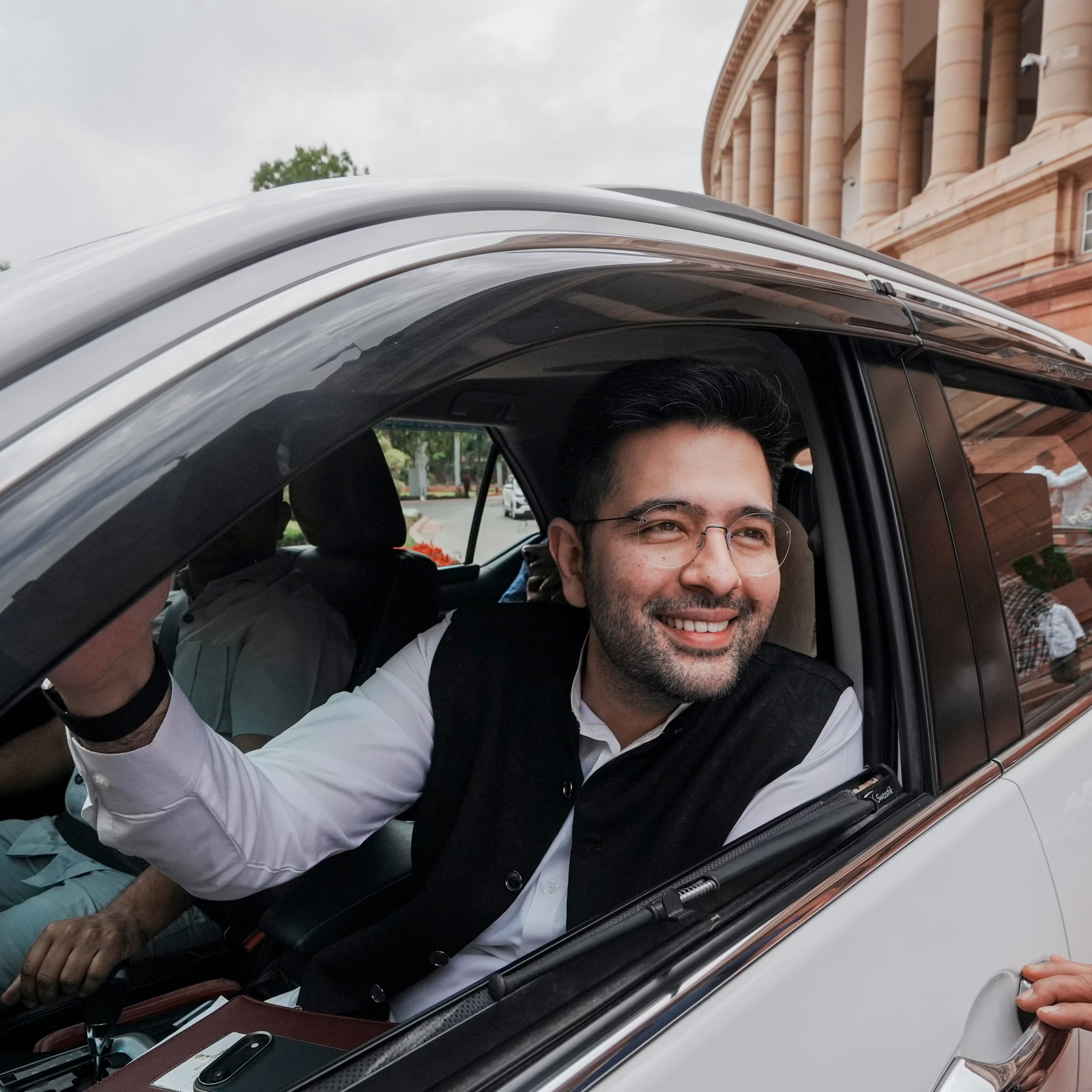
Led by Raghav Chadha, the rebellion has reduced AAP’s strength in the Upper House to just three MPs—delivering a severe institutional and symbolic blow to Arvind Kejriwal.
What Exactly Happened on April 24, 2026
At a high-stakes press conference, Raghav Chadha, alongside Sandeep Pathak and Ashok Mittal, declared that two-thirds of AAP’s Rajya Sabha MPs had invoked constitutional provisions to merge with BJP.
Defectors List
- Raghav Chadha
- Ashok Mittal
- Sandeep Pathak
- Harbhajan Singh
- Rajinder Gupta
- Vikram Sahney
- Swati Maliwal
Remaining with AAP
- Sanjay Singh
- Narain Dass Gupta
- Balbir Singh Seechewal
The defectors reportedly submitted formal letters to the Rajya Sabha Chairman, completing the legal process for merger recognition.
The Legal Masterstroke: Anti-Defection Law
This move is not just political—it’s constitutional.
Under India’s anti-defection framework (Tenth Schedule), a two-thirds split allows legislators to merge with another party without disqualification.
By ensuring seven out of ten MPs moved together, the defectors:
- Retain their Rajya Sabha seats
- Avoid disqualification
- Secure immediate political legitimacy
For the Bharatiya Janata Party, this is a strategic legislative gain, strengthening its position in the Upper House.
Immediate Political Fallout
AAP’s Collapse in Rajya Sabha
AAP’s presence drops from 10 MPs to just 3—effectively shrinking its voice in national lawmaking.
Kejriwal’s Counterattack
Arvind Kejriwal has accused BJP of:
- “Betraying Punjabis again”
- Engineering a split using pressure tactics
- Using Raghav Chadha as a “political tool”
BJP’s Strategic Win
The BJP not only gains numbers but also:
- Weakens a key opposition voice
- Gains momentum ahead of future legislative battles
- Reinforces its dominance in Parliament
Punjab: The Real Battleground
The political shockwaves are most intense in Punjab.
Six of the seven defectors were elected from Punjab (2022)—making this a direct hit on AAP’s strongest state.
What This Means for Bhagwant Mann
- Increased political pressure
- Questions over party cohesion
- Risk of administrative instability
Punjab, once AAP’s growth engine, could now become its biggest vulnerability.
Why Did This Split Happen?
1️⃣ Internal Power Struggles
The removal of Raghav Chadha as deputy leader in Rajya Sabha signaled internal friction.
2️⃣ Investigative Pressure
Enforcement Directorate scrutiny on figures like Ashok Mittal reportedly added external pressure.
3️⃣ Ideological Drift Claims
Defectors argue AAP has:
- “Strayed from its founding principles”
- Centralized decision-making
- Prioritized leadership over cadre
Whether these claims are genuine or strategic justifications remains contested.
Strategic Impact: AAP at a Crossroads
National Ambitions Crippled
AAP’s projection as a national alternative suffers a major credibility hit.
Delhi Under Pressure
After electoral setbacks, the पार्टी must now defend its governance legacy more aggressively.
Isolation Risk
With reduced parliamentary strength, AAP risks marginalization unless it recalibrates.
What Are AAP’s Options Now?
1️⃣ Consolidate Core States
Focus on governance delivery in Delhi and Punjab—jobs, health, education.
2️⃣ Rebuild Political Narrative
Shift from expansion to performance-driven credibility.
3️⃣ Forge Alliances
Engage with regional القوى to maintain parliamentary relevance.
The Bigger Picture: Narrative vs Reality
This defection is not just arithmetic—it’s psychological.
- It signals vulnerability within AAP
- It strengthens BJP’s image of inevitability
- It reshapes opposition dynamics nationally
If this narrative sustains, AAP risks being reframed from a “national challenger” to a regional player.
Bottom Line
The defection led by Raghav Chadha marks a turning point in Indian politics.
For Arvind Kejriwal, the challenge is existential:
- Rebuild trust or risk political contraction
- Deliver governance or lose narrative control
Because in politics, numbers matter—but perception decides survival.