Avalanche Disrupts Srinagar–Ladakh Highway: Vehicles Damaged, Traffic Halted
By: Javid Amin | 25 April 2026
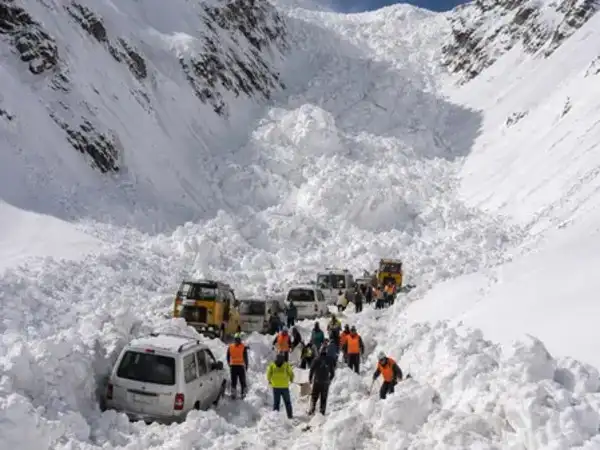
A sudden avalanche struck the vital Srinagar–Ladakh Highway on Sunday, damaging at least nine vehicles and forcing authorities to halt traffic along one of the most strategically important mountain routes in northern India.
The incident occurred along a high-risk stretch near the Zoji La Pass, a corridor known for frequent snow slides during seasonal transitions. While no fatalities have been reported so far, the incident triggered panic among commuters and underscores the persistent dangers of Himalayan travel.
What Happened: Avalanche Hits Moving Traffic
According to initial ground reports, the avalanche descended अचानक on a convoy of vehicles navigating the highway. Several cars and utility vehicles were caught in the snow and debris, sustaining visible damage.
Eyewitnesses described a “sudden wall of snow” crashing onto the road, leaving drivers with little time to react. Some passengers were briefly stranded before being assisted by rescue teams.
Officials have confirmed that:
- At least 9 vehicles were damaged
- No confirmed casualties so far
- Passengers have been moved to safer zones
However, authorities continue to assess the full extent of the damage.
Why This Highway Matters: Lifeline to Ladakh
The Srinagar–Ladakh Highway is more than just a road—it is a critical artery connecting Kashmir Valley with the Union Territory of Ladakh.
- Civilian lifeline: Supplies, tourism, and local mobility depend heavily on this route
- Military logistics: Essential for movement of personnel and equipment to border areas
- Economic importance: Seasonal trade and tourism hinge on its accessibility
Any disruption—even temporary—has cascading effects across sectors.
Seasonal Threat: Why Avalanches Are Common Now
Experts point out that this time of year is particularly dangerous for avalanches due to the spring thaw cycle:
- Rising temperatures loosen compact snow layers
- Melting snow increases slope instability
- Sudden weather shifts can trigger slides without warning
High-altitude passes like Zoji La are especially vulnerable due to their steep gradients and heavy winter accumulation.
Emergency Response: Swift Action on the Ground
Authorities, including road maintenance teams and local administration, responded quickly:
- Snow clearance machinery deployed to remove debris
- Traffic suspended to prevent further risk
- Stranded passengers assisted and evacuated
- Continuous weather and slope monitoring initiated
Teams are working to reopen the highway, but only after safety is ensured.
Safety Concerns: A Recurring Himalayan Challenge
This incident once again highlights the fragile nature of infrastructure in the Himalayas:
1. Unpredictable Natural Hazards
Avalanches, landslides, and rockfalls are inherent risks in mountainous terrain.
2. Limited Warning Systems
While some avalanche forecasting exists, real-time localized alerts remain limited.
3. High Traffic Pressure
As soon as routes reopen after winter, traffic surges—often before conditions fully stabilize.
Need for Long-Term Solutions
Experts and policymakers have repeatedly emphasized the need for:
- Advanced avalanche monitoring systems
- Controlled convoy-based movement in high-risk zones
- Infrastructure upgrades, including snow galleries and protective barriers
- Real-time traveler advisories and digital alerts
Such measures could significantly reduce risk and improve response times.
Ground Reality: Life in the Mountains
For locals and frequent travelers, such disruptions are part of life. Yet each incident serves as a reminder of the delicate balance between connectivity and nature in the Himalayas.
Even short closures can mean:
- Delayed medical access
- Disrupted supply chains
- Economic losses for transporters and traders
Conclusion: Nature’s Reminder on a Strategic Route
The avalanche on the Srinagar–Ladakh Highway is a stark reminder that despite engineering efforts, nature continues to dictate terms in high-altitude regions.
While the absence of casualties is a relief, the damage and disruption reinforce the urgency for better preparedness, smarter infrastructure, and cautious travel practices.
For now, all eyes remain on restoration efforts—and on the mountains, which remain as unpredictable as ever.


