J&K Cloudburst Crisis: Six Extreme Rain Events in a Week Raise Climate Warning Across Himalayan Region
By: Javid Amin | 13 June 2026
Climate change, forest loss and fragile mountains emerge as key concerns as flash floods damage homes, farms and infrastructure across Jammu and Kashmir
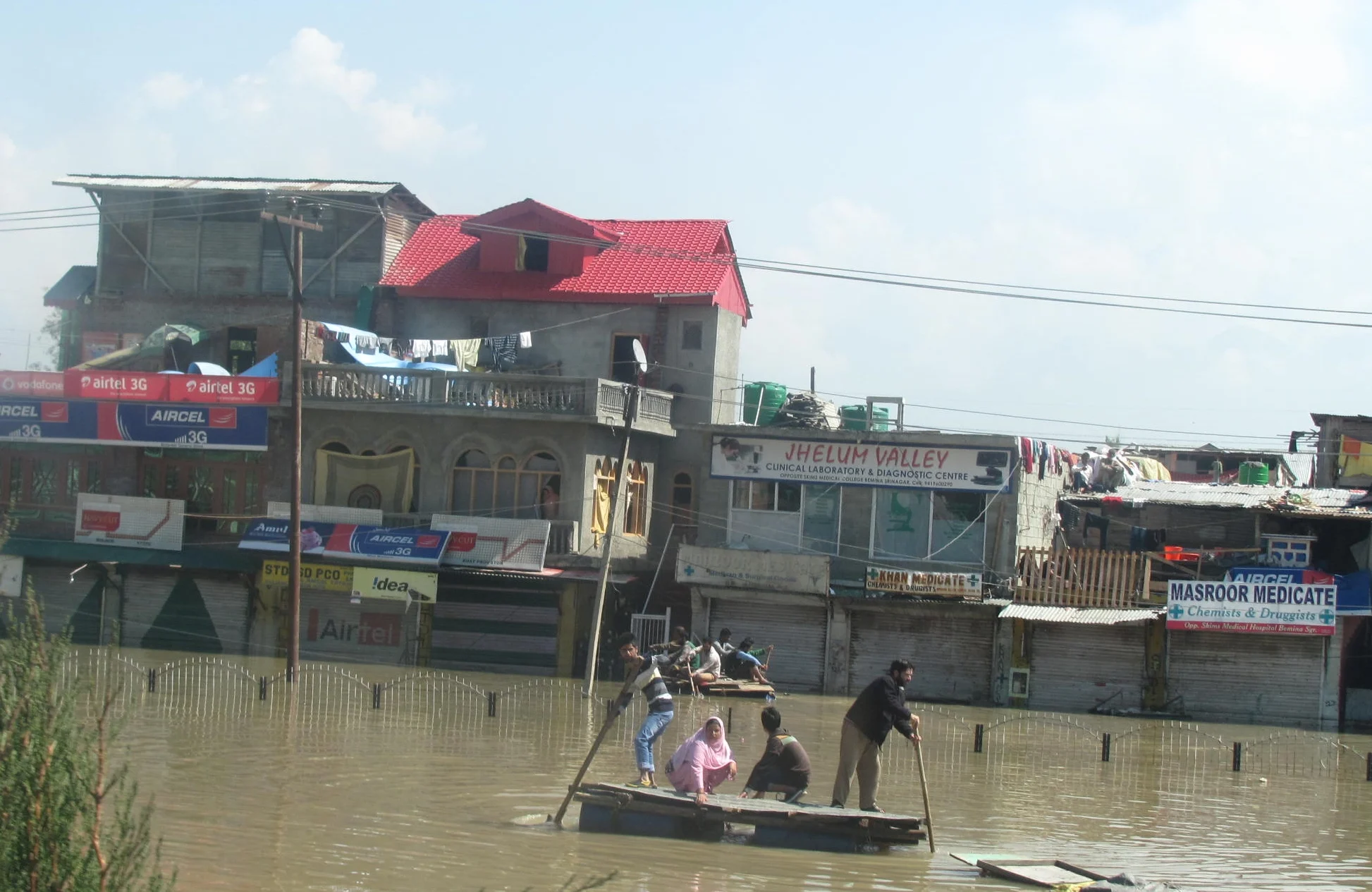
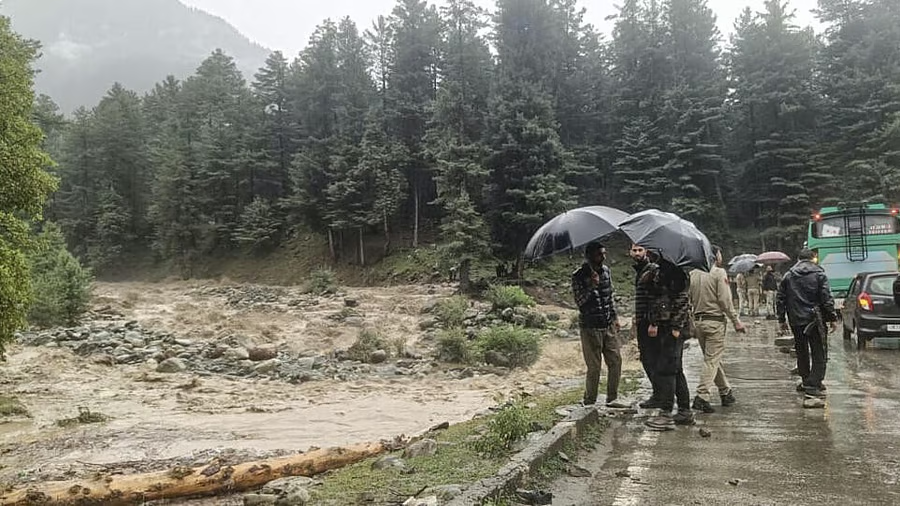
Jammu and Kashmir has witnessed an alarming rise in extreme weather activity, with at least six cloudburst-like events reported across the Union Territory within a week, triggering flash floods, landslides and widespread damage in several mountainous districts.
From the higher reaches of Kishtwar, Doda and Poonch in the Jammu region to the orchards and paddy fields of south Kashmir’s Anantnag district, sudden intense rainfall has disrupted normal life, damaged agricultural land and forced families to move to safer locations.
While no major loss of life has been reported in the latest incidents, the repeated occurrence of short-duration, high-intensity rainfall events has renewed concerns among scientists and environmental experts about the growing vulnerability of the Himalayan ecosystem.
Experts say the combination of rising temperatures, changing weather patterns, deforestation and unplanned development is increasing the risk of flash floods in the region.
Six cloudbursts in one week: Mountain districts bear the impact
The latest incident was reported from Bathoi village in the Mahore subdivision of Reasi district, where a sudden cloudburst late Thursday sent a powerful flow of water, mud and debris into residential areas.
Several houses were damaged as floodwaters entered the village, though officials confirmed that no casualties were reported.
The incident came after multiple cloudburst events were reported in Doda, Kishtwar and Poonch districts during the same week.
Kishtwar faces repeated weather shocks
Kishtwar district witnessed two separate cloudburst incidents — one in the Gahan area of Sarthal and another in Machhipal.
The district, known for its steep mountains and narrow valleys, has increasingly faced challenges from extreme rainfall events because water can travel rapidly downhill through fragile terrain.
The Thathri area of Doda district also witnessed intense rainfall that triggered flash floods. Floodwaters entered residential areas, vehicles were trapped under debris, and residents from vulnerable houses were shifted to safer locations.
Mudslides also disrupted traffic movement along roads passing through the area.
Poonch sees flash floods and debris flow
In Poonch district, heavy rainfall triggered flash floods in the Sabzian-Ghorayank area of Mandi.
Large amounts of debris accumulated near a school building, creating difficulties for local residents.
Authorities reported that there was no loss of life, but the incident highlighted the increasing risk faced by communities living near streams and mountain slopes.
South Kashmir impact: Floodwaters damage farms and orchards in Anantnag
A fresh cloudburst-like event struck parts of Shangus area in Anantnag district, affecting Ranipora, Rakhi-Brah and Nag Naran villages.
The sudden flood damaged paddy fields and orchards, affecting livelihoods dependent on agriculture and horticulture.
Residents described the event as extremely sudden.
“Within seconds, muddy water entered our homes. We heard a loud roar and people barely had time to move out,” said Mushtaq Ahmad, a resident of Ranipora.
The damage has raised concerns among farmers, especially in areas where fruit orchards represent a major source of income.
Anantnag East-Shangus MLA Reyaz Ahmad Khan said assessment teams would evaluate losses and compensation would be provided according to government norms.
“The agriculture and horticulture sectors have suffered losses. Assessment teams will complete the exercise,” Khan said.
Why are cloudbursts increasing in J&K?
A cloudburst is an extreme rainfall event where a very large amount of rain falls over a small area within a short period. In mountainous regions, such rainfall can quickly transform into destructive flash floods because steep slopes accelerate water movement.
Scientists say climate change is playing an important role in increasing the intensity of such events.
Riyaz Ahmad Mir, a geologist at the National Institute of Hydrology, Jammu, explained that warmer temperatures allow the atmosphere to store more moisture.
“When temperatures rise, the atmosphere can hold more water vapour. When this moisture is released suddenly, it can produce extremely intense rainfall,” he said.
Meteorological experts often explain that for every one-degree Celsius rise in temperature, the atmosphere can hold roughly seven percent more moisture, increasing the possibility of heavier rainfall events.
Forest loss adding to mountain disaster risks
Climate change is not the only factor increasing the danger.
Experts point towards environmental degradation, especially loss of forest cover, as another major concern.
Forests play a critical role in absorbing rainfall, stabilising soil and reducing the speed at which water flows down slopes.
According to Global Forest Watch data, Jammu and Kashmir lost around 212 square kilometres of tree cover between 2001 and 2023.
Environmental experts warn that reduced vegetation cover can weaken slopes and increase the possibility of landslides and flash floods.
“When forests disappear, the land loses a natural protection system. Rainwater reaches streams faster and carries more soil and debris,” experts explain.
Weather systems and Himalayan geography create a dangerous combination
Director of the Meteorological Department in Srinagar, Mukhtar Ahmad, said improved satellite and radar-based monitoring has helped authorities issue warnings more effectively.
However, he added that mountainous regions remain highly sensitive during the pre-monsoon and monsoon seasons.
“As the pre-monsoon summer progresses, the possibility of short-duration, high-intensity rainfall events increases, especially in mountainous districts,” Ahmad said.
Climatologist Sonam Lotus explained that cloudburst events in Jammu and Kashmir are often linked to interactions between western disturbances and moisture-carrying winds.
“These weather systems can combine and produce intense rainfall over a very small area within a short time,” Lotus said.
Himalayan development under environmental scrutiny
Independent weather observer Faizan Arif said climate risks must be considered while planning development activities in mountain areas.
“The Himalayan ecosystem is sensitive to both climatic and land-use changes. Development planning needs to account for these factors,” he said.
Experts argue that road expansion, construction activity and changing land use patterns need stronger environmental assessment, especially in fragile mountain zones.
The concern is not against development but about ensuring that infrastructure growth matches the ecological limits of the region.
Memories of past disasters: Kishtwar cloudburst remains a warning
The recent events come after several deadly weather disasters in Jammu and Kashmir in recent years.
One of the most devastating incidents occurred on August 14, 2025, when a cloudburst struck Chisoti village in Kishtwar district along the Machail Mata Yatra route.
The disaster triggered flash floods and debris flow, killing dozens of people and affecting pilgrims and local residents. Rescue operations involved multiple agencies, including disaster response teams and security forces.
The tragedy highlighted the vulnerability of remote Himalayan settlements where sudden rainfall can quickly become life-threatening.
Rising climate risks demand stronger preparedness
According to figures shared by the Ministry of Home Affairs in the Rajya Sabha, floods and heavy rainfall events caused major losses in Jammu and Kashmir, including deaths, livestock losses, damage to houses and destruction of agricultural land.
Experts say better forecasting, early warning systems, stronger disaster response mechanisms and climate-sensitive planning will be crucial for reducing future risks.
For communities living in the mountains, the challenge is becoming clearer: extreme weather events that once appeared rare are becoming more frequent, and adaptation is now essential.
The repeated cloudburst incidents across Jammu and Kashmir serve as a reminder that the Himalayan environment is changing — and protecting it has become central to protecting human lives and livelihoods.