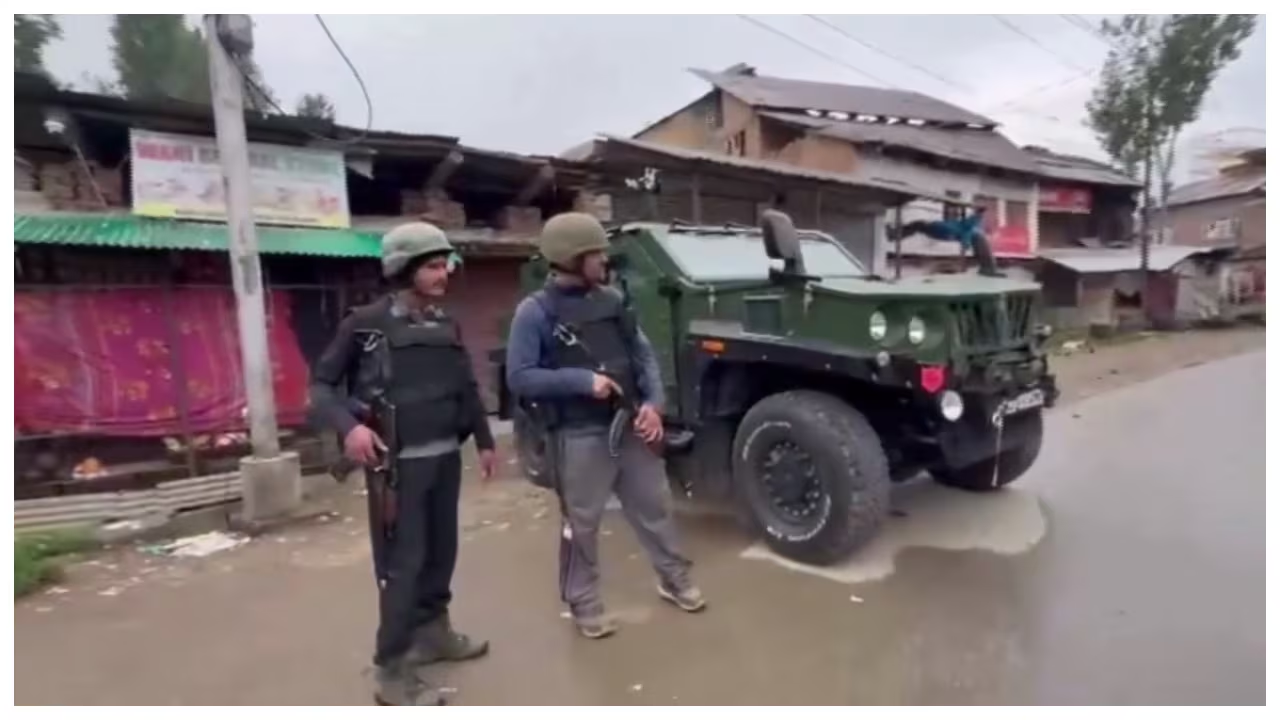
J&K Plans Secure Housing Clusters for Migrant Workers After Kulgam Terror Attack
By: News Desk | 03 Aug 2026
The Jammu & Kashmir administration is preparing a comprehensive security plan to relocate migrant workers into designated housing clusters following the recent terror attack in Kulgam that claimed the lives of two labourers from Chhattisgarh. The proposal, aimed at reducing the vulnerability of non-local workers, seeks to combine enhanced security arrangements with improved coordination between employers, local authorities, and law enforcement. The attack has reignited concerns over the safety of thousands of migrant labourers who contribute significantly to the Valley’s construction, brick kiln, horticulture, and infrastructure sectors.
While officials have confirmed that security arrangements are being strengthened after the attack, details of the proposed cluster-based accommodation plan are still emerging and have not yet been formally announced in full. Reports indicate the administration is examining measures that would allow security agencies to provide better protection while ensuring workers continue their livelihoods with minimal disruption.
Kulgam Attack Triggers Fresh Security Review
The latest security review follows the July 31 terrorist attack on a brick kiln in Kulgam district, where militants opened fire on migrant labourers. Two workers from Chhattisgarh later died from their injuries, marking the first fatal attack targeting migrant workers in Jammu & Kashmir in nearly two years. The incident sparked widespread fear among migrant communities, with many workers temporarily suspending work and considering returning to their home states.
The attack also prompted Chief Minister Omar Abdullah to announce an ex gratia payment of ₹10 lakh each to the families of the deceased while directing officials to strengthen security measures for vulnerable workers.
Secure Cluster Housing Under Consideration
According to officials familiar with the security review, the proposed model involves relocating migrant workers from scattered accommodations into designated residential clusters located near their workplaces.
The proposed facilities are expected to include:
- Controlled entry and exit points.
- Security fencing around residential areas.
- CCTV surveillance covering common spaces.
- Round-the-clock police patrolling.
- Emergency response systems linked with district police.
- Improved lighting and secure transportation routes.
Security planners believe that concentrated housing will enable quicker emergency response while reducing the risks associated with isolated worker accommodations.
District-Wise Security Strategy
The administration is reportedly prioritising districts where large numbers of migrant workers are employed and where recent security concerns have been highest.
| District | Proposed Focus | Current Security Measures |
|---|---|---|
| Kulgam | Industrial zone outskirts | High alert, enhanced deployment |
| Pulwama | Brick kiln clusters | Reinforced patrols and surveillance |
| Anantnag | Construction hubs | Expanded checkpoints and monitoring |
| Srinagar | Peripheral worker colonies | Preventive deployment and area domination |
Officials may expand the initiative to additional districts depending on security assessments and the concentration of migrant labourers.
Multi-Layered Protection Plan
Beyond physical relocation, authorities are planning several complementary measures to improve worker safety.
Enhanced Police Presence
Additional police personnel and Central Armed Police Forces are expected to be deployed near industrial estates, brick kilns, construction projects, and labour settlements. Night patrols and mobile response teams are also likely to be intensified in vulnerable areas.
Worker Verification
District administrations are expected to continue verification drives aimed at maintaining updated records of migrant workers. Authorities say accurate identification can help security agencies respond quickly during emergencies while improving coordination with employers.
Employer Responsibility
Contractors and business owners may be required to:
- Register all migrant employees.
- Share updated worker records with district authorities.
- Provide secure accommodation.
- Maintain emergency contact information.
- Coordinate with local police regarding any security concerns.
Officials believe employer participation will be critical to the success of the protection plan.
Balancing Security With Dignity
Security experts note that while cluster housing can improve protection, implementation will require careful planning to avoid creating the perception of isolation or excessive surveillance.
Labour rights advocates argue that any relocation policy should prioritise:
- Decent living standards.
- Freedom of movement within legal limits.
- Access to healthcare.
- Sanitation and clean drinking water.
- Privacy and dignity.
- Non-discriminatory treatment.
Authorities are expected to consult local administrations and employers before finalising the framework.
Economic Importance of Migrant Workers
Thousands of migrant labourers play a vital role in Jammu & Kashmir’s economy.
They are employed across:
- Construction projects.
- Brick kilns.
- Road and infrastructure development.
- Horticulture and agriculture.
- Manufacturing units.
- Small industries.
Any large-scale departure of workers following security incidents could affect construction schedules, agricultural activities, and infrastructure projects, making worker confidence an important economic priority.
Lessons From Earlier Security Measures
Jammu & Kashmir has previously introduced secure transit accommodation for vulnerable employee groups following targeted militant attacks in earlier years. Those measures included guarded residential facilities and enhanced police deployment for at-risk communities. The current proposal for migrant workers appears to build on that experience while adapting it to a broader labour population.
Challenges Ahead
While the proposed cluster model could strengthen security, several challenges remain:
- Identifying suitable land close to workplaces.
- Ensuring adequate infrastructure and basic amenities.
- Preventing overcrowding.
- Coordinating among multiple government departments.
- Building trust among migrant workers.
- Maintaining community integration with local residents.
Security analysts caution that physical protection alone cannot eliminate the threat posed by terrorism and should be complemented by sustained intelligence gathering and counterterrorism operations.
Outlook
The proposed relocation of migrant workers into secure residential clusters reflects a shift toward a more structured approach to worker protection following the Kulgam terror attack. If implemented effectively, the initiative could improve emergency response, reassure migrant communities, and support economic continuity across the Valley.
However, the long-term success of the policy will depend on transparent implementation, adequate living conditions, cooperation from employers, and continued vigilance by security agencies. Equally important will be ensuring that enhanced security measures do not compromise the dignity, rights, and livelihoods of the workers they are intended to protect.