Mirwaiz Says Article 370 Abrogation Continues to Leave a ‘Deep Wound’ on Kashmir’s Identity
By: News Desk | 05 Aug 2026
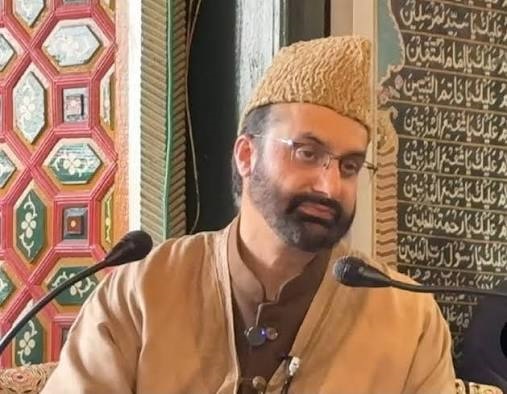
Separatist leader Mirwaiz Umar Farooq has described the 2019 abrogation of Article 370 as a “deep wound” on the political and emotional identity of Jammu and Kashmir, saying the constitutional changes continue to shape public sentiment in the region even seven years later.
His remarks came as several opposition parties and civil society groups marked August 5 as ‘Black Day’, observing the anniversary of the constitutional changes that revoked the special status of the erstwhile state. The statement adds another voice to the continuing political debate over Article 370, an issue that remains central to Kashmir’s public discourse despite significant changes in the region’s administrative and political landscape.
Mirwaiz’s Remarks: Identity, Constitutional Rights and Public Sentiment
Addressing the anniversary, Mirwaiz said the abrogation of Article 370 represented more than a constitutional decision, arguing that it affected the region’s political identity and long-standing constitutional safeguards.
He maintained that many people in the Valley continue to view the 2019 decision as a defining moment that altered Jammu and Kashmir’s relationship with the Indian Union. Describing the move as a “deep wound,” he said the emotional and political consequences remain visible in public discussions and regional politics.
The separatist leader also reiterated his long-standing position that the restoration of constitutional protections remains an important political objective for those who oppose the 2019 changes.
Why August 5 Remains Politically Significant
On August 5, 2019, the Union Government made Article 370 inoperative through a Presidential Order and parliamentary resolutions. Parliament also approved the Jammu and Kashmir Reorganisation Act, 2019, which reorganised the former state into the Union Territories of Jammu and Kashmir and Ladakh.
Since then, the anniversary has become one of the most politically significant dates in the region.
While the Union Government marks the constitutional changes as a milestone for national integration, governance reforms and economic development, several regional political parties and separatist voices observe the day as a reminder of what they describe as the loss of constitutional autonomy.
This divergence continues to define political messaging in Jammu and Kashmir.
‘Black Day’ Observances Across the Political Spectrum
Mirwaiz’s remarks coincided with programmes organised by various political groups that opposed the 2019 decision.
Different organisations used the anniversary to renew their respective political demands:
- Awami Itihaad Party (AIP) observed August 5 as “Black Day” while reiterating its demand for the restoration of Article 370.
- People’s Democratic Party (PDP) continued its campaign emphasising the restoration of the former constitutional position.
- Apni Party linked its political messaging to both the restoration of constitutional rights and full statehood.
- National Conference (NC) continued to prioritise the restoration of statehood while maintaining its legal and political opposition to the constitutional changes.
Although these parties differ in political strategy, the anniversary once again served as a common platform for expressing opposition to the events of August 2019.
Contrasting Political Narratives Continue
The anniversary has once again highlighted two sharply contrasting narratives surrounding Article 370.
Opposition View
Opposition parties and separatist leaders argue that the constitutional changes weakened Jammu and Kashmir’s political identity, altered its constitutional relationship with the Union and ignored the aspirations of many residents.
Mirwaiz’s “deep wound” description reflects this perspective, portraying the issue as both constitutional and emotional.
Government’s Position
The Union Government continues to defend the 2019 decision, stating that the changes have strengthened national integration, improved governance, expanded the implementation of central laws, reduced separatist influence and accelerated infrastructure, investment and welfare initiatives in Jammu and Kashmir.
According to the government, the constitutional changes have opened new opportunities for development while bringing the region under a uniform legal framework applicable across India.
Political Implications
Article 370 Remains a Defining Political Issue
Seven years after the constitutional changes, Article 370 continues to shape election campaigns, political speeches and public debate in Jammu and Kashmir.
For many regional parties, it remains a central issue alongside demands for the restoration of full statehood and greater democratic representation.
Identity Politics Continues to Influence Public Debate
Mirwaiz’s remarks underscore how questions of identity continue to influence political discourse in the Valley.
Even as governance, employment and development gain prominence, constitutional identity remains an important issue for many political stakeholders.
Polarised Narratives Persist
The anniversary illustrates the continuing divide between the Union Government’s development-focused narrative and the opposition’s emphasis on constitutional rights and political identity.
This difference is likely to remain a recurring feature of Jammu and Kashmir’s politics in the coming years.
Security Remains Tight Around August 5
Given the political sensitivity of the anniversary, authorities traditionally strengthen security arrangements across parts of the Valley.
Additional deployments, surveillance, traffic regulation and preventive measures are often implemented in Srinagar and other sensitive districts to maintain public order during political programmes and commemorative events.
Officials generally review the security situation in advance to prevent disruptions while balancing lawful political activity with public safety considerations.
Fact Check & Background
- Article 370 was made inoperative on August 5, 2019, following Presidential Orders and resolutions passed by Parliament.
- Parliament simultaneously enacted the Jammu and Kashmir Reorganisation Act, 2019, creating the Union Territories of Jammu and Kashmir and Ladakh.
- Mirwaiz Umar Farooq has consistently opposed the 2019 constitutional changes and has repeatedly called for dialogue and a political resolution to the Kashmir issue.
- In December 2023, the Supreme Court of India upheld the constitutional validity of the decisions relating to Article 370 while directing that the process for restoring statehood to Jammu and Kashmir should be undertaken at the earliest and noting that Assembly elections should be conducted.
Conclusion
Mirwaiz Umar Farooq’s description of the abrogation of Article 370 as a “deep wound” reflects the continuing political and emotional significance that the issue holds for many in Jammu and Kashmir. His remarks, delivered during the seventh anniversary of the August 5 constitutional changes, reinforce the position of political groups that continue to seek the restoration of constitutional safeguards and greater political autonomy.
At the same time, the Union Government maintains that the 2019 decision has delivered greater integration, governance reforms and development benefits. These competing narratives continue to shape the region’s political discourse, ensuring that Article 370 remains one of the defining issues in Jammu and Kashmir’s contemporary politics. As debates over constitutional identity, statehood and democratic representation continue, the anniversary of August 5 is likely to remain a focal point of political mobilisation and public discussion in the years ahead.