J&K C-Section Surge: Caesarean Deliveries Hit 51%, Private Hospitals at 90%
By: Saika | 22 Aug 2026
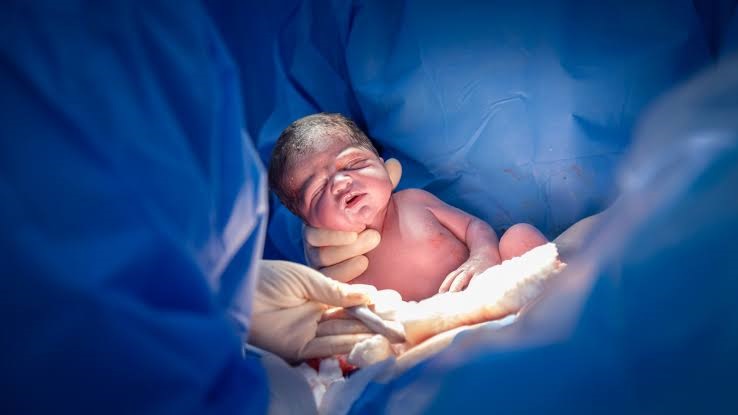
Jammu & Kashmir is seeing a striking rise in Caesarean deliveries, with the latest health data showing that more than half of births now take place through C-section. The increase is particularly dramatic in private hospitals, where the rate has reached about 90%. The numbers are forcing a difficult conversation about medical necessity, childbirth choices, hospital practices and the growing financial burden on families.
There is something unsettling about the latest numbers on childbirth in Jammu & Kashmir.
A Caesarean section can be a lifesaving intervention. When labour becomes dangerous, when the baby is in distress, when the placenta is blocking the birth canal, or when other serious complications emerge, surgery can mean the difference between life and death.
But in Jammu & Kashmir, the latest data show that Caesarean delivery is no longer a marginal part of maternity care.
The overall C-section rate has climbed to 51%, according to NFHS-6 data for 2023-24 cited by the Union Health Ministry. That is up from 41.7% in NFHS-5 (2019-21). Even more striking, 90% of deliveries in private health facilities were Caesarean sections, compared with 82.1% in the previous survey.
That does not, by itself, prove that nine out of ten private-hospital Caesareans are unnecessary. It does, however, raise a legitimate public-health question:
Why is the rate so high, and are all of these operations clinically justified?
That question matters not only because C-sections are surgery, but because surgery also changes the economics of childbirth.
J&K’s C-Section Rate Has Crossed 50%
The trajectory is difficult to ignore.
NFHS-5 recorded a Caesarean rate of 41.7% across Jammu & Kashmir. The latest NFHS-6 figure puts it at 51% — an increase of more than nine percentage points in roughly the period between the two surveys.
The earlier NFHS-5 data already showed considerable variation across districts.
Srinagar recorded a C-section rate of 59.4%, Pulwama 60.7%, Kupwara 51.7%, Anantnag 51.3% and Baramulla 51.1%. At the other end were Ramban at 17%, Doda at 19.5% and Reasi at 23%.
That variation is important.
It suggests that there is no single explanation for Jammu & Kashmir’s high Caesarean rate. Geography, referral patterns, availability of specialists, maternal risk profiles, hospital practices, patient preferences and the organisation of maternity services can all influence the numbers.
A hospital receiving complicated referrals will naturally have a higher C-section rate than a facility handling mostly low-risk pregnancies.
So a headline number should not be interpreted as a verdict against doctors or hospitals.
But when the rate becomes extremely high across an entire segment of the health system, it deserves systematic examination.
The Private-Hospital Figure Is the Real Red Flag
The biggest concern is not simply that J&K’s overall C-section rate has reached 51%.
It is the gap between public and private care.
NFHS data cited by the Centre show that the private-facility C-section rate rose from 82.1% to 90% between NFHS-5 and NFHS-6.
That means that, statistically, roughly nine in every ten births recorded in private facilities are Caesarean deliveries.
Again, the figure should be handled carefully.
A private hospital may have a different patient population from a government hospital. Women with previous Caesareans, high-risk pregnancies, foetal complications or referrals may be disproportionately represented. Some women may also actively request Caesarean delivery.
But a rate approaching 90% is high enough to warrant something more rigorous than anecdotal explanations.
The obvious question is whether hospitals are routinely analysing their deliveries according to the Robson Ten-Group Classification, an internationally recognised framework that groups women according to characteristics such as parity, previous Caesarean, gestational age, presentation and whether labour was induced or spontaneous.
The purpose is not to impose an arbitrary quota.
It is to answer a much more useful question:
Which groups of women are contributing most to the C-section rate, and why?
WHO recommends the Robson classification precisely because comparing crude hospital-level percentages can be misleading.
A Correction About the WHO “10–15%” Figure
One part of the popular discussion around C-sections needs clarification.
It is common to say that the WHO recommends that countries keep C-section rates between 10% and 15%.
That is not quite accurate today.
WHO has explicitly stated that it does not recommend a specific national C-section target. Its 2015 statement noted that when population-level Caesarean rates rise towards 10%, maternal and neonatal mortality falls, but above 10% there is no evidence that mortality continues to decline. WHO subsequently stressed that countries should focus on ensuring that Caesareans are available to women who medically need them rather than trying to achieve a particular numerical rate.
So J&K’s 51% rate should not simply be presented as “violating a WHO 10–15% limit.”
The stronger argument is this:
A very high C-section rate, particularly one concentrated in private facilities, warrants clinical audit to determine whether Caesareans are being performed when medically indicated.
That is a much more defensible public-health position.
Caesarean Section Is Not “Bad” — Unnecessary Surgery Is the Concern
This distinction is essential.
A C-section can save a mother’s life. It can also prevent severe complications for a baby when vaginal delivery becomes unsafe.
WHO identifies situations such as prolonged labour, foetal distress and abnormal fetal presentation among circumstances in which Caesarean delivery may be medically necessary.
The problem begins when surgery is performed without a clear clinical indication.
Unlike a routine consultation, a Caesarean is major abdominal surgery. It involves anaesthesia, an incision through the abdomen and uterus, postoperative recovery and the possibility of complications.
Potential risks include infection, bleeding, blood clots, anaesthetic complications and longer recovery. The implications can also extend to subsequent pregnancies, where previous uterine surgery can influence the risks and management of future births.
For the baby, too, timing matters. A medically indicated Caesarean can be lifesaving, while unnecessary early delivery can introduce avoidable risks.
That is why the debate should never become “normal delivery versus C-section.”
It should be:
What is safest and medically appropriate for this mother and this baby?
Why Are C-Sections Increasing?
There is no single culprit.
1. Previous Caesarean Deliveries
One of the strongest contributors to rising Caesarean rates is the growing number of women who have already undergone a C-section.
Once a woman has had a Caesarean, the options for subsequent births become more complicated. Some women undergo repeat planned Caesareans, while others may be candidates for vaginal birth after Caesarean depending on their clinical circumstances and the resources available.
A high primary C-section rate can therefore create a cycle:
more first-time Caesareans → more repeat Caesareans → higher overall C-section rate.
This makes monitoring first-time, low-risk mothers particularly important.
2. Maternal and Foetal Complications
Not every increase is unnecessary.
Pregnancy can involve hypertension, diabetes, abnormal foetal presentation, placenta-related complications, foetal distress, prolonged labour and other conditions that genuinely require intervention.
An ageing maternal population, rising obesity and metabolic disease in some populations, multiple pregnancies and assisted reproduction can also affect obstetric risk profiles.
This is why simply comparing one hospital’s C-section rate with another’s without examining patient characteristics can produce misleading conclusions.
3. Fear of Labour Pain and Convenience
Patient preference also plays a role.
A hospital-based study from Jammu examining Caesareans performed at maternal request found that maternal-request cases accounted for a minority of C-sections in that study — about 9.9% of the Caesareans recorded.
This is an important reminder that women should not be portrayed merely as passive recipients of hospital decisions.
Some women may prefer planned surgery because of fear of labour pain, previous traumatic birth experiences, anxiety or the perceived predictability of a scheduled delivery.
But informed consent means more than asking, “Do you want a C-section?”
Women should receive balanced information about the benefits, risks and alternatives before making such decisions.
4. Defensive Medicine
Doctors operate in an increasingly complicated medico-legal environment.
A prolonged labour that ends in an emergency C-section may be retrospectively questioned if the newborn develops complications. That creates pressure for clinicians to intervene earlier.
WHO has itself identified fear of litigation as one factor that can influence Caesarean use in some settings.
That does not mean defensive medicine explains J&K’s entire increase.
But it belongs in the conversation.
5. The Economics of Childbirth
This is where the issue becomes particularly sensitive.
A C-section generally requires an operating theatre, surgical team, anaesthesia, medicines, consumables and a longer hospital stay than an uncomplicated vaginal delivery.
That makes the economics different.
International research has identified financial incentives, provider preferences, convenience and health-system factors among the forces that can contribute to excessive Caesarean use.
But the existence of a financial incentive is not evidence that a particular hospital is performing unnecessary surgery.
That distinction matters.
If policymakers suspect overuse, the answer should be evidence — not accusation.
The Cost of Childbirth Is Another Part of the Story
The financial burden is not hypothetical.
NFHS-5’s J&K report found that women who delivered in private health facilities paid substantially more out of pocket than those delivering in public facilities.
The average reported delivery expenditure was:
- Public facility: ₹5,145
- Private facility: ₹24,611
- Any health facility: ₹6,379
These are NFHS-5-era averages and should not be treated as today’s private-hospital tariff. But the gap is revealing: private institutional childbirth cost nearly five times the public-facility average in the survey.
The urban-rural divide was also visible. The average private-facility expenditure was ₹26,768 in urban areas and ₹22,679 in rural areas.
And this is only the reported average cost of delivery.
Families may face additional expenditure on medicines, diagnostic tests, specialist consultations, room upgrades, newborn care and treatment if complications occur.
A complicated Caesarean followed by neonatal intensive care can turn an already expensive delivery into a major household financial shock.
The Financial Problem Is Not Simply “C-Section Costs More”
There is a deeper issue here.
When a family enters a private hospital for childbirth, it may not know exactly what the final bill will be.
A quoted delivery package can sometimes exclude investigations, additional medicines, specialist fees, extended hospitalisation or newborn treatment.
That makes price transparency just as important as price control.
A family should be able to know before admission:
- the basic vaginal-delivery package;
- the basic Caesarean package;
- room charges;
- doctor and anaesthesia fees;
- diagnostic charges;
- newborn-care charges;
- additional charges for complications;
- insurance or government-scheme coverage;
- and the circumstances under which the final bill can exceed the quoted package.
The clearer the information, the harder it becomes for unexpected charges to become a second crisis after childbirth.
Is There Evidence That Parliament Has Ordered a C-Section Price Cap in J&K?
This is where the original claim needs particularly careful handling.
I could not independently verify, from accessible official parliamentary records, a current 2026 parliamentary health-panel recommendation specifically directing the government to impose a price cap on C-section deliveries in Jammu & Kashmir.
There is, however, clear parliamentary concern about rising Caesarean use and private-sector practices.
In a 2019 Rajya Sabha response, the Union Health Ministry acknowledged complaints alleging unethical practices involving Caesarean deliveries and said the government had received grievances concerning doctors allegedly making money from unsuspecting women and pushing them towards surgical delivery.
Parliamentary records also show that the government has repeatedly discussed the unusually high C-section rates in private hospitals and measures to optimise Caesarean use.
So the broader policy concern is real.
But it would be misleading to present a specific “Parliament health panel has ordered a J&K C-section price cap” as an established fact without the underlying committee document.
For a Google News or Google Discover publication, that distinction is crucial.
The defensible headline is about the documented C-section surge and the affordability debate — not an unverified parliamentary order.
What the Government Already Provides
There is another important piece of the story that can easily get lost.
Under the Janani Shishu Suraksha Karyakram (JSSK), pregnant women delivering in public health institutions are entitled to free and no-expense delivery, including Caesarean section, along with specified drugs, diagnostics, diet and transport services. The Union Health Ministry continues to describe elimination of out-of-pocket expenditure for eligible pregnant women in public facilities as a core objective of the programme.
This means the affordability problem cannot simply be described as “government hospitals charge too much for C-sections.”
The more complicated issue is access.
If public hospitals are overcrowded, if specialist services are unavailable in smaller facilities, if women prefer private maternity care, or if complicated pregnancies require referral to tertiary hospitals, families may still end up in the private sector.
NFHS-5 shows that 86.8% of births took place in public facilities and 5.6% in private facilities, while 7.6% occurred at home.
So private hospitals handle a smaller share of births overall, but the extremely high Caesarean proportion within that sector deserves scrutiny.
Rural Families Could Face a Different Kind of Vulnerability
The affordability debate also needs to look beyond the hospital bill.
For a family in a remote district, the cost of childbirth can include:
transport + accommodation + diagnostics + hospital charges + medicines + lost wages + post-operative care.
A woman travelling from a remote mountain area to a tertiary hospital may already have spent significant money before reaching the operating theatre.
And rural families may have fewer alternatives when complications arise.
NFHS-5 recorded substantial district-level differences in institutional delivery and C-section rates. Some districts had much lower Caesarean rates than Srinagar and Pulwama, while others had rates above 50%.
That variation suggests that policy should not rely on a single statewide target.
Instead, authorities need facility-level data.
The Solution Is Not a Blanket Ban on C-Sections
A crude attempt to reduce the percentage could create an entirely different public-health problem.
Imagine a hospital being pressured to keep its C-section rate below an arbitrary threshold.
A doctor might hesitate to operate when surgery is genuinely needed.
That is unacceptable.
The objective should therefore be appropriate Caesarean use, not simply fewer Caesareans.
Several measures could help.
Clinical audits
Every maternity hospital should periodically review Caesarean cases, particularly primary C-sections.
Robson classification
Hospitals should record C-sections using the Robson Ten-Group Classification so policymakers can identify which patient groups drive the rate.
Second-opinion protocols
For planned, non-emergency Caesareans without an obvious indication, hospitals could introduce structured second-opinion systems.
Transparent pricing
Private hospitals should publish complete delivery packages and clearly identify additional charges.
Standardised billing
Hospitals could be required to provide itemised bills showing exactly what the family paid for.
Maternal counselling
Women should receive evidence-based counselling about vaginal delivery, induction, Caesarean delivery, pain-management options and future pregnancy implications.
Strengthen public maternity care
The strongest long-term affordability measure is not necessarily a price ceiling.
It is a public system capable of providing safe, respectful and timely maternity care.
Could Price Caps Actually Work?
Possibly — but only if designed carefully.
A blanket price ceiling can create unintended consequences if it does not account for differences between hospitals.
A small maternity facility and a tertiary referral hospital do not have the same staffing costs, intensive-care capacity, surgical infrastructure or patient complexity.
A more practical approach could involve:
standard treatment packages + transparent tariffs + insurance reimbursement limits + audits + penalties for unexplained billing.
The government could establish reference prices for common maternity services while allowing legitimate variations for documented clinical complexity.
That would address the affordability issue without pretending that every pregnancy is identical.
The Bigger Warning Behind J&K’s Numbers
The most important lesson from the data may be that C-section rates tell only half the story.
A high rate can mean different things.
It can indicate better access to lifesaving surgery.
It can reflect a concentration of high-risk pregnancies in referral centres.
It can reflect previous Caesareans.
It can reflect maternal preference.
It can reflect defensive medicine.
And in some circumstances, it can reflect unnecessary medical intervention.
The challenge for J&K is to determine which of these factors explains the dramatic increase.
That requires better data rather than louder accusations.
The latest numbers should therefore trigger a serious statewide maternity-care review.
Not a witch-hunt against doctors.
Not pressure on women to deliver vaginally.
And not a simplistic campaign against private hospitals.
The right question is more precise:
When a woman enters a maternity ward, is she receiving the safest clinically indicated method of delivery — and does she know what it will cost?
What Families Can Ask Before a Planned C-Section
For expecting parents, the policy debate does not eliminate the need for individual medical advice.
If a Caesarean is recommended, families can reasonably ask their obstetrician:
- What is the medical indication for the C-section?
- Is this an emergency or a planned procedure?
- What are the alternatives in this particular pregnancy?
- What are the risks of waiting or attempting vaginal delivery?
- If I have had a previous C-section, am I a candidate for VBAC?
- What will the complete hospital package cost?
- Are anaesthesia, medicines, investigations and newborn care included?
- What circumstances could increase the bill?
- What additional care might be required after surgery?
These questions do not challenge the doctor.
They make informed consent stronger.
J&K’s Childbirth Debate Is Now About More Than Delivery
Jammu & Kashmir has made substantial progress in institutional childbirth and skilled birth attendance. NFHS-5 found that 92.4% of births occurred in health facilities and 95.1% were assisted by health personnel.
That is a major public-health achievement.
But the next stage is more complicated.
It is not enough to get women into hospitals.
The health system must also ensure that the care they receive is clinically appropriate, financially transparent and respectful of informed choice.
The rise from 41.7% to 51% in the overall C-section rate — and from 82.1% to 90% in private facilities — makes that conversation impossible to ignore.
A Caesarean should never be treated as a failure of normal childbirth.
Nor should vaginal birth be treated as a test a woman has to pass.
The real measure of a maternity system is simpler: whether every mother receives the right intervention, at the right time, for the right medical reason — without her family being pushed into financial uncertainty.
That is the standard J&K’s rapidly changing childbirth landscape now needs to meet.


