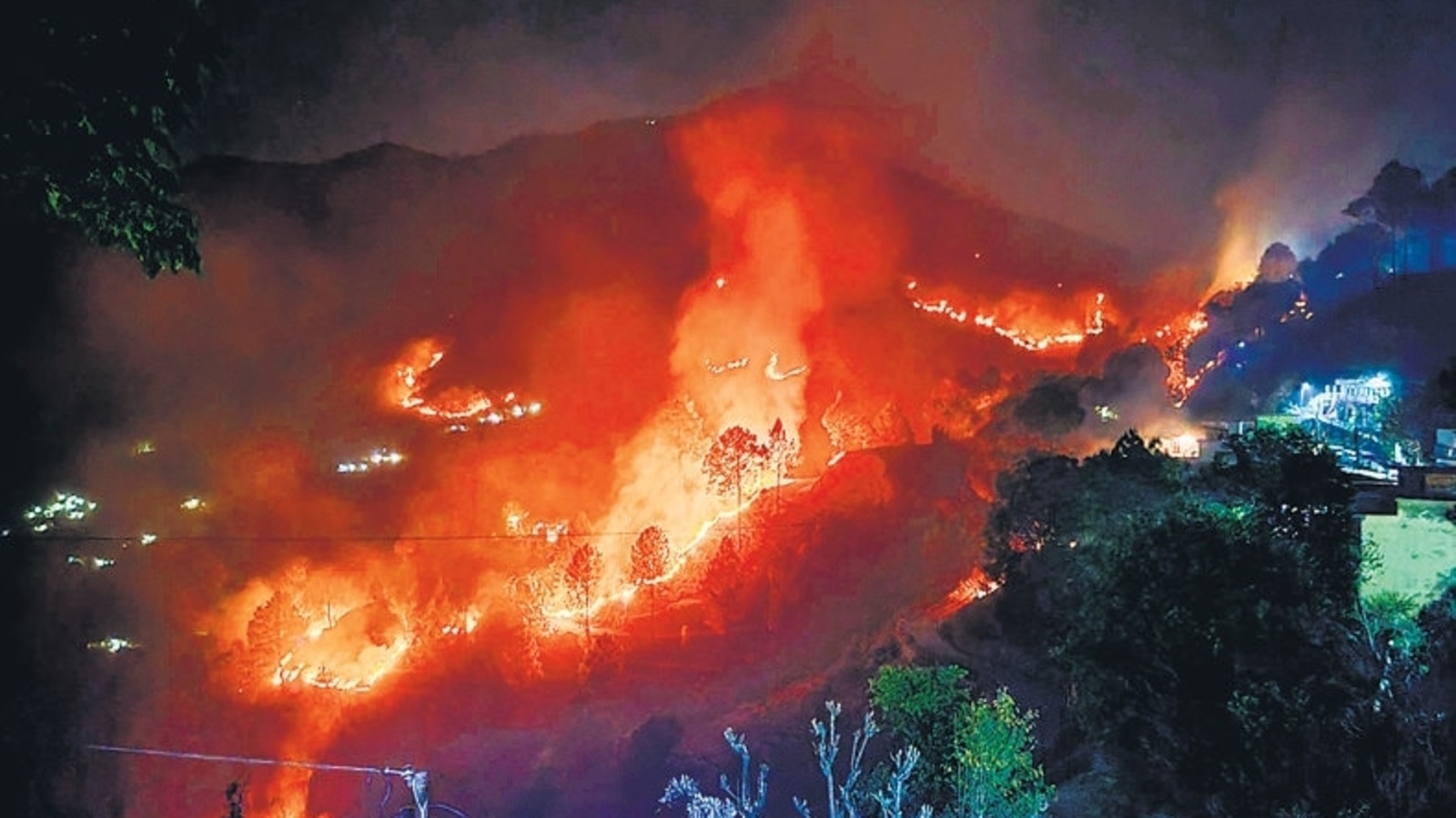
Kashmir’s Vanishing Springs and Choking Streams: The Slow-Motion Water Crisis
By: Javid Amin | 09 September 2026
From Anantnag’s celebrated springs to the streams feeding the Jhelum, Kashmir’s traditional water systems are under growing pressure. Scientific studies show pollution, changing land use, agricultural runoff, urbanisation and climate variability are already affecting water quality and recharge. The question now is whether the Valley can protect its oldest water infrastructure before more springs and streams become memories.
There was a time when a spring was more than a source of water in Kashmir.
It was a landmark.
It could give a village its name, provide drinking water to households, irrigate fields and orchards, sustain livestock and feed a stream that eventually joined a larger river. Around some springs, communities developed settlements, gardens and places of cultural importance.
Today, many of those traditional water sources are facing a quieter threat.
Some are polluted.
Some have weaker seasonal flows.
Some have been altered by construction or changing land use.
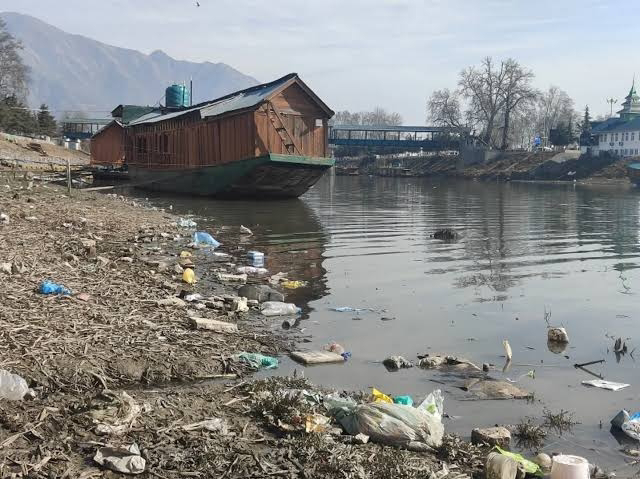
And streams that once carried clean mountain water are increasingly receiving sewage, agricultural runoff, solid waste and other pollutants.
This is not necessarily a story of every Kashmiri spring disappearing. In fact, recent research shows that many springs remain productive and potentially valuable for drinking water and irrigation.
The more serious warning is different:
A water source can survive physically while losing its ecological and social value.
A spring may continue to flow but become unsafe to drink. A stream may continue to carry water but become too polluted to support aquatic life. A wetland may remain on a map while losing much of its ability to store and clean water.
That is why the phrase “springs vanish, streams choke” captures a real environmental concern — but the crisis needs to be understood through evidence rather than nostalgia alone.
Kashmir’s Springs Are Part of a Larger Groundwater System
Springs are natural points where groundwater reaches the surface.
Their flow depends on what happens above and below ground — rainfall, snow, infiltration, geology, soil, groundwater storage and the condition of the surrounding recharge area.
This makes springs particularly sensitive to changes in their catchments.
If a recharge area is covered with concrete, less rainwater may infiltrate.
If vegetation is degraded, runoff and erosion can increase.
If groundwater is excessively extracted, spring discharge can be affected.
If pollutants enter a vulnerable aquifer, contamination can travel through the groundwater system.
Kashmir’s geology makes this relationship especially important. Research has described the Valley’s karstic aquifer systems as capable of transmitting surface contamination relatively quickly, meaning that pollution around recharge areas can become a groundwater-quality concern.
The result is that protecting a spring cannot mean cleaning only the stone structure or outlet where water emerges.
The entire spring catchment — the “springshed” — needs protection.
Anantnag: The District Where Springs Are Part of the Landscape
Few places illustrate the cultural and hydrological importance of springs better than Anantnag.
The name itself is traditionally explained through Sanskrit/Kashmiri linguistic roots associated with “countless” or “innumerable” springs. The district contains some of Kashmir’s best-known springs, including Verinag, Kokernag, Achabal, Martand, Lukhbawan, Malakhnag and Sherbagh.
Scientific research confirms that these are not merely scenic attractions.
A 2025 study examined seven major Anantnag springs and found substantial differences in their discharge. Verinag had the highest measured discharge in the study, at about 4.55 cubic metres per second, while Lukhbawan recorded about 0.17 cubic metres per second during the study period. The researchers found that several major springs could potentially meet agricultural water requirements in their respective command areas.
That finding is important.
It means Kashmir’s traditional springs are not relics of an older economy.
They remain functional water infrastructure.
They can support agriculture.
They can contribute to domestic water security.
And they can reduce dependence on energy-intensive pumping where gravity-based systems are possible.
But their continued usefulness depends on protecting the water system that feeds them.
The Water May Still Flow — But Is It Still Clean?
The danger facing springs is not only about quantity.
It is also about quality.
A major study of 258 springs across the Kashmir Valley found considerable variation in water quality. According to the study’s Water Quality Index assessment, 39.5 per cent of the sampled springs had excellent water, 47.7 per cent had good water, while smaller proportions fell into poor, very poor or unsuitable categories. 6.2 per cent of the springs analysed had water classified as unsuitable for drinking.
That finding should immediately complicate the popular narrative.
Kashmir does not have a simple story in which every spring is polluted or every spring is disappearing.
The evidence shows a patchwork of conditions.
Some springs remain high-quality sources.
Others are under pressure.
And some have already crossed thresholds where untreated use is unsafe.
That is precisely why systematic monitoring matters.
Anantnag’s Spring Water Shows the Pressure of Agriculture
A separate study focusing specifically on Anantnag examined 30 representative springs and analysed 18 physicochemical parameters.
The research found nitrate concentrations ranging from 57 to 2,668 micrograms per litre, with the researchers suggesting agricultural waste as a likely contributor to elevated nitrate levels. The study also warned that further investigation was needed into potential pollution from pesticides, heavy metals and antibiotic wastes.
This matters because Kashmir’s agricultural landscape has changed dramatically.
The Valley has experienced a major shift towards horticulture, particularly high-value apple cultivation. More intensive agriculture can bring increased use of fertilisers and pesticides.
That does not mean orchards are inherently responsible for spring degradation.
It means that what happens on agricultural land can eventually become a groundwater issue.
Fertiliser applied to soil does not necessarily stay where it is placed.
Rain and irrigation can move dissolved nutrients into the subsurface.
In a vulnerable hydrogeological system, the boundary between agricultural land and drinking-water security can therefore be surprisingly thin.
The Real Unit of Protection Should Be the Springshed
This is where Kashmir’s water policy needs to move beyond individual water outlets.
Cleaning a spring is useful.
Protecting the area that feeds the spring is more important.
A springshed-based approach would examine:
- Where does the spring’s recharge come from?
- What land uses occur in that area?
- Are there roads, buildings or drains cutting across recharge zones?
- How much groundwater is being extracted?
- Are fertilisers and pesticides entering the system?
- Has vegetation cover changed?
- How does spring discharge vary between seasons?
- Is the water microbiologically safe?
Without answers to these questions, spring rejuvenation risks becoming cosmetic.
A newly built spring chamber may look impressive while the catchment above it continues to deteriorate.
Srinagar’s Problem Is Different: Waterways Under Urban Pressure
In Srinagar, the pressure is much more visibly urban.
The city has expanded into a landscape historically shaped by rivers, wetlands, streams and flood channels.
The ecological consequences are well documented.
A study of Srinagar’s wetlands found that pollution, urbanisation, encroachment, land-use change and climate pressures have contributed to serious degradation. The research also noted that wetlands historically acted as buffers by storing floodwater, while their degradation has reduced that capacity.
The connection to streams is direct.
When natural drainage channels are narrowed or built over, stormwater has fewer routes to move.
When sewage enters waterways, water quality declines.
When solid waste accumulates in channels, hydraulic capacity is reduced.
And when wetlands disappear, the landscape loses part of its natural ability to absorb excess water.
The result is an environmental chain reaction:
urban growth → drainage alteration → polluted waterways → degraded wetlands → greater flood and water-quality risks.
The Jhelum Is the Valley’s Great Water Test
Almost every conversation about Kashmir’s streams eventually returns to the Jhelum.
The river begins at Verinag and forms the principal drainage artery of the Valley, receiving water from a network of tributaries.
But the river does not exist in isolation.
Its condition reflects what happens throughout the basin.
A 2023 study examining the Jhelum and its tributaries collected samples from 26 locations across four seasons and found a consistent decline in water quality along the river system. The study reported the least pollution in upstream sections and identified the Nallah Sindh as having particularly poor water quality among the sites examined. It concluded that chemical, organic and other pollution factors were significant influences on water quality.
That finding is particularly important because it demonstrates that the health of the Jhelum cannot be separated from the health of its tributaries.
A stream carrying pollution into the Jhelum is not merely a local environmental problem.
It becomes part of the basin-wide problem.
Streams Are Showing the Same Warning Signs
Research on individual Kashmir streams reinforces the broader picture.
A study of the Vishav stream, a major Jhelum tributary, examined its physicochemical characteristics over a two-year period and emphasised the need for regular monitoring because deteriorating stream ecosystems can have consequences for human health and development.
Research on the Aripal and Watalara streams similarly identified deforestation, urbanisation, fertiliser and pesticide use, land-use change and climate change among the pressures affecting stream-water quality.
Another study of the Rambierah stream found that agriculture, built-up land and plantations explained a substantial share of the observed water-quality variation. The researchers also identified waste disposal, sewage inflow and mineral extraction as important observable pressures.
These studies point towards a common conclusion.
The degradation of Kashmir’s streams cannot be blamed on one activity.
It is the cumulative result of land-use change, pollution, urban growth, agriculture and changing hydrological conditions.
Sewage Is One of the Most Immediate Threats
Climate change may shape the long-term water outlook, but sewage is a much more immediate and controllable threat.
Research on the Jhelum basin has found evidence of significant faecal contamination, particularly in downstream areas associated with urbanisation and inadequate sewage treatment. A study of coliform pollution found increasing contamination in downstream reaches and linked the problem to growing urbanisation and inadequate sewage treatment facilities.
Another study of Srinagar’s urban impact on the Jhelum documented deterioration in river-water quality as the river passed through the city, associating the decline with urban waste entering the river system.
This is why sewage treatment is not simply a municipal-service issue.
It is an ecological issue.
It is a drinking-water issue.
It is a public-health issue.
And ultimately, it is a river-basin issue.
The Pollution Problem Does Not Stop at the City Boundary
The Valley’s water system carries pollution from multiple landscapes.
In rural areas, agricultural runoff can contribute nutrients and chemicals.
Around growing settlements, untreated or inadequately treated wastewater can enter streams.
Along roads and construction corridors, soil and sediment can reach waterways.
Solid waste can obstruct drainage channels.
Industrial and commercial activities can add further contaminants where adequate controls are absent.
Research into the Jhelum basin’s hydrogeochemistry has found that anthropogenic sources — alongside natural geological processes — influence water chemistry. The researchers have warned that continuing contamination could jeopardise the long-term sustainability of the river system.
The lesson is simple:
A clean river cannot be created by cleaning only the river.
Its tributaries, drains, agricultural lands, wetlands and groundwater recharge areas all matter.
Climate Change Is Complicating the Water Equation
It is tempting to explain every disappearing spring by saying that climate change is reducing snowfall and glacier melt.
The science is more complicated.
Spring discharge depends on groundwater recharge, geology, precipitation, snowmelt and local land-use conditions. Climate variability can alter these inputs, but individual springs respond differently.
Recent research from Kupwara illustrates this complexity.
A 2025/26 study examined six springs in the district and recorded seasonal variations in discharge. The researchers noted that precipitation, temperature, snowmelt and anthropogenic pressures can influence spring-water availability.
A separate groundwater-balance study for Kupwara, using data from 2012 to 2024, found strong seasonal and spatial variation in groundwater recharge. The study estimated that around 18 per cent of annual precipitation percolated as recharge, while summer rainfall was more strongly associated with evapotranspiration and runoff. It concluded that the basin retains a positive water balance but remains highly heterogeneous.
That is a valuable warning against simplistic explanations.
The issue is not simply that Kashmir is “running out of water.”
It is that water availability is becoming more uneven, while demand and human pressure are increasing.
Kupwara Offers a Useful Counterpoint
The supplied district table describes Kupwara as having hundreds of springs that remain functional but are shrinking.
The available evidence does not establish that precise district-wide claim.
What it does show is that springs remain important water resources in Kupwara and that their discharge varies seasonally.
A recent field study examined six springs in the district — including Astannaag, Checkigam, KVK Spring, Farrnaag, Waninaag and Shewaling — and found measurable discharge at most sites, although the values varied considerably.
This is important because it shows why local monitoring is necessary.
A statement such as “Kupwara’s springs are disappearing” is too broad.
A more scientifically defensible conclusion is:
Kupwara’s spring systems remain important but require monitoring because their quantity and quality are sensitive to seasonal and environmental changes.
That is less dramatic.
It is also more useful.
The Cultural Cost Is Harder to Measure
There is another loss that cannot easily be captured by water-quality indices.
A spring is often part of the memory of a place.
People remember where they collected water.
Where children played.
Where travellers stopped.
Where livestock drank.
Where a stream began.
Where a village gathered.
When a spring dries, the loss is therefore not simply hydrological.
It can change how a community interacts with its landscape.
Anantnag’s famous springs illustrate this relationship particularly well. Research describes springs there as providing drinking water, irrigation, recreation and other ecosystem services. The district’s springs have also historically contributed to fisheries and tourism-related activity.
This is why restoration should not be treated as merely a civil-engineering exercise.
A spring is an ecological asset and, in many communities, a cultural asset as well.
Government Action Is Already Beginning in Some Places
It would be unfair to portray authorities as doing nothing.
There are examples of spring rejuvenation and source-development initiatives.
In April 2026, Anantnag officials presented spring-rejuvenation work involving traditional sources such as Badamnag and Zadinag at a national Jal Jeevan Mission platform. The district administration also highlighted source development, community participation and efforts to protect catchment areas through convergence with other departments.
This direction is significant.
The most effective programmes are likely to be those that combine:
source rejuvenation + catchment protection + water-quality monitoring + community participation.
A spring cannot be permanently restored by repairing its outlet while allowing its recharge area to degrade.
Communities Cannot Be Treated as Spectators
Traditional water management worked partly because communities had a direct stake in the source.
That principle can be adapted to modern water governance.
Village-level water committees can monitor spring discharge.
Residents can report sewage connections entering streams.
Local groups can identify encroachments.
Schools can monitor nearby water bodies.
Farmers can be encouraged to reduce nutrient losses and protect drainage channels.
Women, who in many rural communities remain deeply involved in household water management, should have a meaningful role in local water governance.
This is not about romanticising the past.
Traditional knowledge cannot replace hydrological science.
But modern science and community knowledge can complement each other.
Researchers can measure discharge and contamination.
Residents can explain how a spring has changed over decades.
Together, those two forms of knowledge can produce a much better picture of local water stress.
Kashmir Needs a Spring Inventory That Is Updated, Not Just Announced
One of the clearest gaps exposed by the supplied district-wise table is the lack of a single, easily accessible and consistently updated public inventory covering every district’s springs, discharge, quality and current status.
Academic studies often examine selected springs.
For example, the Kashmir Valley-wide study analysed 258 springs, while the Anantnag research focused on a smaller representative sample.
Those studies are valuable, but they do not constitute a permanent census of every spring.
A modern J&K spring database should ideally record:
- Spring location and elevation
- Seasonal discharge
- Water-quality status
- Recharge-zone characteristics
- Land-use changes
- Nearby sewage or waste sources
- Groundwater extraction
- Historical changes in flow
- Whether the spring is perennial or seasonal
- Current community dependence
- Restoration status
Such a database would transform anecdotal complaints into measurable environmental policy.
What Needs to Change
The solution does not require choosing between large water-supply projects and traditional springs.
J&K needs both.
Large systems can provide reliable water to growing towns and cities.
Springs can provide decentralised, locally available sources, particularly in mountainous settlements.
The real mistake would be allowing one system to destroy the other.
Protect recharge zones
The area feeding a spring should receive as much attention as the spring outlet itself.
Stop sewage from entering streams
Sewage treatment must keep pace with urban expansion, tourism and population growth.
Monitor agricultural pollution
Fertiliser and pesticide use should be linked to water-quality monitoring in vulnerable catchments.
Restore natural drainage
Streams should not be treated as convenient waste channels or construction obstacles.
Control encroachment
Watercourses, wetlands and recharge areas require effective land-use protection.
Create a public spring-health dashboard
Residents should be able to see which springs are flowing, which are polluted and which are under restoration.
Fund community stewardship
Local people should not merely be asked to protect water bodies; they should be given the institutional role and resources to do it.
The Real Warning Is Not That Every Spring Is Disappearing
The evidence does not support the claim that all of Kashmir’s springs are rapidly vanishing.
Nor does it support a neat district-by-district ranking in which one district has a fixed number of springs and another has a precise percentage of degradation.
The reality is more complicated — and arguably more worrying.
Kashmir has many functioning springs, some of which remain capable of supplying drinking and irrigation water. At the same time, research has documented poor water quality in a proportion of springs, agricultural contamination, sewage pressures, stream degradation, changing recharge patterns and growing human pressure on water systems.
That means the Valley is facing two connected challenges:
protect the water that still exists, and restore the water systems that are already under stress.
From Springs to Streams, Kashmir’s Water Story Is One Connected System
A spring does not exist alone.
It becomes a stream.
The stream joins another stream.
Tributaries feed the Jhelum.
The Jhelum carries that water through the Valley.
Wetlands absorb and store part of the flow.
Groundwater and surface water interact throughout the system.
Damage one component and the effects can travel downstream.
That is why the future of Kashmir’s springs cannot be separated from the future of its streams, wetlands, forests, agricultural landscapes and urban drainage.
The environmental challenge is therefore larger than spring rejuvenation.
It is about protecting the Valley’s entire water cycle.
A Slow-Motion Disaster Can Still Be a Disaster
Floods make headlines because they arrive suddenly.
A polluted spring rarely does.
A stream gradually becomes murkier.
A discharge becomes weaker.
A wetland becomes smaller.
A drain becomes clogged.
A new building appears beside a watercourse.
A spring that once flowed throughout the year becomes seasonal.
No single event looks catastrophic.
But collectively, these changes can transform an ecosystem.
That is what makes the decline of traditional water sources a slow-motion disaster.
Kashmir does not need to wait for its springs to disappear before taking action.
It needs to measure them while they are still flowing.
It needs to protect streams before they become drains.
It needs to safeguard recharge areas before they are built over.
And it needs to recognise that water security is not created only through pipes, pumps and treatment plants.
Sometimes, water security begins much higher up the mountain — where rain and snow enter the ground, travel through rock and soil, and eventually emerge as a small spring beside a village.
If Kashmir wants to protect its water future, it must first protect those hidden pathways.