Opposition Demands Removal of CEC Gyanesh Kumar After Report on Election Commission Differences
By: News Desk | 23 September 2026
Report of 14 Objections by Two Election Commissioners Triggers Political Storm Over SIR, Voter Rolls and Poll Panel Functioning
New Delhi: A fresh political confrontation over India’s electoral system has erupted after a report revealed that two Election Commissioners allegedly recorded formal objections on at least 14 occasions over decisions taken in the name of the Election Commission during the past 10 months.
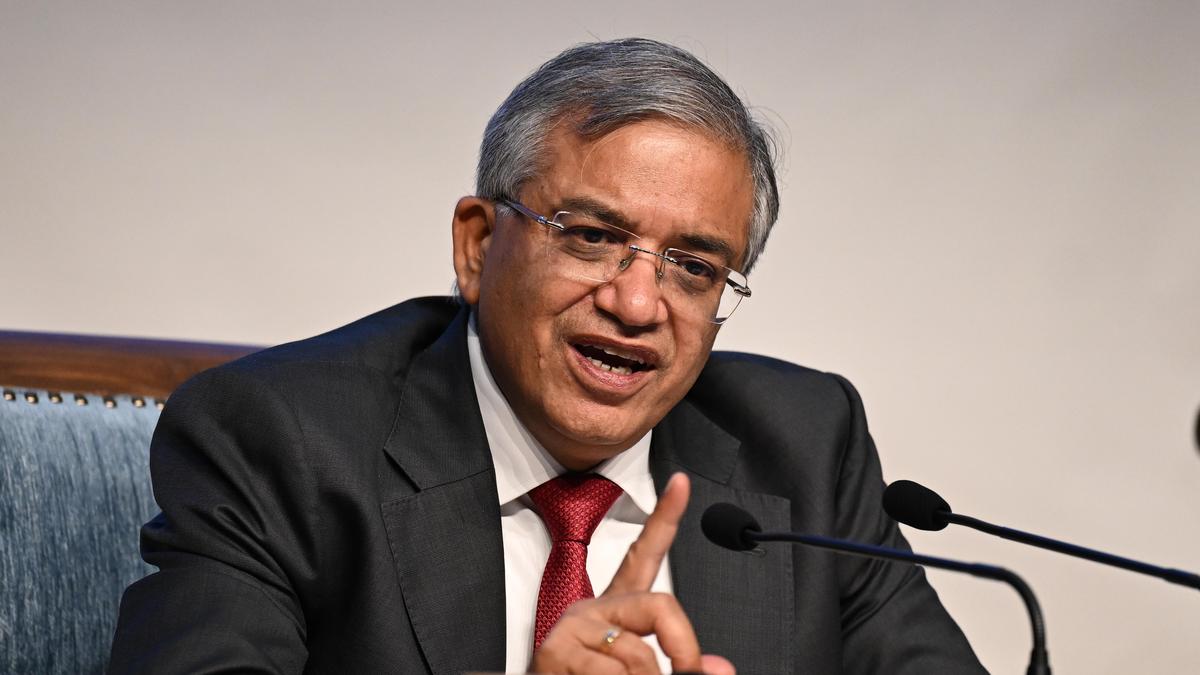
The report by The Indian Express said Election Commissioners Sukhbir Singh Sandhu and Vivek Joshi had objected to decisions concerning voter registration, deletion and restoration of names, changes to Form 6 and the management and control of the electoral-roll database. According to the investigation, the two Commissioners said some decisions or orders were issued without their knowledge or approval.
The revelations have triggered an intense political response, with Opposition parties demanding action against Chief Election Commissioner Gyanesh Kumar, including calls for his removal.
But the Election Commission has rejected the suggestion that the reported objections demonstrate that the institution’s formal decisions were taken unilaterally. Officials said that differing views are part of institutional deliberation and maintained that the Commission’s decisions, including those relating to the Special Intensive Revision (SIR), were approved unanimously by all three Commissioners.
That disagreement over what happened inside the Commission is now at the centre of the controversy.
How the Election Commission row began
The controversy stems from an investigation into the functioning of the three-member Election Commission during the nationwide expansion of the Special Intensive Revision of electoral rolls.
The SIR exercise began in Bihar in June 2025 and has subsequently expanded to other parts of the country. The exercise involves a detailed verification and revision of electoral rolls, making questions surrounding voter inclusion, deletion, restoration and registration particularly consequential.
According to The Indian Express investigation, Sandhu and Joshi recorded at least 14 formal objections over a period of 10 months, including four on a single day.
The reported objections were not confined to one administrative issue.
They reportedly covered:
- addition of new voters;
- deletion and restoration of names from electoral rolls;
- appeals against decisions taken during the SIR process;
- changes involving statutory Form 6, used for new voter registration;
- access to and control over the electoral-roll database;
- centralisation of certain technological functions in Delhi; and
- concerns surrounding software used for electoral-roll management.
The significance of the allegations lies in the fact that they came from two members of the three-member constitutional body itself.
What exactly did the two Election Commissioners object to?
One of the most important disputes concerns Form 6, the statutory form used by citizens seeking inclusion in electoral rolls as new voters.
According to the investigation, Joshi recorded concerns in May over changes made to the form through SIR-related instructions. He reportedly took the position that changes to the statutory form could not simply be introduced through administrative instructions and that the relevant rules would have to be amended through the prescribed process.
Sandhu subsequently concurred with those concerns and later described the change as unauthorised and illegal, according to the report.
Former Chief Election Commissioner O P Rawat subsequently described the reported changes to Form 6 as “absolutely wrong and illegal” and called the differences within the Commission “very serious” and “unfortunate”. He also argued that electoral-roll software should not override decisions taken by field-level officials.
These are, however, external assessments, not judicial findings that the Form 6 changes were unlawful.
That distinction is important.
The reported objections establish that concerns were raised internally. They do not, by themselves, establish that the disputed decisions were legally invalid.
The second flashpoint: who controls the voter database?
Another major issue involves the technology infrastructure used to manage electoral rolls.
The investigation reported that Sandhu and Joshi raised concerns over what they described as a gradual centralisation of control over electoral-roll data in Delhi, with questions about access available to officials working at the state and field levels.
The issue may appear technical, but its political significance is considerable.
Electoral rolls are the administrative foundation of elections. Decisions about who is added, deleted, restored or prevented from being included can directly affect an individual’s ability to participate in an election.
The dispute therefore goes beyond software architecture.
It raises a broader institutional question:
How should authority over voter data be distributed between the Election Commission’s central technology structure and officials responsible for maintaining electoral rolls on the ground?
The reported objections also included concerns about changes in work allocation relating to the technology infrastructure handling electoral-roll information. The two Commissioners reportedly wrote separately to the Cabinet Secretary over aspects of this issue.
Election Commission says decisions were unanimous
The Election Commission’s response is central to understanding the controversy.
Following the publication of the report, EC officials said that all decisions taken by the Commission, including those concerning SIR, had the approval of all three Election Commissioners.
The Commission’s position, as reported by Hindustan Times and other outlets, was that differences of view during deliberations are a normal feature of institutional decision-making and do not necessarily mean that final decisions lacked the approval of the full Commission.
The legal framework itself provides for deliberation within the Commission.
The Chief Election Commissioner and Other Election Commissioners (Appointment, Conditions of Service and Term of Office) Act, 2023 states that the business of the Commission is to be transacted, as far as possible, unanimously, while differences are resolved according to the statutory framework.
This creates an important distinction between:
an internal objection during deliberation
and
a final Commission decision adopted without the participation or approval of the other Commissioners.
The two are not automatically the same.
The controversy therefore turns partly on whether the objections reflected ordinary internal deliberation or whether they indicate that significant decisions were actually taken or implemented without the required institutional approval.
Opposition escalates demand for CEC’s removal
The political reaction was swift.
Opposition parties seized on the reported objections to question the functioning of the Election Commission and the credibility of its decision-making process.
CPI(M) MP John Brittas described the situation as a “one-man autocracy” under Gyanesh Kumar and called for action against the CEC. Congress leaders including Jairam Ramesh and other senior party figures also questioned the Commission’s functioning.
Congress general secretary K C Venugopal called for Kumar’s removal, alleging that electoral processes were being compromised and that voters’ rights could be affected. Other Opposition leaders also demanded parliamentary action and scrutiny of the SIR process.
The reaction was not limited to Congress.
Leaders from the CPI(M), Trinamool Congress and Shiv Sena (UBT), among others, also called for action against the CEC. TMC leader Derek O’Brien renewed calls for action on a parliamentary motion seeking Kumar’s removal.
By September 24, reports indicated that Opposition parties were discussing a fresh joint strategy and a motion seeking action against Kumar.
What does “removal” of a Chief Election Commissioner actually mean?
The political demand for removal has also brought attention to an important constitutional safeguard.
Under Article 324 of the Constitution, the Chief Election Commissioner cannot be removed from office through an ordinary executive decision. The Constitution provides that the CEC can be removed only in the same manner and on the same grounds as a Judge of the Supreme Court.
The 2023 legislation governing the Election Commission reiterates this protection.
Section 11 states that the Chief Election Commissioner cannot be removed except in the manner and on the grounds applicable to a Supreme Court judge. Other Election Commissioners have a different protection: they can be removed only on the recommendation of the Chief Election Commissioner.
Consequently, a political demand for the CEC’s removal is not equivalent to immediate removal from office.
It requires the constitutionally prescribed process.
That makes the current Opposition demand substantially different from a conventional political call for resignation.
Why the SIR issue matters
At the centre of the controversy is the Special Intensive Revision of electoral rolls.
Electoral-roll revision is a routine part of election administration. Its stated purpose is to maintain accurate voter lists by adding eligible voters and removing names where legally justified, including in cases involving death, duplication or migration.
But SIR is politically sensitive because the exercise can result in large numbers of names being left out of draft rolls pending verification.
The Indian Express investigation reported that more than 13 crore names had been struck from draft rolls across 30 States and Union Territories during the broader SIR process. The exact reason for exclusion differs from case to case and should not automatically be equated with permanent deletion or disenfranchisement.
This distinction matters because electoral-roll revision contains procedures for claims, objections, verification and appeals.
The larger dispute is therefore not simply whether voter lists should be revised.
It is about how that revision is conducted, who controls the process, how decisions are documented and what safeguards exist for citizens whose names are excluded or challenged.
The Form 6 controversy adds another layer
The dispute over Form 6 is particularly significant because the form represents the entry point into the electoral system for citizens seeking registration.
According to the investigation, the disputed version of the form introduced an additional declaration linking the new voter’s application with the previous SIR electoral roll.
The two Election Commissioners reportedly questioned the legal basis for introducing such a change through administrative instructions.
The issue has consequently evolved into a question about administrative authority and statutory procedure.
If a statutory form is changed, what legal process must be followed?
Can the Election Commission modify the form through administrative instructions?
Or does such a modification require amendment of the underlying rules?
Those questions are ultimately legal and institutional questions rather than political slogans.
Former election officials raise concerns
The controversy has also drawn comments from former Election Commission officials.
Former CEC O P Rawat said the reported differences represented an unusually serious situation and criticised the reported changes to Form 6.
Rawat, who headed the Commission in 2018, said that during his tenure decisions were generally taken unanimously and argued that electoral-roll software should not be allowed to override field-level decisions.
Another former CEC, S Y Quraishi, also questioned the implications of conducting future elections using electoral rolls produced through what he described as a potentially legally flawed revision process.
Again, these are expert opinions rather than judicial determinations.
Their significance lies in the fact that former officials familiar with the institution are publicly commenting on the reported internal disagreement.
BJP and government’s counter-position
The Opposition’s interpretation has not gone unanswered.
BJP leaders have argued that disagreement within a constitutional institution should not automatically be presented as evidence of institutional collapse.
BJP spokesperson Sambit Patra said differing views among Election Commissioners are part of democratic and institutional functioning and pointed to the Election Commission’s assertion that its final decisions were unanimous.
This presents the controversy through a fundamentally different lens.
For the Opposition, the reported written objections raise questions about transparency and concentration of authority.
For the government’s political camp and the Election Commission, internal discussion and disagreement do not necessarily invalidate the final institutional decision-making process.
The factual question that remains is therefore narrower:
What happened after each objection was recorded?
Were the objections discussed?
Were decisions modified?
Were the concerns formally rejected?
Who authorised disputed administrative instructions?
And did the final orders carry the approval required under the governing legal framework?
Those answers would provide considerably more clarity than political accusations on either side.
Why the dispute could have wider consequences
The controversy comes at a particularly sensitive moment for India’s electoral system.
Questions about voter-roll revision, electoral software, the inclusion or deletion of names and the independence of election administration have increasingly become part of political debate.
For the Election Commission, institutional credibility depends not only on the conduct of polling itself but also on confidence in the administrative machinery that determines who appears on the electoral roll.
That makes transparency particularly important.
If two members of the three-member Commission have formally raised concerns, publishing the relevant decisions, responses and procedural records could help establish what actually happened.
At the same time, allegations made by political parties should not themselves be treated as proof of wrongdoing.
The controversy requires documentary answers.
A constitutional institution now facing a credibility test
The Election Commission occupies a unique position in India’s constitutional structure.
Article 324 vests the superintendence, direction and control of electoral rolls and elections in the Commission.
Its authority ultimately rests not only on constitutional provisions but also on public acceptance of its decisions.
That makes internal disagreement unusually consequential.
The reported 14 objections are important because they concern matters directly connected to electoral administration. But the Commission’s response is equally important: it says the final decisions were unanimous.
Both propositions can coexist at the level of institutional process — Commissioners can raise objections during deliberation while the final decision can still be adopted unanimously.
The crucial question is what the documentary record shows in individual cases.
What happens next?
The immediate political battle is likely to focus on the demand for action against Gyanesh Kumar.
But beyond the parliamentary confrontation, several institutional questions are likely to remain:
Were all disputed decisions properly authorised by the Commission?
What was the legal basis for the changes to Form 6?
How are voter databases controlled and audited?
What safeguards exist when software or centralised systems conflict with field-level decisions?
How are objections raised by individual Election Commissioners resolved and recorded?
And can the Election Commission provide sufficient documentary transparency to settle the dispute?
These questions are more consequential than the competing political descriptions of the controversy.
The Opposition’s demand for removal represents a political response to the reported internal objections. The Election Commission’s assertion of unanimous decision-making represents the institutional response.
Between the two lies the evidence: written objections, orders, meeting records, legal provisions, software protocols and the eventual decisions taken.
That record will determine how the current controversy is ultimately understood.
The larger issue: trust in the electoral process
The dispute is ultimately about more than one office-holder or one revision exercise.
India’s electoral system depends on millions of individual administrative decisions — from voter registration and deletion to polling arrangements and counting.
A voter who believes that the electoral roll is accurate does not ordinarily see this machinery.
But when reports emerge that senior members of the institution itself disagreed over how that machinery was being operated, public attention naturally shifts from the polling booth to the institution behind it.
That is why transparency matters.
The immediate political confrontation may be over the future of CEC Gyanesh Kumar.
The larger institutional question is whether the Election Commission can provide a clear, documented account of how the disputed decisions were made, what objections were raised, how they were resolved and why the final decisions were considered lawful and unanimous.
Until those questions are answered in sufficient detail, the controversy is likely to remain centred on competing claims rather than a settled factual account.