How Omar Abdullah’s Statehood Resolution Reopens the Autonomy Debate in J&K
By: Javid Amin | 30 September 2026
Srinagar: What began as a demand for the restoration of full statehood to Jammu and Kashmir has quickly expanded into a wider political debate over autonomy, special status and the constitutional relationship between the region and the Union.
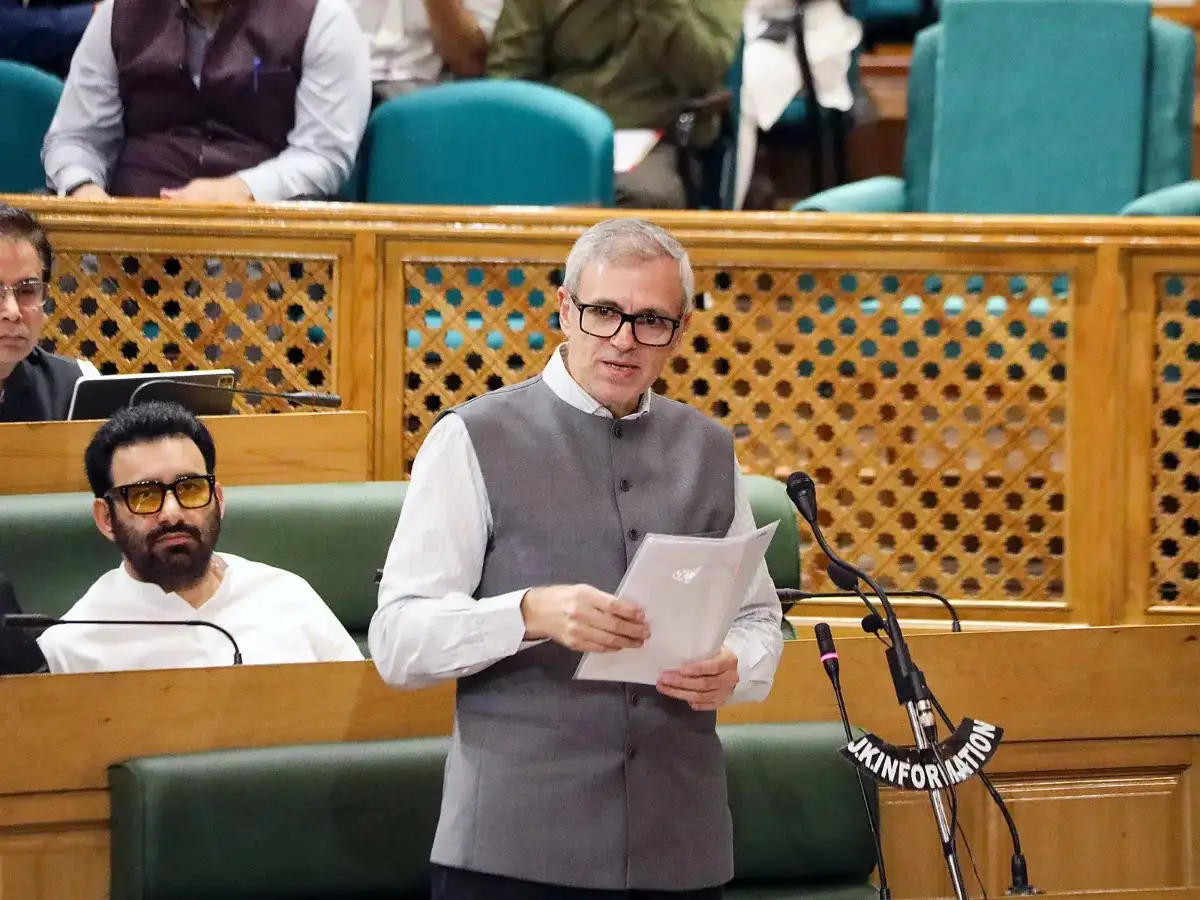
The immediate trigger is a single reference in the resolution moved by Chief Minister Omar Abdullah and passed by the Jammu and Kashmir Legislative Assembly on September 28.
The resolution called upon the Government of India for the “immediate and urgent restoration of full statehood” to Jammu and Kashmir. But it also stated that the demand was being made “in addition to” resolutions adopted by the House on June 26, 2000 and November 6, 2024.
That wording became the centre of the political confrontation between the ruling benches and the BJP.
For the National Conference-led government, the reference was a way of placing the latest demand in the context of positions already adopted by elected Assemblies. For the BJP, it raised a different question: whether a resolution ostensibly about statehood was being used to reopen issues relating to autonomy, special status and the pre-2019 constitutional framework.
The result was a debate that went well beyond the restoration of statehood.
The Resolution at the Centre of the Controversy
The Assembly’s September 28 resolution is straightforward in its operative demand: it calls for the urgent restoration of full statehood and directs that the resolution be forwarded to the Government of India.
It does not itself restore statehood, amend the Constitution or revive Article 370.
The controversy instead stems from the political context created by its reference to the earlier resolutions.
The June 26, 2000 resolution was passed when Farooq Abdullah was Chief Minister and the National Conference was in government. It endorsed the recommendations of the State Autonomy Committee and sought restoration of Jammu and Kashmir’s constitutional relationship with New Delhi to the position that existed before 1953. The Union Cabinet headed by then Prime Minister Atal Bihari Vajpayee subsequently rejected the autonomy resolution.
The November 6, 2024 resolution was different in form and timing. Passed by the newly elected Assembly following the 2024 elections, it sought dialogue with the Government of India for restoration of Jammu and Kashmir’s “special status and constitutional guarantees” and called for constitutional mechanisms to address the changes made after 2019.
The 2026 resolution’s reference to both positions has therefore connected three different political moments: autonomy in 2000, special status in 2024 and statehood in 2026.
2000: The Autonomy Resolution
The 2000 resolution represents one of the clearest historical markers in the National Conference’s approach to Jammu and Kashmir’s constitutional relationship with the Union.
Passed under Farooq Abdullah, it was based on the recommendations of the State Autonomy Committee and sought restoration of the constitutional position that existed before 1953.
That was a much broader proposition than administrative decentralisation. It concerned the distribution of constitutional powers between Jammu and Kashmir and the Union.
The Union Cabinet rejected the resolution in July 2000, leaving it as a political expression of the elected Assembly rather than an instrument that produced constitutional change.
That history explains why its mention in the 2026 resolution carries political weight.
For the BJP, the 2000 reference is not merely historical. Leader of Opposition Sunil Sharma has argued that the reference brings the autonomy question and the pre-1953 position back into the current statehood discussion.
The BJP has said it supports restoration of statehood but opposes connecting that demand with the earlier constitutional arrangement.
2019 Changed the Constitutional Landscape
The context of the debate changed fundamentally in August 2019.
The special constitutional arrangement associated with Article 370 was altered, and the former state was reorganised into the Union Territories of Jammu and Kashmir and Ladakh.
The Supreme Court subsequently upheld the Union government’s constitutional changes in its December 2023 judgment.
At the same time, the Court recorded the Union government’s undertaking regarding restoration of statehood and directed that statehood should be restored at the earliest and as soon as possible. The Court separately directed that elections to the Legislative Assembly be held by September 2024.
That created a new political question.
The immediate issue after the 2019 reorganisation was no longer only whether Jammu and Kashmir should recover its earlier constitutional position. It also became whether the region would first regain the status of a state and, if so, what powers would accompany that status.
The distinction between those questions remains important.
Statehood and autonomy are not legally identical concepts.
Statehood concerns the constitutional status of a territory within India’s federal structure. Autonomy concerns the distribution and exercise of powers within that constitutional relationship.
Consequently, restoration of statehood would not automatically recreate the pre-2019 constitutional framework.
2024: Special Status Returns to the Assembly’s Political Vocabulary
The elected Assembly returned to the constitutional question in November 2024.
On November 6, it passed a resolution seeking dialogue with the Government of India for restoration of “special status and constitutional guarantees” and called for constitutional mechanisms to work out their restoration.
Unlike the 2000 resolution, the 2024 resolution did not simply reproduce the pre-1953 autonomy demand. It emerged from a very different constitutional and political environment following the 2019 reorganisation.
Its significance was therefore primarily political: the elected Assembly formally recorded its position on the post-2019 constitutional changes.
It did not itself restore Article 370 or alter Jammu and Kashmir’s legal status.
That is why the 2026 reference to the 2024 resolution matters.
By retaining the earlier resolution in the political record, the latest Assembly has made clear that its demand for statehood exists alongside, rather than in place of, the positions adopted by the House in 2024.
2026: Statehood Becomes the Immediate Demand
The latest resolution changes the immediate emphasis.
Omar Abdullah’s motion did not ask the Assembly to pass a new resolution restoring Article 370 or autonomy. Instead, it called for the restoration of full statehood.
Omar has repeatedly stressed that distinction.
During the debate, he argued that the House was not being asked to vote again on Article 370, Article 35A, autonomy or special status. Those issues, he maintained, had already been dealt with through previous Assembly resolutions.
The Chief Minister also deliberately resisted attempts by members to insert explicit references to Article 370 and Article 35A into the new resolution.
Ten amendments were submitted during the debate, several seeking references to the earlier constitutional framework. Omar urged members not to press them, warning that doing so could provide the BJP with an opportunity to oppose the statehood resolution itself. The amendments were ultimately not pressed.
This produced an unusual political formulation.
The final resolution demanded statehood while simultaneously referring to earlier Assembly positions on autonomy and special status.
It therefore kept those earlier positions in the political record without formally incorporating them into the operative demand for statehood.
BJP Sees a Link That Omar Says Is Not Being Created
This is where the central disagreement lies.
The BJP has argued that the reference to the 2000 autonomy resolution and the 2024 special-status resolution changes the character of the statehood demand.
Sunil Sharma and other BJP legislators have maintained that the party supports restoration of statehood but does not accept references that, in their interpretation, reopen the pre-2019 constitutional arrangement.
BJP legislators protested in the Assembly, entered the Well, raised slogans and eventually walked out before the resolution was put to a vote.
Omar’s response has been that the latest resolution is specifically about statehood and that removing references to earlier resolutions would effectively require the Assembly to disown positions it had already adopted.
The difference is therefore not simply over whether Jammu and Kashmir should regain statehood.
It is also over what political history should accompany that demand.
Sajad Lone Pushes the Debate Further Back — To 1947
The autonomy debate was widened further by People’s Conference president and Handwara MLA Sajad Lone.
Supporting the statehood resolution, Lone challenged the idea that the current demand should primarily be understood through promises made after 2019 or through the Supreme Court’s 2023 judgment.
He argued that the reference point should instead be 1947 and the political commitments surrounding Jammu and Kashmir’s accession to India.
“If we are here today, it is not because of any promise made by the Prime Minister or the Supreme Court. We are here because of the promises made to the people of J&K in 1947,” Lone said during the Assembly debate, according to reports of his speech.
Lone went further, arguing that the political promises associated with 1947 involved an “exalted status” and autonomy for Jammu and Kashmir.
His intervention effectively widened the discussion from statehood versus Union Territory status to the much older question of the constitutional relationship between Jammu and Kashmir and the Union.
That makes his position distinct from the narrower statehood argument advanced by Omar Abdullah.
While Omar has emphasised restoration of statehood as the immediate demand, Lone has sought to place the demand within a longer historical argument about autonomy and the evolution of Jammu and Kashmir’s constitutional position.
Why Omar Has Tried to Keep the Two Questions Separate
The political challenge for the National Conference government is evident.
Statehood has emerged as a central demand among major regional political parties, but the question of what comes after statehood is more complicated.
The National Conference has historically advocated greater autonomy for Jammu and Kashmir. The party’s 2000 autonomy resolution remains part of its political history.
At the same time, Omar’s government is currently dealing with the practical consequences of Jammu and Kashmir functioning as a Union Territory with an elected legislature.
That makes the immediate restoration of statehood a more focused political demand than reopening the entire constitutional question.
Omar’s approach in the Assembly reflected that distinction.
He sought to retain the political record of the 2000 and 2024 resolutions but resisted amendments that would have expressly inserted Article 370, Article 35A or autonomy into the new statehood resolution.
In effect, the Assembly was being asked to say “restore statehood now” without turning the September 2026 vote into a new vote on the constitutional changes of 2019.
The BJP, however, interpreted the references themselves as politically significant.
That disagreement explains much of the confrontation that followed.
The Supreme Court’s “At the Earliest” Question
Another strand of the debate concerns the Supreme Court’s 2023 judgment.
The Court did not order an immediate restoration of statehood on a fixed date. Rather, it recorded the Union government’s position that statehood would be restored and directed that this should happen “at the earliest and as soon as possible.”
Omar has repeatedly questioned what that formulation means in practical terms.
Nearly two years after the elected Assembly returned following the 2024 elections, the Chief Minister has asked why there is still no publicly specified timetable for restoration of statehood.
He has also challenged arguments that restoration should depend upon the complete end of militancy.
During the Assembly debate, Omar argued that making statehood conditional on the security situation could effectively give developments outside the elected government’s control a role in determining when Jammu and Kashmir would regain statehood.
The argument adds another dimension to the debate: whether statehood is primarily a constitutional and political question or whether it should be linked to prevailing security conditions.
What the Three Resolutions Actually Show
Taken together, the 2000, 2024 and 2026 resolutions reveal how the political emphasis of Jammu and Kashmir’s elected Assembly has changed over time.
2000 was about autonomy.
The Farooq Abdullah government sought restoration of the constitutional position associated with the pre-1953 period.
2024 was about special status and constitutional guarantees.
The newly elected Assembly sought dialogue with the Centre over restoring the constitutional protections altered after 2019.
2026 is about statehood.
The current Assembly has asked the Government of India to urgently restore full statehood.
These are different demands arising from different constitutional circumstances.
Treating them as identical would obscure important legal and political distinctions. At the same time, treating them as completely unrelated would ignore why the 2026 reference to the earlier resolutions has generated such a strong reaction.
The common element is that all three are resolutions of the elected Assembly expressing political positions. None, by itself, changes Jammu and Kashmir’s constitutional status.
The Autonomy Question Is Back — But in a Different Form
The latest controversy does not mean that Article 370 or the 2000 autonomy resolution has been restored.
It means something narrower but politically important: the questions surrounding autonomy, constitutional guarantees and the distribution of powers have once again become part of an active Assembly debate.
The 2026 resolution has given those questions a new political setting.
For the National Conference, earlier resolutions remain part of the institutional record of the Assembly. For the BJP, their inclusion in a statehood resolution raises concerns that the demand is being linked to a broader constitutional agenda. For Sajad Lone and other regional politicians, the discussion extends even further back to the commitments associated with 1947.
The Assembly’s vote therefore settled one immediate question — whether the House would formally demand restoration of statehood — but it did not settle the larger political argument over what Jammu and Kashmir’s relationship with New Delhi should look like.
That question remains open.
What Happens Next?
The statehood resolution has been passed and is to be forwarded to the Government of India.
The next step is therefore outside the Assembly.
The Centre will have to respond to the elected House’s demand, while any actual restoration of statehood would require the necessary legal and constitutional action at the Union level.
Meanwhile, the political debate inside Jammu and Kashmir is already moving beyond the wording of the September 28 resolution.
The arguments advanced by Omar Abdullah, Sajad Lone, M.Y. Tarigami, Surinder Choudhary and BJP legislators show that “statehood” does not mean exactly the same thing to every political constituency.
For some, it is principally about restoring the status of an elected government.
For others, it is inseparable from the larger question of constitutional powers and autonomy.
And for still others, the starting point lies not in 2019 or 2023, but in the political commitments associated with 1947.
The September resolution has therefore not revived the old constitutional order. But it has ensured that the questions surrounding statehood, autonomy, special status and the distribution of powers between Jammu and Kashmir and New Delhi remain firmly on the political agenda.