Cockroach Janata Party Leaders Walk Free, but SIR Campaign Continues: What to Expect From the 2 PM Briefing
By: Javid Amin | Delhi | 11 October 2026
With three senior CJP leaders released by a magistrate, attention now shifts to the organisation’s next move. A scheduled 2 PM press conference could clarify whether the campaign against the Special Intensive Revision of electoral rolls will move towards fresh protests, legal action or a wider opposition mobilisation.
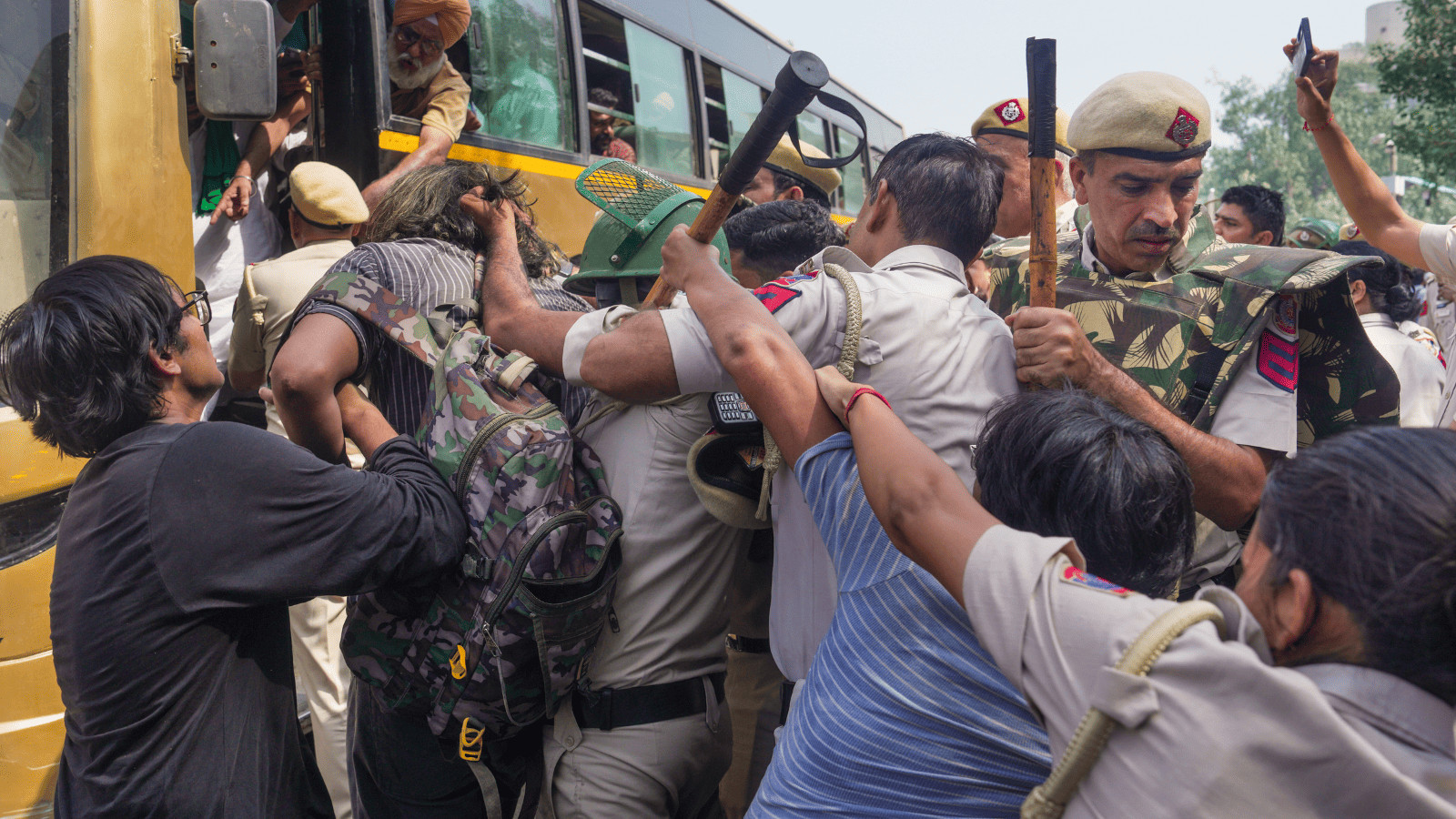
The release of three senior leaders of the CJP on Sunday has shifted the focus of the Delhi protest standoff from detention to the organisation’s future course of action. With a press conference scheduled for 2 PM on October 11, attention is now centred on what the organisation plans to do next following the police crackdown on its proposed demonstration.
Abhijeet Dipke, Saurav Das and Ashutosh Ranka were ordered to be released by an executive magistrate after being detained ahead of the planned protest. The release order reportedly requires them to maintain peace and refrain from activities that could lead to a breach of peace for one year. The precise implications of that condition will depend on the wording of the order and its application.
The announcement of the press conference indicates that the organisation intends to communicate its position and next steps publicly. However, whether it will announce another protest, pursue legal remedies, seek wider political support or change its mobilisation strategy remains to be confirmed.
The 2 PM briefing is therefore emerging as the next significant development in a confrontation that has already drawn attention to protest permissions, preventive detention, electoral-roll revision and the limits of political mobilisation in the national capital.
2 PM Press Conference: What Is CJP Likely to Clarify?
The press conference is expected to address the immediate consequences of the detentions and the organisation’s plans for continuing its campaign. Until the leadership makes its announcement, possible next steps should be treated as scenarios rather than confirmed decisions.
Several questions are likely to shape the briefing.
1. Will CJP Announce Another Protest?
One of the most immediate questions is whether the organisation will announce another demonstration in Delhi or elsewhere.
The earlier protest plan encountered restrictions, heavy police deployment and detentions. If CJP decides to continue with street mobilisation, it may need to clarify the proposed venue, timing, organisers and steps being taken to comply with applicable legal requirements.
A fresh protest could keep the SIR issue in the public debate, but it could also create another confrontation if permission and security arrangements remain unresolved. Any announcement of a new date or venue must therefore be verified directly from the organisation’s official statement.
2. Will the Organisation Challenge the Restrictions Legally?
A second possible course is legal action over the detentions and restrictions imposed on the planned demonstration.
CJP may seek clarification of the legal grounds for the police action, examine the magistrate’s release order or consult lawyers on the available remedies. Whether it pursues any of these routes will depend on the organisation’s assessment and the relevant legal documents.
The legal questions extend beyond the release of the three leaders. They include the grounds for preventive action, the procedures followed by the authorities and the extent to which restrictions on a planned gathering were justified under the applicable law.
Any legal challenge would need to be assessed on its specific facts. Detention alone does not establish that the police action was unlawful, just as the imposition of restrictions does not automatically settle questions about the right to peaceful assembly.
3. Will CJP Expand Its Campaign Beyond Delhi?
The next phase could also involve taking the SIR campaign to a wider audience through public meetings, press briefings, outreach programmes or coordinated activities in other locations.
Such a strategy could allow the organisation to continue communicating its demands without relying exclusively on a single large demonstration in central Delhi.
However, there is no confirmed announcement at this stage that CJP will launch a nationwide campaign or expand its activities to particular states. Any such plan should be attributed to the organisation only after it is formally declared.
The central question is whether CJP intends to keep its campaign focused on the immediate dispute over the Delhi protest or broaden it into a sustained public campaign around electoral-roll revision and voter rights.
The SIR Campaign Remains at the Centre of the Dispute
The Special Intensive Revision of electoral rolls has become the central issue around which the current confrontation has developed.
Electoral-roll revision is intended to update voter lists, identify errors and improve the accuracy of electoral records. However, the process can generate significant controversy when political parties, civil-society organisations or affected voters raise concerns about documentation requirements, deletions, inclusion procedures or access to remedies.
CJP’s campaign has brought these concerns into the public debate. The organisation’s allegations and demands must be examined against official records, election authorities’ explanations and independently verifiable evidence.
A crucial distinction is necessary: the number of names removed or altered during a revision exercise is not, by itself, proof that the same number of eligible voters have been unlawfully excluded. Establishing wrongful exclusion requires evidence about the individuals affected, the reasons for the changes and the procedures available for correction or appeal.
The 2 PM press conference could help clarify which specific SIR-related concerns CJP intends to prioritise and what remedies it will seek. A more clearly defined set of demands could also make it easier for the public to distinguish between documented procedural concerns, political allegations and broader objections to the revision exercise.
What Does the Release Order Mean for CJP’s Next Steps?
The release of Dipke, Das and Ranka removes their immediate detention as an obstacle, but it does not necessarily resolve the wider dispute.
The reported condition requiring the leaders to maintain peace for one year is particularly relevant to any future mobilisation. Its legal scope should not be overstated without examining the actual order. A condition relating to maintaining peace is not automatically equivalent to a blanket prohibition on peaceful political activity.
If CJP announces another demonstration, the relationship between the release conditions, any applicable restrictions and the legal requirements governing public gatherings may become important.
The organisation will also need to communicate its plans carefully so that its supporters understand the intended course of action and any relevant legal conditions. For the authorities, the immediate challenge will be to maintain public order while applying restrictions in a manner consistent with the law.
The next phase will therefore depend not only on the organisation’s political decisions but also on the precise legal framework governing any proposed action.
Delhi Remains on Alert as Authorities Monitor the Situation
Even after the leaders’ release, security remained tight around the Connaught Place Outer Circle and adjoining parts of central Delhi.
The continuing deployment reflects the authorities’ concern about further gatherings, spontaneous demonstrations and possible disruptions in busy public areas. The preceding protest episode involved extensive policing, preventive detentions and restrictions affecting movement around the planned demonstration.
The coming hours could determine whether the situation remains under control or develops into another round of confrontation.
If CJP announces a fresh protest, the response of the Delhi Police, the status of any restrictions and the organisation’s approach to compliance will become central to the next stage of the story. If it instead prioritises legal action and public outreach, the immediate pressure on the streets may ease while the dispute continues through political and legal channels.
At this stage, neither a new protest nor a negotiated resolution should be treated as certain.
Opposition Parties and the Question of Wider Support
The CJP episode has also raised questions about how political parties and opposition groups will respond to the broader debate over SIR and the right to protest.
Several opposition figures and parties have criticised aspects of the police response or expressed support for the right to peaceful demonstration. However, public statements of support do not necessarily indicate agreement on a common action plan, and participation in the same campaign should not be assumed without confirmation.
For CJP, the next decision may involve whether to pursue its campaign independently or seek more structured coordination with political parties, civil-society organisations and other groups concerned about electoral-roll revision.
A wider coalition could increase public attention and create opportunities for joint advocacy. At the same time, different organisations may have distinct priorities, preferred methods of protest and political calculations.
The 2 PM briefing may provide an early indication of whether CJP intends to seek broader coordination. Until such a decision is announced, claims of a formal opposition strategy or a coordinated nationwide programme would be premature.
Three Possible Paths After the 2 PM Briefing
The organisation’s next announcement could point towards one or more of three broad approaches.
First, renewed street mobilisation. CJP could announce another demonstration or a series of public gatherings. Such a move would bring protest permissions, security arrangements and compliance with applicable conditions back into immediate focus.
Second, a legal and institutional campaign. The organisation could prioritise legal consultations, formal representations, documentation of alleged irregularities and demands for explanations from the relevant authorities. This approach could shift the immediate dispute from the streets to official and judicial forums.
Third, wider public and political outreach. CJP could seek to build support through press briefings, public discussions, outreach to affected voters and engagement with political or civil-society groups. Such a strategy would aim to sustain attention on SIR beyond the immediate Delhi confrontation.
These are possible pathways, not confirmed decisions. The organisation may also combine them or adopt a different approach altogether.
What to Watch After the Press Conference
The significance of the 2 PM briefing will depend on the specificity of the announcements made. The most important developments to monitor are:
- A confirmed protest schedule: Whether CJP announces a date, venue and format for any further demonstration.
- Legal proceedings: Whether the organisation initiates a challenge or seeks clarification concerning the detentions, restrictions or release conditions.
- Clear demands on SIR: Whether it identifies specific procedures, records or decisions it wants the authorities to review.
- Political coordination: Whether any joint programme with opposition parties or civil-society organisations is formally announced.
- The authorities’ response: Whether Delhi Police issues further directions or changes security arrangements in response to the organisation’s plans.
These developments will provide a clearer picture of whether the dispute is entering another phase of street mobilisation, moving towards institutional remedies or evolving into a broader public campaign.
The Larger Issue: Protest Rights, Public Order and Electoral Accountability
Beyond the immediate question of what CJP will do next, the episode raises broader questions about democratic participation and the administration of electoral processes.
Peaceful protest provides a channel through which citizens and organisations can raise concerns about government decisions and public institutions. Authorities, meanwhile, have responsibilities relating to public safety, traffic management and the prevention of violence. The challenge is to balance these responsibilities within the framework of the law.
Similarly, electoral-roll revision depends on accurate records and procedures that allow eligible voters to verify their status and seek corrections when necessary. Public confidence is strengthened when the process is transparent, the reasons for changes are explained and effective remedies are available.
The current dispute brings these issues together. Its long-term significance will depend on the evidence behind the allegations, the actions taken by the relevant institutions and the manner in which the organisation pursues its demands.
Conclusion: CJP’s Next Move Could Shape the Next Phase of the Delhi Standoff
The release of three CJP leaders has brought an immediate development in the Delhi protest dispute, but it has not settled the underlying questions concerning SIR, protest restrictions or the organisation’s campaign.
The scheduled 2 PM press conference on October 11 is the next key event to watch. It could clarify whether CJP intends to announce another protest, pursue legal remedies, expand its outreach or seek a wider political platform.
For now, the organisation’s future action plan remains unconfirmed. The clearest indication will come from its formal announcement and any subsequent statements or orders from the authorities.
The next phase of the story will be shaped by what CJP announces, how the authorities respond and whether the dispute produces verifiable answers to the concerns raised about electoral-roll revision and the exercise of the right to peaceful assembly.