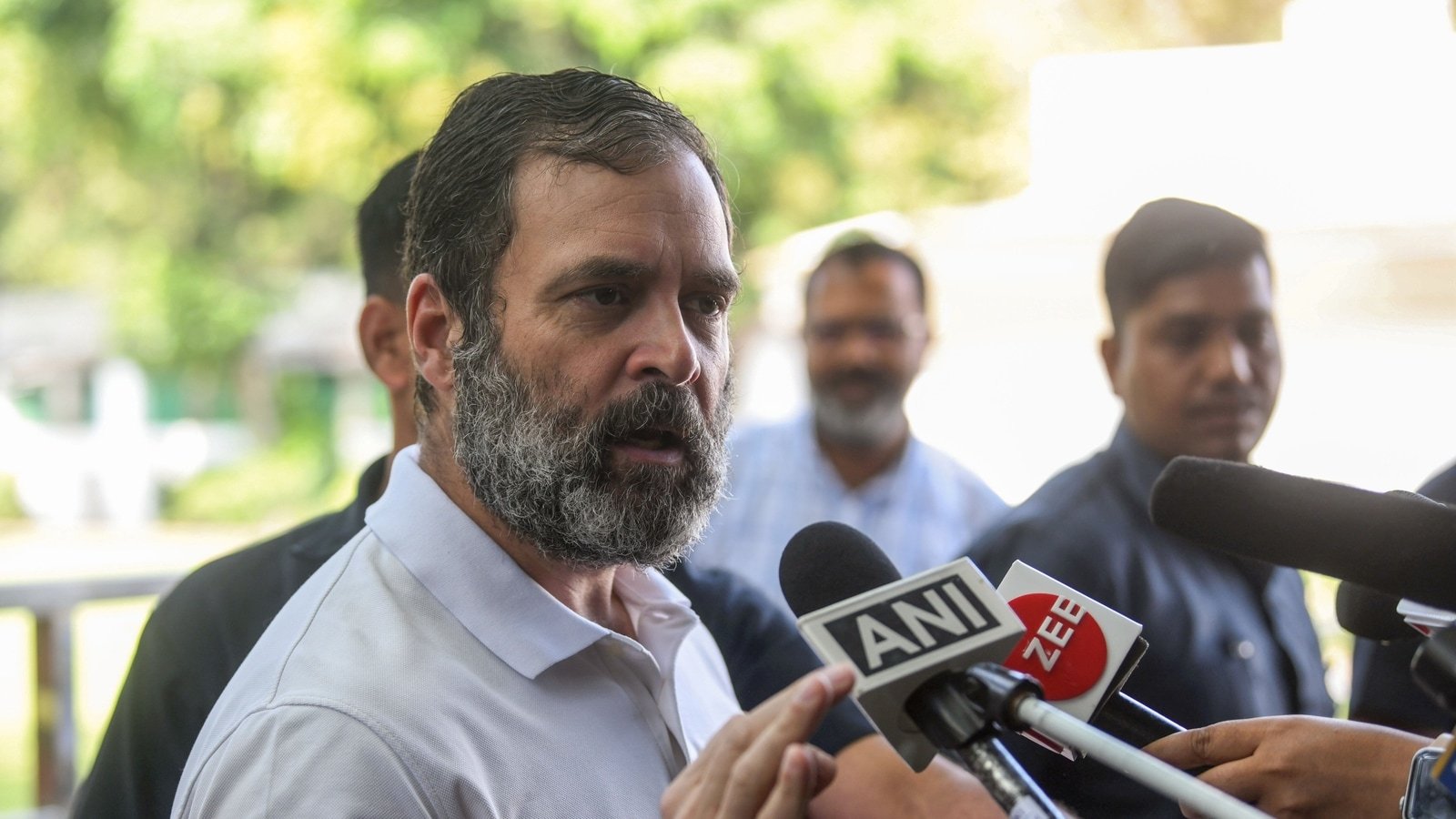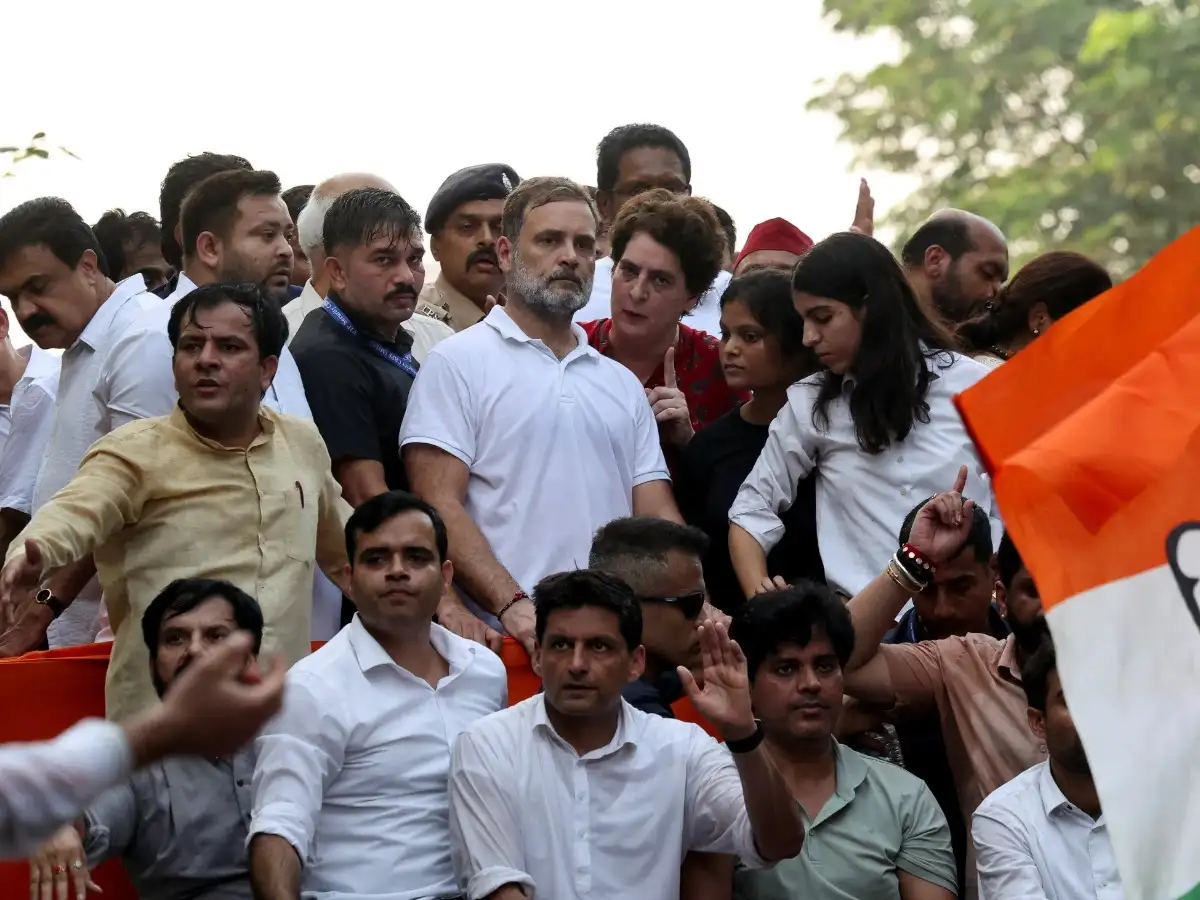
The Opposition’s legal challenge seeks a pause in the Special Intensive Revision of electoral rolls, an independent audit of voter deletions and disclosure of Election Commission records. The petition marks a new phase in the confrontation over electoral transparency, institutional accountability and the right to vote.
By: Javid Amin | 12 October 2026
New Delhi: Congress leader and Leader of Opposition in the Lok Sabha Rahul Gandhi, along with 10 senior leaders of the INDIA bloc, has approached the Supreme Court challenging the Election Commission of India’s handling of the Special Intensive Revision (SIR) of electoral rolls and alleging irregularities in the deletion and modification of voter records.
The petition, filed on Monday, October 12, seeks judicial scrutiny of decisions taken by the Election Commission, greater transparency in the revision process and safeguards against the removal of eligible voters without adequate procedural protection. Among its key demands are an interim suspension of the SIR exercise, an independent audit of electoral-roll changes and disclosure of internal records relating to decisions made by the poll body.
The legal move follows days of political mobilisation and protests in New Delhi, where CJP and opposition groups have demanded the resignation of Chief Election Commissioner Gyanesh Kumar. The demonstrations have also triggered a wider debate over preventive detentions, restrictions on public assembly and the treatment of journalists covering the protests.
The petition marks a shift from street mobilisation to a formal legal challenge. However, the allegations made by the Opposition have not been established as judicial findings, and the filing of the case does not mean that the Supreme Court has accepted the demands or ordered the suspension of SIR.
The case now places the legality, transparency and administration of electoral-roll revision at the centre of a significant constitutional and political debate.
What Triggered Rahul Gandhi’s Supreme Court Move?
At the heart of the dispute is the Election Commission’s Special Intensive Revision of electoral rolls, an exercise intended to review voter records and update electoral lists.
Electoral-roll revision is an important part of election administration. It can help remove duplicate entries, update records following deaths or changes of residence, and ensure that voter lists reflect the eligible electorate. But the process can also generate serious concerns when voters question why their names have been removed, what documents they must provide or whether they have received adequate notice and an opportunity to challenge a decision.
The INDIA bloc’s petition alleges that aspects of the current SIR process raise questions about the Election Commission’s decision-making, the transparency of electoral database changes and the safeguards available to eligible voters.
The Opposition has argued that large-scale changes to electoral rolls require clear procedures, verifiable records and effective remedies for people who believe they have been wrongly excluded.
A central issue is whether the revision process has been authorised and implemented in accordance with the applicable legal framework, including the Election Commission’s powers and the procedures governing the preparation and maintenance of electoral rolls.
The petition also questions whether decisions attributed to Chief Election Commissioner Gyanesh Kumar were taken through the Commission’s proper collective decision-making process.
These are allegations requiring examination against the relevant records and legal provisions. The Election Commission’s decisions and explanations will be important to determining whether the concerns raised by the petitioners have merit.
Who Are the 11 Leaders Behind the Petition?
The petition has brought together prominent leaders from several INDIA bloc parties, reflecting the Opposition’s attempt to frame the SIR controversy as a collective institutional issue rather than an isolated party dispute.
The petitioners are:
- Rahul Gandhi — Congress leader and Leader of Opposition in the Lok Sabha
- Mallikarjun Kharge — Congress president and Leader of Opposition in the Rajya Sabha
- Akhilesh Yadav — Samajwadi Party president
- Tejashwi Prasad Yadav — Rashtriya Janata Dal leader
- Supriya Sule — Nationalist Congress Party (Sharadchandra Pawar) leader
- Sanjay Raut — Shiv Sena (Uddhav Balasaheb Thackeray) leader
- D Raja — Communist Party of India general secretary
- M A Baby — Communist Party of India (Marxist) general secretary
- Saugata Roy — Trinamool Congress MP
- Mahua Majhi — Jharkhand Mukti Morcha MP
- E T Mohammed Basheer — Indian Union Muslim League leader
The breadth of representation is politically significant because the parties involved have different regional bases and electoral priorities. Their participation indicates a shared willingness to seek judicial scrutiny of the revision process.
However, a joint petition does not necessarily mean that all participating parties have identical political strategies or agree on every aspect of the wider protest movement.
The immediate point of convergence is the demand for greater scrutiny of the Election Commission’s decisions and stronger safeguards concerning electoral-roll changes.
What Exactly Has the INDIA Bloc Asked the Supreme Court to Do?
The petition seeks a series of directions intended to subject the SIR process and related Election Commission decisions to closer judicial examination.
1. Suspend the SIR Exercise
One of the principal demands is an interim halt to the ongoing revision exercise while the legal questions raised by the petition are examined.
The petitioners argue that continuing the process without resolving their concerns could create risks for eligible voters if names are removed or modified without adequate safeguards.
A suspension would be a significant interim measure, potentially affecting the timing and administration of the revision exercise. Whether such relief is justified will depend on the legal arguments, the evidence presented and the Court’s assessment of the consequences.
The important distinction is that the Opposition has requested a pause; this does not mean the Supreme Court has ordered one.
2. Establish an Independent Audit of Voter Deletions
The petition seeks an independent committee, reportedly headed by a retired Supreme Court judge, to examine voter deletions and modifications made during SIR.
Such an audit could, if ordered, examine the procedures followed, the reasons recorded for changes and the availability of supporting documentation.
The demand reflects the Opposition’s concern that the scale and nature of electoral-roll changes require independent scrutiny. It also raises a practical question: how can allegations of wrongful exclusion be assessed systematically rather than through isolated political claims?
An effective audit would need a clearly defined mandate, access to relevant records, appropriate safeguards for personal information and a transparent process for addressing discrepancies.
The Supreme Court will have to decide whether an independent audit is legally warranted and, if so, what its scope should be.
3. Publish Details of Deleted Voters and Reasons for Removal
The petition seeks greater transparency concerning deleted voter entries, including booth-level information, the reasons for deletion and relevant demographic details.
The objective, according to the petitioners, is to make it possible to scrutinise patterns in electoral-roll changes and identify cases in which eligible voters may have been wrongly removed.
Such disclosure could improve accountability, but it would also need to comply with applicable privacy and data-protection requirements. Any publication of voter information would have to balance public scrutiny with the protection of sensitive personal details.
The underlying issue is whether the reasons for electoral-roll changes are recorded, accessible to the appropriate authorities and capable of being challenged by affected individuals.
4. Create an Effective Mechanism to Restore Wrongfully Deleted Names
The petition also seeks safeguards to ensure that eligible voters whose names have been wrongly removed can obtain effective relief.
For an individual voter, the consequences of an incorrect deletion can be immediate and serious. A person may discover the problem only when checking the electoral roll or preparing to vote, making accessible correction and appeal procedures particularly important.
An effective restoration mechanism would need clear instructions, reasonable timelines, transparent decisions and a practical route for challenging an adverse outcome.
Existing electoral laws provide procedures for claims, objections and corrections. The central question is whether those mechanisms are sufficient in the circumstances of the current revision exercise and whether additional safeguards are necessary.
5. Disclose Internal Election Commission Records
The petition seeks production of internal records relating to the SIR process, including meeting minutes, objections, file notings and relevant logs from electoral-management systems such as ECINET and ERONET.
These records could be important in establishing how decisions were taken, what information was considered and how changes to electoral rolls were processed.
The petitioners have also questioned whether the Chief Election Commissioner exercised the Commission’s collective powers without the knowledge, approval or concurrence of the other Election Commissioners.
That allegation concerns the institutional functioning of a constitutional body. It must be tested against the Commission’s records, the relevant statutory framework and any explanation provided by the respondents.
The Court will need to determine which records are relevant and whether their production is necessary for deciding the legal issues before it.
Other Issues Raised in the Plea
The reported demands also extend to questions concerning the legal basis for the SIR exercise, changes to voter-registration procedures and Form 6 requirements, the functioning of electoral databases and the integrity of election-related systems.
The petition seeks broader scrutiny of the rules and procedures governing electoral administration, rather than limiting the challenge to individual deletion cases.
The precise relief available will depend on the petition’s final procedural status, the arguments made by the parties and the Court’s directions.
A Procedural Hurdle: Supreme Court Registry Flags Defects
A further development reported on October 13 concerns procedural defects identified by the Supreme Court Registry in the petition.
Media reports said the Registry flagged deficiencies involving authorisation documents, the legibility of an identity document submitted for one petitioner and a shortfall in court fees, among other filing-related issues.
Such objections concern compliance with the Court’s filing requirements. They do not, by themselves, establish whether the substantive allegations about SIR are correct or incorrect.
Nor should registry objections automatically be interpreted as a judicial rejection of the case. The petitioners or their legal team may be required to correct the deficiencies before the matter can proceed in the ordinary course.
The development is nevertheless important because it adds a procedural step to an already politically charged case. The petition’s progress will depend not only on the substance of the arguments but also on compliance with the Court’s filing requirements and the subsequent listing of the matter.
The next confirmed update should establish whether the reported defects have been rectified and when the petition will be taken up for consideration.
Why the Petition Questions the Election Commission’s Decision-Making
One of the more consequential aspects of the case concerns the functioning of the Election Commission itself.
The petition alleges that decisions relating to SIR involved an allegedly unilateral exercise of powers that should be exercised collectively by the Commission.
The Election Commission is a constitutional body entrusted with supervising and conducting elections. Its credibility depends not only on the formal authority it possesses but also on the transparency, consistency and legality of its decision-making.
The petitioners’ challenge raises questions about how the Commission recorded its decisions, whether the required procedures were followed and what internal documentation exists to demonstrate the process.
These questions are separate from whether particular voter deletions were justified. Even if individual changes to electoral rolls were valid, the legality of the process by which broader decisions were made could still be examined. Conversely, an allegation of defective decision-making does not automatically establish that every resulting electoral-roll change was unlawful.
The Court’s task, if it admits and hears the matter, will be to examine the relevant legal questions and evidence rather than to decide the dispute solely on the basis of competing political claims.
What Is SIR, and Why Has It Become So Controversial?
The Special Intensive Revision is a more comprehensive exercise than routine updates to electoral rolls. Its purpose is to review voter records and establish an updated list of eligible electors in accordance with the applicable rules.
The process can involve verification of voter details, changes of residence, identification of deceased electors, removal of duplicate entries and the handling of claims and objections.
The controversy arises when the exercise produces large numbers of deletions or when voters and political parties question the methods used to identify entries for removal.
A deleted name does not necessarily represent an eligible voter being unlawfully excluded. Electoral rolls may contain entries relating to deceased people, duplicate registrations or individuals who have moved away. Equally, an eligible voter could be affected by an error in documentation, verification or data processing.
The distinction can be established only through appropriate records and case-by-case examination.
This is why transparent deletion categories, accessible reasons, reliable documentation and effective appeal mechanisms are important. They help distinguish legitimate corrections from errors and give affected individuals a means of seeking redress.
The legal challenge seeks to place these questions under judicial scrutiny, particularly where the Opposition believes existing procedures do not provide sufficient transparency or protection.
The Numbers Behind the Voter-Deletion Debate
The scale of electoral-roll changes has become one of the most politically sensitive elements of the controversy.
Reports have referred to more than 130 million names removed during the wider revision process, with categories including deceased individuals, people who have moved and voters who could not be traced.
Such a figure must be interpreted carefully. The total number of names removed or marked for removal is not the same as the number of eligible voters who have been unlawfully disenfranchised.
To establish the scale of any wrongful exclusion, investigators would need to examine the underlying categories, the evidence used to support deletions, the number of affected eligible voters and the outcomes of subsequent correction or appeal processes.
For example, a deletion involving a deceased person is fundamentally different from a deletion involving an eligible citizen whose residence or identity was incorrectly recorded. Combining these categories without explanation can create a misleading impression of the number of people who may have lost their voting rights.
The Opposition’s demand for an independent audit is intended to address concerns about the reliability and transparency of the figures. Whether an audit is necessary, and what methodology it should use, remains a matter for legal and administrative consideration.
Why Delhi Became the Centre of the SIR Confrontation
The Supreme Court petition followed a period of intense political mobilisation in the national capital.
CJP and opposition groups had organised demonstrations demanding accountability from the Election Commission and the resignation of Chief Election Commissioner Gyanesh Kumar. Police restrictions, preventive detentions and the disruption of movement in parts of central Delhi brought additional attention to the protests.
The detention of political activists and journalists became a separate source of controversy, with press organisations and civil-liberties advocates questioning whether the police response had unduly restricted peaceful assembly and independent reporting.
Authorities, meanwhile, cited public-order concerns and the need to manage demonstrations in a densely populated part of the capital.
The INDIA bloc’s decision to approach the Supreme Court adds a formal legal dimension to this confrontation. Instead of relying exclusively on public demonstrations and political statements, the parties are seeking judicial directions concerning the rules, records and procedures governing the revision process.
The legal route offers a forum for examining documentary evidence and testing competing interpretations of the law. However, filing a petition does not guarantee that the Court will grant the requested relief, and the proceedings may take time.
The protests and the legal challenge are related, but they remain distinct: one is a form of political mobilisation, while the other seeks a decision through the judicial process.
Opposition Unity: A Shared Legal Challenge, Not Necessarily a Single Political Strategy
The participation of leaders from Congress, the Samajwadi Party, the RJD, the Trinamool Congress, the Left parties, the NCP (Sharadchandra Pawar), Shiv Sena (UBT), the Jharkhand Mukti Morcha and the Indian Union Muslim League gives the petition a broader political base.
For the INDIA bloc, a joint legal challenge allows several parties to place common concerns before the Court. It may also help consolidate demands for transparency and establish a shared institutional position on the administration of electoral rolls.
But cooperation on a petition does not necessarily remove differences among the parties. Their regional interests, election strategies and approaches to public mobilisation may continue to vary.
The more immediate test is whether the parties can sustain a coordinated position around specific, verifiable demands: access to relevant records, transparent procedures for deletion, effective restoration of eligible voters and clarity about the legal basis of the SIR exercise.
If the petition proceeds, the parties will also need to respond to legal developments rather than treating the case solely as a political campaign.
What Does the Election Commission Need to Address?
The Election Commission’s response will be important to the future of the dispute.
The legal questions raised by the petition concern the authority for conducting SIR, the internal process for making decisions, the treatment of voter data and the safeguards available to people affected by deletions.
A substantive response would need to address the relevant legal provisions and explain the procedures followed. Where allegations concern specific electoral-roll changes, the underlying records and reasons for those decisions will be particularly important.
The Commission has a responsibility to maintain accurate electoral rolls. It must also operate within the law and ensure that eligible voters have access to applicable correction and appeal mechanisms.
The Opposition’s allegations should not be treated as proven simply because they have been placed before the Court. Equally, questions about electoral administration cannot be resolved merely by dismissing them as political claims.
The credibility of the process ultimately depends on evidence, transparent procedures and the ability of affected individuals to seek effective remedies.
What Happens Next in the Supreme Court?
The next stage will depend on the petition’s procedural progress and any directions issued by the Court.
Three broad possibilities illustrate the range of issues the proceedings could address. These are potential outcomes, not predictions of what the Court will decide.
Scenario 1: The Court Seeks Records and Explanations
The Court could ask the Election Commission to respond to specific allegations or produce relevant documents. This would allow the legal questions to be examined against the Commission’s records and the governing framework.
Such a step would not automatically establish that the petitioners’ allegations are correct.
Scenario 2: The Court Considers Additional Safeguards
The Court could examine whether further procedural protections, clearer disclosure requirements or effective correction mechanisms are necessary while the case is pending.
Any such directions would depend on the arguments and evidence presented, as well as the legal authority available to the Court.
Scenario 3: The Court Examines the Request for an Audit or Suspension
The Court could consider the petitioners’ request for an independent audit or an interim pause in SIR. It would need to assess the legal basis for those measures, their necessity and their practical consequences for electoral administration.
A decision to grant or refuse interim relief would not necessarily settle every issue raised in the petition. The substantive questions could require further proceedings.
The immediate priority is to establish the petition’s procedural status, including whether the registry objections have been resolved and when the matter will be listed for consideration.
Ground-Level Analysis: The Real Issue Is Electoral Trust
The dispute has moved beyond a disagreement over administrative procedure. It now concerns the relationship between electoral accuracy, transparency and public confidence in democratic institutions.
Accurate voter lists are essential to the conduct of elections. Removing deceased or duplicate entries and updating records can improve the integrity of electoral rolls. But an effective revision process must also protect eligible voters from administrative errors and provide meaningful opportunities to challenge incorrect decisions.
For voters, the practical questions are straightforward: Is their name on the list? If it has been removed, can they find out why? Is there an accessible way to challenge the decision? And can the correction be made in time for them to exercise their voting rights?
For the Election Commission, the challenge is to demonstrate that its procedures are lawful, consistent and supported by reliable records.
For the Opposition, the challenge is to substantiate allegations of wrongful exclusion with evidence rather than relying only on the scale of the overall revision exercise.
For the judiciary, the task is to assess the legal issues independently and determine whether the requested interventions are warranted.
These responsibilities are different, but they converge on a common requirement: electoral administration must be accurate, legally compliant and capable of public scrutiny.
Conclusion: A Legal Test for Electoral Transparency and Accountability
Rahul Gandhi and 10 INDIA bloc leaders have taken the dispute over SIR to the Supreme Court, seeking an independent audit of voter deletions, disclosure of Election Commission records, safeguards against wrongful exclusion and an interim suspension of the revision exercise.
The petition represents a significant escalation in the Opposition’s campaign over electoral-roll revision. It also creates an opportunity for the specific allegations to be examined through legal procedures and documentary evidence.
The case’s progress will depend on the resolution of reported filing defects, the Court’s consideration of the petition and the responses of the Election Commission and other respondents. No conclusion should be drawn about the merits of the allegations or the likely outcome before those issues are examined.
Ultimately, the central question is not simply how many names have been removed from electoral rolls. It is whether each change has been made under the applicable rules, whether eligible voters can challenge errors and whether the institutions responsible for the process can demonstrate that their decisions are transparent and lawful.
The Supreme Court petition has brought those questions into sharper focus. Its significance will depend on the evidence presented, the legal findings made and the practical safeguards that emerge for eligible voters.