Imran Khan’s PTI Loses Control of Its Last Major Provincial Stronghold as Islamabad Cites Militancy, Security Concerns and a Breakdown in Governance
By: Javid Amin | 11 October 2026
Islamabad: Pakistan’s decision to impose emergency measures and Governor’s Rule in Khyber Pakhtunkhwa (KP) has opened a new and potentially consequential chapter in the country’s political crisis, placing constitutional authority, provincial autonomy and counterterrorism policy at the centre of a confrontation between the federal government and Imran Khan’s Pakistan Tehreek-e-Insaf (PTI).
On Sunday, October 11, President Asif Ali Zardari approved the federal cabinet’s recommendations to invoke Articles 232 and 234 of Pakistan’s Constitution. The decision transferred executive authority from the PTI-led provincial administration to Governor Faisal Karim Kundi, supported by an 11-member advisory council. The federal government also announced emergency arrangements covering 12 districts.
Prime Minister Shehbaz Sharif’s government says the intervention has become necessary because of worsening security conditions, increasing militant threats and what it describes as the provincial administration’s failure to cooperate adequately in the fight against terrorism.
PTI rejects that explanation, arguing that Islamabad is using extraordinary constitutional powers to dismantle an elected government in the party’s strongest remaining political base.
The timing has intensified those concerns. The proclamation followed weeks of tension over PTI’s long-march campaign demanding Khan’s release and raising concerns about his access to medical care and political rights. Chief Minister Sohail Afridi had been leading the mobilisation before the federal intervention.
The central question is therefore not simply whether Pakistan faces a serious security problem. It is whether the circumstances satisfy the constitutional requirements for federal intervention in an elected provincial government, and whether the measures will improve security or deepen an already entrenched political conflict.
What Happened in Khyber Pakhtunkhwa?
The announcement followed an emergency meeting of the federal cabinet chaired by Shehbaz Sharif. After reviewing the security situation, the cabinet recommended that the president exercise his constitutional powers.
Law Minister Azam Nazeer Tarar subsequently announced that the provincial government led by Sohail Afridi had ceased to exercise its executive functions. Authority previously held by the chief minister, provincial cabinet and advisers was transferred to the governor under the new arrangement.
An 11-member advisory council was formed to assist in running provincial affairs, while Dr Muhammad Fakhr Alam Irfan was appointed chief secretary.
The government also established a separate administrative secretariat for 12 districts to operate directly under federal authority.
The move was more extensive than a routine security deployment. It altered the structure through which the province’s elected administration exercised executive power.
However, the precise constitutional consequences should not be overstated. Governor’s Rule under Article 234 does not automatically mean that the provincial assembly is dissolved or that the entire Constitution is suspended. The provision permits specified provincial functions to be assumed by the president or governor and allows provincial assembly powers to be exercised by Parliament, subject to constitutional requirements.
The legal status of the assembly, the duration of the proclamations and the scope of the transferred powers are therefore important questions in their own right.
Why Islamabad Says Extraordinary Action Was Necessary
The federal government’s principal justification is security.
Khyber Pakhtunkhwa has faced a prolonged militant threat, particularly in districts bordering Afghanistan and areas affected by the insurgency associated with the Tehreek-e-Taliban Pakistan (TTP). Police officers, security personnel and civilians have repeatedly been targeted in attacks.
Islamabad argues that effective counterterrorism requires cooperation between federal security institutions and the provincial administration. It accuses the KP government of disengaging from that effort and of opposing or obstructing elements of the federal security strategy.
At the October 11 announcement, the federal cabinet cited what it described as the provincial government’s “deliberate disengagement from the fight against terrorism”.
The government has also criticised the province’s approach towards dialogue with Afghanistan and its opposition to certain military operations.
These disagreements did not emerge overnight. They reflect a longer dispute over how Pakistan should confront militancy in its north-western regions, including the balance between military action, negotiations, local consultation and civilian oversight.
For Islamabad, the argument is that a provincial administration cannot allow political differences to obstruct a national security response.
For PTI, the argument is that the federal government has not adequately consulted the province or provided a convincing basis for transferring its authority.
Both claims need to be examined against the record of security operations, consultations, provincial assembly resolutions and the actual constitutional documents supporting the proclamation.
The Constitutional Question: Articles 232 and 234 Are Not the Same
The distinction between the two provisions is central to understanding the dispute.
Article 232: Proclamation of Emergency
Article 232 allows an emergency to be proclaimed where the president is satisfied that a grave emergency threatens the security of Pakistan, or a part of it, through war, external aggression or internal disturbance beyond a provincial government’s capacity to control.
The Constitution also sets procedural requirements. In particular, the internal-disturbance route requires a resolution from the provincial assembly concerned. The proclamation is subject to the constitutional framework governing parliamentary approval.
The question for KP is whether the federal government has invoked the provision on grounds that meet its requirements and whether the necessary procedures have been satisfied.
A government citing militant violence does not, by that fact alone, settle the constitutional issue. The relevant evidence must establish the nature and severity of the threat and demonstrate compliance with the prescribed process.
Article 234: Failure of Constitutional Machinery
Article 234 addresses a different situation: when the president is satisfied that a provincial government cannot be carried on in accordance with the Constitution.
Under this provision, the president may assume specified provincial functions or direct the governor to exercise them on the president’s behalf. The provision also allows provincial assembly powers to be exercised by Parliament, subject to its terms.
A proclamation under Article 234 must be presented to a joint sitting of Parliament. It ordinarily ceases to operate after two months unless approved, and extensions are subject to further parliamentary resolutions. It cannot remain in force for more than six months.
This means the federal government cannot treat Governor’s Rule as an indefinite substitute for an elected provincial administration.
The distinction matters because a serious security problem and a failure of constitutional machinery are not automatically the same thing. The government must establish the grounds applicable to each provision it has invoked.
The Constitution itself provides the framework against which the intervention should be assessed.
A Critical Question: What Happens to Provincial Autonomy?
Pakistan’s federal structure gives provinces constitutionally defined powers and responsibilities. The transfer of executive authority in KP therefore raises questions that extend beyond the immediate dispute between PTI and the federal coalition.
Article 234 exists precisely because the Constitution anticipates exceptional circumstances in which provincial governance may be unable to function constitutionally. But the provision is not an unrestricted political instrument.
Its use places a heavy burden on the federal authorities to demonstrate why the intervention is necessary and to comply with the prescribed approval procedures.
The provincial assembly’s status also matters. An executive transfer is not identical to the permanent dissolution of an elected legislature, and any account of the proclamation must distinguish between the two.
The practical effects on legislation, administration, provincial spending and local government will help determine how far the intervention changes the relationship between Islamabad and KP.
If federal authority is exercised for a limited period under the Constitution, the government will argue that it is using an available safeguard to address an extraordinary situation.
If the arrangement is used to sideline the province’s elected representatives for political reasons, critics will argue that it undermines the federal system.
Those are competing interpretations. The constitutional record, parliamentary proceedings and any judicial review will be essential to assessing them.
Why KP Matters So Much to Imran Khan’s PTI
Khyber Pakhtunkhwa has been central to PTI’s political identity and electoral strength.
The party has governed the province for much of the period since 2013, building a substantial political base and retaining considerable influence despite the removal of Khan from the prime minister’s office in 2022 and his subsequent imprisonment.
After the February 2024 general election, KP remained PTI’s most important provincial centre of government. Its continued control of the provincial administration gave the party an institutional base from which to organise, contest federal policies and demonstrate its support among voters.
The October 11 intervention has therefore changed the political landscape.
By transferring executive authority to the governor, Islamabad has removed PTI’s ability to administer the province through its elected cabinet, at least for the duration of the proclamation.
That is a significant political setback for the party, although it does not automatically erase PTI’s electoral support, its representation in the provincial assembly or its capacity to participate in national politics.
The distinction between control of government and popular support is important. A party can lose executive authority without its voters abandoning it, just as retaining a provincial government does not guarantee nationwide political dominance.
The longer-term implications will depend on how the new arrangement operates, whether it survives legal and parliamentary scrutiny, and how people in KP respond.
The Long March and the Question of Political Timing
The timing of the proclamation has become one of the most contentious elements of the story.
PTI had been organising a long march demanding Khan’s release, improved access to medical care and the restoration of what the party describes as its political rights. Sohail Afridi was among the central figures in the mobilisation.
The federal government had considered emergency measures before the final announcement. On October 1, Geo News reported that Islamabad had decided against immediately imposing Governor’s Rule, choosing instead to give PTI another opportunity to reconsider its planned march.
The proclamation came after the march began and talks between the federal and provincial governments broke down.
This sequence has fuelled allegations that the intervention was intended not only to address security concerns but also to weaken PTI’s capacity to mobilise supporters.
PTI has described the action as an attack on its mandate and provincial autonomy. Its leaders argue that the security justification is being used to suppress opposition politics.
The government, by contrast, says the deterioration in security and the provincial administration’s alleged disengagement from counterterrorism made intervention necessary.
The timing is relevant evidence when assessing the political context, but it is not conclusive proof of motive. Establishing whether the action was constitutionally justified requires examining the official grounds, the evidence supporting them and the process through which the proclamation was issued.
The key issue is whether the government can demonstrate that its actions were necessary to address the circumstances identified in the proclamation rather than merely convenient for its political position.
The Dispute Over Counterterrorism Policy Predates the Emergency
One of the most important background issues is the disagreement over military operations and the province’s role in shaping security policy.
In July 2024, the KP Assembly passed a resolution calling for consultation with the provincial government before a new military operation was launched. In December that year, the assembly voted unanimously against a potential military operation in parts of Khyber and Bannu districts.
Later, under Sohail Afridi, the provincial assembly convened a grand jirga involving Governor Faisal Karim Kundi and representatives of other political groups. It called on the federal government to prioritise negotiations with Afghanistan and consult KP on Afghan policy.
These episodes show that the disagreement over security is not simply a dispute about whether terrorism should be confronted. The parties also disagree over the methods to be used, the degree of provincial consultation and the balance between negotiations and military action.
PTI’s position has been that counterterrorism operations must take local conditions and the concerns of affected communities into account. The federal government has argued that the threat requires a coordinated national response.
This distinction matters in a region where military operations, displacement, border insecurity and militant violence have had significant consequences for civilians.
A durable security strategy needs to be assessed not only by the number of operations conducted but also by whether it reduces attacks, protects communities and sustains public cooperation.
The emergency may centralise decision-making, but it does not by itself resolve the disagreement over the strategy that should follow.
Sohail Afridi’s Reported Arrest: What Is Confirmed?
Reports of Sohail Afridi’s possible detention added to the uncertainty surrounding the proclamation.
KP Information Minister Shafi Jan and other PTI figures claimed that Afridi had been taken into custody after the emergency was announced. The party also raised concerns about the whereabouts of Afridi and other leaders.
However, Dawn reported that police did not confirm the chief minister’s arrest when contacted. A federal minister acknowledged that some people had been detained over the law-and-order situation but did not confirm whether Afridi was among them.
The distinction is important. A claim by a party representative is not the same as independent confirmation of a detention, and the circumstances remained unclear in the reporting available on October 11.
The government should publicly clarify whether Afridi or other elected representatives have been detained, identify the legal grounds if they have, and disclose their whereabouts.
If no detention occurred, an authoritative clarification would help resolve the confusion.
The same standards should apply to reports concerning other PTI officials. In a politically charged situation, precise information about custody and legal process is essential to prevent rumours from becoming substitutes for verifiable facts.
Internet Disruptions and Military Deployment Raise Further Questions
The proclamation was accompanied by additional security measures.
Dawn reported that mobile and data services had been slowed or shut down in selected areas of some cities in KP. Internet watchdog NetBlocks also reported a significant disruption to connectivity in parts of the province.
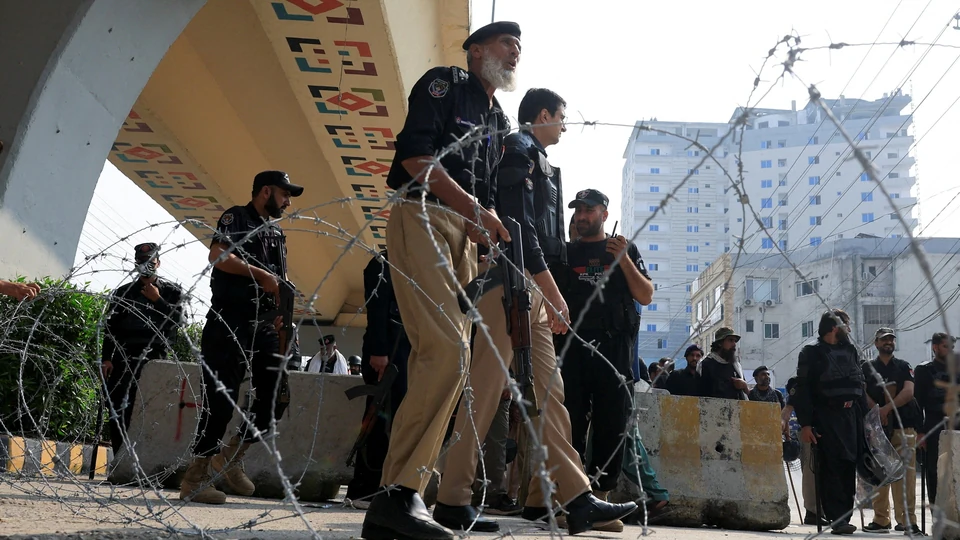
The same report said the federal government had authorised the deployment of Pakistan Army troops and assets in aid of civil power. Containers were placed on roads in Peshawar, while police deployment was increased.
The government has a responsibility to protect civilians and prevent violence. However, communication restrictions can also make it harder for residents to contact family members, obtain reliable information, report security incidents or document the actions of public authorities.
Internet restrictions can affect businesses, hospitals, education and emergency communication as well as political activity. They therefore require clear legal grounds and careful consideration of their scope and duration.
The available reporting indicated disruptions in selected areas, not a confirmed province-wide internet shutdown. That distinction should be maintained unless further evidence establishes otherwise.
Likewise, military assistance to civilian authorities does not by itself demonstrate that the army has assumed every administrative function in the province. The legal basis, operational scope and chain of command for any deployment matter.
The broader concern is whether security measures remain targeted at identifiable risks or become so extensive that they impede ordinary civilian life and political participation.
The Civil-Military Equation: A Longstanding Source of Political Tension
Pakistan’s political history has repeatedly been shaped by the relationship between elected governments and the military establishment.
The armed forces have played a central role in national security and have governed the country directly during several periods of military rule. Even under civilian governments, the military has retained considerable influence over defence and strategic policy.
PTI and Khan have accused the establishment of intervening in political outcomes and of helping to marginalise their movement. The military has denied allegations of political interference.
Those competing claims have been part of Pakistan’s political crisis since Khan’s removal from office in 2022. The events that followed, including Khan’s imprisonment and the confrontation between PTI and the federal authorities, have further damaged trust among political camps.
The emergency in KP is likely to intensify scrutiny of the military’s role because the stated justification is closely connected to counterterrorism policy, an area in which the armed forces have considerable operational influence.
But it is important not to confuse political context with proof of direct military orchestration. The fact that the military is involved in security operations does not, by itself, establish that it directed the constitutional decision.
The relevant questions include who recommended the measures, what evidence was presented to the president and cabinet, what role the security institutions played in the decision-making process, and how the resulting arrangement will be supervised.
Transparent answers would help distinguish documented institutional involvement from political allegations.
KP’s Border With Afghanistan Makes the Security Stakes Real
Khyber Pakhtunkhwa is not simply another arena in Pakistan’s internal political struggle.
Its geography places it at the centre of security challenges involving Afghanistan, the former Federally Administered Tribal Areas, cross-border militant movement and the long-term consequences of insurgency.
The TTP has been responsible for numerous attacks inside Pakistan. Islamabad has repeatedly urged Afghanistan’s Taliban authorities to prevent militant groups from using Afghan territory to launch attacks across the border. Kabul has disputed aspects of Pakistan’s allegations and resisted claims that it is responsible for the country’s security problems.
The resulting tensions complicate counterterrorism operations and border management.
At the local level, communities face the consequences of violence, displacement, economic disruption and restrictions associated with security operations. Police and civilian authorities must also operate under difficult conditions.
These circumstances provide the federal government with a serious security case to investigate. But they also explain why provincial consultation is important.
Local representatives may have information about community concerns, displacement risks and the likely consequences of military operations. Excluding provincial institutions from security decisions can weaken cooperation and make it harder to build public confidence.
The emergency therefore presents a strategic dilemma: centralised authority may make some decisions faster, but a loss of political legitimacy could complicate the cooperation required for sustained security.
Whether the new arrangement improves counterterrorism will depend on practical outcomes, including the frequency of attacks, the protection of civilians and the effectiveness of coordination between federal and local institutions.
What Could the Emergency Mean for Pakistan’s Federal System?
The consequences will extend beyond PTI’s immediate political fortunes.
Pakistan’s federal structure depends on a working relationship between Islamabad and the provinces. Disputes over security, resources and political authority are not unusual, but the transfer of an elected provincial government’s executive powers represents an exceptional step.
If the intervention is narrowly applied, properly reviewed and limited to the period permitted by the Constitution, the government will argue that it has used an available constitutional mechanism to address an exceptional situation.
If it becomes a precedent for removing provincial administrations whenever they clash politically with the federal government, the implications could be much broader.
Other provinces may question whether their autonomy is secure during periods of political disagreement. Opposition parties may become less willing to cooperate with federal security initiatives if they believe cooperation could be used to undermine their authority.
That could make Pakistan’s already difficult security environment harder to manage.
The situation also raises questions about the role of parliamentary oversight. Article 234 contains specific requirements for presenting the proclamation to a joint sitting and obtaining approval. Parliamentary scrutiny is therefore not a formality detached from the emergency; it is part of the constitutional mechanism governing its continuation.
The quality of that scrutiny will matter to the credibility of the process.
Four Questions That Will Shape the Next Phase
1. Can the federal government establish that the constitutional conditions were met?
The legal documents, the evidence supporting the proclamation and compliance with the requirements of Articles 232 and 234 will be central to any challenge. The distinction between emergency powers and Governor’s Rule must remain clear.
2. Will Parliament approve and scrutinise the arrangement?
The proclamation’s continuation is subject to constitutional procedures. Parliamentary proceedings will help establish whether the measure has the required support and whether its scope is being challenged by elected representatives.
3. Can the new administration demonstrate measurable security improvements?
The government has justified its decision on security grounds. It should therefore be judged against evidence of whether attacks decline, civilians are protected and counterterrorism coordination improves. Political control alone is not evidence of security success.
4. Will PTI pursue its challenge through courts, parliament and public mobilisation?
PTI has announced plans to contest the move through constitutional, legal and democratic forums. The outcome will depend on the legal record, political negotiations and the response of supporters in KP and elsewhere.
These questions are interconnected, but none can be answered simply by accepting either the government’s security narrative or PTI’s allegation of political victimisation.
The Road Ahead: Security, Legality and Political Legitimacy
Pakistan’s decision to impose emergency measures and Governor’s Rule in Khyber Pakhtunkhwa has moved the confrontation with PTI into a new phase.
The federal government argues that the intervention is necessary to address a serious security threat and restore effective governance. PTI says the decision undermines the public mandate, weakens provincial autonomy and uses security concerns to suppress opposition politics.
The two positions cannot be reconciled through rhetoric alone.
The government must establish the constitutional basis for the measures it has adopted and comply with the required procedures. PTI must pursue its challenge through verifiable evidence and lawful political and judicial channels. Parliament and the courts will have important roles in examining the proclamation and its consequences.
Above all, the people of KP should not be reduced to spectators in a contest between federal authorities and a political party. Their security, political representation and access to ordinary public services remain central to the question of whether the intervention achieves its stated purpose.
The emergency may give Islamabad greater direct control over provincial administration in the short term. Whether that control produces a lasting improvement in security, however, remains to be demonstrated.
The defining test will be whether Pakistan can address militant violence while preserving constitutional accountability and the federal balance. If the measures lead to better security under lawful and time-limited arrangements, the government will point to that record in support of its decision. If political confrontation deepens while the security threat persists, questions about the rationale and consequences of the intervention will become harder to avoid.
For now, the most consequential battle is not only over who administers Khyber Pakhtunkhwa. It is over how Pakistan’s Constitution is interpreted and applied when national security, provincial autonomy and political power collide.