Rain and Snow Bring Temperatures Down, Trigger Mountain Road Clearance and Renew Hopes for Kashmir’s Winter Tourism Season
By: News Desk | 15 October 2026
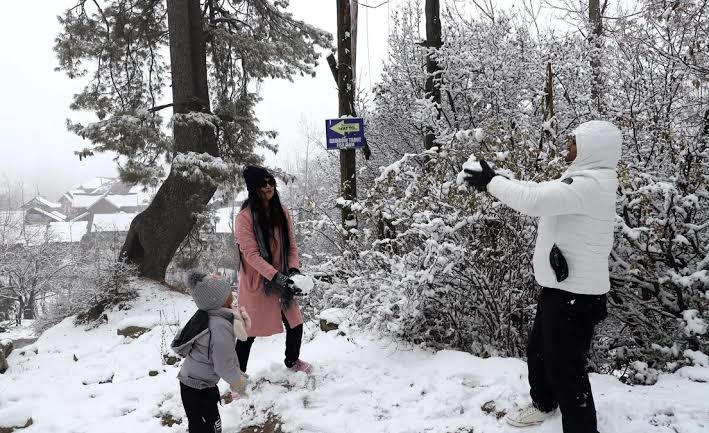
Srinagar: Kashmir’s higher reaches have received fresh snowfall as rain continued across the plains, bringing a sharp autumn chill to Jammu and Kashmir and transforming several mountain destinations into winter-like landscapes.
Popular tourist destinations, including Sonamarg and Gulmarg, received fresh snow, while snowfall was also reported along the Zojila axis, Razdan Top, the Tulail region of Gurez Valley and upper reaches around Pahalgam. The changing weather has renewed the region’s familiar transition from autumn colours to snow-covered mountain scenery.
The latest spell has also affected road connectivity. The Mughal Road, which connects Shopian in south Kashmir with Poonch in the Jammu region, was temporarily closed after snowfall made sections around Peer Ki Gali slippery. Road clearance operations were initiated, with movement dependent on weather conditions and the safety of the route.
The India Meteorological Department’s Srinagar centre indicated that the unsettled spell would begin easing from October 16, with generally dry weather expected over the following days. However, travellers have been advised to check the latest forecasts and traffic advisories before setting out for high-altitude destinations.
Fresh snowfall brings an early winter feel to Kashmir
The latest weather system has delivered a noticeable seasonal shift across the Valley. While rain has affected Srinagar and other lower-altitude areas, snow has accumulated in the mountains, including at several locations popular with tourists and adventure enthusiasts.
Sonamarg, Gulmarg and the Zojila axis have witnessed fresh snowfall, while the higher areas of Gurez, including Tulail and Razdan Top, have also received snow. Upper reaches around Pahalgam have experienced similar conditions.
The contrast between the plains and the mountains is a familiar feature of Kashmir’s autumn weather. Temperatures can remain relatively moderate in the Valley while higher elevations experience freezing conditions, snowfall and rapidly changing visibility.
The recent spell has also pushed temperatures below normal in several areas. Daytime temperatures have been reported around 3–9 degrees Celsius below seasonal averages at some locations, while minimum temperatures in several areas have remained approximately 1–3 degrees below normal. Exact departures vary by station and observation period.
For residents, the weather brings a reminder that winter preparations must begin well before the Valley’s plains experience sustained cold. For visitors, it offers the possibility of seeing snow-covered peaks earlier in the season, although snowfall itself does not guarantee that every mountain road or tourist site will be accessible.
Mughal Road closure highlights the risks of mountain travel
The temporary closure of the Mughal Road is among the most significant practical consequences of the latest snowfall.
The road provides an important link between south Kashmir and the Pir Panjal region of Jammu. It is also a scenic route for travellers, but its high-altitude stretches can become hazardous when snow, ice, poor visibility or strong winds affect driving conditions.
Snowfall around Peer Ki Gali prompted authorities to suspend traffic as a precaution. Snow-clearance teams and machinery were deployed to restore the affected stretches, with reopening dependent on the road being declared safe for movement.
The closure underlines an important point for tourists planning autumn holidays: a destination may be reachable under normal conditions but become temporarily inaccessible during a sudden weather change.
Travellers should therefore avoid relying solely on older itineraries, online photographs or previously published travel schedules. Before departure, they should confirm the latest road status through official traffic police and district administration advisories. They should also allow flexibility in their plans in case a journey takes longer than expected or a route remains closed.
Those travelling towards Sonamarg, Gulmarg, Pahalgam or other high-altitude locations should carry warm clothing, keep adequate time for their return journey and follow instructions issued by local authorities.
Weather likely to improve from October 16
The current wet spell has been associated with an active Western Disturbance, a weather system that can bring precipitation to the western Himalayas.
The Meteorological Centre Srinagar forecast further rain and the possibility of light snowfall over higher reaches during the final phase of the spell. Thunderstorms, gusty winds and isolated hailstorms were also possible at some locations.
Conditions were expected to improve from October 16. The forecast indicated generally dry weather from October 17 to October 24, although isolated brief showers could not be ruled out.
A period of relatively dry weather would be welcome for road-clearance work, local transport operators, farmers and tourism businesses. It could also provide better opportunities for sightseeing, particularly if skies clear over the mountain ranges.
However, a dry forecast should not be interpreted as a guarantee of unrestricted access. Snow and ice can persist after precipitation ends, especially on shaded roads and high passes. Road-opening decisions remain dependent on local conditions and official assessments.
Weather forecasts also remain subject to change. Visitors planning journeys several days ahead should review updated bulletins rather than assume that the forecast will remain unchanged throughout their stay.
Sonamarg’s growing ambition to become an all-season destination
The snowfall has brought renewed attention to Sonamarg, a mountain destination known for its alpine scenery, glaciers, meadows and access to high-altitude landscapes.
For decades, Sonamarg’s tourism season has been strongly influenced by weather and road accessibility. Snowfall and winter conditions can limit movement and reduce the range of activities available to visitors. Better connectivity and the development of winter-oriented experiences, however, have strengthened the ambition to position the destination as more than a short summer stop.
Improved access through the Z-Morh tunnel has the potential to support more reliable connectivity towards Sonamarg, while the wider Zojila corridor remains strategically important for travel between Kashmir and Ladakh. Tunnel infrastructure can reduce exposure to certain weather-related disruptions, although it does not eliminate the risks associated with heavy snowfall, icy surfaces or closures on adjoining roads.
An all-season tourism model would require more than improved road access. It would depend on reliable visitor facilities, trained local operators, emergency preparedness, responsible construction, waste management and activities suited to different seasons.
Winter tourism could create opportunities for accommodation providers, restaurants, guides, transport operators and local businesses. But the benefits would be strongest if local communities are included in planning and if growth does not place excessive pressure on fragile mountain ecosystems.
The challenge is to extend the tourism season without compromising the landscape that attracts visitors in the first place.
Can early snowfall strengthen Kashmir’s winter tourism prospects?
Fresh snowfall often generates interest among travellers looking for snow-covered scenery, winter photography and mountain holidays. Images of white slopes in Sonamarg and Gulmarg can encourage visitors to consider Kashmir for trips beyond the traditional summer and autumn seasons.
Yet early snowfall is not the same as a fully established winter tourism season. Snow depth, temperatures, road access, accommodation availability and the operating status of attractions can change from day to day.
Tourism businesses also need to communicate conditions accurately. Visitors should know whether snow is visible at the destination itself, whether it is limited to higher elevations, and whether road access or outdoor activities are operating normally.
For travellers planning a Kashmir holiday, a flexible itinerary is particularly useful during the seasonal transition. A trip can combine Srinagar’s lakes and gardens with sightseeing in Gulmarg, Pahalgam or Sonamarg, while allowing the order of visits to change if weather or traffic conditions require it.
Visitors planning such a holiday can explore Kashmir tour packages from JKL Travels to review possible destinations and itinerary options. The company’s Kashmir Calling itinerary offers another starting point for travellers considering a multi-destination visit.
Those who want to discuss travel dates, transport and accommodation can contact JKL Travels through its official enquiry page. As with any mountain holiday, arrangements should be confirmed against current road conditions and the latest weather advisories before travelling.
Tourism growth must go hand in hand with mountain protection
As Kashmir seeks to attract visitors throughout the year, the environmental costs of tourism require equal attention.
Mountain destinations are vulnerable to unmanaged construction, traffic congestion, litter, pressure on water resources and the disturbance of sensitive habitats. Winter tourism can also bring additional demands for heating, waste disposal, road maintenance and emergency services.
Sonamarg’s long-term prospects will depend not only on the number of tourists it attracts but also on how effectively the destination manages those visitors. Better waste collection, clearly marked walking routes, responsible vehicle movement and safeguards for ecologically sensitive areas can help protect the landscape.
Local residents and businesses also need a meaningful role in tourism decisions. If new opportunities generate sustainable livelihoods while protecting the environment, the benefits of a longer tourism season can extend beyond peak holiday periods.
The same principle applies across Kashmir. Gulmarg, Pahalgam, Gurez and other mountain destinations each have different ecological conditions and infrastructure needs. A one-size-fits-all tourism strategy would risk overlooking these differences.
What travellers should know before heading to Kashmir’s snowy areas
With snowfall now reported in several higher reaches, visitors should plan carefully:
- Check road status: Confirm whether the intended route is open before leaving, especially for the Mughal Road, Zojila and other high-altitude stretches.
- Follow official advisories: Use current updates from traffic police, district authorities and the Meteorological Centre Srinagar.
- Pack for changing conditions: Carry warm layers, suitable footwear and rain protection, even if the weather in Srinagar appears relatively mild.
- Keep plans flexible: Allow extra time for travel and be prepared to change the order of sightseeing stops.
- Do not approach unsafe snowfields: Avoid restricted areas, unstable slopes and roads where officials have suspended movement.
- Confirm activities in advance: Snowfall does not automatically mean that every attraction, road or adventure activity is operating.
These precautions can help visitors enjoy Kashmir’s scenery without placing themselves or others at unnecessary risk.
A seasonal turning point for Kashmir
The fresh snowfall marks another step in Kashmir’s transition from autumn towards winter. The mountains have turned white, temperatures have dipped in several areas and the temporary closure of the Mughal Road has demonstrated how quickly weather can affect travel.
The forecast improvement from October 16 could offer a window for road clearance and tourism activity, but conditions at high elevations will continue to require attention.
For Sonamarg, the snowfall is both a seasonal spectacle and a reminder of the opportunity, and the challenge, involved in developing an all-season tourism economy. Better connectivity may widen access, but long-term success will depend on safety, sustainable planning and reliable visitor services.
Kashmir’s appeal lies in its changing seasons as much as in its scenery. Turning that appeal into a year-round tourism opportunity will require careful planning so that visitors, local communities and the region’s fragile mountain environment all benefit.