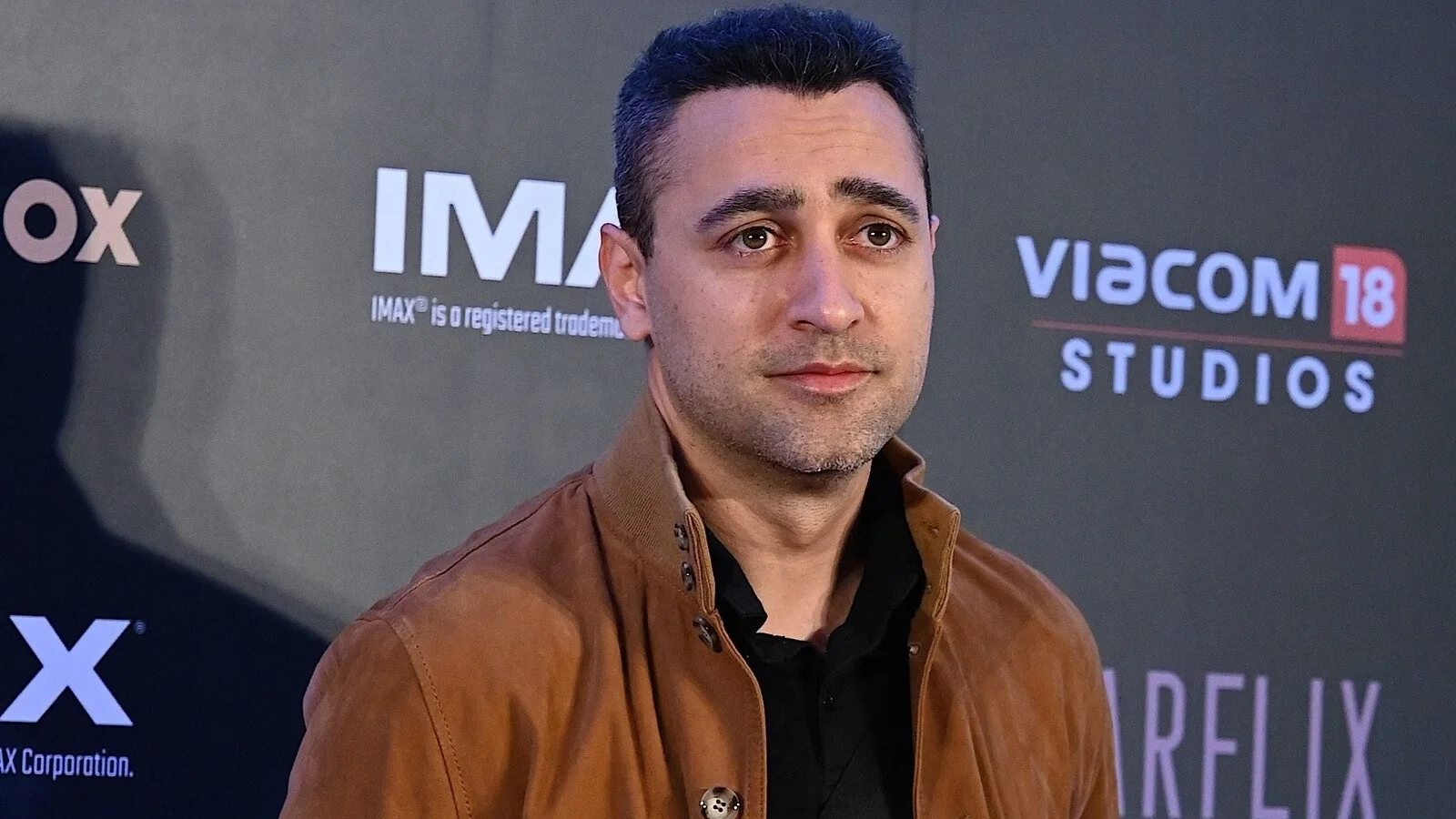
Imran Khan’s October 28 Deadline: The Legal Questions Behind the FRRO Notice
By: Javid Amin | Mumbai | 15 October 2026
Bollywood actor Imran Khan, best known for films such as Jaane Tu… Ya Jaane Na and Delhi Belly, has reportedly been served a notice directing him to leave India by October 28, following his participation in a protest against Chief Election Commissioner Gyanesh Kumar at Mumbai’s August Kranti Maidan.
The notice, reported by The Indian Express on October 15, was issued by the Foreigners Regional Registration Office (FRRO). According to the report, the authorities allege that Khan violated the Foreigners Act by participating in the demonstration. The precise terms of the notice and the legal grounds recorded in it are central to understanding the action.
Khan, who is a US citizen and holds OCI status according to media reports, was detained by Mumbai Police on October 10 while attending the protest. He was among hundreds of people taken into custody during demonstrations held in solidarity with the wider anti-CEC campaign.
The case is therefore about more than a celebrity’s involvement in a protest. It puts the relationship between immigration enforcement and political expression under scrutiny.
Kirit Somaiya’s complaint brought the case to immigration authorities
The action followed a complaint by former BJP MP Kirit Somaiya, who questioned whether a foreign national holding an OCI card could participate in what he described as an unauthorised political agitation.
On October 10, Somaiya said he had written to Mumbai Police seeking an inquiry into Khan’s participation in the demonstration. He subsequently sought action against the actor, including detention and deportation, arguing that his presence at the protest raised questions about compliance with OCI rules and immigration conditions.
The sequence is important. The initial complaint was a request for investigation and action. It was not itself a finding that Khan had violated the law.
The subsequent reported notice directing him to leave India represents a separate administrative development. Its precise legal basis, the grounds recorded by the authorities and any opportunity for Khan to challenge the action are therefore central to the case.
Somaiya also sought a Look Out Circular (LOC) and restrictions on Khan’s foreign travel while the matter was being examined, according to reports. However, a request for an LOC should not be confused with confirmation that one has been issued.
What Imran Khan said at August Kranti Maidan
Khan’s explanation for attending the protest was notably different from the political allegations surrounding it.
Speaking to reporters before he was detained on October 10, he said he was present as a resident of Mumbai concerned about restrictions on movement and the suppression of public voices.
He said he was not representing an organisation and was participating in an individual capacity.
His stated position raises a question that is now central to the immigration case: should the authorities assess his conduct as participation in a political agitation, as he is accused of doing, or as an individual’s presence at a public demonstration?
That distinction cannot be resolved simply by relying on Khan’s description of his intentions. Nor can his participation alone establish every legal element necessary for immigration action.
The authorities must apply the relevant rules to the actual conduct and circumstances. Khan’s explanation, the police account and the terms of the notice are all relevant to that assessment.
As of the latest reports cited here, there is no independently confirmed public account from Khan or his legal representatives setting out a formal challenge to the October 28 deadline. That position may change as the case develops.
Why OCI status is different from Indian citizenship
The OCI scheme was introduced in 2005 for eligible people of Indian origin who hold citizenship of another country. Despite the name, an OCI card does not confer Indian citizenship. OCI cardholders remain foreign nationals and hold a range of privileges under Indian law, subject to applicable conditions.
| Category | Legal position |
|---|---|
| Citizenship | OCI status is not Indian citizenship. |
| Voting | OCI cardholders cannot vote in Indian elections merely by holding an OCI card. |
| Contesting elections | OCI status does not confer the right to contest Indian elections as a citizen. |
| Residence and travel | OCI status provides specified immigration and residence-related privileges, subject to applicable law and conditions. |
| Political participation | The extent of permissible activity must be assessed under the relevant constitutional provisions, OCI rules and immigration conditions. |
The Ministry of Home Affairs’ published guidance makes clear that OCI cardholders are foreign nationals and that certain activities, including journalism and some specified activities, require prior permission. The exact conditions depend on the activity and the applicable notification.
At the same time, it would be too broad to conclude that every appearance by an OCI cardholder at a public gathering automatically amounts to an immigration violation. The specific restrictions, conduct alleged and legal basis of the action must be examined.
Can an OCI cardholder be asked to leave India for joining a protest?
This is the most consequential legal question raised by the case.
The Indian Constitution distinguishes between rights guaranteed to all persons and rights reserved specifically for citizens. Article 19, which protects freedoms including speech and peaceful assembly, is framed in terms of citizens. Foreign nationals therefore do not enjoy those particular guarantees on the same footing as Indian citizens.
But that does not mean foreign nationals are outside the protection of Indian law. Their treatment remains subject to applicable legal provisions and the procedures governing administrative action.
The Citizenship Act, 1955, also provides for cancellation of OCI registration in specified circumstances under Section 7D. These include obtaining registration through fraud or concealment and other grounds identified in the statute, including considerations relating to sovereignty, security and the public interest.
In Khan’s case, media reports say the FRRO issued a notice requiring him to leave India by October 28, citing his participation in the protest and an alleged violation of the Foreigners Act.
-
Which specific statutory provision or immigration condition has the authority relied upon?
-
Does the notice allege a breach of a particular condition attached to Khan’s stay or OCI status?
-
What evidence does it cite concerning his participation in the demonstration?
-
Does it provide a mechanism to submit a response, seek review or challenge the direction?
-
Has any separate proceeding concerning the cancellation of OCI registration been initiated?
The answers matter because a legal order must be assessed by its actual terms, not merely by the public controversy surrounding it.
The Indian Express examined the broader issue in its October 13 explainer on whether OCI cardholders can participate in protests and whether their involvement can justify deportation. The report highlighted the need to distinguish the privileges and restrictions attached to OCI status from the question of whether a particular administrative action is legally justified.
More than 400 detained: what happened at August Kranti Maidan?
Khan’s case emerged from a much wider police operation in Mumbai.
On October 10, demonstrators gathered at August Kranti Maidan in support of the protest movement calling for Chief Election Commissioner Gyanesh Kumar’s resignation. The campaign was linked to allegations concerning the Election Commission’s Special Intensive Revision of electoral rolls.
Mumbai Police detained hundreds of people at August Kranti Maidan and other locations. India Today reported that more than 400 people were detained, while a subsequent Indian Express report put the number at more than 600. The differing figures appear to reflect different stages or scopes of the police operation and should not be treated as a single reconciled total.
The disagreement over permission is relevant to the police operation, but it is separate from the immigration question surrounding Khan. Even if the gathering was unauthorised, that fact alone does not establish that every participant committed an immigration offence.
The episode also produced allegations of excessive force. Khan’s partner, actor Lekha Washington, alleged that she and actor Zayn Marie were grabbed and bruised by police personnel during their detention. These are allegations reported by The Indian Express and require assessment against the police account and any available independent evidence.
The scale of the detentions and the allegations of rough handling have broadened the debate beyond the actor’s immigration status to include police conduct, access to public spaces and the treatment of people attending demonstrations.
The political backdrop: why the anti-CEC protests matter
The demonstrations were part of a wider mobilisation against the Election Commission’s SIR exercise and demands for the resignation of Chief Election Commissioner Gyanesh Kumar.
Opposition parties and activists have alleged that the revision process risks excluding eligible voters and have called for greater transparency and safeguards. The Election Commission’s procedures, official data and responses to specific allegations are essential to assessing those claims. The allegations themselves should not be treated as proof of wrongdoing.
The protests spread beyond Delhi to cities including Mumbai, where participants sought to demonstrate solidarity with the wider movement. The police response in multiple locations turned the management of public demonstrations into a national controversy.
Khan’s participation drew particular attention because he is a recognisable film personality. His presence brought a celebrity into a dispute that would otherwise have centred primarily on political organisers, activists and election administration.
That visibility also creates a risk of the legal issues being reduced to a question of whether a famous actor should or should not have joined the protest.
The more useful question is whether the rules governing foreign nationals were correctly applied in this particular case, and whether the administrative action is supported by a clear legal basis.
Why the October 28 deadline matters
The reported deadline gives the case an immediate practical dimension.
If the notice remains in force, Khan faces a decision about complying with the direction or pursuing whatever legal remedies are available to him. The available reporting does not establish the outcome of any challenge, nor does it confirm that the deadline has been extended or withdrawn.
Several developments will be important to watch:
-
Whether Khan or his representatives formally challenge the notice.
-
Whether the authorities disclose the precise statutory grounds for directing him to leave.
-
Whether any separate proceedings concerning his OCI status are initiated.
-
Whether a court is asked to examine the legality or proportionality of the action.
-
Whether the authorities clarify the distinction between participation in a public protest and conduct that violates a specific immigration condition.
The answers could clarify how immigration law is applied when an OCI cardholder participates in politically sensitive events.
The bigger question: immigration enforcement and political expression
The case of Imran Khan brings together three issues that are often debated separately: immigration control, political participation and the role of celebrities in public movements.
The government has legitimate authority to regulate the entry and stay of foreign nationals, including OCI cardholders, under applicable law. Such privileges do not amount to full citizenship, and the restrictions attached to them must be respected.
But enforcement decisions also need a clear legal foundation. A complaint by a political leader is a reason for authorities to examine the facts, not proof that the person complained against has violated the law.
Khan’s case will therefore turn on the specific provisions invoked, the facts recorded by the authorities and any legal challenge that follows. His celebrity status neither exempts him from immigration rules nor establishes that the action against him is justified.
The October 28 deadline has made the dispute urgent. Its wider significance lies in whether the ensuing proceedings clarify the boundaries of OCI privileges and the treatment of foreign nationals who take part in public demonstrations.
For now, the reported notice is a significant administrative development, but the ultimate legal position remains dependent on the actual order and any subsequent proceedings.