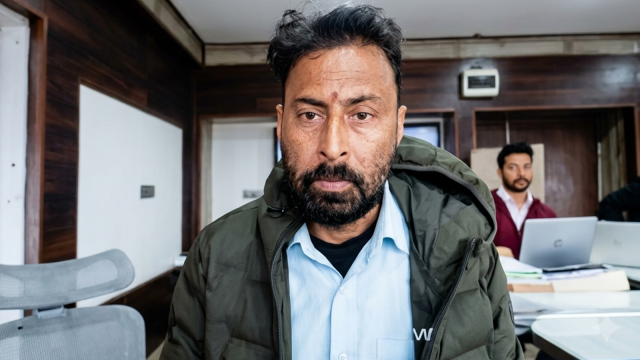
Omar Abdullah seeks a report as Beenish Wani’s treatment during a Mission YUVA review meeting triggers demands for an impartial inquiry and raises questions about administrative accountability in Jammu and Kashmir
By: News Desk | 15 October 2026
Srinagar: A controversy over the conduct of a senior bureaucrat has put Jammu and Kashmir’s administrative machinery under scrutiny after a video purportedly showing IAS officer Kumar Rajeev Ranjan using abusive language against a woman subordinate during an official meeting circulated widely on social media.
The exchange, involving Beenish Wani, an Assistant Director in the Employment Department posted in Ganderbal, has drawn criticism from political leaders and civil service representatives. The incident has also reignited debate over workplace dignity, the use of disciplinary authority by senior officials and the relationship between the Jammu and Kashmir Administrative Service (JKAS) and the Indian Administrative Service (IAS).
The confrontation reportedly took place on October 14 during a virtual review meeting concerning Mission YUVA, the government’s youth entrepreneurship and employment initiative. Ranjan, a 2010-batch IAS officer serving as Administrative Secretary of the Labour and Employment Department, was reviewing departmental work and the role of the National Rural Livelihoods Mission (NRLM).
The controversy intensified after the circulating footage appeared to show Ranjan directing personal insults at Wani when she attempted to explain her position. He was also heard threatening suspension-related action after she objected to his language.
Chief Minister Omar Abdullah has reportedly sought details of the episode from the Chief Secretary, adding a government-level dimension to the growing demands for an inquiry. The immediate focus is now on establishing the full sequence of events, examining the available recording and determining what action is warranted under the applicable service rules.
What happened during the Mission YUVA meeting?
According to reports by The Indian Express and The Tribune, the disagreement began during a discussion about the role of the National Rural Livelihoods Mission in implementing or supporting work linked to Mission YUVA.
Ranjan questioned why the Employment Department needed NRLM’s assistance and challenged the role being assigned to the mission. Wani, who was briefing the meeting remotely, sought to explain that NRLM was acting as a supporting agency rather than the principal authority. She also referred to the targets achieved by her office.
The discussion then escalated. In the circulating footage, Ranjan can be heard interrupting Wani and telling her to stop speaking. When she objected to the manner in which she was being addressed, the exchange became more confrontational.
Ranjan was reportedly heard using the phrase “bloody shit” and asserting that he could speak to her in that manner. He then turned to another official and asked for a suspension order to be prepared. Wani responded that he could suspend her if he wished, before leaving the meeting following a further exchange.
The footage has prompted questions about the boundaries between legitimate performance monitoring and unacceptable workplace conduct.
Senior officers have the responsibility to review departmental performance, question delays and hold subordinates accountable for official work. But those responsibilities must be exercised through professional communication and established procedures. Questions about an employee’s performance and questions about the conduct of a supervisor are separate matters, and both can be examined through a fair administrative process.
The central issue is therefore not whether a senior officer can question a subordinate’s work. It is whether the conduct shown in the recording, once independently verified and considered in its full context, meets the standards expected of a public servant.
Beenish Wani says the incident occurred
Wani has spoken to media outlets about the episode. The Tribune reported that she said the incident had taken place during the review meeting and that she had approached higher authorities, who assured her that the matter would be looked into.
News9 also reported that Wani confirmed the incident and rejected suggestions that the footage had been altered or generated using artificial intelligence. According to that report, she had joined the meeting remotely while on leave because of a fractured foot.
Her account has become central to demands for an impartial inquiry. The questions requiring examination include the authenticity and completeness of the recording, the circumstances in which it was made public, the full exchange preceding the remarks and whether any formal disciplinary action was initiated during or after the meeting.
A proper inquiry would also need to distinguish the substance of the departmental review from the language used during it. If there were concerns about work targets or performance, those could be documented and assessed independently rather than being conflated with the dispute over professional conduct.
Video authenticity becomes a separate issue
The circulation of the footage has brought an additional question into the controversy: whether the recording is complete and authentic.
Some reporting has carried a departmental claim that the circulating clip was AI-generated or manipulated, while other outlets have reported Wani’s denial that the video was altered. News9 reported that the department said the matter would be addressed under applicable rules, while The Daily Jagran reported the department’s challenge to the clip’s authenticity.
These competing accounts should not be treated as settled findings. A claim that footage is fabricated does not establish fabrication by itself, just as viral circulation does not independently authenticate every clip.
The most reliable way to resolve the question would be to examine the original recording, its metadata and provenance, the full meeting record if available, and statements from those who attended. Any conclusions should be based on that examination rather than social media circulation alone.
This step matters for both officers. The woman officer’s complaint deserves a fair hearing, while the senior officer must also be assessed through a process that establishes the facts rather than presuming the outcome.
Omar Abdullah seeks a report as pressure builds
The episode has attracted attention at the political level, with the Chief Minister reportedly seeking a report from Chief Secretary Atal Dulloo.
The request places the administration under pressure to clarify what happened and whether a formal inquiry or other action has been initiated. A report from the Chief Secretary could help establish the sequence of events, identify the relevant service rules and determine which authority is competent to take further steps.
However, seeking a report should not be confused with a final finding or disciplinary order. The outcome will depend on the material examined, the applicable rules and the authority legally empowered to act.
The government will also face questions about whether Wani is protected from retaliatory action while the matter is examined. Any decision affecting her service status should be based on documented grounds and due process, rather than the public controversy surrounding the video.
For the administration, the immediate challenge is to demonstrate that a complaint involving a senior official will be examined with the same seriousness and procedural fairness expected in cases involving other government employees.
NC leaders link the episode to the Union Territory framework
The incident has also become part of the wider political debate over Jammu and Kashmir’s Union Territory status.
National Conference leaders have argued that the elected government operates within administrative constraints, particularly in relation to the control and management of All India Service officers. The NC has repeatedly linked the restoration of full statehood to the question of greater accountability and authority for the elected government.
That argument has resurfaced in the current controversy. Party spokesperson Tanvir Sadiq has reportedly said that, under a full statehood arrangement, the government could have taken immediate administrative steps, such as attaching the officer to the General Administration Department pending an inquiry.
The precise authority available in any particular case, however, depends on the officer’s service, cadre and applicable rules. The powers of the elected government, the Lieutenant Governor and the Union government cannot be determined solely by political statements.
The dispute therefore raises two distinct questions: what action is justified by the facts of the episode, and which authority has the legal power to initiate that action?
Those questions should be answered through the applicable service framework rather than assumption.
JKAS fraternity demands an impartial inquiry
The Jammu and Kashmir Administrative Service fraternity has condemned the alleged verbal abuse and public humiliation of Wani and called for an impartial inquiry.
Its position, as reported by Hindustan Times and ThePrint, is that administrative accountability and performance reviews are necessary, but they do not justify abusive language, intimidation or conduct that undermines an officer’s dignity. The fraternity has also called for safeguards against possible retaliatory action.
The demand reflects a concern that goes beyond one meeting. Public administration depends on a clear chain of responsibility, but that hierarchy must operate within professional standards and service rules.
Officers need to be able to raise operational difficulties, explain decisions and respond to criticism without personal humiliation. At the same time, performance reviews must remain meaningful, with officials expected to meet targets and account for delays.
An impartial inquiry could establish whether the interaction crossed professional or disciplinary boundaries and whether any subsequent action was procedurally justified. It could also clarify whether the disagreement was limited to the NRLM issue or involved other matters that require separate examination.
The association’s demand is therefore centred on accountability and due process, not on exempting government officers from scrutiny.
PDP and other opposition leaders demand action
The controversy has drawn sharp reactions from opposition leaders, including PDP leader Iltija Mufti, who demanded action against Ranjan and called for intervention by the Chief Minister and Lieutenant Governor.
In her public response, Mufti criticised the language reportedly used against Wani and argued that local officers were being undermined within the administration. Her comments framed the episode as part of a broader concern about how local civil servants are treated by senior officials.
Other political figures have also condemned the exchange. Their responses have broadened the controversy from workplace conduct to questions about the distribution of authority, the treatment of local employees and the accountability of officers serving in Jammu and Kashmir.
These political interpretations remain arguments advanced by the leaders concerned. Whether the episode demonstrates a wider pattern of discrimination or institutional imbalance would require evidence beyond a single incident.
Nevertheless, the immediate demand for a transparent inquiry has gained prominence because the dispute occurred during an official meeting and involved a senior officer exercising supervisory authority over a subordinate.
IAS and JKAS relations under scrutiny
The controversy has renewed attention to the working relationship between IAS officers and members of the Jammu and Kashmir Administrative Service.
IAS officers and JKAS officers serve within the same administrative system but belong to different services, with different recruitment routes, career structures and service rules. Their responsibilities can overlap in departmental work, policy implementation and district-level administration.
The relationship requires coordination and mutual professional respect. Seniority and supervisory authority are important to administrative functioning, but they do not remove the obligation to communicate professionally or to follow established procedures when addressing alleged underperformance.
The present episode has prompted some political voices to portray the dispute as a conflict between officers from outside Jammu and Kashmir and locally recruited officials. Such claims have become part of the political reaction, but they should be distinguished from findings that an inquiry may establish.
The broader institutional question is whether the administration has effective safeguards to ensure that complaints involving unequal authority are heard fairly, irrespective of the officers’ service or background.
Transparent grievance procedures, documented performance reviews and clear disciplinary rules are essential to maintaining confidence within the civil service.
Why the controversy matters beyond the viral video
The row has implications that extend beyond the words reportedly exchanged during one review meeting.
Workplace dignity: Government employees are entitled to professional treatment. Supervisory authority should not be used to justify personal insults or intimidation.
Administrative accountability: Officers must be answerable for performance, but complaints about conduct should be investigated separately from disputes over targets or departmental responsibilities.
Protection against retaliation: An employee who objects to alleged misconduct should not face arbitrary disciplinary consequences. Any action must be supported by recorded reasons and due process.
Public confidence: Citizens expect civil servants to model the standards of fairness, restraint and accountability that public institutions demand from others.
Institutional responsibility: The authorities must establish what happened, whether any service rules were breached and what response is legally appropriate.
The controversy has become politically charged, but these administrative questions remain important regardless of party affiliation or the constitutional status of Jammu and Kashmir.
What happens next?
The next stage will depend on the response from the competent authorities and the evidence available to them.
Key questions include whether a formal inquiry has been ordered, whether the full recording can be authenticated, whether the Chief Secretary has submitted a report to the Chief Minister, and whether any decision has been taken regarding the conduct of either officer.
As of the latest reports cited here, calls for an impartial inquiry and disciplinary action are continuing. The public record reviewed for this article does not establish a final finding of misconduct or a confirmed disciplinary outcome.
A fair process should give the relevant officers an opportunity to present their accounts, examine the complete evidence and apply the rules consistently. Any decision should then be communicated clearly, with the distinction between an allegation, an interim administrative measure and a final finding maintained.
The larger test for Jammu and Kashmir’s administration
The controversy presents the government with a test of institutional credibility. A transparent response would show that complaints involving senior officials are not beyond scrutiny and that service rules apply regardless of rank.
It would also help separate the factual questions surrounding the meeting from the wider political dispute over statehood and administrative control. Those political questions remain significant, but they should not substitute for an evidence-based inquiry into the conduct alleged in this case.
For public servants, the episode is a reminder that authority and accountability must operate together. For the government, it is an opportunity to demonstrate that the administrative system can investigate a sensitive complaint fairly and reach a decision grounded in evidence.
The decisive question is no longer simply what the viral video appears to show. It is whether the administration can establish the facts transparently, protect due process and demonstrate that professional standards apply at every level of government.


