Jammu and Kashmir’s Chief Secretaries: Seven Decades of Administration, Change and Continuity
By: Javid Amin| 25 October 2026
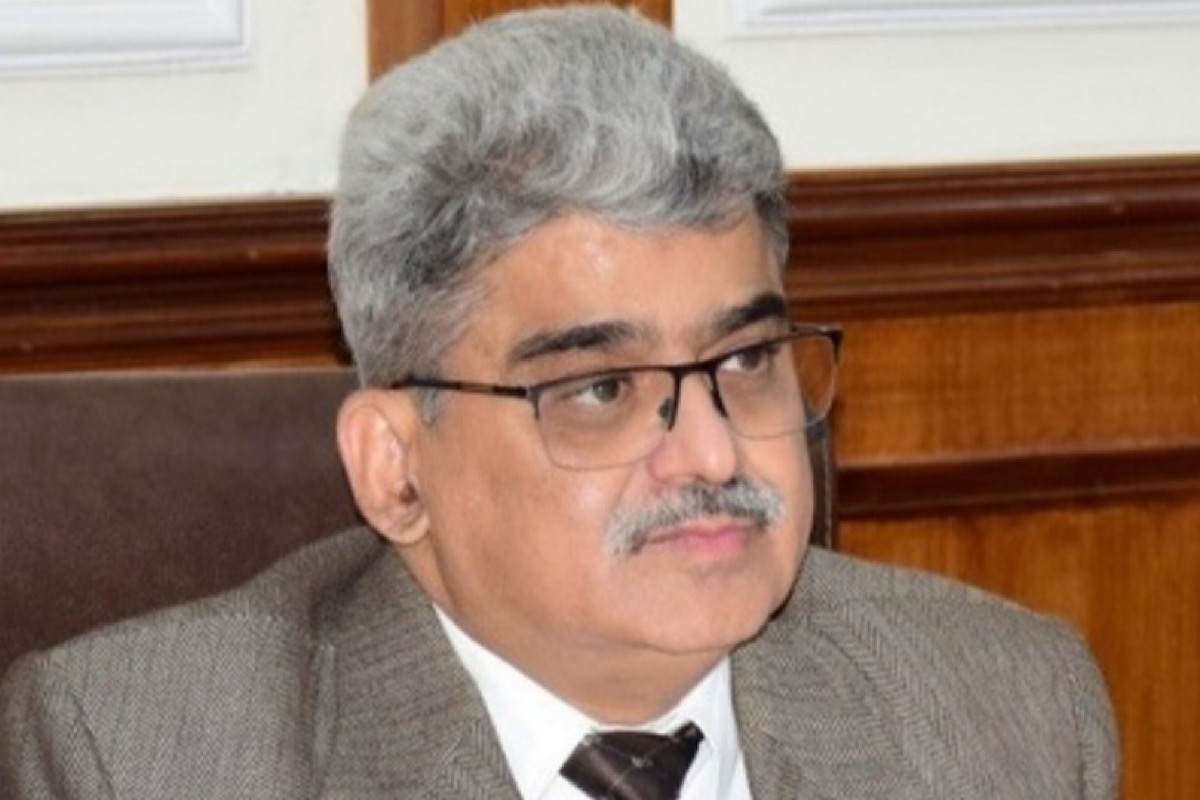
From the years of political transition and militancy to the post-2019 Union Territory administration, Jammu and Kashmir’s Chief Secretaries have played a central role in shaping governance. Atal Dulloo’s appointment in December 2023 marked the return of a J&K-resident officer to the top bureaucratic post after 2017.
Srinagar/Jammu: Jammu and Kashmir’s administrative history has passed through several defining phases, including the consolidation of government institutions, the years of militancy, the restoration of an elected government in 1996, successive coalition governments and the constitutional changes of August 2019. Through these transitions, the office of the Chief Secretary has remained central to the functioning of the civil administration.
The Chief Secretary is the senior-most civil servant in the state or Union Territory administration. The office coordinates the work of government departments, monitors policy implementation and facilitates administrative decisions across sectors such as health, education, infrastructure, finance and public services.
The responsibilities have remained significant across different political arrangements, although the administrative framework and relationship with the Union government have changed over time.
The history of Jammu and Kashmir’s Chief Secretaries is therefore closely connected with the wider evolution of governance in the region. Their tenures have coincided with periods of political uncertainty, security challenges, institutional restructuring and renewed emphasis on development and public-service delivery.
Ashok Jaitly: Administration During the Years of Militancy
Ashok Jaitly served as Chief Secretary of Jammu and Kashmir from October 1996 to April 2002. His tenure began after the 1996 Assembly elections brought an elected government back to power following several years of Governor’s Rule.
The period was marked by continuing militancy and serious security challenges. The civil administration had to maintain government functioning while dealing with disruptions affecting public institutions and everyday life.
Jaitly, a 1964-batch IAS officer of the Jammu and Kashmir cadre, had earlier served in several administrative assignments, including in rural development. After retiring in 2002, he served as an adviser to Chief Minister Farooq Abdullah and later worked with The Energy and Resources Institute (TERI).
His career received considerable attention after his death in June 2015. Contemporary reporting and tributes from former colleagues highlighted his role during a difficult phase in the region’s history. Former tourism director Saleem Beg, quoted by The Indian Express, recalled Jaitly’s support for officers who protested against civilian killings.
Jaitly’s tenure remains an important chapter in the history of the civil administration because it coincided with the restoration of an elected government and the challenge of maintaining governance amid persistent violence. His record also illustrates the influence a senior administrator can exercise through institutional coordination and engagement with the political leadership.
Vijay Bakaya: A Long Career in Jammu and Kashmir’s Administration
Vijay Bakaya served as Chief Secretary from 1 August 2005 to 31 May 2006. An IAS officer of the 1970 batch, he spent decades working in the Jammu and Kashmir administration before moving into political life.
After relinquishing the office of Chief Secretary, Bakaya joined the National Conference and was elected to the Legislative Council. In July 2015, party patron Farooq Abdullah appointed him political adviser.
Bakaya’s career reflects the movement between senior administrative responsibilities and public life that has characterised the careers of several former civil servants in Jammu and Kashmir.
His tenure as Chief Secretary lasted less than a year. It formed part of a wider period in which the state administration operated under an elected government and dealt with the routine demands of public services, departmental coordination and development.
The Administrative Transition of 2006–2017
The years between 2006 and 2017 saw several changes at the top of Jammu and Kashmir’s civil administration.
According to the official General Administration Department’s former-Chief-Secretaries list, C. Phunsog succeeded Vijay Bakaya in May 2006. B. R. Kundal took over in November 2007, followed by S. S. Kapur in June 2008. Madhav Lal assumed the post in January 2011, and Mohammad Iqbal Khanday succeeded him in February 2013.
Braj Raj Sharma became Chief Secretary on 31 August 2015 and served until 28 April 2017.
These appointments took place under different political administrations, including governments led by the Congress, the National Conference and the People’s Democratic Party. The administration continued to manage departmental operations, public expenditure, development programmes and the implementation of government decisions through these changes.
The official record establishes the succession and tenure dates. Individual assessments of performance require a closer examination of decisions, departmental results and contemporary accounts rather than relying on broad labels such as “best” or “most effective.”
Braj Raj Sharma: The Last Local Chief Secretary Before 2017
Braj Raj Sharma served as Chief Secretary from August 2015 to April 2017. Before his appointment, he held senior administrative positions in Jammu and Kashmir. After leaving the top post, he served as an adviser to the state government.
Sharma’s tenure coincided with a sensitive political period following the formation of the PDP-BJP coalition government in 2015.
His departure from the post in April 2017 was followed by the appointment of Bharat Bhushan Vyas, a 1986-batch IAS officer who had previously served as Principal Secretary to the Chief Minister.
The change became significant in retrospect because Sharma was the last J&K-resident officer to serve as Chief Secretary before a succession of officers from outside the region’s local administrative background occupied the post.
That period continued until Atal Dulloo assumed charge in December 2023.
Bharat Bhushan Vyas: Chief Secretary Before the 2018 Political Shift
Bharat Bhushan Vyas took charge on 28 April 2017 and served until 20 June 2018.
Before becoming Chief Secretary, Vyas had served in important assignments, including Principal Secretary to the Chief Minister and Principal Secretary to the Governor. His appointment came under the PDP-BJP coalition government led by Mehbooba Mufti.
In June 2018, the BJP withdrew support from the coalition government, leading to the end of the elected government and the imposition of Governor’s Rule.
Vyas was succeeded by B. V. R. Subrahmanyam, a 1987-batch IAS officer of the Chhattisgarh cadre. The change marked the beginning of a new phase in the administration, with Subrahmanyam taking charge during Governor’s Rule.
B. V. R. Subrahmanyam: Chief Secretary During the 2019 Constitutional Changes
B. V. R. Subrahmanyam assumed charge as Chief Secretary on 20 June 2018. His tenure included the major constitutional and administrative changes announced by the Union government in August 2019.
On 5 August 2019, the government announced measures that effectively ended Jammu and Kashmir’s special constitutional status under Article 370. The Jammu and Kashmir Reorganisation Act, 2019, subsequently divided the former state into the Union Territories of Jammu and Kashmir and Ladakh, with the new arrangement taking effect on 31 October 2019.
These changes transformed the region’s administrative structure. Jammu and Kashmir continued as a Union Territory with a legislature, while Ladakh became a separate Union Territory without a legislature.
As Chief Secretary, Subrahmanyam headed the civil administration during this transition. His tenure was associated with the implementation of the new administrative framework and the coordination of government departments during a period of substantial institutional change.
The post-2019 period also brought renewed focus on infrastructure, investment, digital administration and the restructuring of government functions. The broader political debate surrounding these developments has included questions about centralisation, democratic representation and the extent of local decision-making.
Subrahmanyam’s place in Jammu and Kashmir’s administrative history is closely tied to this transition, which remains one of the most consequential changes in the region’s modern governance.
He remained Chief Secretary until 30 May 2021, when Arun Kumar Mehta succeeded him.
Arun Kumar Mehta: Governance and Administrative Monitoring
Arun Kumar Mehta served as Chief Secretary from 31 May 2021 to 30 November 2023. A 1988-batch IAS officer, he took charge during the Union Territory period and remained in office through a phase of administrative restructuring and a renewed emphasis on monitoring government programmes.
His tenure included the use of digital systems, departmental reviews and project-monitoring mechanisms to track implementation and administrative performance.
The administration also continued work on infrastructure, public services, investment-related initiatives and departmental coordination. These areas became important parts of the government’s development agenda during the Union Territory period.
Mehta retired on 30 November 2023. The Ministry of Home Affairs appointed Atal Dulloo as his successor with effect from 1 December 2023.
Atal Dulloo: A J&K-Resident Officer Returns to the Top Post
Atal Dulloo assumed charge as Chief Secretary of Jammu and Kashmir on 1 December 2023. The appointment was recorded in the Jammu and Kashmir Official Gazette, while the General Administration Department lists him as Chief Secretary with effect from that date.
A 1989-batch IAS officer, Dulloo’s official service profile identifies Jammu and Kashmir as his state of domicile. Before his appointment, he served as Secretary in the Union Ministry of Home Affairs’ Department of Border Management and had previously held several senior assignments in Jammu and Kashmir.
These included responsibilities related to health and medical education, agriculture and finance. During the COVID-19 pandemic, he served in the health administration at a time when the region was expanding medical infrastructure and responding to public-health pressures.
Dulloo’s appointment attracted attention because he became the first J&K-resident officer to hold the top bureaucratic position since Braj Raj Sharma’s tenure ended in April 2017.
The appointment was welcomed by PDP president Mehbooba Mufti, who publicly expressed hope that a J&K resident in the position would help address public concerns and strengthen the administration’s connection with the people.
The significance of Dulloo’s appointment lies in both his administrative experience and the local representation it restored to the top post. His performance, like that of his predecessors, will ultimately be assessed through the functioning of departments, the delivery of public services and the implementation of government programmes.
What the Official Record Shows
The Jammu and Kashmir General Administration Department’s published list provides the following verified succession for the period from 2005 to 2023:
- Vijay Bakaya: 1 August 2005 – 31 May 2006
- C. Phunsog: 31 May 2006 – 31 October 2007
- B. R. Kundal: 1 November 2007 – 2 June 2008
- S. S. Kapur: 9 June 2008 – 31 January 2011
- Madhav Lal: 31 January 2011 – 18 February 2013
- Mohammad Iqbal Khanday: 18 February 2013 – 31 August 2015
- Braj Raj Sharma: 31 August 2015 – 28 April 2017
- Bharat Bhushan Vyas: 28 April 2017 – 20 June 2018
- B. V. R. Subrahmanyam: 20 June 2018 – 30 May 2021
- Arun Kumar Mehta: 31 May 2021 – 30 November 2023
- Atal Dulloo: From 1 December 2023
The list confirms the recent succession of Chief Secretaries and their tenure dates. Earlier records and published historical accounts identify Ashok Jaitly as Chief Secretary from 1996 to 2002, while Vijay Bakaya’s tenure began in August 2005.
A complete account of all Chief Secretaries across seven decades requires a consolidated historical record covering the earlier years as well. The current online list of former Chief Secretaries does not, by itself, provide that entire historical sequence.
Seven Decades of Changing Governance
The history of Jammu and Kashmir’s Chief Secretaries reflects the changing demands placed on the civil administration.
The years of political transition required the administration to maintain continuity and support elected governments. The period of militancy placed extraordinary pressure on public institutions. The return of an elected government in 1996 brought a renewed focus on restoring routine administration. The 2019 constitutional changes reshaped the region’s institutional framework, while subsequent years brought an emphasis on departmental monitoring, infrastructure and public-service delivery.
Each Chief Secretary worked within the political and administrative circumstances of the time. The nature of the office also evolved as Jammu and Kashmir moved from statehood to Union Territory status.
Atal Dulloo’s appointment in December 2023 marked a notable change in the pattern of appointments to the post. His return to the top position as a J&K-resident officer brought renewed attention to local administrative representation.
The Legacy of the Chief Secretary’s Office
The Chief Secretary’s role extends beyond the tenure of any one officer. The office coordinates departments, supports the implementation of policy and provides administrative continuity through political changes.
The record of Jammu and Kashmir’s Chief Secretaries includes officers who served during militancy, those who worked under elected governments, and those who oversaw major institutional changes. Their tenures form part of the region’s broader administrative history.
For the public, the lasting value of this institution lies in the performance of government itself: accessible services, functioning hospitals and schools, reliable infrastructure, timely decisions and accountable administration.
Seven decades of changing leadership have left Jammu and Kashmir with an administrative history shaped by both continuity and transformation. The Chief Secretary remains at its centre—not as a substitute for elected political leadership, but as the senior civil servant responsible for coordinating the machinery through which government decisions reach the public.
Follow Us on WhatsApp
Get Breaking News, Exclusive Updates & In-Depth Analysis from Kashmir and beyond, delivered straight to your phone.
Join our WhatsApp Channel: Follow Now


