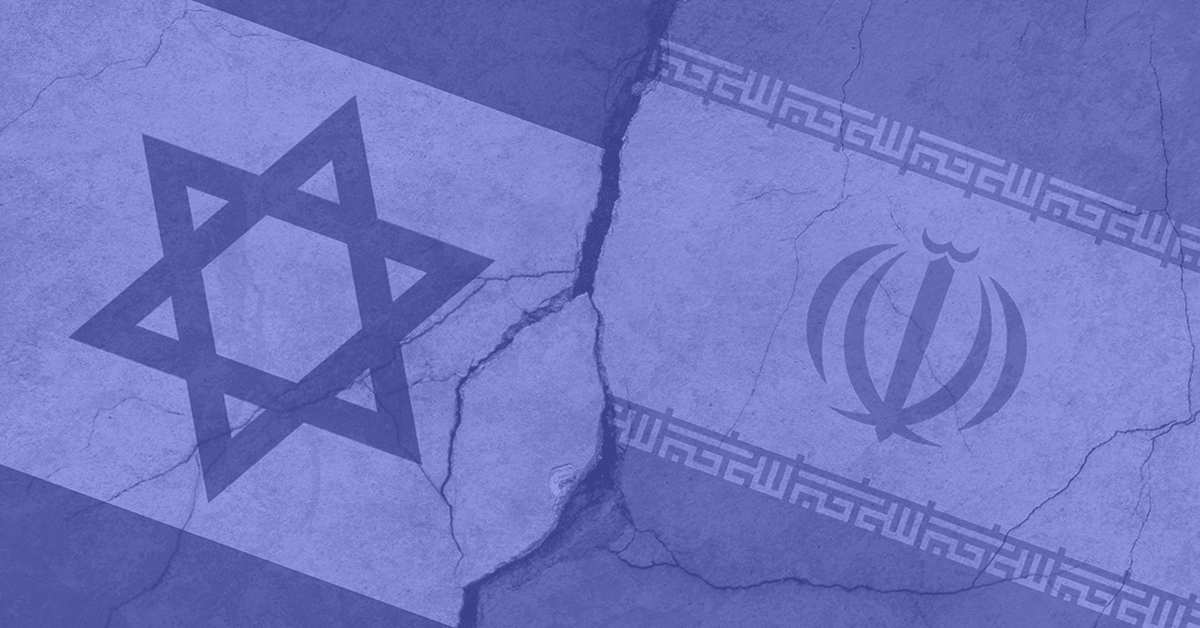
The reported shelving of a major Israeli military operation against Iran has exposed a difficult question for Washington and Jerusalem: how far should the two allies go to contain Tehran, and who gets to decide when diplomacy has failed?
By: Javid Amin | 22 October 2026
A fresh military confrontation between Israel and Iran may have been avoided earlier this month, but the strategic calculations that brought the two countries to the brink appear far from settled.
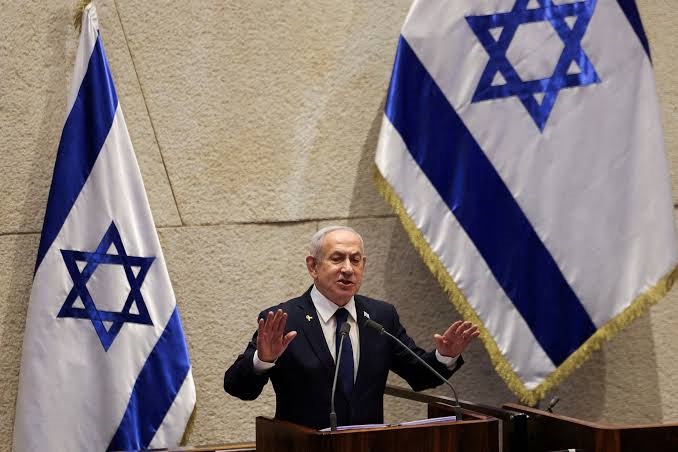
Reports published on October 21 by the Financial Times and subsequently carried by several international news organisations say Israeli Prime Minister Benjamin Netanyahu wanted to prepare a new, large-scale military campaign against Iran. The proposed operation was reportedly planned for the weekend of October 10 and could have targeted Iranian nuclear facilities, sites associated with the Iranian government and civilian infrastructure, including energy installations.
According to people familiar with the discussions cited by the Financial Times, US President Donald Trump opposed restarting a major conflict before America’s November 3 midterm elections. The reported offensive did not take place.
The disclosures have raised fresh questions about the relationship between Netanyahu’s security priorities and Trump’s political and diplomatic calculations. They have also revived concerns that the confrontation over Iran’s nuclear programme could escalate into another regional war, even as negotiations remain a possible route out of the crisis.
There is, however, an important qualification. The claim that an Israeli offensive was ready to proceed on October 10 has been disputed. The Jerusalem Post, citing its own sources on October 21, reported that the Israeli military had not received the kind of orders that would indicate an imminent attack.
That disagreement matters. It separates a reported push for renewed military action from the stronger claim that Israel was on the verge of launching an operation that Trump personally stopped.
As of October 22, the available reporting does not establish that a new large-scale Israeli or joint US-Israeli offensive has begun. Nor is there public confirmation of a final decision to launch one.
What the reports say happened in October
The immediate controversy centres on discussions between Netanyahu and Trump about whether to resume major military operations against Iran.
The Financial Times, citing three people familiar with the planning, reported that the Israeli military was prepared for a multi-day campaign around October 10. The targets reportedly included nuclear facilities, government-linked sites and civilian infrastructure such as power plants. The operation was described as potentially more intense than the previous joint US-Israeli strikes in February.
The report did not establish whether Washington would have participated directly in the proposed October operation or whether Israel would have acted alone.
That distinction is critical. An Israeli strike conducted without American participation would carry different operational, diplomatic and political consequences from a joint campaign involving US forces.
The reported plan was ultimately shelved, with sources attributing the decision to Trump’s opposition to reigniting the conflict before the US midterms. The administration’s stated position, as reported by Iran International, was that the United States would not attack Iran before the elections.
But the precise sequence of decisions remains less clear than some headlines suggest. The existence of military preparations, discussions about possible action and a presidential decision not to proceed are separate matters. The publicly available accounts do not establish every step in that process.
The reports also suggest that Israel has continued to assess possible targets and that further strikes remain a possibility in the coming weeks. Such assessments indicate that the military option has not necessarily disappeared. They do not, by themselves, demonstrate that an attack has been authorised.
A significant disagreement: Was Israel actually ready to attack?
One of the most important developments on October 21 came from The Jerusalem Post, which challenged the central premise of the Financial Times account.
Citing sources familiar with the Israeli military’s position, the newspaper reported that the Israel Defense Forces had not been instructed to prepare for an October 10 attack in the manner associated with earlier major operations against Iran.
The report acknowledged that the Israeli military had been on a war footing at various points and had maintained readiness for a possible confrontation. However, it said there was no equivalent order from Netanyahu, Defence Minister Israel Katz or another government official directing the military to prepare for the reported offensive.
The two accounts therefore differ on a fundamental question: whether the October 10 plan had advanced to the stage of an imminent military operation or remained part of broader contingency planning and political discussions.
There is not enough independently available evidence to resolve that dispute conclusively.
A military can maintain strike options, update target assessments and position itself for contingencies without receiving a final order to attack. Conversely, a lack of publicly acknowledged orders does not necessarily prove that senior leaders never discussed a specific operation.
The distinction is especially important when the underlying reporting relies on unnamed sources. Such sources can provide valuable information about sensitive security discussions, but readers cannot always assess their proximity to the decision-making process, their motives or whether they are describing the same stage of planning.
The Israeli prime minister’s office had also rejected an earlier report that Netanyahu was seeking to restart the war before the elections. On October 14, Reuters reported that Netanyahu said a pre-emptive strike was not convenient at that time, while reiterating that Israel would respond forcefully if Iran attacked.
His public comments do not settle what may have been discussed privately with Trump. They do, however, complicate any portrayal of an Israeli leader who had publicly committed himself to launching a new offensive before election day.
The most defensible conclusion is that renewed military action was reportedly discussed and remained a strategic possibility, while the claim that a fully prepared October 10 offensive was blocked by Trump remains contested.
Why Trump is reluctant to reopen the conflict before November 3
The US midterm elections offer an important explanation for Washington’s reported reluctance to restart hostilities.
American presidents routinely face competing demands between foreign policy and domestic politics. A major military escalation shortly before an election can affect public opinion, economic confidence, energy prices and the administration’s broader political message.
A renewed war with Iran could create pressure on the White House from several directions at once. It could require additional military deployments, increase the risk to American personnel across the region and unsettle energy markets. It could also force the administration to explain why another round of combat was necessary when diplomatic alternatives had not been exhausted.
Higher oil prices would be a particular concern. The Middle East remains central to global energy security, and fears of disruption around the Strait of Hormuz can influence oil prices even before physical supplies are interrupted.
For Trump, therefore, restraint before the midterms need not mean abandoning the objective of limiting Iran’s nuclear capabilities. It may instead reflect a judgement that the timing and consequences of another military campaign are politically and strategically unfavourable.
That interpretation should not be confused with proof that domestic politics was the administration’s only consideration. The public reporting does not disclose a complete record of Trump’s deliberations, and Washington has other reasons to be cautious about widening a regional conflict.
There is also a difference between postponing an operation and ruling it out. The reported American position leaves open the possibility that military pressure could return after the elections if negotiations fail or if the administration concludes that Iran is making unacceptable progress in areas it considers security threats.
For Israel, that creates a potentially uncomfortable waiting period. Netanyahu may regard delay as allowing Iran more time to rebuild capabilities. Washington, by contrast, may see delay as a way to retain leverage without immediately accepting the costs of another war.
Netanyahu faces a separate political clock in Israel
The American election is only one part of the political picture. Israel is also approaching its October 27 parliamentary election, according to the reports.
The timing has intensified scrutiny of Netanyahu’s calculations. Any decision to launch a major military operation in the days before voting would inevitably become part of the domestic political debate, particularly given the importance of national security to Israeli voters.
Netanyahu has long presented Iran’s nuclear and military capabilities as a fundamental threat to Israel. A policy of sustained pressure against Tehran is therefore not simply an electoral slogan; it is also a longstanding feature of his security outlook.
Nevertheless, the prospect of a new war so close to an election raises questions about political accountability. A military campaign can alter the public agenda, rally support around the government or, if it goes badly, deepen criticism of the leadership.
Those possibilities are not evidence that an operation would be motivated by electoral considerations. Establishing political intent requires evidence beyond the timing of a proposed strike.
The controversy instead highlights a broader democratic question: how should a government weigh urgent security claims against the risk that military decisions will become entangled with domestic political competition?
Netanyahu’s reported discussions with Trump also expose the limits of Israel’s freedom of action when its strategic objectives depend on American support. Even if Israel can conduct certain operations independently, a sustained campaign against Iran could create demands for intelligence, logistics, air defence and diplomatic backing that are difficult to separate from the US role.
That dependence does not give Washington automatic control over every Israeli decision. It does mean that the relationship between the two governments can shape the scale, timing and consequences of military action.
The nuclear dispute remains at the heart of the confrontation
The latest reports cannot be understood without the longstanding dispute over Iran’s nuclear programme.
Israel regards the prospect of Iran acquiring a nuclear weapon as an existential security threat. Successive Israeli governments have argued that Tehran’s nuclear infrastructure, missile capabilities and support for armed groups across the region together pose a danger that cannot be addressed through diplomacy alone.
Iran, for its part, has maintained that its nuclear programme is peaceful. Tehran has also argued that its security concerns are routinely used to justify sanctions and military pressure.
The dispute is not simply about declarations of intent. It concerns the technical capacity to enrich uranium, the condition and accessibility of nuclear facilities, the ability of international inspectors to verify activities and the time that would be required to produce material suitable for a weapon.
These are distinct questions. A country can possess advanced nuclear technology without having decided to build a nuclear weapon, while restricted access for inspectors can make it harder for outsiders to establish what is happening with confidence.
For that reason, reliable assessments require current information from the International Atomic Energy Agency, including verified findings on uranium enrichment, inventories, monitoring arrangements and access to relevant facilities.
Claims that Iran is rebuilding its nuclear capabilities should therefore be assessed against specific evidence, rather than treated as established merely because they appear in political statements or intelligence-based media reports.
At the same time, uncertainty is not proof that the threat is imaginary. If international monitoring is limited or access to sensitive facilities is restricted, governments may have less confidence in their ability to detect or verify developments.
This creates a dangerous strategic cycle. Israel may interpret uncertainty as a reason to consider military action. Iran may view that pressure as a reason to strengthen deterrence. Washington then faces the task of preventing escalation while trying to secure nuclear restrictions that it considers meaningful.
The result is a dispute in which each side can describe its actions as defensive while interpreting the other side’s moves as evidence of hostile intent.
Why a new campaign could be more dangerous than a limited strike
The reported October proposal was described as more intense than the earlier joint US-Israeli campaign. If that description accurately reflects the plans under discussion, it would suggest an operation intended to have broader effects than a narrowly targeted strike.
The reported target categories are also significant. Nuclear facilities and military installations are different from civilian infrastructure such as electricity plants. Attacks on the latter could have consequences extending well beyond the immediate military objective.
Power stations support hospitals, water systems, communications, businesses and households. Damage to electricity networks can therefore create cascading disruption, even when the facilities themselves are not military bases.
Under international humanitarian law, parties to an armed conflict must distinguish between military objectives and civilian objects. An attack on a military objective must also comply with the rules of proportionality and precautions in attack. Civilian infrastructure is not automatically a lawful target merely because it is strategically important to a government.
Whether any particular facility could lawfully be attacked would depend on the facts, including its actual contribution to military action, the expected military advantage and the foreseeable civilian harm.
The strategic consequences would also depend on how Iran responded. Tehran could retaliate directly against Israel, target military assets associated with the United States or encourage allied armed groups to increase pressure elsewhere in the region. These are possible escalation pathways, not predictions that every scenario would occur.
Even a campaign that initially appeared limited could become difficult to contain if either side interpreted the other’s response as requiring a further round of strikes.
The danger is therefore not confined to the first wave of attacks. It lies in the possibility that each side would feel compelled to demonstrate resolve, making it harder to stop the fighting once it began.
Could the military preparations be intended to strengthen diplomacy?
Not every reported military option necessarily means that leaders have abandoned negotiations.
One of the sources cited in the reporting suggested that the Israeli preparations could also have served as a negotiating tactic. In international diplomacy, governments sometimes use military readiness to persuade an adversary that refusing an agreement carries serious risks.
This approach can produce leverage, but it is difficult to control. A threat intended to bring an opponent to the negotiating table can instead persuade that opponent to accelerate military preparations, disperse sensitive assets or retaliate pre-emptively.
The reported assessment that there could be either a deal or an attack captures the pressure surrounding the dispute. It does not establish that those are the only possible outcomes.
Negotiations can stall and later resume. Interim arrangements can reduce immediate risks without resolving the underlying disagreement. Third-party mediation can also create room for limited understandings even when a comprehensive agreement remains out of reach.
The essential question is what a workable agreement would require.
For Washington and Israel, that could include verifiable limits on Iran’s nuclear activities, reliable monitoring and arrangements designed to prevent a rapid return to activities they consider unacceptable. For Tehran, sanctions relief, security assurances and restrictions on military pressure may be central to any bargain it is prepared to accept.
Those positions are difficult to reconcile, particularly when the parties do not trust one another’s intentions. But military action cannot by itself settle every political and technical issue surrounding the nuclear programme.
Even a successful attack on selected facilities would not necessarily erase the knowledge, expertise or industrial capacity that underpins a nuclear programme. It could delay particular activities while leaving the underlying dispute unresolved.
A durable outcome would require a political arrangement capable of surviving changes in military pressure and domestic leadership.
The Strait of Hormuz and the global economic risk
The consequences of renewed conflict would extend well beyond Israel and Iran.
The Strait of Hormuz is one of the world’s most important energy chokepoints. A significant share of global oil trade passes through the narrow waterway, alongside substantial volumes of liquefied natural gas.
Any credible threat to shipping can prompt energy-market volatility, raise insurance costs and increase uncertainty for import-dependent economies. Actual disruption could have more serious effects, depending on its scale and duration.
For countries across Asia, including India, the stakes are particularly high. Import costs influence domestic fuel prices, transport expenses, inflation and the finances of governments that subsidise or tax energy consumption.
The effects would not be identical across countries. Outcomes would depend on existing contracts, strategic reserves, alternative supply routes, currency movements and the duration of any disruption.
A short-lived increase in risk premiums would be different from a sustained interruption to physical supplies. It would therefore be misleading to treat every report of possible military action as evidence that an energy crisis is inevitable.
Nevertheless, a wider conflict could impose economic costs even if the fighting remained geographically concentrated. Markets often react not only to what has happened, but also to what traders believe might happen next.
That uncertainty gives diplomacy an economic dimension. Preventing escalation is not merely a question of avoiding casualties; it is also a way to reduce the risk of a shock that could spread through global trade and energy markets.
What happens next?
The immediate question is whether the current pause creates space for negotiations or merely postpones another confrontation.
Several indicators will matter in the coming days and weeks.
First, any change in the public position of the White House could signal a shift in Washington’s calculations. A statement that attacks will not take place before the midterms is a time-bound commitment, not necessarily a permanent rejection of military action.
Second, statements from Netanyahu’s office and the Israeli military may help clarify whether the reported October operation represented an authorised strike plan or a contingency under discussion. Direct confirmation remains limited, and official silence should not be mistaken for confirmation.
Third, developments in nuclear diplomacy will be central. New proposals, monitoring arrangements or evidence of renewed negotiations could reduce immediate pressure. A breakdown in talks, particularly alongside claims of significant nuclear advances, could strengthen arguments for military action among those who favour it.
Finally, military movements and regional security incidents need to be interpreted carefully. Readiness measures can serve defensive, deterrent or operational purposes. They are not conclusive proof that an attack has been ordered.
The Israeli and American elections may influence timing, but they will not remove the strategic dispute. Even if leaders avoid a new campaign in October, the questions of nuclear restrictions, regional deterrence and the future of US-Iran relations will remain.
A pause is not a settlement
The most important lesson from the latest reporting is that the absence of an attack should not be confused with the resolution of the crisis.
The Financial Times account suggests that Netanyahu pressed for renewed military action and that Trump opposed restarting the conflict before the American midterms. The Jerusalem Post, however, has disputed whether the Israeli military was preparing an imminent October 10 strike. Other reporting indicates that the two leaders have discussed the possibility of renewed operations, while Netanyahu has publicly described an immediate attack as inconvenient.
Taken together, these accounts point to a tense and unsettled policy debate, rather than a fully documented decision to launch a new war.
For Washington, the challenge is to prevent Iran’s nuclear dispute from becoming another prolonged military conflict while maintaining pressure for an agreement. For Jerusalem, it is to address what it sees as a serious security threat without triggering consequences that could exceed the intended military objectives. For Tehran, the challenge is to navigate external pressure while deciding what concessions, if any, it is willing to make.
The coming weeks may reveal whether the reported pause is the beginning of a renewed diplomatic effort or simply a delay shaped by electoral calendars.
For now, the crucial question is not only whether Israel will strike Iran again. It is whether the United States, Israel and Iran can find a path that reduces the perceived need for another strike before the next confrontation becomes harder to prevent.
Follow Us on WhatsApp
Get Breaking News, Exclusive Updates & In-Depth Analysis from Kashmir and beyond, delivered straight to your phone.
Join our WhatsApp Channel: Follow Now