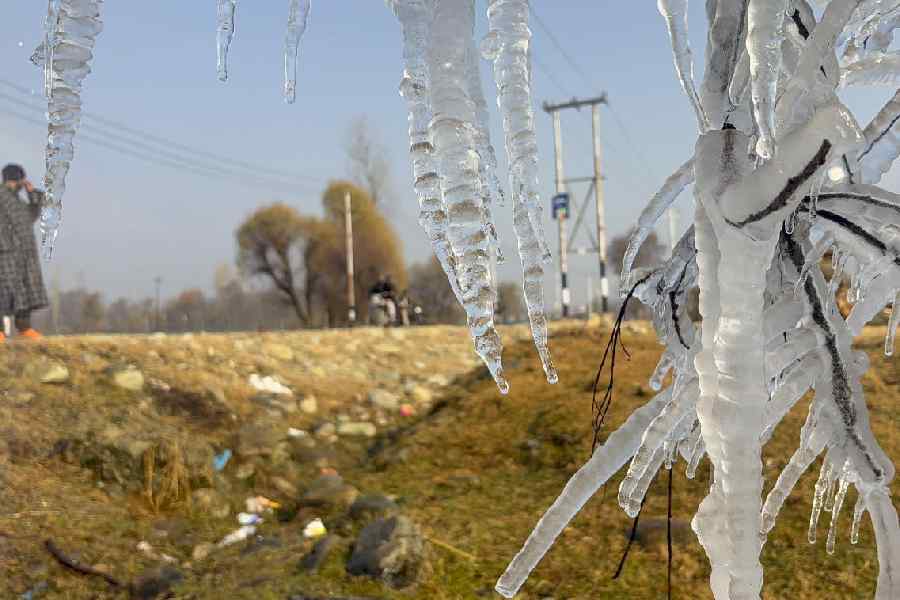
Kashmir Nights Near Freezing as Winter Tightens Its Grip; Shopian Records 0.8°C, Rain and Snow Likely on October 24
By: News Desk | 21 October 2026
Srinagar: The chill of Kashmir’s approaching winter is becoming increasingly difficult to ignore. In south Kashmir, temperatures have dipped close to freezing, mornings are growing colder, and residents are preparing for the seasonal shift that transforms the Valley’s autumn landscape.
Shopian recorded the lowest minimum temperature among the stations listed in the latest report, at 0.8°C. Awantipora followed at 1.2°C and Pulwama at 1.3°C, while the tourist destinations of Sonamarg and Pahalgam each recorded 1.4°C.
Srinagar, meanwhile, registered a minimum temperature of 4.4°C, reportedly 1.4 degrees below normal for this time of year.
The falling mercury comes as the Valley experiences a marked contrast between chilly nights and comparatively mild afternoons. Although daytime conditions remain relatively comfortable, the temperature difference is becoming a familiar sign of Kashmir’s transition from autumn towards winter.
The weather is expected to change again on October 24, when the Meteorological Centre in Srinagar has forecast generally cloudy conditions, with the possibility of light rain in the plains and light snowfall over higher reaches. Thunderstorms and gusty winds may also occur at some locations.
For now, the forecast offers farmers a short window to continue harvesting and other agricultural operations before the possibility of unsettled weather returns.
The latest developments point to a familiar seasonal pattern, but they also carry practical implications for farming, travel, heating arrangements and communities living in Kashmir’s colder districts.
Kashmir Weather Update: Shopian Records the Lowest Temperature
Shopian emerged as the coldest location in the reported temperature readings, with the minimum falling to 0.8°C.
The readings from other parts of the Valley show that the cooling is not confined to a single district. Awantipora recorded 1.2°C, Pulwama 1.3°C, Sonamarg and Pahalgam 1.4°C each, and Gulmarg 2.2°C.
Other reported minimum temperatures included:
- Anantnag: 3.2°C
- Budgam: 3.3°C
- Kupwara: 3.4°C
- Qazigund: 3.8°C
- Ganderbal: 4.2°C
- Bandipora: 4.3°C
- Srinagar: 4.4°C
- Kulgam: 4.8°C
- Kokernag: 5.4°C
These figures represent reported minimum temperatures, not current daytime readings. They also reflect conditions at individual observation stations, which can differ according to elevation, local terrain and exposure.
The figures nevertheless underline the spread of the autumn chill across the Valley, particularly in south Kashmir and higher-altitude areas.
For residents, a temperature just above freezing can make early mornings uncomfortable, especially in homes that are not yet fully equipped for sustained cold. For farmers and people working outdoors, the change is noticeable before the colder daytime conditions of winter become established.
Why Shopian is getting so cold
Nighttime temperatures can fall sharply during clear, dry weather. After sunset, the ground loses heat, and a lack of cloud cover allows more of that heat to escape into the atmosphere.
In low-lying areas, cold air can also collect in depressions and valleys, creating local pockets of colder conditions. The exact temperature at any station depends on several factors, including altitude, wind, humidity and the surrounding landscape.
This helps explain why temperatures can vary considerably between nearby locations.
The reported reading of 0.8°C in Shopian is therefore a meaningful indication of the seasonal chill, but it should not automatically be interpreted as evidence of a region-wide cold wave. Such a classification requires meteorological criteria, including comparisons with normal temperatures and the duration and extent of the cold conditions.
Srinagar’s Nights Turn Colder While Afternoons Remain Mild
Srinagar recorded a minimum temperature of 4.4°C, approximately 1.4 degrees below its seasonal normal according to the reported figures.
The contrast between cold nights and milder afternoons is becoming more pronounced. Daytime temperatures have remained around the low 20s Celsius in recent reports, allowing residents to continue outdoor activities even as early mornings and evenings become increasingly chilly.
This difference is characteristic of the autumn transition in Kashmir. As the season advances, nights generally become colder, while sunshine can still provide considerable warmth during the day.
The practical effect is a changing daily routine. People may leave home in heavy jackets in the morning and find lighter clothing more comfortable by afternoon. Heating arrangements that were unnecessary during warmer weeks may begin to return, particularly in homes in south Kashmir and other colder pockets.
However, the reported 4.4°C reading should be understood as a specific observation rather than a guarantee of the temperature on every subsequent night.
The latest official bulletin and daily station observations remain the best reference for determining whether temperatures are continuing to fall or temporarily recovering.
Rain and Snow Forecast for October 24
The next significant development in the Kashmir weather forecast is expected around October 24.
According to reports quoting the Meteorological Centre in Srinagar, Jammu and Kashmir is likely to experience generally cloudy weather, with light rain possible at scattered to many places and light snowfall over higher reaches.
Thunderstorms and gusty winds may occur at a few locations from late on October 23 into the forenoon of October 24.
The forecast suggests that the coming days will offer a relatively short period of dry weather before conditions potentially change.
The Meteorological Centre has indicated that generally dry weather is likely to return from October 25 and continue through October 31.
The expected precipitation is not a guarantee of widespread rain or snowfall across the entire region. Weather conditions can vary considerably between the plains, foothills and higher mountain areas. The amount and location of precipitation will depend on how the weather system develops.
For people planning travel, the most important distinction is between the possibility of light snowfall over higher reaches and the conditions expected on lower roads and in populated areas.
Snowfall in the mountains does not necessarily mean that Srinagar or other plains will experience snow. Similarly, a forecast of light rain does not establish that heavy rainfall or widespread disruption will occur.
Residents travelling towards higher-altitude destinations should monitor updated forecasts, particularly if thunderstorms, gusty winds or fresh snowfall are expected along their route.
Will the Wet Spell Bring Relief From the Cold?
Cloud cover can influence nighttime temperatures by reducing the amount of heat that escapes from the ground. As a result, cloudy nights may sometimes be milder than clear ones.
This means the approaching wet spell could temporarily moderate minimum temperatures in some locations. However, the effect will depend on the strength of the weather system, wind conditions, humidity and the amount of cloud cover.
Daytime temperatures may also change as cloud cover and precipitation reduce the amount of sunshine reaching the ground.
It would therefore be premature to conclude that the October 24 spell will either end the current chill or bring a sustained drop in temperatures throughout Kashmir.
The more reliable expectation is a temporary change in weather conditions, followed by a return to generally dry weather if the current forecast holds.
That return to dry conditions could again allow nighttime temperatures to fall under clear skies, although the precise temperatures cannot be established from the forecast alone.
Jammu Division Also Feels the Autumn Chill
The cooling trend is not restricted to the Kashmir Valley. Several locations in the mountainous districts of Jammu division have also recorded relatively low minimum temperatures.
The reported readings include 4.8°C in Bhaderwah, 4.9°C in Banihal and 9.5°C in Rajouri.
These figures highlight the influence of elevation and local geography on nighttime conditions. Higher-altitude settlements can experience colder nights than lower-lying areas, even when daytime temperatures remain comparatively mild.
The Chenab Valley and Pir Panjal region contain varied terrain, with temperatures changing sharply across mountain slopes, valleys and inhabited areas.
For people living in these districts, the seasonal transition can affect travel, outdoor work and the need for heating. Weather conditions at higher elevations can also change more quickly than those in the plains.
The possibility of fresh snowfall over higher reaches on October 24 makes updated forecasts particularly relevant for people travelling through mountainous areas.
However, the reported readings alone do not establish that every district in Jammu division is experiencing the same degree of cooling.
Farmers Face a Narrow Window Before the Next Weather Change
The approaching wet spell has particular importance for Kashmir’s agricultural sector.
October is an important period for harvesting and other seasonal farm operations. Dry weather can help farmers organise fieldwork, collect produce and complete tasks that become more difficult when rain interrupts operations.
The Meteorological Centre has advised farmers to continue harvesting and other agricultural activities in view of the expected weather conditions.
The advice reflects the value of using the available dry period before the possibility of rain and snowfall returns.
For farmers, the immediate concern is not simply the temperature. It is the timing of precipitation, the condition of fields and the amount of work remaining before colder weather becomes more persistent.
Rain can complicate some outdoor operations, while snowfall over higher reaches may affect access to remote locations. The actual impact will depend on the intensity and distribution of the weather.
Farmers should therefore follow local agricultural advisories and updated weather bulletins rather than assume that the forecast will unfold identically across all districts.
The period between now and October 24 offers an opportunity to complete pending work where field conditions permit. Beyond that, the outlook will depend on the actual weather observed and any subsequent revisions to the forecast.
What the Falling Temperatures Mean for Daily Life
The gradual decline in nighttime temperatures is also changing everyday life across the Valley.
Residents are bringing out warmer clothing, preparing heating arrangements and adjusting their routines to accommodate colder mornings and evenings.
In households where heating appliances are used, this is also a useful time to check their condition before they become necessary for longer periods.
Electric heaters and other electrical appliances should be used according to manufacturers’ instructions, with damaged wiring and overloaded sockets avoided. Where fuel-burning heating equipment is used, adequate ventilation and appropriate safety precautions are essential.
The transition to colder weather can also be difficult for people who spend long hours outdoors, including workers, commuters and those travelling early in the morning.
For visitors, the contrast between daytime sunshine and nighttime chill makes layered clothing a practical choice. People travelling to Pahalgam, Sonamarg, Gulmarg or other higher-altitude destinations should be prepared for conditions that may differ from those in Srinagar.
These are ordinary seasonal adjustments, but they become increasingly important as the temperature falls further.
Is Kashmir Entering Winter Early?
The latest readings suggest that Kashmir is moving deeper into its autumn cooling phase. They do not, on their own, establish that winter has arrived unusually early.
The region experiences a gradual transition from autumn into winter, with temperatures influenced by altitude, cloud cover, western disturbances and other weather systems.
Cold nights can occur well before the more persistent winter conditions associated with December and January. Similarly, a brief spell of rain or snowfall in October does not necessarily indicate that sustained snowfall or severe cold will follow immediately.
The expectation that temperatures may approach or fall below freezing at more stations as November advances is consistent with the seasonal cooling pattern, particularly in south Kashmir and higher-altitude areas. But the timing and extent of such conditions remain uncertain and should be assessed against updated meteorological forecasts.
For now, the most useful indicators are daily minimum temperatures, the development of the October 24 weather system and the pattern of conditions that follows it.
These observations will provide a clearer picture of how quickly the Valley is moving towards winter.
What Residents Should Watch Over the Coming Days
Three developments deserve attention.
First, residents should monitor whether minimum temperatures continue to fall during the remaining dry period. Clear skies may allow further nighttime cooling, but the extent will vary by location.
Second, the forecast for October 24 should be followed closely, particularly by people travelling through higher reaches where snowfall, thunderstorms or gusty winds may affect conditions.
Third, farmers should make practical use of the dry weather window while remaining alert to updated local advisories.
The expected return to generally dry weather from October 25 could provide a further period for outdoor work, but it should not be interpreted as a guarantee that temperatures will rise or that every location will experience identical conditions.
The distinction between a weather forecast and an observed outcome is especially important during autumn, when conditions can change quickly.
Conclusion: Kashmir’s Autumn Is Giving Way to a Colder Season
The reported minimum of 0.8°C in Shopian offers a clear indication of the chill settling over parts of Kashmir. With several other locations recording temperatures close to freezing and Srinagar falling below its reported seasonal normal, the seasonal transition is becoming increasingly apparent.
Yet the coming days are not expected to bring uninterrupted cold or widespread snowfall. The Meteorological Centre’s forecast points instead to a possible spell of light rain and higher-altitude snowfall around October 24, followed by a return to generally dry conditions.
For residents, the immediate priorities are straightforward: prepare for colder nights, follow updated weather forecasts and take advantage of the dry period where possible.
For farmers, the timing of the expected precipitation makes the next few days particularly important. For travellers, changing conditions at higher elevations deserve attention.
Kashmir’s winter will arrive gradually, not in a single overnight shift. But as the temperatures fall and the mountains prepare for another season of snow, the Valley is already showing the unmistakable signs of a colder chapter ahead.
Follow Us on WhatsApp
Get Breaking News, Exclusive Updates & In-Depth Analysis from Kashmir and beyond, delivered straight to your phone.
Join our WhatsApp Channel: Follow Now


