Farooq Abdullah’s ‘Conspiracy’ Remark: Between Political Suspicion and the Real Fear of Kashmiri Pandit Employees
By: News Desk | 02 September 2026
Srinagar/Jammu: A question from Farooq Abdullah has opened an old and deeply sensitive wound in Jammu and Kashmir.
Why, the National Conference president asked, are Kashmiri Pandit employees repeatedly receiving threats while senior Hindu officials and police officers working in the Valley do not appear to face the same pattern of intimidation?
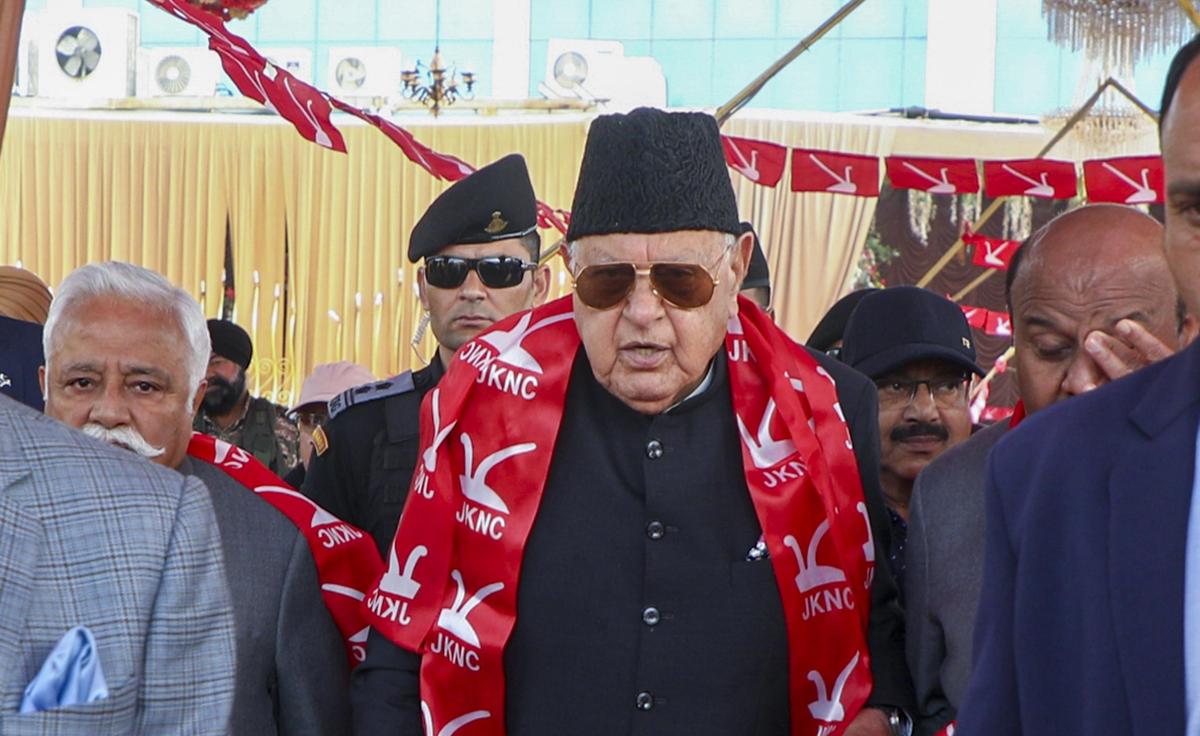
Abdullah went further, suggesting that the threats could be part of a “conspiracy” intended to create fear and potentially prevent Jammu and Kashmir from regaining statehood.
The remarks have triggered an angry political response.
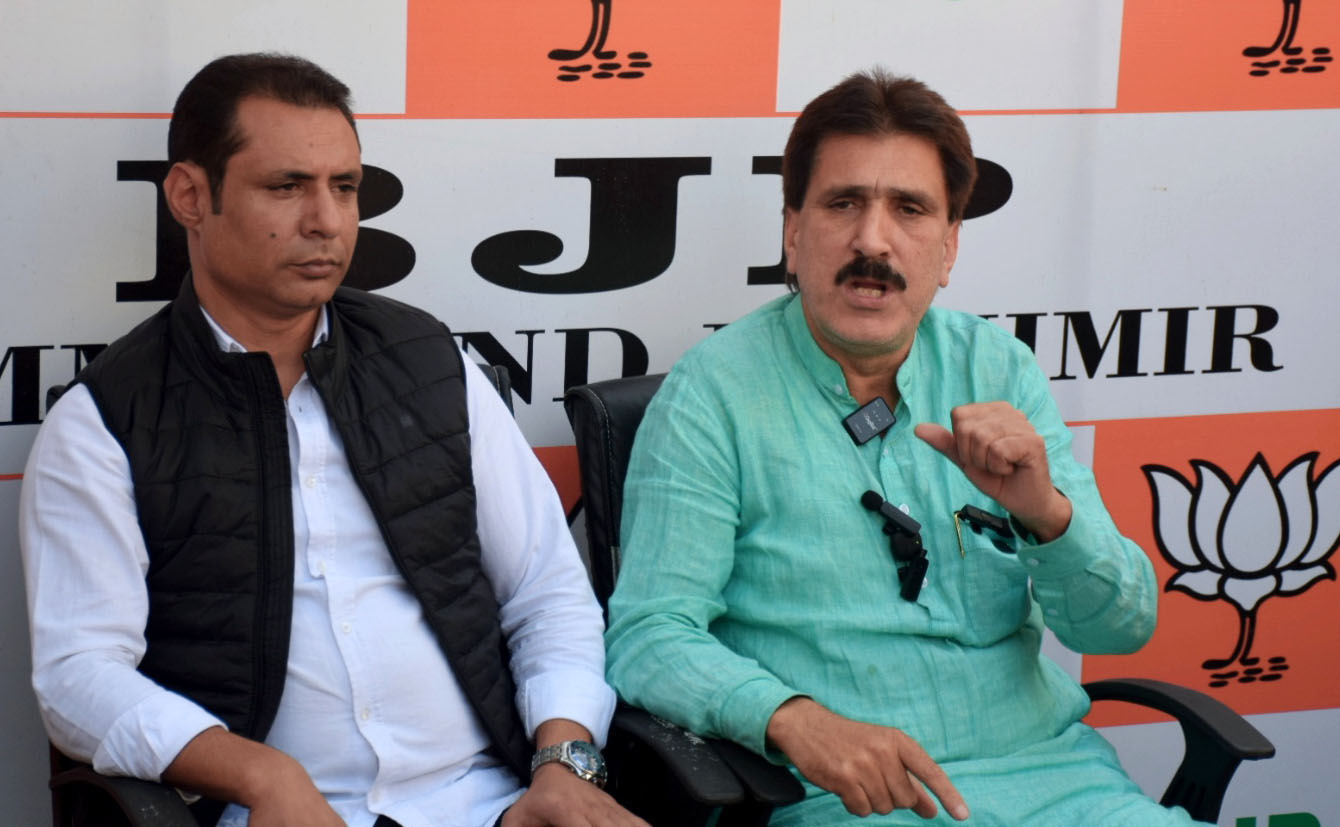
The BJP has accused the veteran National Conference leader of trivialising the security concerns of Kashmiri Pandits and casting doubt on threats that have left government employees and their families worried about their safety.
But beneath the political uproar lies a more difficult question.
Where does legitimate scrutiny of a security threat end and dangerous dismissal of a community’s fear begin?
That distinction matters enormously in Kashmir.
Because whatever the political interpretation of the latest threats, the fear among many Kashmiri Pandit employees is not imaginary.
It has a documented history.
And the latest developments show that the issue is not simply about one statement by Farooq Abdullah. It is about whether a rehabilitation policy that brought thousands of displaced Kashmiri Pandits back into Valley postings can provide them with something more fundamental than a government appointment:
the confidence that they can safely live, travel and work in Kashmir.
The Remark That Started the Storm
Farooq Abdullah’s intervention came amid renewed concern over threats allegedly directed at Kashmiri Pandit employees working in the Valley under the Prime Minister’s special employment package.
According to reports, Abdullah questioned why such threats were apparently aimed at Pandit employees while senior Hindu officials and police officers working in Kashmir were not facing similar intimidation.
He suggested that the pattern deserved investigation and linked the issue to the wider political question of restoring statehood to Jammu and Kashmir.
His argument was not simply that threats should be ignored.
Rather, he was questioning who was issuing them, why particular employees were being targeted and whether somebody could be deliberately creating fear for a political purpose.
That is a legitimate line of inquiry in any security investigation.
But the political problem arose from the word “conspiracy.”
For Kashmiri Pandit representatives and the BJP, the remark sounded less like a demand for investigation and more like a questioning of the threats themselves.
And in a community carrying the memory of displacement, targeted killings and years of insecurity, that distinction is particularly sensitive.
The Timing Makes the Remark More Explosive
Abdullah’s comments did not come in a vacuum.
They came after a fresh threat poster reportedly circulated online and allegedly identified Kashmiri Pandit employees by name and included personal information.
The All PM Package Employees Forum Kashmir subsequently approached Jammu and Kashmir’s Chief Secretary seeking enhanced security for employees, their workplaces, residences and transit routes.
The Indian Express reported that the latest threat letter was notable because it allegedly contained unusually detailed personal information, including house numbers and street names.
That detail is significant.
A vague threat written on a wall or circulated anonymously is one thing.
A document that appears to contain the residential and personal details of government employees creates an entirely different level of anxiety.
It raises questions about how such information was obtained.
It raises questions about surveillance.
It raises questions about whether the threat is genuine.
And it raises the obvious security question:
Who is behind it?
Those are precisely the questions authorities should investigate.
But until such an investigation establishes otherwise, the existence of uncertainty cannot reasonably be treated as proof that the threat itself is fabricated.
The Employees Are Not Talking About Politics. They Are Talking About Safety.
This is perhaps the most important ground reality missing from the political exchange.
The employees receiving these threats are not political leaders.
They are government workers.
Teachers, clerks, engineers, health workers and other employees recruited under the Prime Minister’s special employment package have been posted in different parts of the Valley as part of a broader attempt to facilitate the return and rehabilitation of displaced Kashmiri Pandits.
For many of them, the question is painfully practical.
Can they go to work?
Can their families stay with them?
Can they travel safely between their homes and offices?
Can they return home after dark?
Will the government protect them if their names appear in a threat?
Those questions do not fit neatly into the political arguments being traded between the NC and BJP.
But they are the questions that matter most to the employees themselves.
The PM Package Was Never Just About Jobs
The Prime Minister’s special employment package for Kashmiri migrants was conceived as more than a conventional recruitment programme.
It was linked to the larger political objective of facilitating rehabilitation and encouraging displaced Kashmiri Pandits to return to the Valley.
That makes security an inseparable part of the policy.
A government job may bring an employee back physically.
But if the employee does not feel safe living or working there, the rehabilitation objective remains incomplete.
This is why demands for relocation to Jammu have repeatedly surfaced among PM Package employees.
Their argument is not necessarily that they reject Kashmir.
It is that employment cannot be separated from physical security.
A job posting is meaningful only when the person holding it can safely perform that job.
The Fear Has a Recent History
The latest threats also have to be viewed against the violence experienced by Kashmiri Pandits in recent years.
Targeted attacks on minority employees in the Valley, particularly in 2022, generated widespread fear and prompted many employees to demand transfers to safer locations.
The security environment subsequently improved in some areas, but the psychological impact of those attacks did not disappear.
That history explains why a fresh threat letter can produce a reaction far greater than the contents of the letter alone might suggest.
For someone who remembers earlier attacks, an anonymous threat is not merely an online message.
It is a reminder of what happened before.
That is why the administration cannot afford either complacency or sensationalism.
It must establish the facts.
Quickly.
Credibly.
Transparently.
Are the Threats Genuine? That Is Exactly What Needs to Be Investigated
There is an important point on which Farooq Abdullah and the concerned employees should theoretically have common ground.
Investigate the threats.
If the threat is genuine, identify those responsible and protect the employees.
If the threat is fabricated, identify those responsible for creating panic.
If the document was circulated by a militant front or a criminal group, establish its links.
If the information contained in the poster came from a security breach, determine how that happened.
If there is evidence of an organised conspiracy, expose it.
In other words, questioning the origin of the threat is not inherently wrong.
The danger lies in prematurely deciding the answer.
Calling something a conspiracy before an investigation establishes the facts can be as damaging as blindly accepting every anonymous threat as authentic.
The answer should come from evidence, not political instinct.
BJP Sees a Different Danger
The BJP’s criticism of Abdullah comes from precisely this point.
Its leaders argue that questioning the threats risks sending the wrong message to a community that already feels vulnerable.
The party has framed Abdullah’s remarks as insensitive and politically irresponsible, particularly given the history of targeted violence against Kashmiri Pandits.
There is a political calculation behind the BJP’s response as well.
The BJP has consistently positioned itself as a defender of displaced Kashmiri Pandits and as a party that places security and national integration at the centre of its Kashmir policy.
Abdullah’s remarks therefore give the BJP an opportunity to reinforce that narrative.
But the political usefulness of the issue should not obscure the underlying security question.
The employees need protection whether the BJP gains politically from the controversy or not.
The NC’s Possible Defence: ‘We Are Asking Questions, Not Dismissing Threats’
The National Conference can make an equally strong counterargument.
A security threat should never be accepted uncritically.
Every threat should be investigated.
If there is an unusual pattern — particularly one in which particular categories of employees are repeatedly targeted — authorities should determine why.
That is a legitimate security question.
Why are particular employees being named?
Who has access to their details?
How are the threat letters being distributed?
Who benefits from the resulting fear?
Are the organisations issuing the threats genuine militant formations, fronts or merely names being used by individuals to create panic?
These are questions that intelligence agencies and police should answer.
But there is a line between investigating a threat and politically declaring it a conspiracy before the investigation is complete.
That line has become blurred in the current debate.
The ‘Why Not Hindu Police Officers?’ Argument Needs Context
Abdullah’s central question — why are senior Hindu police officers or officials apparently not receiving similar threats — sounds compelling at first glance.
But it does not, by itself, establish that the threats against Pandit employees are fabricated.
Militant targeting does not necessarily follow a simple religious formula.
Attackers can select targets based on occupation, location, accessibility, perceived vulnerability, symbolic value or political objectives.
A government employee working in an ordinary office may be far more accessible than a senior police officer operating inside a heavily protected security environment.
Therefore, the absence of reported threats against one category of Hindu officials cannot logically prove that threats against another category are false.
At the same time, the selective nature of the targeting remains a legitimate investigative question.
Both propositions can be true simultaneously.
The threats may be genuine, and their selective targeting may still require explanation.
That is where political debate should give way to professional investigation.
The Most Disturbing Detail Is Not the Political Statement
The most disturbing element in the recent episode may actually be buried beneath the political controversy.
The threat poster reportedly contained personal information relating to employees.
The Indian Express reported that details allegedly included house numbers and street names — information that can turn a generic threat into a much more direct form of intimidation.
That should immediately trigger questions about information security.
Where did the information come from?
Was it publicly available?
Was it obtained through local networks?
Was there surveillance?
Was government data compromised?
Was the information deliberately collected?
These questions matter more than political speeches.
If the information was genuinely obtained by militants or their affiliates, the security implications are serious.
If somebody fabricated the document using publicly accessible information, that too is serious because it demonstrates how easily fear can be generated.
Either way, the state needs answers.
The Employees Have Already Asked the Government for Protection
The All PM Package Employees Forum Kashmir has not merely issued political statements.
It has approached the administration.
The forum sought enhanced security for employees, their residences, workplaces and transit routes following the fresh threat reports.
That is significant.
The employees are effectively telling the government:
Do not ask us to debate the authenticity of the threat. Establish the facts and keep us safe while you do it.
That is a reasonable demand.
Security assessments often have to be made before investigations are complete.
The state does not wait for an attack to happen before deciding whether a credible threat deserves protection.
Preventive security exists precisely because intelligence is rarely perfect.
The Relocation Demand Is Back Again
The renewed threats have also revived an older demand: relocation of PM Package employees to Jammu or other safer locations.
This demand has appeared repeatedly following targeted attacks and security scares.
The government’s difficulty is obvious.
If employees are permanently relocated away from the Valley, the rehabilitation objective behind the employment package becomes harder to achieve.
But forcing employees to remain in places where they genuinely believe they are unsafe carries its own risks.
There is no easy administrative formula.
Security can be increased.
Accommodation can be strengthened.
Workplaces can be relocated to safer clusters.
Transport arrangements can be improved.
Threat assessments can be updated.
But ultimately, rehabilitation requires something that cannot be provided through a police escort alone:
confidence.
The Statehood Question Has Complicated Everything
Abdullah’s decision to link the threat controversy to restoration of statehood has added another layer to the dispute.
The former chief minister argued that creating fear among Pandit employees could serve a political purpose by delaying or obstructing the restoration of statehood.
That is an allegation, not an established finding.
There is currently no publicly established evidence in the material available that proves the latest threats were designed specifically to prevent statehood.
That distinction should remain clear.
But Abdullah’s reasoning reflects a broader political belief within the NC: that continued instability can be used to justify prolonged central control over Jammu and Kashmir.
The BJP, predictably, sees the argument differently.
For the BJP, the security threat itself is evidence that the administration cannot afford to lower its guard.
Thus the same incident feeds two competing narratives.
NC: Someone may be manufacturing fear to delay political normalisation.
BJP: Genuine threats demonstrate why security cannot be compromised.
Employees: Whatever the political explanation, we need protection.
The third voice may be the most important.
Kashmir’s Pandit Employees Are Again Caught Between Politics and Security
This is not the first time Kashmiri Pandits have found themselves at the centre of a political argument in which their own voices risk becoming secondary.
Their displacement has been politicised for decades.
Their return has been politicised.
Their employment has been politicised.
Their security has been politicised.
And now even the threats against them have become the subject of a political battle.
That is precisely what should be avoided.
A Kashmiri Pandit employee should not have to choose between being labelled a political instrument by one side and a security symbol by the other.
The employee should simply be treated as what he or she is:
a citizen entitled to work without fear.
What Should the Government Do Now?
The immediate response should be practical rather than political.
First, authorities need to establish the authenticity and origin of the latest threat material.
Second, employees named or identifiable in the material should receive an immediate security assessment.
Third, residential locations and transit routes should be reviewed, particularly where personal details have allegedly been exposed.
Fourth, the administration should maintain direct communication with employee representatives.
Fifth, any genuine militant involvement should be publicly established through credible investigation rather than speculation.
And finally, the government should explain what security arrangements are being provided and what additional measures are being considered.
Transparency matters because silence creates rumours.
And rumours create more fear.
Political Parties Also Have a Responsibility
The responsibility does not end with the administration.
Political parties need to exercise restraint.
The BJP is justified in demanding protection for Kashmiri Pandits.
The NC is justified in asking whether threats are genuine and who is behind them.
But neither side should turn an unresolved security matter into a settled political fact.
The BJP should avoid suggesting that questioning the threats automatically means supporting militants or dismissing Pandit suffering.
The NC should avoid language that can reasonably be interpreted as dismissing the fears of employees who have asked for protection.
Both positions risk pushing the community further into a political corner.
The Real Test Is Whether the State Can Separate Security From Politics
This episode offers Jammu and Kashmir an opportunity to demonstrate something important.
Can the administration investigate a politically sensitive security threat without allowing the investigation itself to become partisan?
That means evidence must come first.
If the threat is genuine, the perpetrators must be exposed.
If it is fabricated, the people responsible must also be exposed.
If there is a political conspiracy, it should be established through evidence.
If there is no such conspiracy, that too should be made clear.
The truth should not depend on which political party benefits from it.
The Fear Is Real Even When the Source of the Threat Is Unclear
There is an important distinction between the authenticity of a threat and the authenticity of fear.
The first requires investigation.
The second is already visible.
Employees have sought protection.
Families are worried.
Security measures have been discussed.
Some employees have previously demanded relocation.
Those are realities that do not disappear simply because investigators have not yet established who authored a particular threat letter.
Even if a threat ultimately proves fabricated, the fear it generated was real.
And if it proves genuine, the consequences could be far more serious.
Either way, the government has a responsibility to respond.
Beyond Farooq Abdullah’s Controversial Question
The political controversy surrounding Farooq Abdullah’s remarks will probably continue for several days.
The BJP will demand an apology or condemn the statement.
The NC will likely insist that its president was asking legitimate questions about a suspicious pattern.
Political television debates will turn the phrase “conspiracy” into a headline.
Social media will divide along familiar lines.
But the real story is happening away from television studios.
It is happening in the homes of employees whose names may have appeared on threat posters.
It is happening on roads they travel to work.
It is happening in offices where colleagues wonder whether security is sufficient.
And it is happening in families trying to decide whether a government posting in Kashmir is worth the risk.
That is the ground reality that political rhetoric must not erase.
Conclusion: Investigate the Threats, Protect the People, Avoid the Politics
Farooq Abdullah’s question about why Kashmiri Pandit employees are being threatened while other Hindu officials apparently are not is a legitimate subject for investigation.
His leap from that question to the suggestion of a wider conspiracy, however, remains an allegation that requires evidence.
The BJP is equally justified in demanding that the fears of Kashmiri Pandit employees not be trivialised.
But political condemnation alone will not make those employees safer.
The government needs to establish who issued the threats, how personal details were obtained and whether the latest warnings represent a genuine militant threat, an organised intimidation campaign or something else.
Until those answers emerge, one fact should remain beyond political dispute:
Kashmiri Pandit employees should not have to live in fear simply because they chose to work in the land from which their community was once displaced.
The statehood debate can continue.
The NC-BJP political battle can continue.
Arguments over the past can continue.
But security should not become another political bargaining chip.
If the threats are real, the perpetrators must be found.
If they are fabricated, the fabricators must be exposed.
And if there is a conspiracy, it should be proven — not merely proclaimed.
For the employees caught in the middle, the demand is much simpler than the politics surrounding them:
Let them work. Let them live. And let them feel safe.