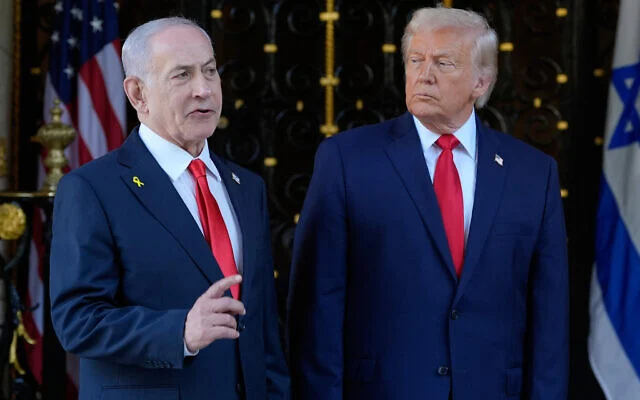
Netanyahu, Trump and Iran: What the Election Results Mean for the Next Phase of War
By: Javid Amin | 28 October 2026
Israel has voted, but the political uncertainty surrounding Prime Minister Benjamin Netanyahu has not disappeared. Instead, the country’s October 27 election has produced an apparent deadlock, leaving the future government uncertain at precisely the moment when Washington and Jerusalem are weighing their next moves against Iran.
Across the Atlantic, US President Donald Trump faces another important date: the November 3 midterm elections. His administration has publicly ruled out resuming American attacks on Iran before that vote, while reporting by major news organisations indicates that US and Israeli militaries have been preparing plans for renewed strikes afterward.
The distinction matters. Preparations for a possible offensive have been reported by multiple outlets, but the available evidence does not establish that a final decision to launch one has been made.
The stakes extend well beyond the political fortunes of two leaders. Iran remains under severe military and economic pressure, commercial shipping in the Gulf has been threatened, and diplomatic efforts have struggled to bridge disagreements over nuclear activities, sanctions and maritime security. The Council on Foreign Relations described the conflict as worsening in its October 23 assessment.
The emerging picture is one of military preparation without a confirmed attack date, electoral calculations without a guaranteed political outcome, and diplomacy that remains possible but increasingly fragile.
Israel election 2026: Exit polls point to a deadlock, not a Netanyahu victory
Israelis went to the polls on October 27 in the country’s first national election since the Hamas-led October 7, 2023, attacks and the wars that followed. The vote became a judgment on Netanyahu’s handling of national security, the military campaign against Iran, the wars on other fronts and divisions within Israeli society.
The latest reports available on October 28 indicate that neither Netanyahu’s Likud-led bloc nor the opposition bloc led by former military chief Gadi Eisenkot has secured a clear path to a parliamentary majority.
Reuters reported that exit polls suggested a deadlocked Knesset. The Associated Press likewise reported that preliminary projections showed no clear winner, with the two main blocs short of the 61 seats required to command a majority in the 120-member parliament. Arab-led parties were projected to hold a substantial number of seats and could influence coalition negotiations.
That is an important correction to the supplied summary, which states that Likud was leading with 32 seats. That figure should not be presented as an established election result. Exit-poll projections are not final counts, and the available reporting does not substantiate a confirmed 32-seat Likud victory.
Israel’s proportional electoral system makes the distinction especially important. Voters choose party lists, and the prime minister must emerge from a process of coalition-building rather than simply winning the most votes for an individual candidate.
The president consults political parties and asks the candidate considered most capable of forming a government to attempt to do so. Negotiations can take weeks, and failure to assemble a majority may lead to another election.
Until official results and coalition negotiations clarify the outcome, Netanyahu’s political future remains uncertain.
Why the deadlock matters for the Iran conflict
The election creates two competing possibilities.
If Netanyahu remains in office, whether through a new coalition or temporarily as caretaker prime minister, he may retain the political platform from which he has pursued a confrontational strategy toward Iran. But the absence of a parliamentary majority could constrain his freedom to make major decisions, particularly if coalition partners demand concessions.
An opposition-led government could alter Israel’s political tone and its approach to domestic issues. Yet it would be premature to assume that a change of leadership would mean abandoning military pressure on Iran. Israeli security concerns extend across party lines, even when politicians disagree over the government’s performance and the appropriate response.
The immediate uncertainty is therefore not simply whether Netanyahu survives. It is whether Israel can form a stable government quickly enough to make consequential decisions while the regional conflict remains unresolved.
Netanyahu’s nuclear warning: A campaign message with consequences
One of the most striking moments of the final campaign came on October 25, two days before the election, when Netanyahu shared an AI-generated image depicting a nuclear explosion over Tel Aviv.
Reporting by The Times of Israel, The Jerusalem Post and The Indian Express confirmed the publication and the accompanying warning that Iran represented an existential threat. The message argued that the nuclear question overshadowed other controversies surrounding the government. Opposition figures, including Gadi Eisenkot and Yair Golan, criticised the imagery and accused Netanyahu of using fear to influence voters.
The image was a political illustration, not evidence of an actual nuclear strike or an intelligence assessment that such an attack was imminent.
Its significance lies in the way it connected the election to the Iran confrontation. Netanyahu framed the choice of leadership as a question of national survival, suggesting that other political disputes were secondary to preventing Iran from acquiring nuclear weapons.
There is a genuine security issue behind that argument. Iran’s nuclear activities have long been a central concern for Israel, the United States and international non-proliferation authorities. But the rhetoric also raises a difficult question: how should voters distinguish a real strategic threat from political messaging designed to emphasise the incumbent’s credentials?
The nuclear image also exposed a tension in Netanyahu’s public case. He and Trump have described the Iranian military and nuclear infrastructure as having suffered devastating damage, while continuing to warn that Iran remains an existential danger.
Those positions are not necessarily mutually exclusive. Damage to nuclear facilities does not automatically establish the location, condition or accessibility of all nuclear material, nor does it eliminate missile capabilities or the possibility of rebuilding. Still, claims about the extent of the damage require independent verification.
The International Atomic Energy Agency’s monitoring role is central here. Without sufficient access to affected facilities and nuclear material, assessments of Iran’s remaining capabilities carry greater uncertainty. That uncertainty should not be confused with proof that Iran possesses a nuclear weapon.
Trump’s endorsement of Netanyahu: More than a diplomatic gesture
In posts published on October 18 and reiterated on October 25, he praised Netanyahu as an “outstanding Warrior Prime Minister” and urged Israeli voters to re-elect him. Trump linked his support to the US-Israeli campaign against Iran and called for the two leaders to “finish the job.” These statements were documented by Reuters, Axios and Israeli media outlets.
First, it connected Netanyahu’s electoral prospects explicitly to the future of the Iran campaign. Trump did not merely praise an allied leader; he presented Netanyahu’s continued leadership as important to the pursuit of their shared military objectives.
Second, the intervention came as pre-election polling suggested Netanyahu’s coalition was struggling to secure a majority. Axios reported that Netanyahu had sought additional public support from Trump in the final days before voting. The report, based on sources familiar with the discussions, described an effort to reinforce the prime minister’s image as Israel’s most effective partner in Washington.
This creates a potentially important political relationship. Netanyahu can point to his close ties with the US president as evidence of diplomatic and military influence. Trump, meanwhile, can present the partnership as part of his strategy for confronting Iran.
But the endorsement does not prove that Washington has agreed to every Israeli military proposal. The public record also shows that the two governments have not always shared the same timetable for renewed fighting.
That distinction becomes critical after the election. Trump’s support for Netanyahu may strengthen their political alignment, but it does not remove the competing pressures facing the American administration before November 3.
US midterms: Why November 3 has become a potential military turning point
The most consequential evidence in the supplied summary concerns the timing of possible renewed strikes.
On October 22, ABC News reported that the US and Israeli militaries had developed plans for renewed joint attacks on Iran in the coming weeks. The report cited two Israeli sources familiar with the planning and said the operations were expected to take place after the November 3 US midterms.
ABC also reported that White House spokesperson Anna Kelly had explicitly stated that the United States would not attack Iran before the midterm elections. The administration nevertheless maintained that it would keep its options open to prevent Iran from acquiring nuclear weapons.
The New York Times was the original source of the reporting about military preparations, according to ABC and The Times of Israel. The latter reported that exercises had intensified and that planning could involve energy infrastructure, nuclear facilities, and missile and drone arsenals.
These reports provide meaningful corroboration that renewed military action is being considered. They do not independently establish that the White House has approved an offensive, that a final target list has been authorised or that November 4 is a fixed launch date.
That distinction is central to the story.
Why would Washington wait until after the vote?
The reported concern is partly economic. A renewed offensive could trigger Iranian retaliation, disrupt energy exports further and increase volatility in oil markets. Higher fuel prices could become a political liability for the administration and Republican candidates shortly before voters choose the next Congress.
The White House’s stated position gives the election a concrete place in the timeline: American attacks will not resume before the vote. But the administration has not publicly committed to launching them afterward.
The midterms therefore create a possible decision point, not a guaranteed countdown to war.
There is also a strategic complication. Postponing military action may offer time for diplomacy, but it can also give both sides an opportunity to reposition forces, replenish supplies and prepare for a longer confrontation.
The military evidence: Preparation is real, but an attack is not inevitable
The Council on Foreign Relations’ October 23 conflict tracker describes the war as having begun with US-Israeli strikes on Iran in February 2026. It says an April ceasefire and a June memorandum of understanding temporarily halted large-scale fighting, but the arrangement later collapsed and the memorandum expired in August. Intermittent attacks and counterattacks have continued.
The Congressional Research Service’s September assessment also describes the conflict as a war of attrition, with Iran facing mounting economic pressure while the United States and its partners face costs associated with maintaining military operations and countering Iranian retaliation.
This background helps explain why renewed strikes remain a serious possibility. The previous arrangements failed to resolve the principal disputes, and neither side has demonstrated that it can impose a stable settlement on the other.
Yet military planning serves several purposes. Governments prepare contingency plans to preserve options, deter adversaries and respond rapidly if negotiations fail. Planning is therefore evidence of readiness and intent to preserve an option, not proof that the option will be exercised.
The strongest defensible conclusion is that Washington and Jerusalem are preparing for the possibility of renewed war while retaining at least some room for diplomacy.
Iran’s counter-strategy: Waiting out Trump or preparing for another attack?
Iran’s response is not limited to military preparations. Its negotiating strategy may also be shaped by the American electoral calendar.
In a Reuters report published on October 20, three Iranian officials and an Iranian insider said Tehran was deliberately prolonging negotiations in an effort to weaken Trump politically before the midterms. The sources said Iranian leaders feared renewed US-Israeli attacks and did not want to provide Trump with a diplomatic victory that he could present to voters.
These are attributed assessments from officials speaking anonymously, not a publicly acknowledged Iranian policy document. They offer insight into how some officials understand Tehran’s strategy, but they should not be treated as proof that every Iranian decision is driven by American electoral politics.
The reported Iranian position is nevertheless revealing. Tehran appears to be trying to avoid a settlement on terms it considers excessively favourable to Washington while using the economic and political costs of the conflict to increase pressure on the United States.
Reuters reported that Iran’s proposed seven-day arrangement would reopen the Strait of Hormuz under Iranian control in exchange for concessions involving the US maritime blockade, oil restrictions, frozen assets and an end to hostilities. Tehran was reportedly unwilling to discuss its nuclear programme before those conditions were addressed.
This sequencing creates a fundamental problem. Washington wants assurances on Iran’s nuclear capabilities and regional security. Tehran wants sanctions and maritime restrictions addressed before conceding on the nuclear question.
Each side is effectively asking the other to make the first significant move.
The result is a negotiating stalemate in which time itself has become a strategic resource. Iran may hope that political pressure makes Washington more flexible. Washington may believe that sustained economic and military pressure will force Tehran to accept stricter terms.
Neither calculation guarantees success.
The Strait of Hormuz: A dangerous test of military and economic leverage
On October 22, the Associated Press reported that Iranian state television, citing the Islamic Revolutionary Guard Corps’ navy, said seven oil tankers had been struck or damaged by naval mines. Four vessels were reportedly targeted during ship-to-ship oil transfers, while three others were said to have struck mines.
The report did not initially identify the vessels, their flags or their owners, and the claims were not independently verified in the account. They must therefore be attributed to Iranian state media rather than presented as fully established findings.
Even with that qualification, the reports illustrate the danger facing commercial shipping. The waterway has become both a military flashpoint and an economic pressure point, where restrictions, attacks and competing claims of control can disrupt trade.
A new US-Israeli offensive could intensify the problem. Iran has threatened to widen retaliation against regional targets, while the United States has maintained pressure on Iranian exports and shipping.
For India and other major energy importers, the consequences could include higher crude prices, increased shipping insurance premiums and pressure on domestic fuel costs. A prolonged disruption would also affect the movement of goods through regional ports and supply chains.
There is no need to assume a complete closure of the strait to understand the risk. Even a sustained reduction in safe commercial traffic could produce significant economic consequences.
The regional war is widening: Egypt, Saudi Arabia and the Houthis
The supplied summary also points to a potentially important development involving Egypt’s military support for Saudi Arabia.
On October 26, Egypt’s parliament authorised President Abdel Fattah el-Sisi to take necessary measures to support and defend Saudi Arabia against external aggression. The decision followed attacks by Yemen’s Iran-aligned Houthi movement and came amid wider efforts to contain the regional conflict.
The parliamentary authorisation does not mean Egypt has declared war on Iran, nor does it establish that Egyptian ground forces have been sent to Yemen.
Egyptian officials have described the potential role as defensive. The reported scope includes support for Saudi security, while the government has ruled out using the decision as a mandate for attacks on Yemen. The exact form and scale of any assistance remain important unresolved details.
The Houthi response also requires precise wording. On October 27, Houthi political official Mohammed Ali al-Houthi characterised Egypt’s support for Saudi Arabia as a declaration of war against Yemen. That was the movement’s political interpretation of the Egyptian decision, not a formal declaration of war by Egypt.
Why does this matter for the US-Iran crisis?
Because the conflict is no longer confined to direct exchanges between Washington, Jerusalem and Tehran. Saudi security, Red Sea shipping, the Bab al-Mandeb passage and Egypt’s regional interests are becoming more closely entangled.
Egypt has a particular economic stake in maritime security because instability around the Red Sea can disrupt traffic through the Suez Canal and reduce canal revenues. Saudi Arabia, meanwhile, must protect its territory and energy infrastructure while avoiding a wider war.
These developments do not prove that every regional actor is operating under a single military plan. They do show how the consequences of the Iran conflict can spread through alliances, shipping routes and defensive commitments.
The nuclear question: What can the IAEA actually verify?
The nuclear issue remains the most politically charged element of the confrontation, but it is also one of the areas where careful distinctions are essential.
Trump and Netanyahu have portrayed the strikes as a major setback for Iran’s military and nuclear capabilities. The strategic question is whether the damage has eliminated the risks that motivated the attacks or merely reduced Iran’s capabilities temporarily.
The International Atomic Energy Agency’s ability to inspect facilities and account for nuclear material is crucial to answering that question. When inspectors cannot access sites or verify the location and condition of nuclear material, uncertainty increases.
An Associated Press report on October 28 said IAEA Director General Rafael Grossi told the UN Security Council that the agency had found no evidence Iran had attempted to repair or reconstruct facilities damaged by US and Israeli strikes. At the same time, the agency could not verify the status of Iran’s stockpile of highly enriched uranium because it had not been able to complete the necessary inspections.
These findings need to be read together.
The absence of evidence of reconstruction is not the same as proof that all nuclear capabilities have been eliminated. Equally, an inability to verify the current location or condition of nuclear material is not proof that Iran has built a nuclear weapon or diverted material for military use.
The unresolved verification problem is one reason the conflict cannot be assessed purely through claims of military victory. Bombing can damage facilities, but it cannot substitute for a reliable accounting system, inspections and a negotiated framework that prevents future reconstruction or proliferation.
A renewed offensive might further damage infrastructure. It would not automatically resolve the underlying verification problem.
The central contradiction: Can the war be both won and still require another major offensive?
One of the most revealing tensions in the public statements from Washington and Jerusalem concerns the definition of success.
Trump has claimed that Iran’s military and economy are in ruins and that the US-led campaign has severely weakened Tehran. Netanyahu has similarly presented the military campaign as a historic opportunity to remove the Iranian threat.
Yet both leaders have continued to emphasise the danger Iran poses, while reports describe preparations for further strikes.
There are several possible explanations. Military damage may have been extensive without eliminating all of Iran’s capabilities. Governments may believe that further attacks are needed to prevent reconstruction. Or public claims of victory may be intended partly to reassure domestic audiences while the underlying strategic objectives remain unfinished.
The evidence does not establish which explanation accounts for every statement. But it highlights a critical distinction: destroying military infrastructure is not the same as achieving a durable political settlement.
Iran could emerge with weakened conventional forces yet retain the ability to launch missiles, threaten shipping, support regional armed groups or rebuild parts of its military infrastructure. A government under pressure may also become more determined to develop deterrent capabilities rather than accept the terms demanded by its adversaries.
That is why the outcome of a renewed campaign cannot be measured only by the number of targets struck. It must also be assessed against the political objectives that the military action is supposed to achieve.
What happens after November 3? Three plausible scenarios
The evidence supports three broad possibilities, although none should be treated as a prediction.
Washington and Tehran could reach an interim arrangement involving maritime access, sanctions, a cessation of attacks and renewed nuclear monitoring. Such a deal would require compromises on sequencing and enforcement, and neither side has yet demonstrated that it is willing to make all the necessary concessions.
The United States and Israel could launch another round of strikes against selected Iranian military, nuclear-related or energy infrastructure. This is a possibility supported by reporting on military planning, but no final decision or confirmed launch date has been established publicly.
A major attack on US forces, Israeli territory or commercial shipping could trigger retaliation that expands across the Gulf and Red Sea. Egypt’s authorisation to support Saudi Arabia adds another layer to regional security calculations, although it does not mean Cairo has entered the war.
The most important indicators to watch are official announcements from the White House and Pentagon, verified movements in regional military deployments, statements from Iranian officials, developments in the Strait of Hormuz and any renewed access granted to international nuclear inspectors.
Claims that an attack is imminent should be treated cautiously unless supported by corroborated reporting or an official announcement.
What the developments mean for India
For India, the consequences could extend from energy markets to maritime security and the safety of its citizens.
A renewed offensive could push oil prices higher, increase insurance costs for commercial vessels and complicate energy imports. The effects would depend on how long the confrontation lasted, whether shipping through Hormuz was disrupted and how quickly alternative supplies could be arranged.
India also has diplomatic interests across the region. Maintaining communication with Iran, Israel, the United States and Gulf governments is important both for economic security and for protecting Indian nationals.
The Egyptian decision to support Saudi Arabia is relevant because it illustrates how the conflict is affecting countries beyond the original combatants. If the Red Sea and Gulf become more dangerous simultaneously, shipping routes and regional economic links could face additional pressure.
India’s immediate interest is therefore not simply to anticipate which leader will gain politically from the crisis. It is to reduce exposure to a prolonged regional conflict while preserving its diplomatic options.
Final assessment: A post-election offensive is possible, not inevitable
The evidence available on October 28 supports several conclusions.
Israel’s October 27 election has produced an apparent parliamentary deadlock in exit polls, with neither Netanyahu’s bloc nor the opposition showing a clear route to a majority. Official results and coalition negotiations will determine the political outcome.
Trump’s endorsement of Netanyahu is documented, as is his public emphasis on continuing the campaign against Iran. Reporting by ABC News and other major outlets also supports the conclusion that US and Israeli forces have prepared options for renewed military action after the American midterms.
But the strongest claim in the supplied summary needs qualification: the November 3 election is not a confirmed launch trigger. The White House has said the United States will not attack before the vote, while reporting about post-election strikes describes planning and expectations, not a final operational order.
Iran’s reported decision to prolong negotiations, the continuing danger to shipping and Egypt’s new authority to support Saudi Arabia all show that the crisis is spreading across diplomatic, economic and regional security channels.
The central risk is that these pressures could reinforce one another. Political incentives may narrow leaders’ room for compromise, military preparations may deepen mutual suspicion, and another incident at sea or on the battlefield could rapidly change the calculations.
The Middle East is therefore approaching a consequential period, but the outcome remains open. The test after November 3 will be whether Washington and Tehran use the remaining diplomatic channels to reduce the risk of war or whether military planning becomes renewed combat.


