Sonia Gandhi Targets Centre’s ‘Silence’ on Khamenei: Diplomacy, Kashmir, and the Politics of Foreign Policy
By: Javid Amin | 02 March 2026
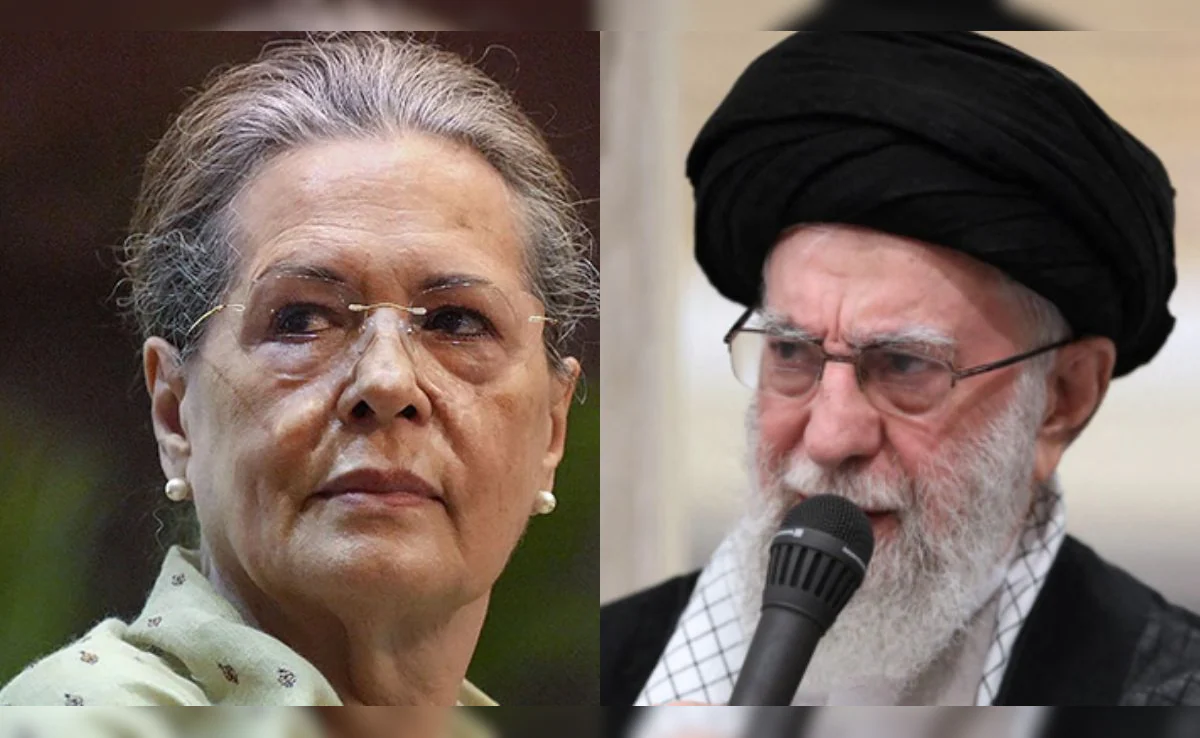
India’s foreign policy debate returned to Parliament this week after Congress Parliamentary Party Chairperson Sonia Gandhi sharply criticized the Central government’s silence on the reported killing of Iran’s Supreme Leader, Ayatollah Ali Khamenei.
Calling the government’s stance “not neutrality but abdication,” Gandhi argued that India’s lack of a formal response undermines its diplomatic credibility in a moment of global instability.
Her intervention has triggered a broader conversation: Is India strategically cautious — or diplomatically evasive?
“Not Neutrality, But Abdication”: Sonia Gandhi’s Core Argument
Addressing concerns about the Centre’s position, Gandhi framed her critique in three principal themes:
1️⃣ Diplomatic Silence
She argued that the government’s lack of a clear statement risks signaling:
-
Strategic ambiguity at a time of global tension.
-
Over-alignment with Western powers.
-
A departure from India’s tradition of principled non-alignment.
According to Gandhi, silence in such a moment “raises doubts about India’s voice in a changing world order.”
2️⃣ Foreign Policy Credibility
Gandhi pressed for:
-
An open parliamentary debate.
-
Clarification of India’s official position.
-
Reaffirmation of India’s independent foreign policy doctrine.
Her remarks implicitly questioned whether India is maintaining strategic autonomy while balancing ties with Washington, Tel Aviv, and Tehran.
3️⃣ The Kashmir Reminder: 1994 at the UN
Perhaps the most politically significant element of her statement was the historical reference.
Gandhi reminded Parliament that in 1994, when Pakistan attempted to internationalize the Kashmir issue at the United Nations Human Rights Commission, Iran supported India’s position.
This diplomatic backing was crucial in preventing a resolution critical of New Delhi.
By invoking 1994, Gandhi suggested that India must remember past solidarity when shaping present diplomacy.
Why the 1994 UN Moment Still Matters
In 1994, Pakistan sought to raise Kashmir at the UN forum in Geneva. India mounted a strong diplomatic defense.
Iran’s support at the time helped:
-
Prevent isolation of India at the UN.
-
Undermine Pakistan’s effort to globalize the issue.
-
Strengthen India’s claim that Kashmir was a bilateral matter.
For the Congress leader, this history is not symbolic — it is strategic memory.
Her message: relationships built in moments of need should not be forgotten in moments of crisis.
The Centre’s Strategic Balancing Act
India today navigates a far more complex geopolitical environment than in 1994.
India–Iran Relations
Iran remains important to India for:
-
Energy security (historically a major crude supplier).
-
Connectivity through Chabahar Port.
-
Access to Afghanistan and Central Asia.
However, U.S. sanctions on Iran significantly reduced India’s oil imports after 2018.
India–Israel Relations
Israel is one of India’s key defense partners:
-
Missile systems.
-
Intelligence cooperation.
-
Agricultural technology.
Defense ties deepened significantly in the past decade.
India–United States Partnership
The United States is India’s:
-
Largest trading partner.
-
Strategic partner in the Indo-Pacific.
-
Defense collaborator through foundational agreements.
This trilateral dynamic makes any statement on Iran diplomatically sensitive.
Is Silence Strategic?
From a foreign policy perspective, silence can mean several things:
| Interpretation | Strategic Meaning |
|---|---|
| Neutrality | Avoiding entanglement |
| Prudence | Waiting for verified information |
| Alignment | Avoiding criticism of allies |
| Ambiguity | Preserving maneuvering space |
The government has not publicly condemned or endorsed any side, maintaining a cautious tone.
This fits India’s broader doctrine of “multi-alignment” — maintaining relations across competing power blocs.
Domestic Political Reverberations
Gandhi’s remarks signal that foreign policy is once again becoming a domestic political issue.
By linking Iran’s past Kashmir support to present diplomatic conduct, the Congress is:
-
Framing foreign policy as moral obligation.
-
Questioning the government’s strategic independence.
-
Positioning itself as defender of traditional non-alignment principles.
This may resonate particularly in states with Shia populations and among constituencies sensitive to West Asian developments.
The Broader Geopolitical Context
If confirmed, the killing of a sitting Supreme Leader would represent a dramatic moment in international law and diplomacy.
India’s response — or lack thereof — is being watched by:
-
Iran.
-
Israel.
-
The United States.
-
Gulf states.
-
Russia and China.
Each of these actors interprets silence differently.
Congress vs BJP: Competing Foreign Policy Visions
While the BJP government emphasizes strategic partnerships and pragmatic engagement, Congress traditionally highlights:
-
Non-alignment legacy.
-
Moral positioning in global conflicts.
-
Multilateral diplomacy.
Gandhi’s intervention reflects this ideological divergence.
Does Iran’s 1994 Support Create Obligation?
From a realist perspective, foreign policy operates on present interests, not historical favors.
However, in diplomacy, memory shapes trust.
Invoking 1994 serves three purposes:
-
Reminds Parliament of diplomatic reciprocity.
-
Signals to Iran that past ties are acknowledged.
-
Frames silence as inconsistency.
Chabahar: The Strategic Anchor
Despite tensions, India continues engagement on the Chabahar Port project in Iran.
Chabahar:
-
Provides access to Afghanistan bypassing Pakistan.
-
Counters China’s Gwadar Port in Pakistan.
-
Enhances India’s regional influence.
This infrastructure project symbolizes pragmatic continuity despite rhetorical disagreements.
The Energy Factor
Before sanctions, Iran was among India’s top oil suppliers.
Sanctions disrupted:
-
Energy trade.
-
Banking channels.
-
Insurance arrangements.
Energy diversification reduced dependence, but Iran remains strategically relevant.
Strategic Autonomy Under Scrutiny
India’s foreign policy doctrine emphasizes:
-
Autonomy.
-
Multi-alignment.
-
Issue-based cooperation.
Gandhi’s criticism suggests that silence could be interpreted as erosion of autonomy.
The government, however, may argue that restraint preserves flexibility.
What Happens Next?
Possible outcomes:
1️⃣ Government issues calibrated statement.
2️⃣ Parliament holds debate on West Asia policy.
3️⃣ India continues strategic silence while monitoring developments.
Political Impact
While unlikely to cause immediate policy shift, the episode:
-
Sharpens opposition narrative.
-
Revives debate on non-alignment.
-
Highlights domestic resonance of global events.
Final Analysis: Diplomacy or Distance?
Sonia Gandhi’s intervention is less about Iran alone and more about India’s global posture.
Her argument rests on three pillars:
-
Diplomacy requires voice.
-
History shapes obligation.
-
Silence carries meaning.
Whether the government views restraint as prudence or critics view it as abdication will shape the coming debate.
Conclusion
The debate triggered by Sonia Gandhi underscores a fundamental tension in India’s foreign policy:
How does a rising power maintain strategic autonomy while deepening partnerships with competing global actors?
Her reminder of Iran’s 1994 support on Kashmir is a political and diplomatic signal — one that blends memory, morality, and realpolitik.
In an era of fractured global order, even silence becomes a statement.