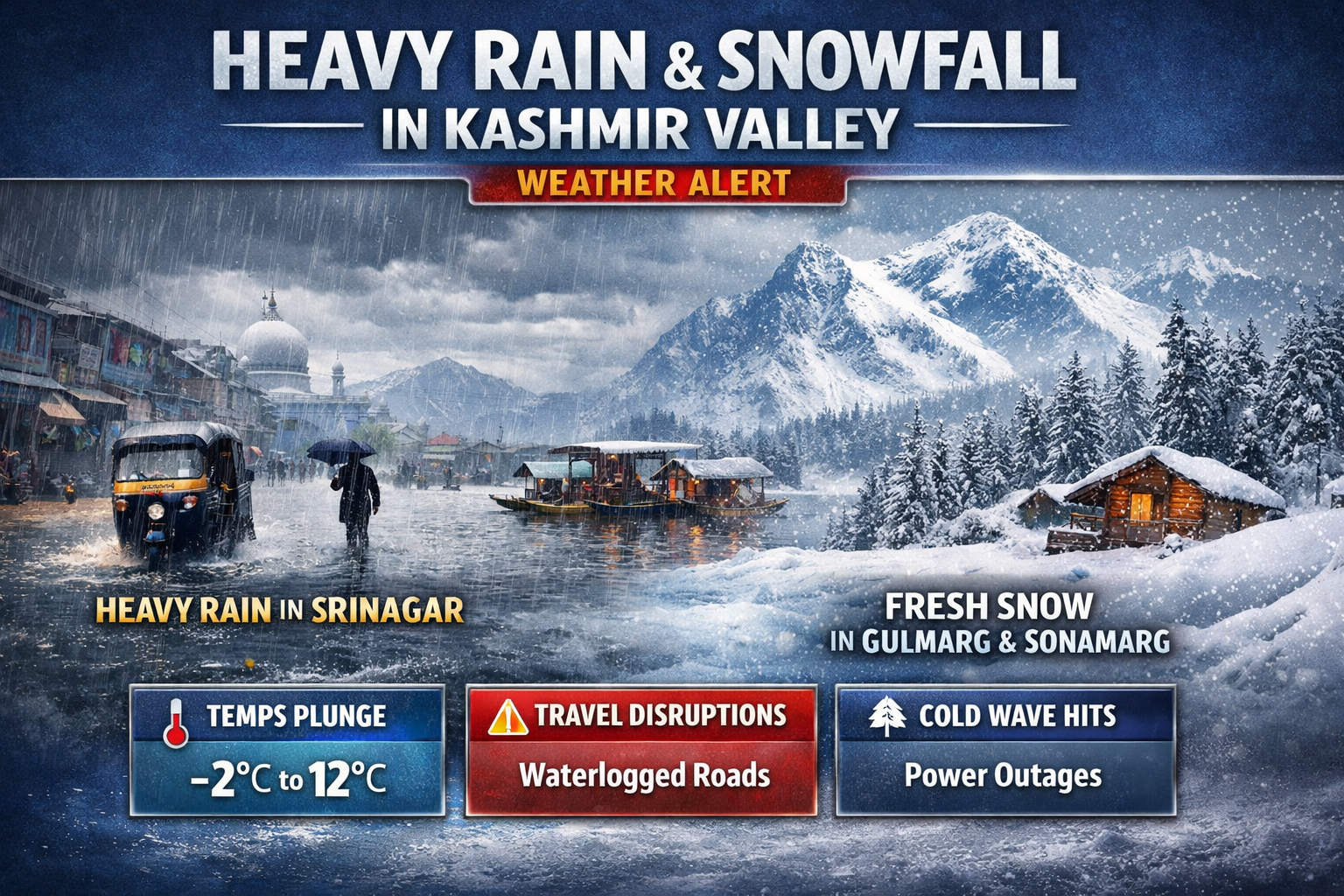
Kashmir Weather Update: Heavy Rain in Srinagar, Snowfall in Gulmarg & Sonamarg
By: Javid Amin | 04 May 2026
Heavy Rain and Fresh Snowfall Grip Kashmir, Disrupting Daily Life Across the Valley
The picturesque Valley of Srinagar woke up to relentless rainfall, as heavy showers swept across the region, slowing down life and pushing temperatures sharply downward. From waterlogged streets in the city to fresh snow coating the mountains, the changing weather has once again reminded residents of Kashmir’s unpredictable climate patterns.
While rain dominated the plains, higher reaches including Gulmarg and Sonamarg experienced fresh snowfall, transforming the landscape into a winter-like scene even as spring struggles to stabilize.
Srinagar Soaked: Streets Waterlogged, Traffic Crawls
Continuous rainfall since early morning led to widespread waterlogging in several parts of Srinagar. Key areas such as Lal Chowk, Rajbagh, and Bemina saw commuters struggling through flooded roads.
The situation exposed recurring urban challenges—poor drainage infrastructure and clogged waterways—which often worsen during intense rainfall events. Traffic movement slowed considerably, with long queues forming on major routes as vehicles navigated through submerged patches.
Residents described the situation as “routine yet frustrating,” highlighting how even moderate-to-heavy rainfall can disrupt normal life in the city.
Snowfall Returns to Higher Reaches, Gulmarg and Sonamarg Turn White
As rain lashed the plains, higher altitudes witnessed fresh snowfall. Tourist destinations like Gulmarg and Sonamarg were once again draped in white, offering stunning visuals but also signaling a sudden weather shift.
In parts of Kupwara’s upper reaches, snowfall was reported alongside sub-zero temperatures, raising concerns about road accessibility and safety. The return of snow this late into the season is not unusual for Kashmir but does reflect ongoing variability in weather cycles.
For the tourism sector, the snowfall could be a mixed blessing—enhancing scenic appeal while temporarily affecting connectivity.
Sharp Temperature Drop Across the Valley
The Valley recorded a significant dip in temperatures, with daytime readings in Srinagar hovering between 10–12°C. In contrast, upper reaches slipped below freezing point.
Cold winds accompanying the rain added to the chill, forcing residents to pull out winter clothing again. Such abrupt temperature drops are typical during active western disturbances—weather systems that frequently impact North India, especially Jammu & Kashmir.
Impact Assessment: Transport, Power, and Agriculture Hit
Transport Disruptions
Key routes, including the Srinagar–Baramulla and Srinagar–Anantnag highways, reported delays due to slippery conditions and reduced visibility. Public transport services were affected, with commuters facing longer travel times.
Power Supply Issues
Intermittent electricity outages were reported in several localities. Wet weather often damages power lines or triggers safety shutdowns, especially in areas with aging infrastructure.
Agriculture Concerns Grow
For farmers, the rainfall comes with mixed implications. While moisture can benefit crops, continuous rain during sensitive orchard stages—particularly in apple-growing belts—raises concerns about:
- Flower damage
- Delayed pesticide spraying
- Increased risk of fungal infections
Experts warn that prolonged wet spells during this period could impact overall yield if conditions persist.
Weather Outlook: More Rain and Snow Before Relief
According to the India Meteorological Department, the current weather pattern is expected to continue over the next 24–36 hours. Rain is likely to persist across plains, while higher altitudes may receive additional snowfall.
Gradual improvement is forecast thereafter, but temperatures are expected to remain below seasonal averages due to lingering cold winds.
Environmental Insight: A Pattern of Increasing Weather Variability
From an environmental perspective, Kashmir has been witnessing more erratic weather shifts in recent years—unseasonal snowfall, sudden temperature dips, and intense rainfall episodes.
Climate scientists link these patterns to broader changes in atmospheric circulation, including the behavior of western disturbances. While individual events cannot be solely attributed to climate change, the increasing frequency and intensity of such fluctuations are raising long-term concerns.
Better urban planning, resilient infrastructure, and climate-adaptive agricultural practices are becoming essential for the region.
Conclusion: Kashmir Balances Beauty and Disruption Amid Weather Swings
The latest spell of rain and snowfall has once again highlighted the delicate balance Kashmir maintains between natural beauty and climatic vulnerability. While snow-covered mountains offer breathtaking views, the accompanying disruptions serve as a reminder of the region’s infrastructural and environmental challenges.
For now, residents brace for another day of wet and cold conditions—hoping for clearer skies ahead.


