Defying the Ban: Mehraj Malik’s Doda Rally Turns Into a Show of Strength
By: Javid Amin | 03 May 2026
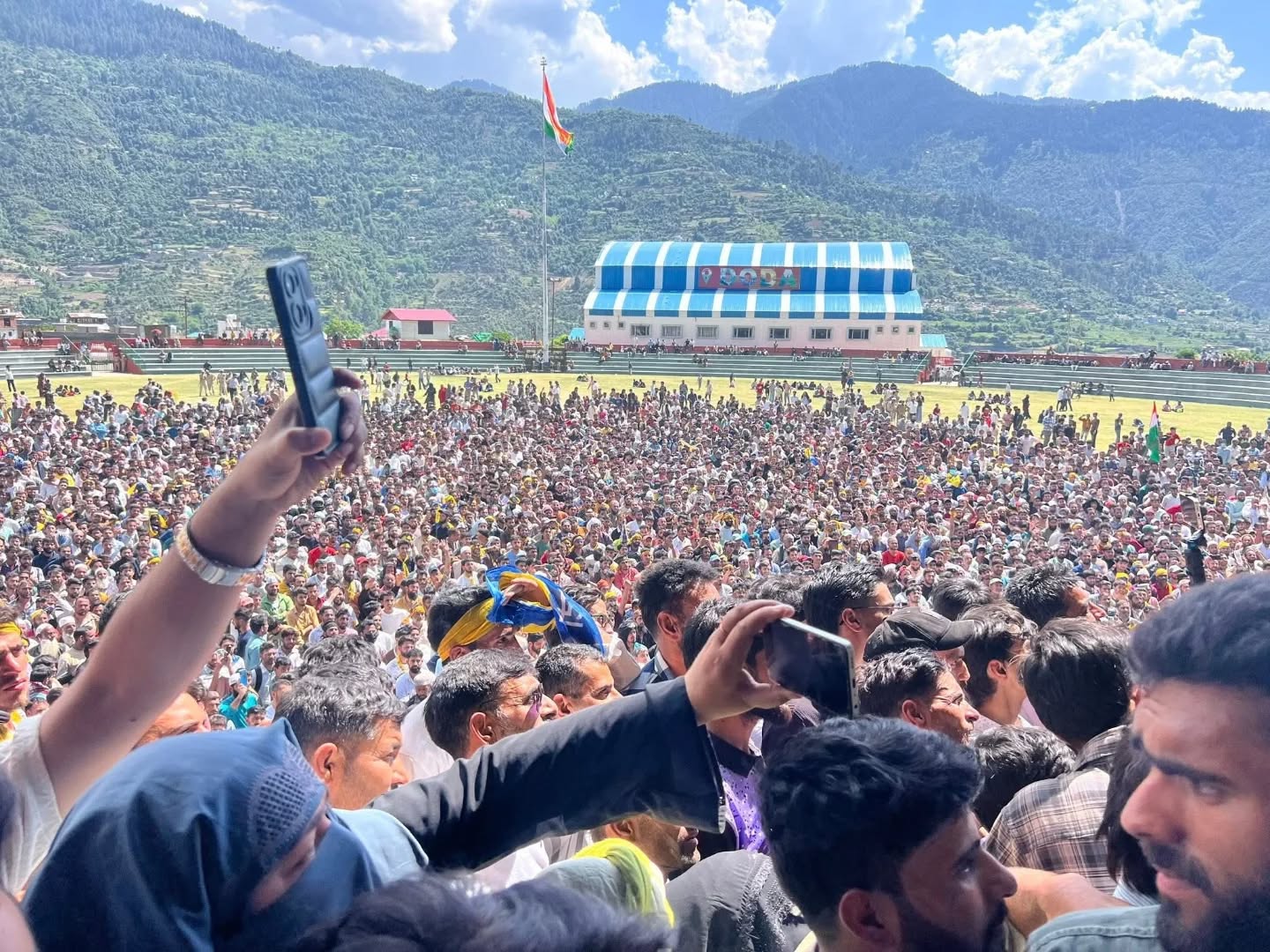
In a striking display of grassroots mobilization, thousands of supporters gathered in Doda to welcome Mehraj Malik, defying prohibitory orders and turning what was meant to be a restricted day into a powerful political statement.
The rally, held at the Doda Sports Stadium and surrounding areas, quickly evolved into more than just a public reception—it became a reflection of growing political energy, public sentiment, and the ongoing tension between administrative control and democratic expression in Jammu and Kashmir.
Crowds Pour In Despite Restrictions
Authorities had imposed a ban on unauthorised gatherings under Section 163 BNSS, covering key areas of Doda for two months. The move was aimed at maintaining public order and preventing large-scale assemblies.
However, the scale of the turnout told a different story.
- Thousands of people filled the stadium and spilled onto adjoining roads
- Supporters openly defied restrictions, creating a charged yet largely peaceful atmosphere
- Enforcement mechanisms appeared stretched, with officials unable to contain the sheer size of the gathering
The event underscored a recurring challenge for authorities: when public sentiment reaches a tipping point, administrative orders alone may not be enough to control mobilization.
From Detention to Public Stage: Malik’s Political Comeback
This rally marked Mehraj Malik’s first major public appearance after his recent release from detention under the Public Safety Act in late April 2026.
Having spent around eight months in detention, Malik’s return to the political stage carried strong symbolic weight:
- From Silence to Visibility: His appearance signaled a transition from enforced absence to renewed public engagement
- Emotional Connect: Supporters viewed his detention as unjust, strengthening their loyalty
- Momentum Shift: The scale of the reception suggests that his political capital may have grown during his absence
For many in attendance, the rally was not just about politics—it was about reclaiming a voice they felt had been suppressed.
Malik’s Message: ‘Voice of the People’
Addressing the crowd, Mehraj Malik struck a familiar but resonant tone:
- He vowed to fight for public welfare, justice, and corruption-free governance
- He positioned himself as someone who speaks the “language of people’s hearts”
- He alleged that voices in the region are being systematically silenced, reinforcing a narrative of resistance
His messaging aligns with a broader strategy often used by emerging political figures—direct emotional connection with the electorate, bypassing traditional power structures.
Civil Liberties Vs Administrative Control
The rally has once again brought the issue of civil liberties into focus.
Key Tensions Highlighted
- Freedom of Assembly: The defiance raises questions about how restrictions are perceived by the public
- Legal Enforcement: Authorities warned of action under Section 223 BNSS, but enforcement appeared limited
- Public Sentiment: Large-scale participation suggests frustration with curbs on political expression
This incident reflects a broader dilemma in Jammu and Kashmir: how to balance law-and-order concerns with democratic rights in a politically sensitive environment.
Political Signal: A Rising Force in Chenab Valley?
The scale of Malik’s reception carries clear political implications:
| Aspect | Significance |
|---|---|
| Political Capital | Demonstrates Malik’s growing influence in Doda and nearby regions |
| Grassroots Appeal | Indicates strong local connect, especially among youth and marginalized groups |
| Opposition Space | Positions Malik as an alternative to traditional political players |
| Narrative Building | Frames him as a leader resisting systemic constraints |
For the Aam Aadmi Party (AAP), which has been attempting to expand its footprint in Jammu and Kashmir, this rally could serve as a key momentum point.
Governance Challenge: Containment vs Engagement
For the administration, the event presents a complex challenge:
- Containment Limits: Large crowds make strict enforcement difficult without risking escalation
- Public Perception: Heavy-handed action could fuel further resentment
- Policy Recalibration: Authorities may need to reassess how restrictions are implemented and communicated
The situation highlights a critical governance question:
Can order be maintained without alienating an increasingly assertive public?
Conclusion: More Than a Rally—A Political Marker
Mehraj Malik’s Doda rally was not just a show of support—it was a signal of shifting political currents.
It revealed:
- The limits of administrative restrictions in the face of strong public mobilization
- The emergence of new political actors with grassroots appeal
- The deepening debate over civil liberties and governance in Jammu and Kashmir
As the region continues to navigate its evolving political landscape, such moments will likely play a crucial role in shaping both perception and power.
For now, one thing is clear: Mehraj Malik has firmly placed himself back in the political conversation—and perhaps closer to the center of it than before.