“Engineered Outcome?” Omar Abdullah Raises Questions Over Bengal Verdict
By: Javid Amin | 05 May 2026
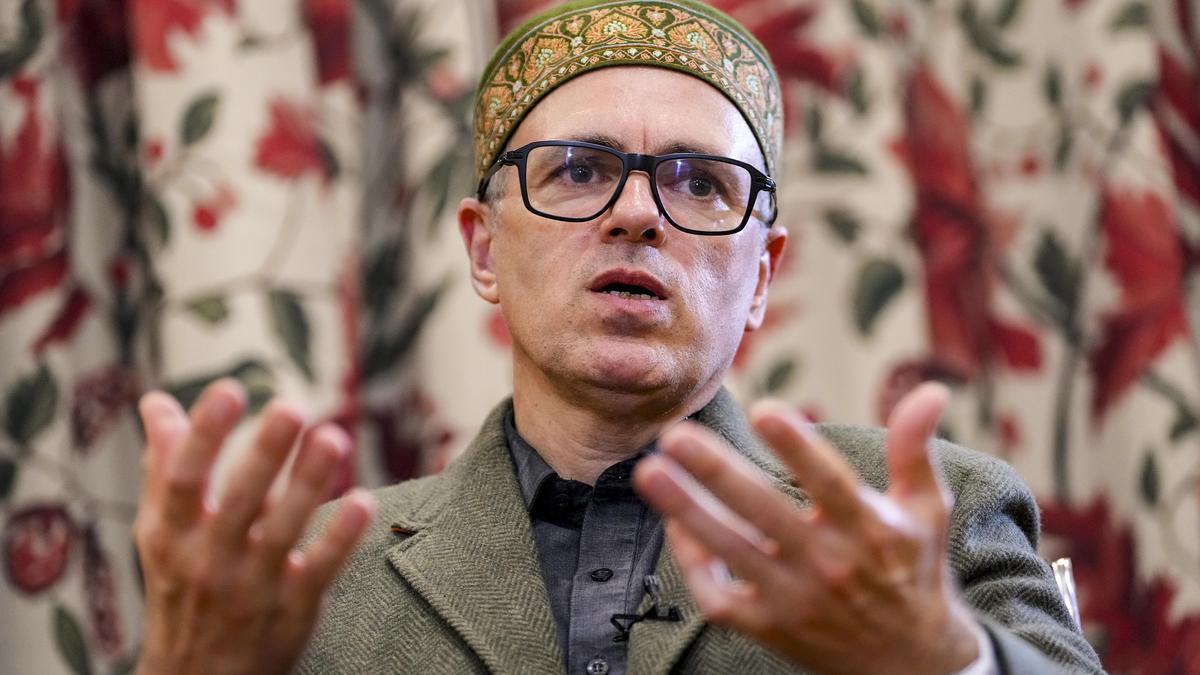
As political reactions pour in after West Bengal’s dramatic electoral shift, Omar Abdullah has emerged as one of the most vocal critics of the outcome.
The National Conference (NC) leader has attributed the Bharatiya Janata Party’s sweeping victory to what he describes as a mix of institutional conduct and sociopolitical consolidation — calling it a “politically engineered outcome rather than a natural mandate.”
Important note: These are political allegations. Any claims regarding electoral processes require verification through official data and statements from the Election Commission of India.
What Omar Abdullah Said
Speaking in the immediate aftermath of the results, Abdullah outlined three key factors behind the BJP’s dominant performance:
1️⃣ Election Commission’s Conduct Under Scrutiny
Abdullah alleged that the Election Commission’s handling of the polls may have influenced the outcome. His concerns included:
- “Selective scheduling” of polling phases
- “Lax enforcement” of the Model Code of Conduct
- Perceived institutional inaction during sensitive phases
He suggested that such factors created an uneven playing field, though no formal evidence has yet been presented publicly to substantiate these claims.
2️⃣ Hindu Vote Consolidation
A central pillar of his argument is the consolidation of Hindu votes in favor of the BJP.
According to Abdullah:
- Districts that previously backed the All India Trinamool Congress (TMC) saw a shift
- Religious identity became a stronger determinant than local governance issues
- BJP’s campaign successfully unified disparate voter segments under a broader ideological umbrella
This interpretation aligns with a broader analytical trend in Indian elections, where identity-based mobilization increasingly intersects with development narratives.
3️⃣ “Nationalization” of a Regional Election
Abdullah also pointed to the BJP’s strategy of transforming a state election into a national ideological contest.
He argued that:
- Campaign messaging linked Bengal to larger national themes
- Leadership projection and central narratives overshadowed local issues
- The election became a referendum on ideological alignment rather than state governance
Parallels with Jammu & Kashmir
Drawing from his own political context, Abdullah linked developments in Bengal to trends in Jammu and Kashmir.
He warned that:
- “Majoritarian politics is being normalized through institutional silence”
- Similar patterns of political restructuring could emerge elsewhere
- Opposition forces must remain vigilant about institutional balance
These remarks come at a time when the National Conference is navigating complex dynamics with the People’s Democratic Party (PDP) and the Indian National Congress in the region.
Call for Opposition Reset
Abdullah’s statement goes beyond criticism — it is also a strategic call to action.
He urged opposition parties, particularly those aligned with the INDIA bloc, to:
- Reassess engagement with the Election Commission
- Strengthen coordination and seat-sharing mechanisms
- Rebuild a unified “secular front” to counter ideological polarization
This reflects a growing concern within opposition ranks about fragmented responses to a politically cohesive BJP strategy.
Balancing Claims with Institutional Reality
While Abdullah’s remarks capture a significant strand of opposition sentiment, it’s critical to distinguish between:
- Political interpretation (subjective, strategic)
- Institutional validation (objective, evidence-based)
The Election Commission of India operates as a constitutional body, and any allegations of bias typically require:
- Formal complaints
- Judicial scrutiny (often via High Courts or the Supreme Court)
- Documentary or procedural evidence
Until such processes unfold, these claims remain part of the political discourse rather than established fact.
Implications of the Debate
🔹 For BJP
The criticism underscores how its victory is being interpreted:
- Not just as an electoral win, but as a sociological and ideological shift
- Reinforces its narrative of expanding beyond traditional geographic limits
🔹 For Opposition
Abdullah’s remarks intensify pressure on opposition parties to:
- Address voter polarization more effectively
- Improve organizational unity
- Develop a counter-narrative that resonates across regions
🔹 For Election Commission
Even unproven allegations can have institutional impact:
- Renewed scrutiny over neutrality and transparency
- Potential calls for procedural reforms
- Greater public debate on election management practices
The Bigger Picture
The Bengal verdict has clearly triggered more than a change in government — it has opened a debate on:
- The nature of electoral mandates
- The role of institutions
- The influence of identity in voting behavior
Omar Abdullah’s intervention reflects a broader unease within sections of the opposition, but its long-term significance will depend on whether these concerns translate into formal challenges or remain part of political rhetoric.
Key Takeaway
Omar Abdullah’s claim of a “politically engineered outcome” adds a sharp edge to the post-election narrative. However, without verified evidence from constitutional or judicial processes, the BJP’s victory in West Bengal stands as a legally valid electoral mandate.
The real contest now shifts from ballots to narratives — and how both sides shape public perception in the months ahead.