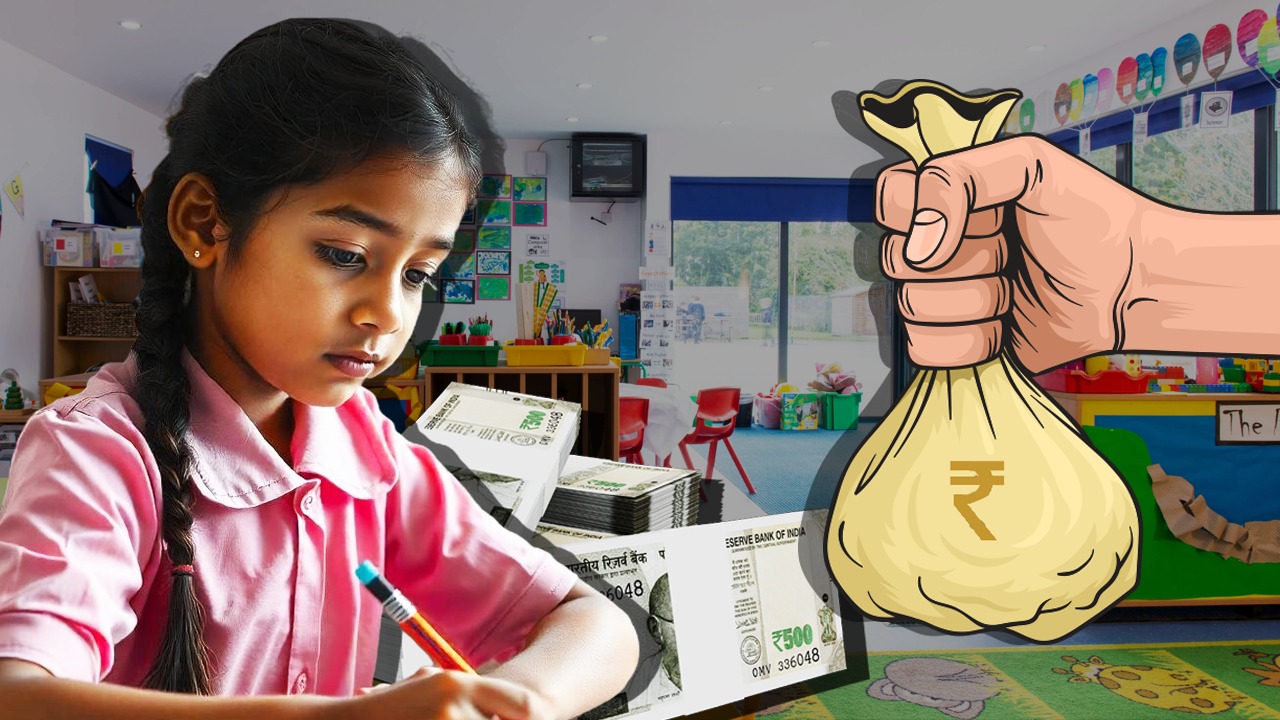
Annual Fees in Kashmir Private Schools: What Parents Should Legally Get in Return
By: Javid Amin | 17 May 2026
Rising School Fees Spark Questions Across Kashmir as Parents Demand Transparency and Better Facilities
As education costs continue to rise across Kashmir, thousands of parents are increasingly questioning one major component of private school expenses — the annual fee.
From smart classrooms and heating systems to sports facilities and digital learning tools, private schools across Jammu and Kashmir justify annual charges as essential for maintaining quality education infrastructure. But many parents argue that despite paying hefty annual fees, the facilities and services provided often fail to match the promises made during admissions.
The issue has become particularly sensitive in Kashmir, where economic pressures on middle-class families are rising and education expenses consume a major portion of household income.
Under Jammu and Kashmir’s education regulations, annual fees are legal — but strictly regulated. Schools are permitted to charge these fees only for legitimate operational and infrastructure-related expenses, not for profiteering.
The Fee Fixation and Regulation Committee (FFRC) is responsible for ensuring that schools justify these charges through audited financial records and maintain transparency with parents.
What Exactly Is an Annual Fee?
Education experts clarify that annual fees are different from tuition fees.
Tuition Fee
Tuition fees primarily cover:
- Teacher salaries
- Academic instruction
- Classroom teaching expenses
Annual Fee
Annual fees are meant to fund:
- Infrastructure maintenance
- Utilities and facilities
- Student services
- Technology upgrades
- Sports and extracurricular activities
- General school upkeep
The idea behind the annual fee system is to ensure students receive a modern, safe, and well-equipped learning environment beyond basic classroom teaching.
What Annual Fees in Kashmir Are Supposed to Cover
Under the regulatory framework in Jammu and Kashmir, annual fees are intended to support non-salary operational costs that directly benefit students.
Infrastructure & Maintenance
Parents paying annual fees are entitled to expect:
- Clean and well-maintained classrooms
- Functional washrooms and sanitation systems
- Safe school buildings
- Proper lighting and ventilation
- Heated classrooms during Kashmir’s harsh winters
- Reliable electricity and water supply
Technology & Modern Learning
Schools charging high annual fees are expected to provide:
- Smart classrooms and digital boards
- Functional computer labs
- Internet-enabled learning systems
- E-learning platforms and digital educational resources
- Updated science laboratories and libraries
Student Enrichment Programs
Annual fees are also supposed to support:
- Sports facilities and playgrounds
- Art, music, and cultural activities
- Competitions and extracurricular events
- Counseling and career guidance services
- Student wellness and safety initiatives
Administrative & Operational Costs
Schools may use annual fees for:
- Security staff
- Cleaning and sanitation workers
- Generators and backup systems
- General campus upkeep and maintenance
Legal Framework Governing School Fees in Kashmir
Private school fee regulation in Jammu and Kashmir falls under the oversight of the Fee Fixation and Regulation Committee (FFRC), established under the J&K Education Act.
What the Law Allows
Schools are legally permitted to charge only:
- Tuition fee
- Annual fee
- Transport fee
What Is Prohibited
Schools cannot legally demand:
- Admission fees
- Donation charges
- Capitation fees
- Arbitrary hidden charges
Authorities say education cannot be treated purely as a commercial business.
Schools Must Justify Annual Fees Through Audits
One of the most important safeguards under the law is the audit requirement.
Private schools are required to submit audited financial reports to the FFRC every three years to justify:
- Fee structures
- Infrastructure expenses
- Operational costs
- Development expenditures
The FFRC has the authority to:
- Approve fee structures
- Cap excessive annual fees
- Reduce unjustified charges
- Investigate profiteering complaints
This mechanism is meant to ensure that annual fees reflect actual expenses rather than becoming a profit-making tool.
Supreme Court and High Court Position on School Fees
The judiciary has repeatedly emphasized that private educational institutions cannot engage in profiteering.
The Supreme Court of India has ruled that while schools may generate reasonable surplus funds for development and infrastructure, education cannot be converted into a business enterprise.
Courts have generally allowed development charges within regulated limits, provided schools can justify them transparently.
The Jammu and Kashmir High Court has also reinforced the right of parents to challenge unjustified fee hikes through the FFRC.
Why Many Parents in Kashmir Feel Frustrated
Despite regulations, many parents claim there is still a major gap between the fees charged and the actual facilities provided.
Several recurring complaints include:
- Poor infrastructure despite high annual fees
- Lack of modern learning tools
- Inadequate heating during winter months
- Limited extracurricular opportunities
- Poor sanitation and maintenance
- Hidden charges beyond approved categories
Parents also complain that schools rarely provide a transparent breakdown explaining where annual fee money is being spent.
For many families already struggling with inflation and rising living costs, sudden fee hikes create significant financial stress.
How Some Schools Allegedly Bypass Regulation
Education observers say enforcement remains inconsistent.
Some schools reportedly challenge FFRC orders through legal stays or delay compliance with regulatory directions. Others allegedly categorize expenses under vague “development” heads to justify higher annual charges.
Experts say weak complaint mechanisms and low awareness among parents further reduce accountability.
Many parents avoid formal complaints due to:
- Fear of retaliation against children
- Lack of awareness about legal rights
- Lengthy administrative processes
- Social pressure
What Parents Should Expect in Return for Annual Fees
Parents paying substantial annual fees are legally and morally entitled to measurable value.
Parent Checklist: What Schools Must Deliver
Infrastructure
- Clean classrooms
- Safe buildings
- Functional heating systems
- Proper sanitation
- Maintained playgrounds
Technology
- Smart classrooms
- Functional computer labs
- Updated digital learning tools
Student Development
- Sports programs
- Cultural activities
- Career counseling
- Health and safety support
Transparency
- Clear fee breakdowns
- FFRC-approved fee structures
- No hidden charges
Warning Signs Parents Should Watch For
Experts advise parents to question annual fees if they notice:
- Repeated fee hikes without approval
- Poor infrastructure despite high charges
- Lack of visible facility upgrades
- No extracurricular or enrichment programs
- Unclear or vague accounting explanations
In such cases, parents can approach:
- District Education Officers
- The Fee Fixation and Regulation Committee (FFRC)
- Consumer grievance platforms where applicable
The Larger Debate: Education Quality vs Financial Burden
The issue of annual fees reflects a larger challenge facing Kashmir’s education system.
Private schools argue that maintaining quality infrastructure, technology, and staff support has become increasingly expensive due to inflation, rising electricity costs, digital education demands, and operational expenses.
Parents, however, argue that education is becoming financially exhausting for middle-class and lower-middle-class families.
Experts believe the solution lies in:
- Stronger fee transparency
- Better regulatory enforcement
- Public disclosure of audits
- Parent participation in oversight mechanisms
- Clear accountability standards for schools
Transparency May Become the Biggest Issue Ahead
As educational competition intensifies in Kashmir, parents are no longer willing to pay high fees without accountability.
The growing public demand is not necessarily against annual fees themselves — but against arbitrary charges without visible improvement in student facilities or learning outcomes.
Education experts say that if private schools want parental trust, transparency must become central to the system.
Because ultimately, annual fees are not just financial transactions — they are promises of better education, safer campuses, improved learning environments, and meaningful student development.
And parents increasingly want proof that those promises are being fulfilled.