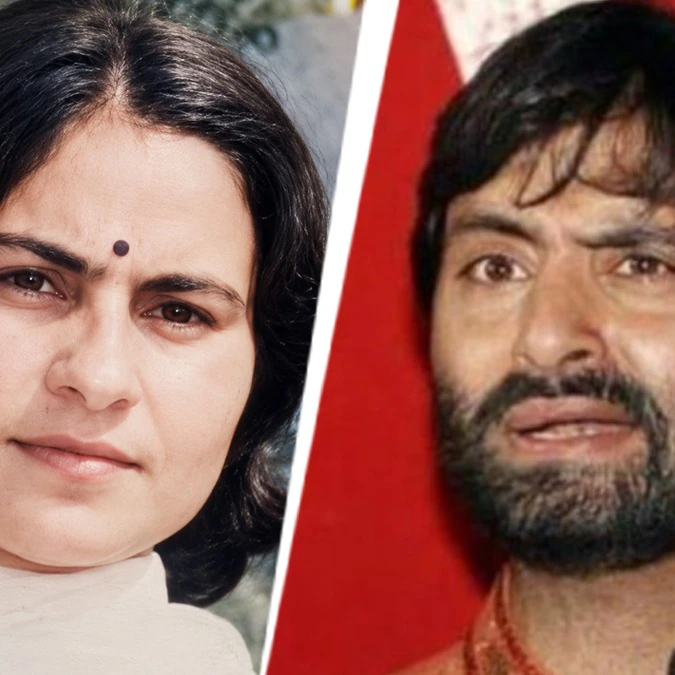
Sarla Bhat Murder Case: SIA Files 737-Page Chargesheet Against Yasin Malik After 36 Years
By: Javid Amin | 29 June 2026
Sarla Bhat Murder Case Revived After 36 Years: SIA Names Yasin Malik in Landmark Chargesheet
More than three decades after the abduction and killing of Kashmiri Pandit nurse Sarla Bhat, one of the most haunting crimes of Kashmir’s early insurgency has entered a crucial legal phase. The State Investigation Agency (SIA) has filed a comprehensive 737-page chargesheet naming jailed separatist leader Yasin Malik, former chief of the banned Jammu and Kashmir Liberation Front (JKLF), along with four others, in connection with the 1990 murder.
Filed before the designated Special Court under the TADA/POTA framework in Srinagar, the chargesheet marks one of the most significant developments in a legacy terrorism case that remained unresolved for nearly 36 years. Investigators describe it as the culmination of an extensive investigation involving witness testimonies, documentary records, forensic and ballistic evidence, medical reports and fresh field inquiries after the case was reopened in 2024.
For many Kashmiri Pandit families, the case is not merely about one murder. It symbolizes the violence, fear and displacement that reshaped Kashmir in the early 1990s.
Who Was Sarla Bhat?
Sarla Bhat was a 27-year-old staff nurse at the Sher-i-Kashmir Institute of Medical Sciences (SKIMS), Soura, in Srinagar.
She belonged to the Kashmiri Pandit community at a time when the Valley was witnessing escalating militancy and targeted killings. While thousands of Pandit families had already begun leaving Kashmir amid growing threats, Bhat continued performing her professional duties at one of the Valley’s premier medical institutions.
According to the investigation, she was abducted in April 1990 while travelling to work, allegedly tortured and later killed. The incident shocked Kashmir and became one of the most widely remembered crimes associated with the turbulent beginnings of the insurgency.
The Crime That Became a Symbol of Kashmir’s Darkest Chapter
The killing of Sarla Bhat occurred during one of the most violent periods in Jammu and Kashmir’s modern history.
The late 1980s and early 1990s witnessed:
- Rapid growth of armed militancy
- Targeted attacks on civilians
- Assassinations of government officials and community leaders
- Widespread fear among minority communities
- The large-scale migration of Kashmiri Pandits from the Valley
Within this broader context, Sarla Bhat’s murder came to represent the vulnerability of civilians caught in the conflict and the climate of intimidation that prevailed at the time.
Over the years, her name has frequently surfaced in discussions surrounding the Kashmir Pandit exodus and the long wait for accountability in unresolved terror-related crimes.
What Does the 737-Page Chargesheet Contain?
According to the SIA, the chargesheet has been prepared after a detailed investigation spanning several decades of available evidence.
The agency says the document includes:
Witness Testimonies
Investigators recorded statements from multiple witnesses connected with the incident, reconstructing events despite the long passage of time.
Documentary Evidence
Police files, intelligence records and historical documents have been examined to establish the alleged conspiracy.
Forensic and Ballistic Reports
The investigation incorporates scientific evidence, including ballistic analysis and medical findings collected during various stages of the probe.
Electronic and Field Investigation
Officials also relied on additional field verification and other supporting material gathered after the case was formally transferred to the SIA in 2024.
Who Has Been Named in the Chargesheet?
The SIA has named five accused:
- Yasin Malik, former JKLF chief, currently serving a life sentence in a separate terror-funding case.
- Khurshid Ahmad Chalkoo, against whom proclamation proceedings have reportedly been initiated.
- Abdul Hamid Sheikh (deceased)
- Mohammad Yousuf Sofi alias Idrees (deceased)
- Ghulam Mohammad Taploo (deceased)
According to the SIA, Malik allegedly played a key role in planning the conspiracy, while investigators have attributed specific operational roles to other accused persons. These allegations will now be examined by the court during the trial process, and guilt can only be determined through judicial proceedings.
Legal Provisions Invoked
The chargesheet invokes several serious criminal provisions, including:
- Sections relating to murder, abduction and criminal conspiracy under the erstwhile Ranbir Penal Code (RPC)
- Relevant provisions of the Terrorist and Disruptive Activities (Prevention) Act (TADA), 1987
- Sections of the Arms Act, 1959
Given that the alleged offence dates back to 1990, the prosecution is proceeding under the legal framework applicable at the time of the incident.
Why This Case Matters Beyond One Murder
1. Justice Delayed, But Still Pursued
One of the strongest messages emerging from the chargesheet is that investigations into serious terror-related crimes can continue even decades after the incident.
Officials have described the filing as evidence that the passage of time does not extinguish criminal liability.
2. A Test for India’s Legacy Terror Investigations
Old militancy cases often suffer from:
- Missing records
- Deceased witnesses
- Destroyed evidence
- Changing investigative agencies
- Legal complexities arising from the passage of time
Successfully prosecuting such cases requires courts to carefully assess historical evidence while ensuring due process for all accused.
3. Renewed Focus on the Kashmir Pandit Exodus
The revival of the Sarla Bhat case has once again drawn attention to the experiences of Kashmiri Pandits during the insurgency.
For many displaced families, unresolved cases remain an important part of demands for justice, recognition and historical documentation.
4. Political Significance
The chargesheet is also likely to influence ongoing political discourse in Jammu and Kashmir.
Supporters of the investigation view it as an effort to establish accountability for crimes committed during the insurgency, while critics may debate the timing and broader political context. Regardless of political positions, the case is expected to remain under close judicial scrutiny.
Challenges Ahead for the Prosecution
Despite the extensive chargesheet, legal experts note that prosecuting a case after more than three decades presents significant challenges.
These include:
- Verifying witness credibility after decades
- Corroborating historical evidence
- Addressing gaps created by the deaths of several accused
- Ensuring procedural fairness under applicable laws
Ultimately, the prosecution must prove its case before the designated court, and the accused are entitled to all legal protections under the criminal justice system.
A Case That Continues to Shape Kashmir’s Collective Memory
The Sarla Bhat case occupies a unique place in Kashmir’s modern history.
It reflects not only the personal tragedy of a young healthcare worker who lost her life during one of the Valley’s most violent periods but also the broader human cost of militancy. The reopening of the investigation and the filing of a detailed chargesheet underscore the continuing effort to address unresolved crimes from that era.
Whether the proceedings ultimately lead to convictions will be determined by the courts. Yet the revival of the case has already ensured that one of Kashmir’s oldest unresolved terror investigations has returned to the centre of public attention, renewing conversations about justice, accountability, reconciliation and the enduring legacy of the 1990s conflict.


