J&K Jobs Row Turns Into Political Battlefield: Govt, PDP and NC Clash Over Outsourcing, Recruitment and Youth Trust
By: Javid Amin | 28 June 2026
The controversy over government jobs in Jammu and Kashmir has moved beyond a recruitment policy debate and turned into a major political confrontation, with the administration defending outsourcing practices, the Peoples Democratic Party (PDP) accusing the government of bypassing fair recruitment systems, and the National Conference (NC) attacking both sides over what it describes as political double standards.
At the centre of the dispute is a question that has repeatedly shaped political conversations in J&K:
Are government employment opportunities being decided through transparent merit-based systems, or are recruitment processes vulnerable to political influence?
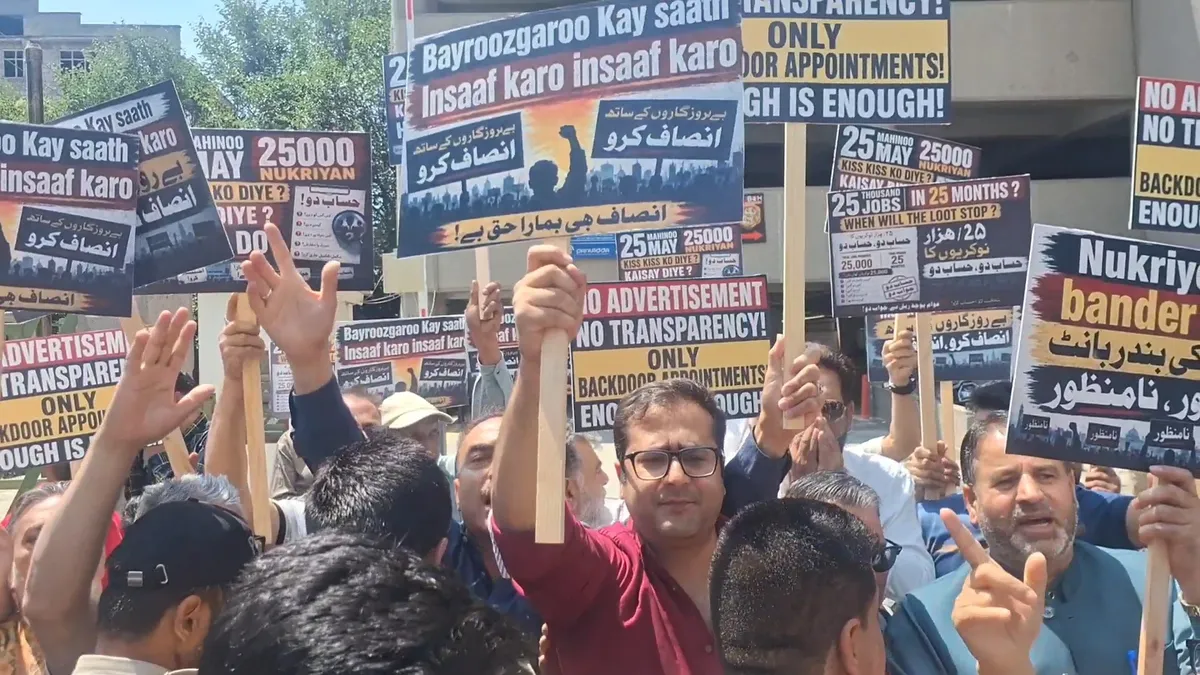
With thousands of educated youth waiting for stable employment opportunities, the outsourcing debate has become a sensitive issue touching governance, accountability and public confidence.
Government vs PDP: Battle Over “Backdoor Hiring” Allegations
The Jammu and Kashmir government has strongly rejected allegations of “backdoor hiring” levelled by opposition parties, maintaining that its outsourcing policy is transparent, practical and aimed at improving administrative efficiency.
Government officials argue that outsourcing is a mechanism used to address immediate manpower shortages and ensure uninterrupted public services.
According to the administration, private agencies help departments complete recruitment processes faster while reducing the burden on government machinery.
The government’s argument rests on three key points:
1. Outsourcing Is an Administrative Requirement
Officials maintain that not every manpower requirement can be addressed through permanent recruitment.
Departments dealing with essential services often require quick deployment of workers, making contractual hiring a practical solution.
2. Cost Efficiency and Faster Placement
The administration argues that outsourcing reduces delays associated with lengthy recruitment procedures and allows departments to function smoothly.
Supporters of the policy say contractual arrangements provide flexibility and help manage operational needs.
3. Merit Has Not Been Compromised
The government has maintained that outsourcing does not mean arbitrary selection and that agencies follow prescribed procedures while hiring manpower.
However, opposition parties argue that the issue is not only about procedure but also about long-term employment security and equal opportunity.
PDP’s Attack: “Youth Are Losing Fair Opportunities”
The Peoples Democratic Party has emerged as one of the strongest critics of the outsourcing policy.
PDP leaders argue that educated youth who spend years preparing for competitive examinations are being denied opportunities when government departments rely on contractual hiring.
The party has described outsourcing as a system that could create a parallel route to employment outside traditional recruitment channels.
The main concerns raised by the PDP include:
Lack of Permanent Job Security
Contractual workers often face uncertainty regarding tenure, benefits and career growth compared with regular government employees.
Recruitment Transparency
The opposition questions whether outsourced hiring receives the same level of public scrutiny as recruitment conducted through official selection bodies.
Youth Discontent
The issue has gained political importance because unemployment remains one of the biggest concerns among young people in Jammu and Kashmir.
National Conference Launches Offensive: Targeting Both Government and PDP
The National Conference has used the controversy to attack both the administration and the PDP, accusing political rivals of selective outrage.
NC leaders argue that outsourcing practices and recruitment controversies are not new and existed under previous governments as well.
The party’s strategy appears focused on presenting itself as the political voice of unemployed youth while challenging what it calls hypocrisy in the debate.
NC’s argument is built around the claim that:
- Previous governments also faced questions over recruitment practices.
- Political parties should not ignore their own past records.
- The focus should remain on creating a transparent employment system for young people.
By taking this position, NC has attempted to shift the debate from a single government policy to a broader discussion about recruitment governance in J&K.
Itoo’s Challenge: Spotlight on Past Recruitment Practices
The controversy expanded further after senior political leader Imran Raza Ansari and other leaders raised questions about recruitment decisions taken during the PDP era.
Itoo questioned the fairness of certain appointments made during earlier governments, alleging that political influence and favoritism affected recruitment processes.
He framed the issue as a matter of youth disappointment, arguing that deserving candidates should not lose opportunities because of personal connections or political access.
The attack shifted the debate from present outsourcing practices to a wider examination of how recruitment has been handled historically in Jammu and Kashmir.
Javid Dar’s Defence: “Appointment Was Based on Merit”
Responding to criticism, Javid Dar defended the selection of his relative, arguing that the appointment was legitimate and followed the required process.
Dar accused political opponents of turning personal matters into political weapons to gain advantage in the larger jobs debate.
His response highlighted another dimension of the controversy:
While parties debate recruitment systems, individual appointments involving political figures often become symbols in the wider public perception of fairness.
Why the J&K Jobs Debate Matters Beyond Politics
The controversy has become significant because government employment remains a major economic lifeline in Jammu and Kashmir.
Youth Employment Crisis
For many educated young people, government jobs represent stability in an economy where private-sector opportunities remain limited.
Any perception of unfair recruitment can create anger and frustration among job seekers.
Trust in Institutions
Recruitment systems depend on public confidence.
Questions over transparency can damage faith in institutions responsible for providing equal opportunities.
Legal and Governance Challenges
If recruitment practices are challenged legally, courts may examine whether procedures followed principles of fairness, equality and transparency.
The Bigger Political Message: Jobs Become the New Battleground in J&K
The outsourcing controversy shows how employment issues have become central to Jammu and Kashmir’s political narrative.
The three-way confrontation is now clear:
| Political Player | Position |
|---|---|
| Government | Outsourcing is transparent, efficient and necessary |
| PDP | Outsourcing threatens fair recruitment and youth opportunities |
| NC | Both government and PDP must answer questions about recruitment practices |
The political competition is no longer only about policy — it is about credibility.
Every party wants to be seen as the strongest defender of unemployed youth.
What Happens Next?
The coming weeks could determine whether the outsourcing controversy remains a political argument or develops into a larger governance debate.
The government may need to provide greater clarity on outsourcing contracts, selection procedures and safeguards to address public concerns.
Opposition parties are likely to continue using the issue to challenge the administration and highlight unemployment concerns.
For young job aspirants across Jammu and Kashmir, however, the core demand remains unchanged:
A recruitment system where merit, transparency and equal opportunity remain stronger than political influence.
The jobs row has now become more than an employment dispute — it has become a test of public trust in governance.