US-Iran Conflict Escalates: Missile Sites Hit, Gulf Bases Targeted as Ceasefire Falls Apart
By: Javid Amin | 27 June 2026
The fragile ceasefire between the United States and Iran has come under severe pressure after a fresh cycle of military strikes shook the Persian Gulf, raising fears that a limited confrontation could turn into a wider regional conflict.
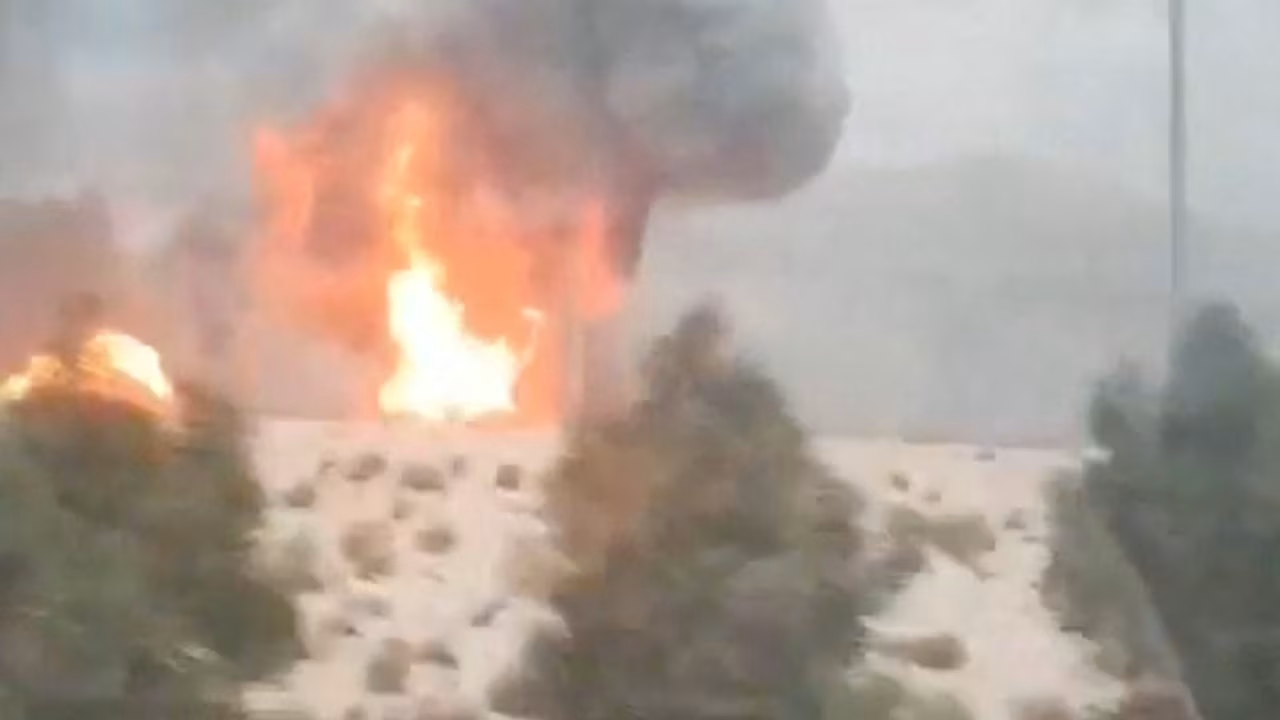
The United States carried out new airstrikes on Iranian military infrastructure, targeting missile storage facilities, drone sites, coastal radar systems and other strategic assets after Washington accused Tehran of violating the ceasefire framework. Iran responded with drone and missile attacks targeting American military positions in Kuwait and Bahrain, intensifying the confrontation across the Gulf.
The latest escalation comes at a sensitive moment when diplomatic efforts were attempting to maintain a temporary truce and open a path for broader negotiations.
US Airstrikes Hit Iranian Military Infrastructure
According to US officials, American aircraft targeted multiple Iranian military locations, including:
- Missile storage facilities
- Drone launch and storage areas
- Coastal surveillance radar systems
- Communication networks
- Air defence infrastructure
- Naval mine-laying capabilities
The US Central Command (CENTCOM) said the operation was a response to what Washington described as continued Iranian threats against commercial shipping and violations of the ceasefire arrangement.
The strikes reportedly focused on degrading Iran’s ability to conduct drone and missile operations, particularly around strategic maritime routes near the Strait of Hormuz.
The Strait of Hormuz remains one of the world’s most important energy corridors, through which a significant portion of global oil shipments passes every day.
Strait of Hormuz Attack Becomes Trigger Point
The immediate trigger behind the US response was an attack on a commercial oil tanker near the Strait of Hormuz.
US officials linked the incident to an Iranian drone strike against the Panama-flagged tanker M/T Kiku, which was carrying a large crude oil shipment. Washington argued that the attack represented a direct threat to international shipping and violated the ceasefire terms.
For the United States, the incident was not only a military issue but also an economic security concern.
Any disruption in the Strait of Hormuz can impact:
- Global oil prices
- International shipping routes
- Energy markets in Asia and Europe
- Regional economic stability
Trump Issues Strong Warning to Tehran
US President Donald Trump publicly confirmed the strikes through his Truth Social platform.
Trump accused Iran of violating the ceasefire and warned that further violations could bring a much stronger US response.
His statement included a direct warning that continued escalation could result in the United States “militarily completing the job” and that Iran could face severe consequences.
The message was viewed by analysts as an attempt to pressure Tehran into stopping further attacks, but it also increased concerns about a possible expansion of the conflict.
Iran Retaliates: Kuwait and Bahrain Put on Alert
Iran’s Islamic Revolutionary Guard Corps (IRGC) claimed responsibility for missile and drone strikes targeting US military facilities in the Gulf.
The reported targets included:
- Ali Al Salem Air Base in Kuwait
- US Fifth Fleet facilities in Bahrain
Iran described the attacks as retaliation for US strikes on Iranian positions.
Authorities in Kuwait said their air defence systems responded to incoming threats, while Bahrain confirmed drone activity and condemned the attacks as a security threat. Initial reports indicated no major casualties.
The attacks demonstrated Iran’s ability to reach US-linked military infrastructure outside its borders, increasing pressure on Gulf governments.
Gulf Countries Brace for Wider Conflict
The latest exchange has placed several Gulf states on heightened alert.
Countries including:
- Saudi Arabia
- Kuwait
- Bahrain
- Oman
- Qatar
are closely monitoring developments due to their geographic proximity and economic dependence on stable maritime trade.
The Gulf states face a difficult balancing act:
- Maintaining security partnerships with Washington
- Avoiding direct involvement in a US-Iran war
- Protecting oil and shipping infrastructure
Shipping Routes Shift as Maritime Risks Grow
The crisis has also affected commercial shipping calculations.
Maritime authorities have expanded alternative routes near Oman to reduce exposure to Iranian-controlled waters and areas considered vulnerable to attack.
The move highlights growing concerns that the Strait of Hormuz could become a major pressure point if military exchanges continue.
Even limited disruptions in the region can have global consequences because energy markets closely monitor every security incident around the Gulf.
Political Battle in Washington: War Powers Debate Returns
The military escalation has also triggered political debate inside the United States.
Critics argue that expanded military operations against Iran require stronger congressional oversight under the War Powers framework.
Supporters of the administration argue that the strikes were defensive actions responding to immediate threats against US forces and international shipping.
The dispute reflects a long-running debate in American politics over presidential authority to conduct overseas military operations without a formal declaration of war.
Hezbollah and Wider Middle East Tensions
The Iran-US confrontation is unfolding alongside broader regional tensions.
The situation is connected with ongoing disputes involving:
- Israel-Lebanon security arrangements
- Hezbollah’s position in Lebanon
- Iran’s regional influence network
Reports indicate that Hezbollah has rejected parts of a US-backed Israel-Lebanon framework, adding another layer of uncertainty to Middle East diplomacy.
Analysts warn that a wider regional crisis could emerge if multiple fronts become linked.
What Happens Next? Three Possible Scenarios
1. Limited Retaliation and Diplomatic Recovery
The US and Iran may attempt to avoid a full war by limiting attacks and returning to negotiations.
This remains the preferred option for regional governments concerned about economic damage.
2. Continued Tit-for-Tat Strikes
A cycle of:
US strike → Iranian retaliation → US response
could continue, creating a dangerous situation where neither side intends a major war but escalation happens gradually.
3. Regional War Risk
The biggest concern is miscalculation.
A major attack causing significant casualties, damage to energy infrastructure, or involvement of additional regional actors could push the conflict beyond control.
US-Iran Crisis: Key Developments at a Glance
| Event | Details | Impact |
|---|---|---|
| US Airstrikes | Iranian missile, drone and radar facilities targeted | Increased military pressure on Tehran |
| Trump Warning | Threatened stronger action if ceasefire violations continue | Raised escalation concerns |
| Iranian Response | Drone and missile attacks on US-linked bases in Kuwait and Bahrain | Expanded conflict zone |
| Strait of Hormuz Tensions | Shipping security concerns increased | Global energy risks |
| Political Fallout | War powers debate in Washington | Questions over executive authority |
Final Analysis: A Ceasefire Hanging by a Thread
The latest US-Iran confrontation shows how fragile Middle East ceasefires remain when military actions, regional rivalries and strategic interests collide.
The immediate battle may be over specific military targets, but the larger struggle involves influence, energy security, maritime control and diplomatic leverage.
For now, the world is watching the Gulf closely — because a single miscalculation around the Strait of Hormuz could transform a limited confrontation into a much wider international crisis.