Kashmiri Pandit Employees in Valley Face an Old Fear in a New Security Environment
By: News Desk | 11 Aug 2026
Srinagar/Jammu: For Kashmiri Pandit employees working in the Valley under the Prime Minister’s employment package, the question of security has never been merely administrative.
It is personal.
Every posting, every commute to work and every stay inside a transit accommodation carries the memory of a community that was displaced from Kashmir during the violent turmoil of the early 1990s.
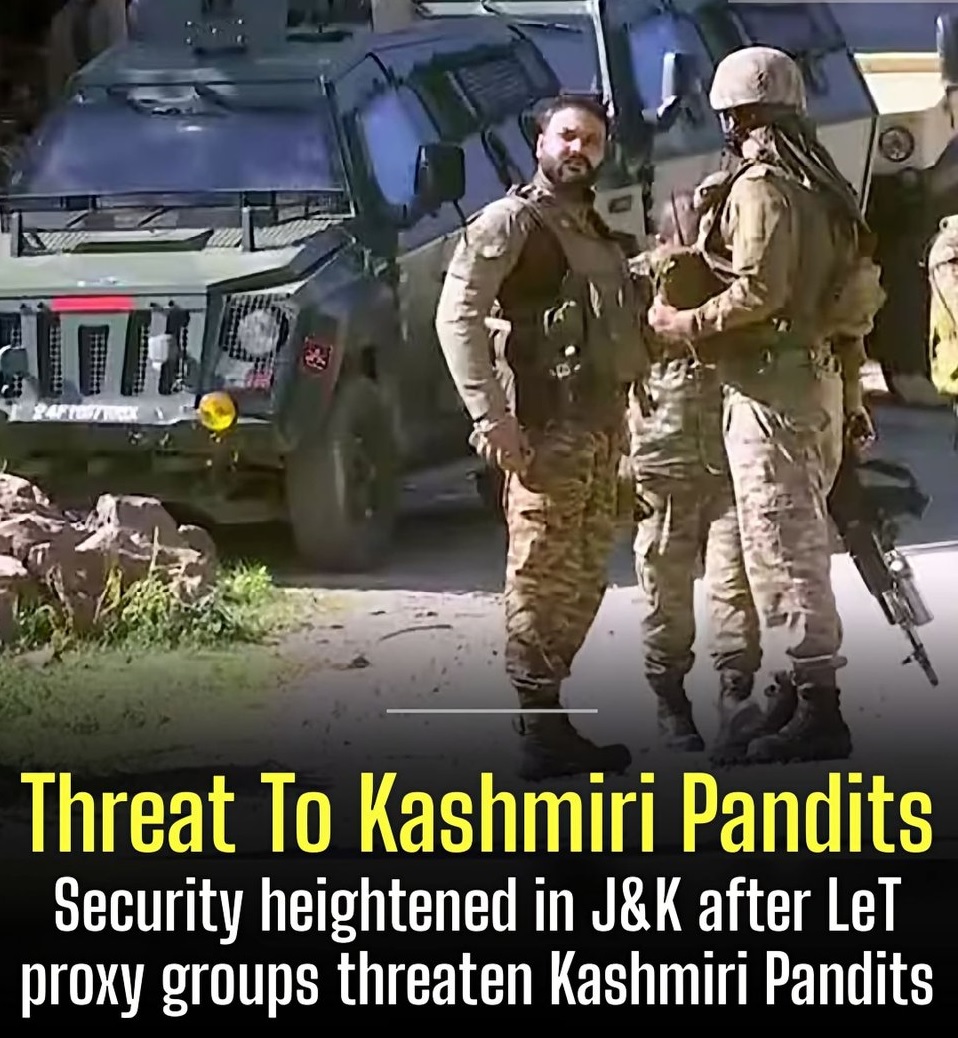
Now, renewed reports of threats against members of the community have again placed the security of PM Package employees at the centre of public debate.
Community representatives have repeatedly demanded relocation to safer areas, secure accommodation and stronger protection. Their argument is straightforward: an employment scheme intended to facilitate rehabilitation cannot succeed if employees remain afraid to travel to their workplaces or live in vulnerable locations.
However, one important point needs to be established at the outset.
Current reporting available for August 2026 does not independently confirm a blanket government order sending all Kashmiri Pandit PM Package employees on leave because of fresh terror threats. Earlier incidents, threats and government security measures are well documented, but the specific leave-order claim requires an official order or authoritative confirmation before it can be treated as established fact.
That distinction matters in a sensitive security story.
The PM Package Was Designed as a Pathway Back to Kashmir
The Prime Minister’s employment package for Kashmiri migrants was introduced during the late 2000s as part of a broader effort to encourage return and rehabilitation in the Valley.
The package included employment opportunities, housing and related support intended to help displaced Kashmiri families rebuild their lives in their ancestral region.
The government later expanded administrative arrangements for these employees, including measures relating to promotions and the management of posts.
In 2022, the J&K administration said around 5,928 employees were working under the PM Package and approved measures to redesignate their posts at the divisional level, allowing greater flexibility in postings within the Kashmir division.
The fundamental objective was clear:
Employment was intended to become a bridge between displacement and rehabilitation.
But the security situation repeatedly tested that model.
Targeted Killings Changed the Debate
The security concerns surrounding Pandit employees became particularly acute after a series of targeted attacks on minorities and government employees in 2021 and 2022.
One of the most prominent cases was the killing of Rahul Bhat, a Kashmiri Pandit government employee working under the PM Package, inside a government office in Chadoora, Budgam, in May 2022.
The killing triggered widespread protests among Pandit employees.
Many employees subsequently argued that they should be transferred out of vulnerable locations in the Valley until adequate security arrangements could be guaranteed.
The incident fundamentally altered the rehabilitation debate.
Before the attacks, the question was largely:
How can displaced Pandits return?
After the attacks, an additional question became unavoidable:
How can those who returned be kept safe?
Employees Asked for Relocation to Safer Areas
Following the targeted killings, groups representing Kashmiri Pandit employees demanded relocation from vulnerable areas.
Reports at the time documented employees returning temporarily to Jammu because of fear and uncertainty.
Some employees argued that their government jobs had effectively placed them in locations where they felt exposed to militant attacks.
The government, meanwhile, emphasised enhanced security and the movement of vulnerable employees to safer locations.
In June 2022, the J&K administration announced that Hindu government employees and PM Package employees would be posted at district headquarters or other secured locations.
The policy illustrated the central dilemma.
The government wanted rehabilitation to continue.
Employees wanted rehabilitation — but not at the cost of their lives.
‘Who Will Guarantee Our Security?’
The fear expressed by employees was not theoretical.
Following attacks on minority employees, several Kashmiri Pandit workers told journalists that they were afraid to remain in the Valley.
Some returned to Jammu temporarily with their families.
One employee quoted by The Indian Express questioned who could guarantee the safety of Pandit employees after militants had been able to identify and target minority workers at their workplaces.
That question has continued to shape the debate.
Security is not simply about the presence of guards at an office.
For employees living away from protected accommodation, risk can exist during the entire journey between home and workplace.
For families, the concern extends further:
- Is the residential colony secure?
- Is the workplace protected?
- What happens while travelling?
- Can emergency evacuation be guaranteed?
- What happens to children and elderly family members?
- What happens if the threat level suddenly changes?
These are practical questions that any long-term rehabilitation policy must address.
The Transit Accommodation Problem
Protected or transit accommodation has become a major part of the PM Package debate.
The basic idea is to provide employees with relatively secure residential facilities near their workplaces.
But construction and availability have themselves become contentious issues.
Recent reporting in 2026 has highlighted continuing concerns over delays in the construction of transit accommodation for PM Package employees. BJP leader and former MLC Girdhari Lal Raina has also raised allegations about delays in completing approved facilities, including projects in Baramulla and other districts.
These allegations should be treated as political claims rather than independently established findings.
Nevertheless, the underlying issue is significant.
If employees are expected to work in the Valley, secure housing is not a peripheral facility. It is part of the security architecture.
Why Relocation Remains a Sensitive Demand
Pandit employees have repeatedly demanded temporary relocation to safer areas, particularly Jammu.
For the employees, relocation is generally presented as a security measure rather than a rejection of rehabilitation.
But from the perspective of government policy, permanent relocation of employees appointed specifically as part of a return-and-rehabilitation package presents a difficult problem.
If employees are permanently moved out of Kashmir, one of the central objectives of the employment package is weakened.
That creates a policy dilemma with no easy answer.
Option 1: Keep employees in the Valley
This preserves the original rehabilitation objective but requires robust security arrangements.
Option 2: Temporarily relocate employees
This could reduce immediate risk but may disrupt administrative work and delay the rehabilitation process.
Option 3: Provide secure cluster accommodation
This could allow employees to remain in Kashmir while reducing exposure.
Option 4: Transfer vulnerable employees permanently
This addresses individual safety concerns but could undermine the broader objective of the package.
The challenge is finding a framework that recognises both security and rehabilitation as legitimate goals.
The Government’s Dilemma: Rehabilitation Versus Immediate Safety
The PM Package was built around the idea that economic opportunity could encourage displaced families to reconnect with the Valley.
But rehabilitation cannot be measured only by the number of jobs created.
A person cannot be considered meaningfully rehabilitated if they live in constant fear.
At the same time, a blanket withdrawal of employees from the Valley could have wider consequences.
It could reinforce the perception that the return process has failed.
It could create administrative vacancies.
And it could further deepen the psychological divide between displaced communities and their ancestral homeland.
That is why the issue requires a policy response more sophisticated than either “stay” or “leave.”
The Security Environment Remains the Central Variable
The security situation in Kashmir has changed significantly over the past decade, but targeted attacks remain a serious concern whenever militant groups identify vulnerable civilian targets.
For minority communities, the psychological impact of such attacks can be particularly severe.
A single targeted killing can affect hundreds of families who may begin questioning whether their own presence is safe.
This is why threats — even when they do not result in an attack — can have consequences beyond the immediate target.
They can influence:
- employee attendance,
- family decisions,
- housing choices,
- school arrangements,
- migration patterns,
- administrative functioning and
- willingness to participate in rehabilitation programmes.
Security therefore becomes an essential component of social confidence.
Threats Against Pandits Have a Long History
The present anxiety cannot be understood without remembering earlier threats.
Kashmiri Pandit employees and migrant settlements have faced threats and attacks at different points since the 1990s.
In 2016, for example, militant threats and attacks against transit camps housing PM Package employees prompted hundreds of employees to leave the Valley temporarily.
In 2022, after a series of targeted killings, Pandit employees again warned of a possible mass departure if the government could not guarantee their safety.
The recurring pattern explains why fresh threats can trigger disproportionate anxiety.
For a community with the memory of the 1990 displacement still deeply embedded in family histories, security warnings are not treated as ordinary workplace risks.
A Second Exodus Is the Fear Employees Do Not Want to Discuss
The word “exodus” carries enormous emotional weight for Kashmiri Pandits.
The community’s displacement in the early 1990s remains one of the defining events in its modern history.
Many PM Package employees who returned to the Valley did so precisely because they wanted to reverse part of that history.
They wanted employment.
They wanted to reconnect with Kashmir.
They wanted their children to have a relationship with the land their families had left.
That is why the possibility of leaving again is particularly painful.
In 2022, employee groups explicitly warned that continued attacks could trigger another mass migration.
The fear is therefore not simply about losing a job posting.
It is about the possibility that a rehabilitation project could once again turn into displacement.
What Happens to Government Services If Employees Leave?
There is also an administrative dimension.
PM Package employees work in sectors including education, revenue and other government departments.
If significant numbers leave their posts, offices may face staffing shortages.
Teachers are particularly important because schools depend on regular classroom staffing.
In previous episodes of heightened insecurity, some displaced employees returned to Jammu and continued work or teaching through alternative arrangements where possible.
That experience showed how a security crisis can quickly become an administrative problem.
The government therefore has to balance:
employee safety + continuity of services + rehabilitation policy.
None of these objectives can simply be ignored.
The Psychological Cost Is Harder to Measure
Statistics can record how many employees were attacked.
They can count vacancies.
They can measure how many people were transferred.
But they cannot easily measure fear.
For a Pandit employee, every threat can revive memories of the community’s displacement.
For families, security concerns can affect children’s education, marriages, employment decisions and willingness to remain in Kashmir.
The psychological cost may therefore persist even when the immediate security threat declines.
That is why rehabilitation requires more than physical infrastructure.
It requires confidence.
And confidence takes time to build but can disappear very quickly.
Why ‘Normalcy’ Is Not Enough
Government authorities frequently point to improved security indicators and reduced levels of violence when describing the broader situation in Jammu and Kashmir.
But for vulnerable communities, normalcy is experienced at the individual level.
A Pandit employee may ask a much simpler question:
Can I travel to work tomorrow without fear?
If the answer is uncertain, macro-level improvements may not translate into personal confidence.
This does not mean that security improvements should be dismissed.
It means that the success of rehabilitation should also be measured through the everyday experience of those being rehabilitated.
What a Sustainable Security Plan Could Look Like
A long-term policy for PM Package employees could combine several measures.
Protected accommodation
Complete delayed transit housing projects and ensure adequate security around existing colonies.
Secure commuting
Develop arrangements that reduce exposure while travelling between accommodation and workplaces.
Vulnerability-based postings
Employees should not necessarily be treated as one category. Those working in particularly vulnerable locations may require different arrangements.
Emergency relocation protocols
A clearly defined system should allow rapid temporary relocation when intelligence agencies identify credible threats.
Family support
Security policies should include spouses, children and elderly dependants rather than focusing exclusively on employees.
Transparent communication
Employees need timely information about threats and security arrangements.
Career protection
Temporary relocation should not automatically create professional or financial penalties.
Independent review
A periodic review mechanism could assess whether security arrangements are actually working on the ground.
The Bigger Question: What Does Rehabilitation Really Mean?
The controversy surrounding PM Package employees ultimately raises a larger question.
What does it mean to rehabilitate a displaced community?
Is employment enough?
Clearly, it is not.
Employment can create economic stability, but rehabilitation also requires:
- physical security,
- housing,
- social acceptance,
- property rights,
- education,
- healthcare,
- cultural continuity,
- political representation and
- confidence in the future.
The PM Package addressed one important component: employment.
The security crisis has demonstrated why the other components cannot be treated separately.
A Policy Meant to Bring People Home Cannot Leave Them Feeling Unsafe
This is the central contradiction confronting policymakers.
The PM Package was designed to encourage Kashmiri migrants to return to the Valley.
But if employees believe that returning exposes them to unacceptable danger, the policy’s fundamental objective becomes difficult to sustain.
At the same time, simply moving everyone out whenever threats emerge could create a cycle:
return → threat → relocation → reduced confidence → renewed displacement.
Breaking that cycle requires a stronger institutional framework.
The objective should not be merely to bring employees back.
It should be to create conditions under which they choose to stay.
What the Latest Threat Debate Really Reveals
Whether or not the specific August 2026 claim about blanket leave orders is ultimately confirmed, the broader issue is real and longstanding.
Kashmiri Pandit PM Package employees remain sensitive to security threats because their return to the Valley was itself part of a fragile rehabilitation experiment.
Past attacks have demonstrated the vulnerability of minority employees.
Earlier relocation demands show that this is not a new concern.
And continuing questions over protected accommodation demonstrate that physical security infrastructure remains an important part of the debate.
The lesson is straightforward:
A rehabilitation policy cannot be separated from the security environment in which it operates.
Conclusion: Security Must Become the Foundation of Rehabilitation
For Kashmiri Pandit employees, the choice should not have to be between a government job and personal safety.
The original promise of the PM Package was to create a pathway back to Kashmir through employment and rehabilitation.
That promise can only remain credible if employees believe they can work, live and raise their families in safety.
Fresh threats — whether directed at individuals, colonies or government institutions — therefore demand more than temporary administrative responses.
They require credible intelligence-led security, protected accommodation, rapid relocation mechanisms when necessary, career protection and transparent communication with employees.
At the same time, claims about specific government actions, such as a blanket order sending all Pandit employees on leave, should be independently verified before being presented as fact.
The larger issue, however, is unmistakable.
Rehabilitation cannot be measured simply by how many employees were brought back to Kashmir. It must also be measured by whether those employees feel secure enough to remain there.
For a community carrying the memory of displacement, security is not an additional benefit of rehabilitation.
It is the foundation on which rehabilitation depends.