Veteran Eidgah MLA’s exclusion from Omar Abdullah’s Cabinet sparks protests; Abdul Majeed Larvi also voices disappointment over missing ministerial berth
By: Javid Amin | 27 October 2026
Srinagar: The Jammu and Kashmir Cabinet expansion has brought a fresh internal challenge for the ruling National Conference (NC), with senior leader and Eidgah MLA Mubarak Gul expressing disappointment after being left out of the ministerial team. In a swift response, party president Dr Farooq Abdullah appointed Gul as the organisation’s new general secretary, in a move that came amid visible resentment among some party workers and leaders.
The appointment followed the induction of four NC legislators, Ali Mohammad Sagar, Shamima Firdous, Mir Saifullah and Altaf Ahmad Kaloo, into Chief Minister Omar Abdullah’s Council of Ministers on October 27. While the expansion completed the Cabinet’s permitted strength, the selection also exposed the difficult choices involved in balancing experience, regional representation and competing expectations within the party.
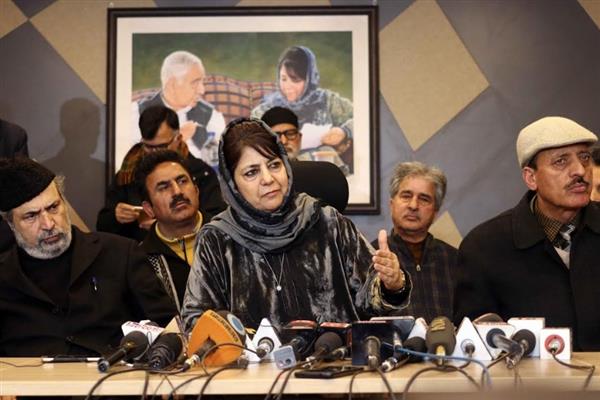
Gul, a six-time MLA and former Speaker of the Jammu and Kashmir Legislative Assembly, made his disappointment public shortly before the swearing-in ceremony. He told reporters that he had attended around 30 oath-taking ceremonies over the course of his political career but had repeatedly been left out of the ministerial team.
“I have attended 30 oath-taking ceremonies till now. Every time I was dropped, and today as well, I am being dropped,” Gul said, according to Kashmir Life.
His remarks were followed by protests from supporters at the National Conference headquarters in Nawa-i-Subh, Srinagar. Farooq Abdullah subsequently reached out to the veteran leader and appointed him general secretary, succeeding Ali Mohammad Sagar, who vacated the organisational post after joining the Cabinet.
The development has provided the party leadership with an immediate response to Gul’s exclusion. However, the appointment does not, by itself, settle broader questions raised by the Cabinet selection, particularly after another senior legislator, Abdul Majeed Larvi, also spoke openly about his disappointment.
Mubarak Gul’s disappointment after decades in politics
Gul’s reaction reflected the frustration of a senior politician who has held prominent legislative and organisational responsibilities but has once again missed out on a place in the government.
He has represented Eidgah in Srinagar in six Assembly elections, including those held in 1983, 1996, 2002, 2008, 2014 and 2024. He also served as Speaker of the erstwhile Jammu and Kashmir Legislative Assembly, giving him a long record of involvement in the region’s political and legislative affairs.
For a legislator with that history, exclusion from a Cabinet expansion can carry significance beyond the immediate question of holding a ministerial portfolio. Ministerial appointments offer a direct role in executive decision-making, responsibility for government departments and an opportunity to influence policy implementation.
Gul did not announce any decision to leave the party or challenge its leadership. Instead, when reporters asked about his next steps, he indicated that he would speak at an appropriate time. His remarks conveyed disappointment, but they did not amount to a formal declaration of rebellion.
That distinction matters. Political parties often face disappointment after Cabinet reshuffles, particularly when several experienced legislators are competing for a limited number of positions. The immediate question for the NC is whether such disappointment remains an individual grievance or develops into a broader organisational problem.
Farooq Abdullah’s intervention and Gul’s new role
The NC leadership moved quickly after Gul publicly expressed his displeasure. Party president Farooq Abdullah reached out to him and appointed him general secretary, a senior organisational position that became vacant after Ali Mohammad Sagar’s induction into the Cabinet.
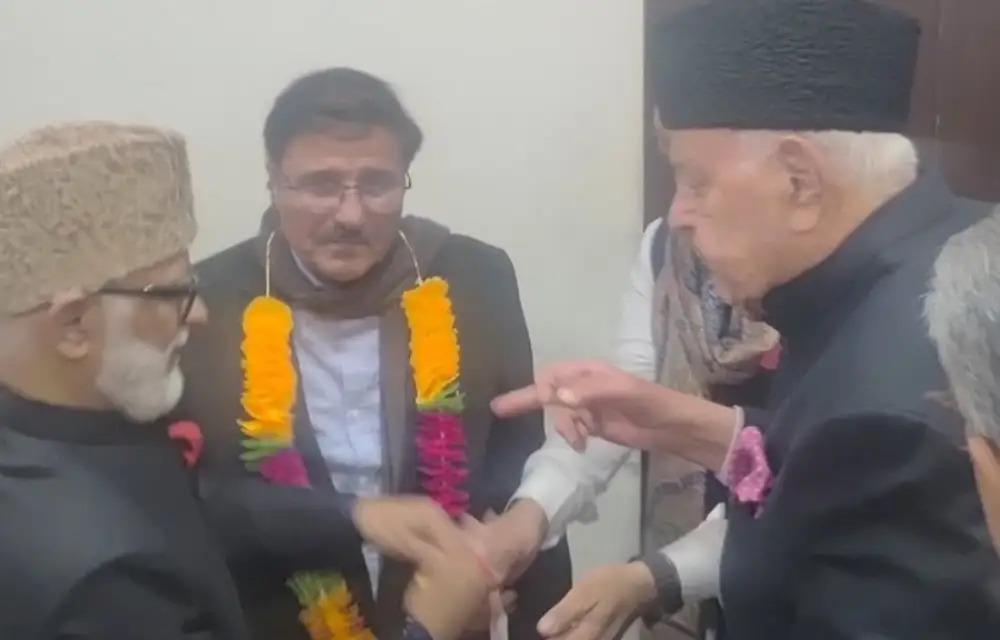
The party formally announced the appointment through its spokesperson, Imran Nabi Dar. Reports also described a personal gesture by Farooq Abdullah, who seated Gul in the general secretary’s chair at the party headquarters.
The appointment gives Gul a significant role in the party organisation at a time when the NC is governing Jammu and Kashmir and must manage both administrative responsibilities and internal political expectations.
However, the general secretary’s role is different from a Cabinet position. A minister serves in the government and exercises responsibilities linked to an assigned department, while a party general secretary works within the organisation and helps manage party affairs. The new appointment therefore offers Gul an important organisational responsibility, but it is not equivalent to induction into the Council of Ministers.
The timing nevertheless makes the political significance clear: the leadership acted within hours of Gul’s public remarks, amid protests by supporters. That sequence suggests an effort to address the immediate fallout, although the available reports do not establish that the appointment alone has resolved the dissatisfaction.
Supporters protest at NC headquarters
Gul’s exclusion also triggered a reaction among party workers who believed his experience and long association with the NC warranted a place in the government.
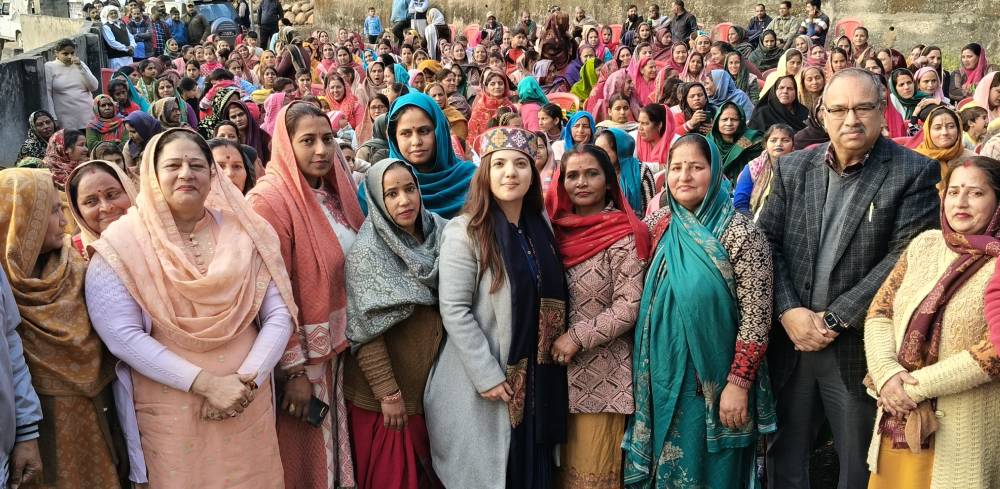
According to Kashmir Reader, supporters gathered at the party headquarters in the Nawa-i-Subh Complex after the Cabinet expansion, raising slogans in Gul’s favour and expressing resentment over the decision. Reports said the protest took place as senior party leaders were meeting at the headquarters.
The protests brought the issue beyond Gul’s personal disappointment. For party workers, the selection of ministers can also become a question of whether a constituency’s political contribution and loyalty have received adequate recognition.
Some supporters reportedly argued that Eidgah had consistently backed Gul and the National Conference over several decades and deserved stronger representation in the government. Those arguments reflect the protesters’ position, rather than an established finding that the constituency has been deliberately ignored.
For the party leadership, the challenge is to acknowledge such concerns without allowing disagreements over ministerial appointments to weaken organisational discipline. The appointment of Gul as general secretary was an immediate response, but continued confidence will depend on how the leadership manages expectations among elected representatives and their supporters.
Abdul Majeed Larvi says exclusion has hurt
Gul was not the only senior NC leader to express disappointment following the Cabinet expansion. Abdul Majeed Larvi, the party’s MLA from Anantnag West, also said he had expected to be included in the ministerial team.
Speaking to Kashmir News Service, Larvi acknowledged that the final decision rested with the party leadership but said he believed his seniority, loyalty and service to the organisation made him deserving of a Cabinet berth.
“My heart does hurt because I deserved it as well,” Larvi said, explaining that the decision had hurt him despite his acceptance of the leadership’s authority to select ministers.
Larvi also made clear that he intended to continue working for the party. His remarks therefore combined personal disappointment with an affirmation of loyalty to the NC, rather than an announcement that he would break with the organisation.
His response highlights a recurring challenge in party politics: leaders may accept the formal authority of the high command while still feeling that their experience and contribution have not received adequate recognition.
The distinction between accepting a decision and being satisfied with it is important. Larvi’s statement indicates that the Cabinet choices have created disappointment among at least some senior leaders, but it does not, on its own, establish the extent of dissent within the wider party.
Why the Cabinet expansion has created difficult choices
The Cabinet expansion was intended to fill the remaining ministerial positions in Omar Abdullah’s government. The induction of Ali Mohammad Sagar, Shamima Firdous, Mir Saifullah and Altaf Ahmad Kaloo brought the Council of Ministers to its maximum permissible strength of nine members, including the Chief Minister.
But completing the Cabinet also meant that several legislators who may have expected ministerial roles were left outside the government.
The political difficulty lies in balancing multiple considerations. Seniority and previous ministerial experience can strengthen a Cabinet’s administrative capacity, while regional representation, electoral considerations, gender representation and the need to accommodate different political constituencies can also influence the final selection.
Not every experienced MLA can be accommodated when the number of ministerial positions is limited. At the same time, repeated exclusion can create frustration among legislators who believe their work and standing within the party should have earned them a place in government.
The reports surrounding Gul and Larvi have brought these competing expectations into public view. They show that the Cabinet expansion has prompted expressions of disappointment from individual leaders and protests from Gul’s supporters. They do not, however, prove that the National Conference is facing a formal split or that the government’s stability is immediately at risk.
A test of party management for the National Conference
For Farooq Abdullah and Omar Abdullah, the immediate task is to ensure that disagreement over the Cabinet does not spill over into the party’s broader functioning.
As party president, Farooq Abdullah has a central organisational role in managing senior leaders, party workers and competing expectations. Omar Abdullah, meanwhile, must lead a government whose ministers are responsible for implementing policies and responding to public concerns.
Gul’s appointment gives the organisation a way to recognise a senior leader who was left out of the Cabinet. But the leadership must also manage the disappointment expressed by other legislators, including Larvi, without creating the impression that organisational appointments are simply substitutes for ministerial positions.
The broader political question is whether the NC can keep its legislators engaged while ensuring that Cabinet selection remains a workable exercise in governance rather than a recurring source of internal friction.
The party may be able to contain the immediate controversy through dialogue and organisational responsibilities. Yet the durability of that response will depend on whether leaders who missed out on ministerial positions continue to feel involved in the party’s political and decision-making processes.
What happens next?
The immediate developments point to three issues to watch.
First, Gul’s response after taking up the general secretary’s role will indicate how he intends to move forward following his public disappointment. His reported remarks did not include a decision to leave the party, and his new position gives him a continuing role in its organisation.
Second, the response of Larvi and other legislators who were not inducted will matter. Their public statements and subsequent conduct will offer a clearer picture of whether the discontent remains limited to individual grievances or develops into a wider challenge for the leadership.
Third, the party will need to demonstrate that the expanded Cabinet can function effectively and address public concerns. Ministerial appointments are politically significant, but their lasting value is ultimately measured by the government’s performance.
For now, Farooq Abdullah’s outreach to Gul has provided an immediate response to a difficult moment for the National Conference. The appointment recognises Gul’s seniority within the organisation, but the reactions to the Cabinet expansion show that the leadership’s challenge extends beyond one position.
The central test for the NC is whether it can reconcile the expectations of its experienced legislators with the practical limits of Cabinet formation, while keeping its organisation united and its government focused on delivery.