₹1,000-Crore Revenue Setback? Waheed Para Questions J&K Government After HC Strikes Down Hydropower Water Charges
By: Javid Amin | 29 October 2026
Srinagar, October 30, 2026: A major legal setback for Jammu and Kashmir’s finances has reopened a long-standing debate over who benefits from the region’s vast water resources. The High Court of Jammu and Kashmir and Ladakh has struck down the water usage charges imposed on hydropower projects under the Jammu and Kashmir Water Resources (Regulation and Management) Act, 2010, ruling that the levy effectively amounted to an unconstitutional tax on electricity generation.
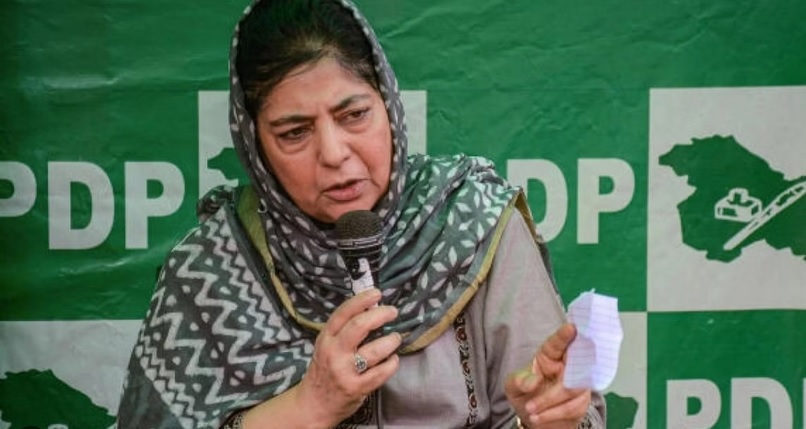
The verdict has prompted sharp political reactions, with Peoples Democratic Party (PDP) leader and Pulwama MLA Waheed Ur Rehman Para describing it as a potential ₹1,000-crore setback for the Union Territory. He has questioned the government’s handling of the legal proceedings and raised concerns about its preparedness to defend Jammu and Kashmir’s financial interests.
Para also linked the judgment to the wider question of political and constitutional representation, asking whether the administration could effectively defend Jammu and Kashmir’s interests in major legal disputes, including the demand for restoration of statehood.
But the significance of the ruling goes well beyond the political controversy. It concerns one of Jammu and Kashmir’s most valuable natural resources, the constitutional limits of taxation, the financial arrangements governing hydropower projects and the region’s continuing struggle to secure a greater economic return from electricity generated using its rivers.
The judgment has removed an important revenue mechanism that the erstwhile state government had introduced more than a decade ago. At the same time, it has exposed a larger policy challenge: how can Jammu and Kashmir secure a fair financial return from its water resources without adopting a taxation mechanism that falls outside its constitutional powers?
Waheed Para Flags ₹1,000-Crore Setback, Questions Government’s Legal Preparedness
Reacting to the High Court verdict, Para argued that Jammu and Kashmir could lose around ₹1,000 crore in potential revenue following the cancellation of water usage charges and related demand notices.
The PDP leader questioned how the government had allowed a legal challenge involving such an important revenue source to reach an outcome that could significantly affect the Union Territory’s finances.
He also raised concerns about the reported absence of a regular Advocate General for nearly two years, arguing that the government should have ensured stronger legal representation in matters involving major financial and constitutional interests.
“If this is how we defend our interests, what’s hope for the statehood case?” Para asked, according to reports of his reaction.
His criticism touches on an important issue in Jammu and Kashmir’s present political arrangement. The Union Territory depends heavily on transfers from the Union government, while its own revenue-generating capacity remains limited compared with its expenditure requirements.
In such circumstances, losing an established revenue instrument, even one whose constitutional validity has been challenged, is bound to attract political attention.
However, the ₹1,000-crore figure should be understood as Para’s estimate of the potential setback. The publicly available judgment reports do not establish this amount as the exact revenue lost, nor do they provide a consolidated calculation of future collections that would have been possible under the levy.
The financial consequences will depend on the status of outstanding demands, the projects covered by the judgment, the amounts already collected and the scope of any further legal proceedings.
What Exactly Did the High Court Decide?
The High Court of Jammu and Kashmir and Ladakh delivered its judgment on October 29, 2026, allowing a batch of petitions filed by independent power producers challenging the water usage charges imposed under the 2010 legislation.
The Division Bench comprised Justice Rajnesh Oswal and Justice Sanjay Dhar.
The petitioners included Mass N Energy Private Limited, Magpie Hydel Construction Operation Industries Private Limited and Choudhary Power Projects Private Limited.
The companies had challenged the provisions of the Jammu and Kashmir Water Resources (Regulation and Management) Act, 2010, along with the relevant rules and demand notices issued by the authorities.
Their central argument was that the government had effectively imposed a tax on electricity generation under the name of water usage charges, despite the erstwhile state legislature lacking the constitutional authority to impose such a tax.
The court accepted the substance of this argument.
It held that the nature of the levy, the method used to calculate the charges and the overall statutory framework demonstrated that the government was taxing electricity generation rather than charging for the actual consumption or supply of water.
The court consequently declared the relevant provisions unconstitutional to the extent that they imposed water usage charges on hydropower projects.
It also quashed the consequential demand notices issued against the petitioners and restrained the authorities from imposing a tax on electricity generation under the guise of water usage charges or another similar levy.
The distinction is important: the judgment does not invalidate every provision of the 2010 Water Resources Act. It strikes down the impugned levy on hydropower generation.
The 2010 Water Resources Act: Why Was the Levy Introduced?
To understand the financial significance of the verdict, it is necessary to go back to 2010.
The Jammu and Kashmir Water Resources (Regulation and Management) Act was introduced by the then state legislature to establish a framework for the regulation, allocation, conservation and management of water resources.
The legislation covered several areas, including drinking water, irrigation, groundwater, water supply and the use of water for electricity generation.
It also provided for the establishment of a regulatory authority empowered to determine water tariffs and usage charges.
Under Section 145(1)(d), the authority was empowered to establish a water tariff system and fix charges for different categories of water use, including hydropower generation.
The government’s argument was that water was a valuable natural resource and that commercial entities using it for electricity generation should contribute financially towards its management and utilisation.
The policy had an economic rationale from Jammu and Kashmir’s perspective.
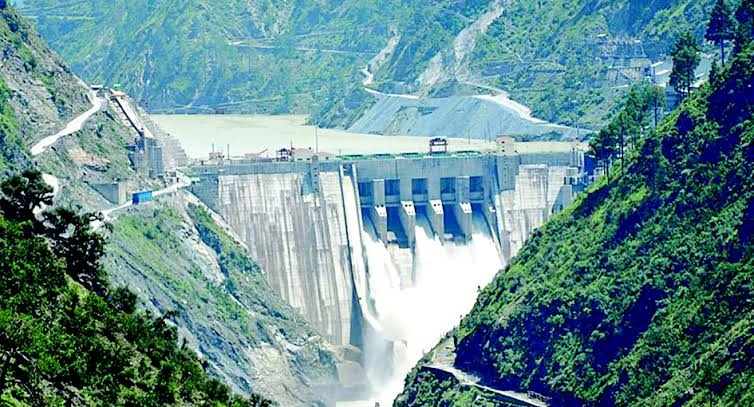
The region has an extensive river network and significant hydropower potential. Its rivers support large electricity projects, including those operated by the National Hydroelectric Power Corporation (NHPC), as well as projects developed by independent power producers.
For successive governments in Jammu and Kashmir, the question has remained the same: if local rivers are helping generate substantial electricity and economic value, what proportion of that value should return to the region?
The water usage charges were one attempt to secure a financial return from that resource.
Why Did the Court Call It a Tax on Electricity Generation?
The most important part of the judgment concerns the difference between a water usage fee and a tax on electricity generation.
Although the government described the levy as water usage charges, the court examined how the amount was actually calculated.
The regulatory mechanism linked the charges to the height of the water head used to drive turbines rather than simply measuring the quantity of water consumed.
In a conventional hydropower project, water is channelled through turbines to generate electricity and is subsequently returned to the river system.
This makes the use of water in such projects largely non-consumptive, although it does not mean hydropower generation has no environmental or ecological impact.
The court reasoned that the charge was not genuinely connected to the supply of water or a service provided to the hydropower operators.
Instead, the formula used to calculate the levy was closely linked to the electricity-generating potential of the project.
In simple terms, the greater the water head, the greater the potential electricity generation and the higher the charge.
The court therefore concluded that the levy was effectively imposed on electricity generation rather than on the actual consumption of water.
It also examined whether the charges had the characteristics of a regulatory fee. A genuine fee generally requires a reasonable connection between the amount collected and the service or regulatory function provided.
In this case, the court found that the statutory framework did not establish the necessary relationship between the charges and services rendered to hydropower operators.
The court consequently held that the levy was a tax in substance, irrespective of the terminology used by the legislature.
This principle is significant in constitutional law: governments cannot establish the validity of a tax simply by giving it another name. Its actual nature, purpose and operation determine its constitutional character.
The Constitutional Issue: Why the Erstwhile J&K Legislature Lacked Power
The central legal question was whether the erstwhile Jammu and Kashmir legislature possessed the constitutional authority to impose a tax on electricity generation when the 2010 law was enacted.
The government defended the levy by relying on its authority to regulate water resources under Entry 17 of List II of the Seventh Schedule of the Constitution.
However, the court distinguished between the power to regulate water and the power to impose a tax.
Entry 17 of the State List covers water, including water supplies, irrigation, canals, drainage, embankments and water power, subject to the constitutional qualifications contained in the entry.
The court held that this was a regulatory legislative field and did not independently provide the authority to impose a tax on water or electricity generation.
It also examined Entry 53 of List II, which concerns taxes on the consumption or sale of electricity.
The court observed that this entry does not confer authority to impose a tax on electricity generation.
The distinction between regulating a natural resource and taxing electricity production became decisive.
The bench held that the erstwhile legislature had exceeded its constitutional competence when it introduced the impugned levy.
The judgment also examined the administration’s argument that the 2010 Act had subsequently been adopted under the Jammu and Kashmir Reorganisation Act, 2019.
The administration contended that the adoption of the legislation following reorganisation strengthened its legal validity.
The court rejected this argument, holding that a law which was unconstitutional because of a lack of legislative competence at the time of its enactment could not be made constitutionally valid simply through subsequent adoption.
This aspect of the ruling is particularly important because it addresses the legal consequences of the 2019 reorganisation and the continuation of pre-existing state legislation.
How Much Money Has Jammu and Kashmir Actually Collected?
The question of revenue requires closer examination because the financial history of water usage charges shows that the levy was not merely a theoretical proposal.
There is documentary evidence that Jammu and Kashmir collected substantial amounts under the framework.
In a written reply in the Rajya Sabha on May 7, 2012, the Union Ministry of Power informed Parliament that NHPC had paid approximately ₹639 crore to the Jammu and Kashmir government as water usage charges up to March 2012 for its Salal, Dulhasti, Sewa-II and Uri power stations.
The figure demonstrates that the levy generated significant revenue during its early years.
A separate report published by The Economic Times in November 2011, citing the then state government’s statement, said that the government had received ₹475.87 crore from NHPC and had set a broader annual revenue target of ₹900 crore from water usage charges.
These historical figures establish that the mechanism had a substantial financial dimension.
However, they should not be confused with the amount affected by the October 2026 judgment.
The Comptroller and Auditor General’s audit of Jammu and Kashmir’s revenue sector for 2016-17 also identified serious weaknesses in the assessment and collection of water usage charges.
The audit found that departmental records were incomplete and that consolidated information about amounts assessed, collected and outstanding was not properly maintained.
Based on the records examined, the CAG reported that ₹5,950.55 crore had been assessed during the period under review, but the absence of complete information prevented it from establishing the exact amount due and the outstanding balances across the projects.
This is a crucial distinction.
An amount assessed is not necessarily an amount collected. Similarly, a demand notice does not automatically translate into realised government revenue.
Therefore, neither the historical collections nor the total assessed amounts can independently establish Para’s ₹1,000-crore estimate.
A proper financial assessment would require the government to publish a project-wise statement showing collections, outstanding demands, amounts covered by the judgment and the expected impact on future revenue.
Why Jammu and Kashmir’s Hydropower Resources Matter So Much
The controversy reflects a much larger economic issue concerning Jammu and Kashmir’s natural resources.
The Union Territory possesses significant hydropower potential, supported by river systems including the Chenab, Jhelum, Indus and their tributaries.
Several major hydropower projects operate in the region, while additional projects are being developed or planned.
Yet Jammu and Kashmir continues to depend on electricity purchases from outside the region, particularly during periods when local generation cannot meet demand.
This creates an economic contradiction that has featured prominently in regional political discussions for years.
Jammu and Kashmir contributes its river resources, land and geographical infrastructure to electricity generation, but a substantial share of the electricity produced by major projects is integrated into wider power arrangements.
The region receives certain contractual benefits, including a share of free electricity from projects under established agreements. However, political parties have repeatedly argued that these arrangements do not adequately compensate Jammu and Kashmir for the economic value of its natural resources.
The issue is especially sensitive when electricity shortages, high procurement costs and power-sector financial pressures affect consumers.
For the government, the challenge is not simply to increase revenue. It must also ensure that local power availability, electricity affordability and the financial sustainability of the power sector improve.
The High Court judgment has therefore reopened a fundamental question: how can Jammu and Kashmir secure a greater economic return from its hydropower resources through a constitutionally valid arrangement?
The 12 Per Cent Free Power Arrangement: An Important Part of the Debate
The court proceedings also brought attention to the existing contractual arrangements between the government and hydropower developers.
The petitioners argued that their project agreements already required them to provide 12 per cent free electricity to the government as part of the agreed benefits associated with the use of water resources.
They contended that imposing additional water usage charges amounted to an additional financial burden beyond the contractual arrangement.
The government disputed the legal implications of this argument.
The court examined the contractual arrangements alongside the statutory provisions, but its central conclusion rested on the constitutional character of the levy and the lack of legislative authority to impose a tax on electricity generation.
The free-power arrangement and the water usage charges are therefore distinct components of the broader hydropower framework.
Free electricity provides a direct energy benefit to the government. A water usage charge was intended to generate monetary revenue.
The existence of one does not automatically establish the legality or illegality of the other.
This distinction will remain important in future discussions about hydropower agreements, resource compensation and the financial rights of Jammu and Kashmir.
What Does the Verdict Mean for NHPC and Private Hydropower Developers?
The ruling also has implications for companies operating hydropower projects in Jammu and Kashmir.
Independent power producers had challenged the levy on the grounds that it imposed an unconstitutional financial burden on electricity generation.
The court’s decision provides relief to the petitioners by quashing the impugned demand notices and striking down the relevant charging provisions as applied to hydropower projects.
It also restricts the authorities from reintroducing a tax on electricity generation under the same or another label of water usage charges.
For project developers, the ruling removes uncertainty surrounding the challenged levy.
For the administration, however, it creates a financial and policy challenge. Any future arrangement must respect the constitutional division of legislative powers and the contractual framework governing hydropower projects.
The government cannot simply recreate the same charge under a different name if its actual character remains a tax on electricity generation.
Any alternative mechanism would have to be legally examined in terms of its purpose, basis of calculation, constitutional authority and relationship to the actual use of water or services provided.
The Larger Political Question: Who Benefits From Kashmir’s Rivers?
The High Court has settled the constitutional validity of the particular levy, but it has not resolved the broader political debate over compensation for natural resources.
For years, regional political parties have argued that Jammu and Kashmir has not received an adequate economic return from its hydropower potential.
The PDP, National Conference and other political formations have, at different times, raised questions about project ownership, free power, royalty arrangements and the financial benefits accruing to the region.
The argument is rooted in a wider economic concern: natural resources should contribute meaningfully to the development of the region from which they originate.
However, the constitutional question cannot be bypassed.
A government may have legitimate reasons to seek compensation for resource use, but the mechanism must be supported by the Constitution and the applicable legal framework.
The court has made clear that the 2010 levy cannot survive simply because the government considers it economically justified.
This leaves policymakers with the responsibility of identifying legally sustainable alternatives.
Potential areas for examination include contractual royalty arrangements, revised project agreements, constitutionally authorised fiscal mechanisms and transparent revenue-sharing arrangements.
Each option would require separate legal and financial scrutiny. None should be presented as an automatic replacement for the charge that has been struck down.
Will the Government Challenge the Judgment?
One of the immediate questions following the verdict is whether the Jammu and Kashmir administration will approach the Supreme Court.
An appeal would require the government to identify specific legal grounds on which the High Court’s reasoning could be challenged.
These could involve the interpretation of legislative competence, the legal character of the levy, the effect of the Reorganisation Act or the contractual and statutory framework governing hydropower projects.
However, the government would need to address the court’s detailed reasoning, particularly its conclusion that the charge was effectively linked to electricity generation rather than the quantity of water consumed.
As of October 30, 2026, no confirmed decision to challenge the verdict has been established in the reporting available for this article.
The administration’s next steps will be important not only for the affected companies but also for Jammu and Kashmir’s future resource-revenue policy.
Para’s Statehood Question Adds Another Political Dimension
Para’s reaction has also brought the judgment into the wider debate over restoration of Jammu and Kashmir’s statehood.
By questioning the government’s legal preparedness, he has suggested that the handling of the hydropower case raises concerns about the administration’s ability to defend the region’s interests in other important constitutional matters.
The comparison is political rather than a direct legal parallel.
The hydropower case concerned the constitutional competence of the erstwhile legislature to impose a particular tax. The statehood question concerns the constitutional and political status of Jammu and Kashmir following its reorganisation in 2019.
They involve different legal issues and cannot be treated as interchangeable.
Nevertheless, both are connected by a broader question of institutional authority and the ability of Jammu and Kashmir’s political leadership to secure its interests within the existing constitutional framework.
For regional leaders, the verdict reinforces the need for stronger legal preparation, better financial documentation and a clearly defined strategy for protecting the Union Territory’s economic interests.
What Happens Next? The Need for a New Hydropower Revenue Framework
The immediate priority should be to understand the full financial consequences of the judgment rather than rely solely on political estimates.
The government should prepare a comprehensive assessment of the water usage charges collected over the years, the outstanding demand notices, the projects affected and the revenue that may no longer be recoverable under the ruling.
It should also examine whether any existing contractual arrangements can be improved through negotiations with hydropower developers.
A future framework must satisfy three essential requirements.
Constitutional validity: Any proposed levy or royalty arrangement must have a clear legal basis and cannot indirectly impose a tax on electricity generation without constitutional authority.
Economic fairness: Jammu and Kashmir should be able to negotiate a reasonable financial return from hydropower projects operating within its geographical and natural-resource base.
Transparency: The government must publish reliable information about free-power entitlements, royalty arrangements, water-resource revenue and the financial benefits received from individual projects.
These measures would help move the debate beyond political accusations and towards a sustainable economic policy.
A Legal Victory for Power Producers, a Policy Challenge for J&K
The High Court’s decision is a significant development for hydropower companies operating in Jammu and Kashmir. It has also exposed the limitations of a revenue mechanism that successive authorities had relied upon for years.
For Waheed Para, the judgment represents a potential ₹1,000-crore setback and raises questions about the government’s ability to protect the Union Territory’s financial interests.
For the administration, the challenge is now twofold: understand the financial consequences of the verdict and develop a legally sound alternative that recognises the economic value of local water resources.
The court has not ruled that Jammu and Kashmir has no legitimate interest in benefiting from its rivers. It has ruled that the particular method adopted under the 2010 Act crossed constitutional boundaries.
That distinction should guide the next phase of the debate.
Jammu and Kashmir’s rivers remain among its most important economic assets. The real challenge is to create a framework through which the region can secure a fair and sustainable return from those resources without violating the constitutional division of powers.
The ₹1,000-crore question may dominate the immediate political reaction. But the more consequential question is whether Jammu and Kashmir can finally develop a durable hydropower revenue policy that protects its economic interests, respects constitutional limits and delivers tangible benefits to its people.