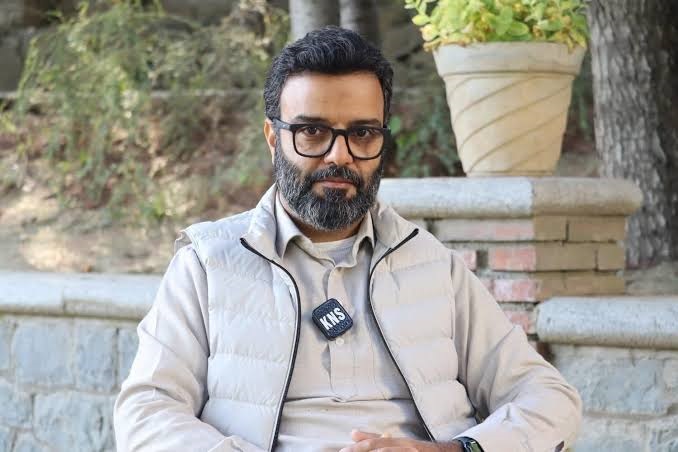
Ruhullah Mehdi to Resign From NC, Lok Sabha on November 3
By: Javid Amin | 29 October 2026
Srinagar: Srinagar Member of Parliament Aga Syed Ruhullah Mehdi has reaffirmed that he will resign from both the National Conference (NC) and the Lok Sabha on November 3, maintaining that nothing has changed to warrant a reconsideration of his decision.
The senior NC leader, whose differences with the party leadership have widened over the past year, said he remained as firm as when he first announced his intention to quit.
“As sure as I was when I announced it. Nothing has changed ever since. Things remain the same. I don’t see there is any reason for me to change my decision,” Ruhullah said, reiterating that he intends to leave both the party and Parliament. His remarks were reported by Kashmir Life and other news outlets on October 28.
The announcement marks another escalation in the political dispute between Ruhullah and the National Conference leadership, particularly over the party’s position on Jammu and Kashmir’s constitutional rights and the commitments it made during the 2024 Assembly elections.
Although the MP has reiterated his plan, his resignation from the Lok Sabha and the party remains a future step as of October 29. The formal submission and its subsequent processing will determine the status of his parliamentary membership.
Why Ruhullah Is Leaving the National Conference
Ruhullah’s differences with the NC leadership centre on what he describes as a departure from the party’s electoral commitments, especially the demand for the restoration of Jammu and Kashmir’s special constitutional status.
The MP has repeatedly questioned whether the party has pursued its promises with sufficient political resolve since taking office under Chief Minister Omar Abdullah in October 2024. He has argued that the restoration of statehood alone does not address the wider constitutional changes introduced in August 2019, when the Centre revoked Article 370 and reorganised the former state into two Union Territories.
Ruhullah has also criticised the party’s handling of reservation policy and other governance issues. His objections reflect a broader disagreement over how the NC should pursue its political agenda while governing under the existing constitutional and administrative framework.
The party leadership has not accepted his interpretation of its approach as the only measure of its political commitments. The dispute has nevertheless become increasingly public, with the MP repeatedly voicing dissatisfaction with decisions taken by the party and the government.
His planned departure is therefore not simply a disagreement over one policy. It represents a deeper conflict over political strategy, the interpretation of the NC’s manifesto and the extent to which the party should continue pressing for constitutional restoration.
Article 370 and the Unfulfilled-Promises Dispute
The question of Article 370 remains central to Ruhullah’s criticism.
The National Conference campaigned in the 2024 Assembly elections on a manifesto that included efforts to restore Jammu and Kashmir’s special status and pursue the restoration of statehood. Ruhullah has argued that the party must be judged against those commitments rather than only its performance in routine administration.
The NC government has faced a difficult political situation since taking office. Jammu and Kashmir remains a Union Territory, and key decisions concerning its constitutional and administrative status involve the Union government and the wider legal framework. The elected government’s ability to deliver on its promises is consequently constrained by powers it does not control independently.
That institutional limitation, however, has not resolved the political disagreement. Ruhullah’s position is that constraints should not become a reason to dilute the demand for constitutional rights. His criticism reflects a wider debate within Jammu and Kashmir over whether elected representatives should prioritise achievable administrative gains or continue to press the Centre more forcefully on the changes made in 2019.
The distinction matters: the government’s limitations are part of the constitutional context, while Ruhullah’s charge that the party has moved away from its promises remains his political assessment.
A Rift That Has Been Building for Months
The disagreement did not emerge with the latest announcement. Ruhullah has been openly critical of the party leadership for an extended period, questioning its ideological direction and the manner in which it has handled major political commitments.
In August 2026, he announced that he intended to resign from both Parliament and the party. The decision followed a public challenge from NC president Farooq Abdullah, who had urged him to resign and seek a fresh electoral mandate if he believed he no longer agreed with the party’s direction.
Ruhullah subsequently maintained that November 3 would be the date of his departure. His latest statement confirms that the intervening political developments have not persuaded him to abandon the plan.
The public nature of the dispute has placed the NC leadership in a difficult position. Ruhullah is not an outside critic: he won the Srinagar parliamentary constituency on the party’s ticket in the 2024 Lok Sabha election. His decision to leave would therefore mark a significant break between an elected representative and the organisation that secured his nomination.
At the same time, the political consequences cannot be measured solely by whether he resigns. His future political choices, his relationship with voters and the response of the party’s support base will also shape the significance of the split.
Why November 3 Has Personal Significance
The date Ruhullah has chosen carries personal meaning. November 3 is the death anniversary of his father, Aga Syed Mehdi, a prominent religious and political figure in Kashmir who was killed in a militant attack.
Earlier reports said Ruhullah had selected the date for his planned resignation and had commitments to complete before leaving Parliament, including work relating to funds under the Members of Parliament Local Area Development Scheme (MPLADS).
The date gives the announcement a personal dimension, but the political reasons he has publicly cited remain focused on the NC’s direction and its handling of constitutional demands.
Ruhullah has also indicated that he intends to assess the situation after resigning. While he has spoken about returning to grassroots politics and consulting people on a possible future course, no final decision on forming a new party or joining another political organisation has been established by his latest statement.
What His Resignation Could Mean for the NC
If Ruhullah submits his resignation and it is accepted, the National Conference would lose its representation through the Srinagar Lok Sabha seat. The development would also raise questions about the party’s ability to retain the support of voters who expect it to maintain a firm position on constitutional restoration.
The immediate parliamentary impact would be significant for the party’s representation from Jammu and Kashmir. Reports have indicated that the NC would be left with one remaining Lok Sabha member from the Union Territory, Mian Altaf Ahmad, if Ruhullah’s departure takes effect.
However, it would be premature to conclude that the resignation alone would determine the party’s electoral prospects or trigger a wider realignment. Such outcomes would depend on how the dispute develops, whether Ruhullah builds an independent political platform and how voters respond to competing positions on constitutional rights and governance.
For the NC leadership, the challenge is to manage a public disagreement with a sitting MP while defending its record and explaining how it intends to pursue the promises made in 2024.
For Ruhullah, the next step will be to translate his criticism into a clear political course beyond the party and Parliament.
What Happens Next?
The immediate development to watch is November 3, when Ruhullah says he will formally resign from the NC and the Lok Sabha. Until the resignation is submitted and the parliamentary process is completed, he remains the sitting MP for Srinagar.
His next political move is also uncertain. He has indicated that he wants to return to the people and consult like-minded individuals about how to continue pursuing Jammu and Kashmir’s constitutional rights. That leaves open several possibilities without confirming any particular alliance or organisational plan.
The wider political question is whether the dispute remains a personal and organisational split or becomes part of a broader debate over the NC’s commitments, the restoration of statehood and the future of constitutional politics in Jammu and Kashmir.
For now, Ruhullah’s message is unambiguous: he says his decision has not changed. Whether that declaration becomes a completed resignation on November 3 will be the next decisive development in his increasingly public break with the National Conference.


