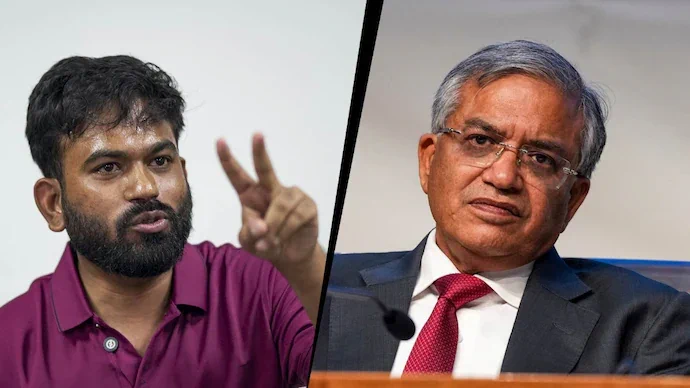
Cockroach Janta Party Backs INDIA Bloc Rally Against CEC Gyanesh Kumar
By: Javid Amin | 28 October 2026
New Delhi: The Cockroach Janta Party (CJP) has announced its support for the INDIA bloc’s November 1 rally at Delhi’s Ramlila Maidan, joining the opposition campaign demanding the resignation of Chief Election Commissioner Gyanesh Kumar and greater accountability over the management of electoral rolls.
The party’s endorsement adds another voice to a growing political mobilisation around the Election Commission’s Special Intensive Revision (SIR) of electoral rolls. Opposition parties argue that the process risks excluding eligible voters and have questioned the poll panel’s handling of the exercise. The Election Commission, however, has defended its decisions and rejected allegations that the Chief Election Commissioner acted unilaterally.
The CJP’s support comes as the INDIA bloc prepares to bring opposition parties, student groups and civil society representatives together for the planned rally. The gathering is part of a wider campaign framed by the opposition as a fight to protect voting rights and democratic accountability.
The immediate test will be whether the alliance can turn its criticism into a clear, widely understood set of demands—and demonstrate broad public participation at the November 1 event.
Why has the Cockroach Janta Party backed the rally?
In its statement, the CJP argued that the SIR exercise had raised serious concerns about the exclusion of eligible voters. It said the Chief Election Commissioner had lost the public confidence necessary to oversee free and fair elections and called for his resignation.
The party invoked the constitutional principle of universal adult franchise, arguing that electoral processes should make participation easier for eligible citizens rather than create obstacles to their right to vote. Its statement also referred to the democratic vision associated with Dr B. R. Ambedkar, Jawaharlal Nehru and other members of the Constituent Assembly.
The CJP’s position aligns with the opposition’s broader argument that the accuracy of electoral rolls is not merely an administrative matter. Voter registration determines who can participate in elections, making transparency, due process and accessible correction mechanisms central to public confidence in democracy.
However, backing the rally does not establish that the party has formally joined the INDIA bloc as a member. The available reports confirm its support for the November 1 demonstration; that should not be confused with formal membership of the opposition alliance.
What is the November 1 INDIA bloc rally about?
The rally is part of the opposition’s campaign against alleged electoral irregularities and the SIR process. Opposition leaders have demanded Gyanesh Kumar’s resignation and raised concerns about voter exclusions, changes to electoral procedures and the Election Commission’s institutional independence.
The Congress-led campaign has also sought to involve people beyond established political parties. Reports indicate that student organisations and civil society groups are expected to participate, reflecting an effort to present the issue as one of democratic rights rather than only a dispute between the ruling coalition and opposition parties.
The Congress has set an ambitious target of gathering 10 lakh people at the rally, according to NDTV. That figure is an organisers’ target—not a confirmed attendance estimate. Actual participation will only be known after the event.
Delhi Police has issued a no-objection certificate for the rally at Ramlila Maidan, subject to conditions covering crowd management, surveillance, traffic arrangements and the event’s permitted hours. The rally is scheduled for November 1, from 10 am to 5 pm.
The central dispute: voter protection versus electoral-roll revision
At the heart of the controversy is a basic question: how can election authorities ensure that voter lists are accurate without wrongly excluding eligible citizens?
The Election Commission conducts electoral-roll revisions to update records, remove duplicate or ineligible entries and incorporate eligible voters. The opposition’s concern is that the SIR process, its documentation requirements and the handling of voter records could leave some eligible citizens off the rolls.
The CJP has adopted this concern as a central reason for supporting the rally. Its argument is that electoral-roll management must protect the right to vote and maintain confidence in the independence of the institution responsible for conducting elections.
But the distinction between an allegation and a verified finding is essential. Evidence that a voter’s name was wrongly removed, or that a process was applied unlawfully, must be assessed through records, applicable rules, individual cases and judicial scrutiny. The political statements supporting the rally do not, on their own, prove that the Election Commission deliberately excluded eligible voters.
The broader public-interest issue is whether the process provides clear notice, accessible procedures for correction, effective review of disputed deletions and adequate safeguards for citizens whose records contain errors.
What has the Election Commission said?
The Election Commission has rejected key allegations about its handling of SIR. In a counter-affidavit filed in the Supreme Court, the Commission said the relevant SIR orders had been approved unanimously by the Chief Election Commissioner and the two Election Commissioners.
It also disputed the allegation that the statutory Form 6 used for new voter registration had been amended, arguing that the SIR declaration was a separate requirement rather than a change to the prescribed form. The Commission has maintained that its decisions were lawful and opposed the claims made against its functioning.
The legal dispute is important because it moves the controversy beyond political speeches. The questions include how the Commission makes and records decisions, how voter-registration procedures are implemented and whether the relevant processes comply with electoral law.
The Commission’s response does not automatically settle every concern about implementation. Equally, opposition allegations cannot be treated as judicially established facts. A fair assessment must distinguish the Commission’s formal position, the evidence cited by petitioners, documented voter-level cases and any eventual judicial findings.
Why the controversy matters beyond party politics
Electoral rolls are the foundation on which elections operate. If an eligible citizen is wrongly omitted, that person may be unable to vote until the error is corrected. If duplicate or ineligible entries remain, the integrity of the roll can also be questioned.
The challenge for election authorities is to achieve both accuracy and inclusion. A revision exercise needs reliable records, transparent procedures and effective ways for citizens to challenge errors. It also needs public communication that makes the process understandable, particularly for voters who may struggle with documentation or access to administrative offices.
For the opposition, the rally offers a platform to demand stronger safeguards and political accountability. For the Election Commission, the controversy underscores the importance of explaining its procedures, publishing relevant information and demonstrating that eligible voters have meaningful opportunities to correct their records.
The wider democratic question is not whether electoral rolls should be revised. It is whether revisions are conducted transparently, consistently and with safeguards that protect every eligible voter.
CJP and the wider opposition campaign
The CJP’s endorsement follows earlier public overlap between the party and Congress on issues including examination paper leaks and SIR. India Today reported that Congress leader Rahul Gandhi had expressed support for peaceful protest after CJP leaders were arrested, prompting a public exchange with CJP leader Abhijeet Dipke.
That history helps explain why the CJP’s latest announcement has attracted attention. Its support brings another political voice into a campaign that the INDIA bloc is attempting to broaden beyond its core party structure.
Still, the significance of the endorsement should not be overstated. A public declaration of support does not establish the size of the party’s following, how many people it will bring to the rally or whether it will materially affect attendance. Those questions can only be answered through evidence from the event itself.
The rally’s political impact will depend more on the breadth of participation, the clarity of the demands and the credibility of the evidence presented than on the number of organisations that announce support beforehand.
What to watch before November 1
Three developments will help determine the significance of the rally:
-
Participation: Whether opposition parties, student groups and civil society organisations attend in substantial numbers, rather than merely issuing statements of support.
-
Specific demands: Whether organisers focus on verifiable concerns about voter-roll procedures, transparent review mechanisms and institutional accountability.
-
Institutional response: Whether the Election Commission provides further clarification, whether legal proceedings advance and whether any corrective steps follow.
The rally will also test the INDIA bloc’s ability to sustain a common campaign around electoral governance despite the different political priorities of its constituent parties.
Conclusion: A political protest with a wider democratic question
The Cockroach Janta Party’s backing adds to the momentum behind the INDIA bloc’s November 1 rally against Chief Election Commissioner Gyanesh Kumar. The campaign centres on concerns about the Special Intensive Revision of electoral rolls, the possible exclusion of eligible voters and the accountability of the institution overseeing elections.
The Election Commission has rejected key allegations and defended the legality and collective approval of its decisions. Those competing positions make it important to separate political claims from documented evidence and judicial findings.
Ultimately, the rally’s significance will depend on whether it produces a serious public debate about voter protection, transparent electoral procedures and institutional trust. In a democracy, the credibility of the electoral process rests not only on the conduct of polling but also on the assurance that every eligible citizen has a fair opportunity to participate.