Iran is linking the restoration of normal shipping through the Strait of Hormuz to sanctions relief, the removal of the US naval blockade, the release of frozen assets and an end to fighting across the region. But the dispute goes beyond a ceasefire. It concerns nuclear negotiations, maritime law and who will influence the future management of one of the world’s most important shipping routes.
By: Javid Amin | 12 November 2026
The Strait of Hormuz has become the most important bargaining chip in the confrontation between Iran and the United States. What began as a military struggle involving airstrikes, missiles and naval operations has developed into a wider contest over oil exports, economic sanctions, maritime access and regional security.
Iran’s Parliament Speaker and chief negotiator, Mohammad Bagher Ghalibaf, has now made Tehran’s position clear. In an interview with Al Jazeera published on November 11, he said Iran had sent Washington a detailed response through Qatari mediation and was waiting for an official answer.
His message was uncompromising: the United States must accept Iran’s conditions before negotiations can resume and the Strait of Hormuz can return to normal operation.
Ghalibaf also warned that the waterway would never return to its pre-war arrangements, indicating that Tehran wants a new framework for managing maritime traffic, not simply a temporary reopening.
The statement has raised an important question. Is Iran offering a route towards peace, or attempting to convert its control over a critical shipping chokepoint into lasting political and economic leverage?
The answer lies in the details of the proposal, the disagreements between Washington and Tehran, and the interests of the Gulf countries that depend on the strait.
The seven conditions: What has Iran actually demanded?
There is an important qualification to the headline. Iranian officials have repeatedly referred to seven conditions, but the complete, authoritative seven-point text of the latest proposal has not been publicly released. Ghalibaf identified several central demands in his November 11 interview, while other details have emerged through earlier statements by Iranian officials and reporting on the June Islamabad memorandum of understanding.
The following are the main publicly identifiable negotiating demands. They should be understood as a reconstruction of the demands reported by officials, not as a verbatim official list of seven numbered clauses.
1. An end to the war across all fronts
Tehran wants military operations against Iran and allied groups across the region to stop. Lebanon is particularly important because fighting between Israel and Hezbollah has repeatedly threatened to undermine wider ceasefire arrangements.
Iran argues that a settlement limited to its own territory would not resolve the regional conflict.
2. A formal declaration ending the war
Iran is seeking more than a temporary pause in military operations. Ghalibaf has called for an explicit announcement that the war has ended.
This would provide Tehran with a political assurance that the conflict will not simply resume after Iran makes concessions on shipping or negotiations.
3. Removal of the US naval blockade
The United States has imposed a naval blockade on Iranian ports, restricting Tehran’s ability to move goods and conduct maritime trade.
Iran wants Washington to end the blockade before it agrees to reopen the strait under the proposed arrangement.
It is important to distinguish this blockade from the wider disruption to shipping through Hormuz. The US restrictions target Iranian ports, while Iran’s restrictions and attacks on vessels have affected commercial navigation more broadly.
4. Lifting sanctions and restoring Iranian oil exports
Tehran wants the removal of US economic restrictions, particularly those affecting oil exports, banking, insurance and international trade.
Iran has also called for the cancellation of sanctions imposed after the earlier memorandum.
This is one of the most consequential demands. Oil exports are a major source of revenue for the Iranian government, and restrictions on them have intensified the economic pressure facing the country.
5. Release of frozen Iranian assets
Iran is demanding access to funds held abroad under sanctions.
The release of these assets would provide Tehran with additional financial resources and help restore its ability to conduct international transactions.
The issue is also politically important. Iranian leaders want to demonstrate that the country has secured tangible economic gains from any agreement.
6. Respect for Iranian sovereignty and an end to interference
Iran has repeatedly demanded that Washington stop interfering in its internal affairs and provide assurances against further attacks.
Earlier Iranian formulations also called for an end to US cooperation with groups Tehran describes as opponents of its political system.
The June memorandum included commitments by both sides to respect each other’s sovereignty and avoid interference in domestic affairs. It also envisaged the eventual withdrawal of US forces from the immediate vicinity of Iran after a final agreement.
7. Compensation and reconstruction arrangements
Some Iranian statements and media reports have included compensation for wartime damage among Tehran’s demands.
The June memorandum proposed a US-backed reconstruction and economic development plan worth at least $300 billion, to be developed with regional partners.
However, there is a distinction between that earlier reconstruction proposal and a formal agreement on war reparations. The latest public summary by Ghalibaf did not clearly spell out a final compensation formula.
Taken together, these demands show that Iran is not negotiating only over the opening of a waterway. It is seeking a broader political and economic settlement that would change the conditions under which it trades, operates its nuclear programme and deals with the United States.
From a seven-day proposal to a two-day plan
The latest proposal did not emerge overnight. It developed through several rounds of indirect diplomacy.
In June, Washington and Tehran agreed on an interim memorandum of understanding, known as the Islamabad memorandum. It envisaged a halt to military operations, the gradual removal of the US blockade, the restoration of commercial shipping through Hormuz and a 60-day period for negotiations towards a permanent agreement.
The memorandum also included sanctions relief, the release of frozen Iranian assets, a reconstruction framework and provisions dealing with Iran’s nuclear programme.
But the arrangement did not survive. Disagreements over maritime navigation, the regional ceasefire and the wider terms of the settlement undermined the agreement.
Iran subsequently returned with a proposal in September that offered to reopen the Strait of Hormuz after Washington met its conditions.
Under the earlier timetable, Iran said the waterway could reopen on the sixth day after the US accepted the proposal, with broader negotiations beginning on the seventh day.
That timetable has since been shortened.
On November 2, Iranian Foreign Minister Abbas Araghchi said Tehran was prepared to implement a two-day arrangement through Qatari mediation.
Under the reported sequence:
- First day: Washington would lift the blockade on Iranian ports, provide a waiver for Iranian oil sales and cancel newly imposed sanctions.
- Second day: Iran would reopen the Strait of Hormuz and restore maritime traffic towards pre-war levels.
- Following stage: Negotiations would continue on the remaining issues, including the broader settlement and nuclear questions.
The shorter timetable is politically significant. Iran is attempting to make its proposal look practical and immediate rather than allowing negotiations to become an indefinite process.
But the sequence also exposes the central disagreement. Tehran wants Washington to make major concessions before the nuclear issue is fully negotiated. Washington wants the nuclear question addressed from the beginning.
That is not a minor difference over procedure. It concerns which side gives up its strongest bargaining leverage first.
Why the Strait of Hormuz matters to the entire world
The importance of the dispute becomes clearer when the geography and energy figures are examined.
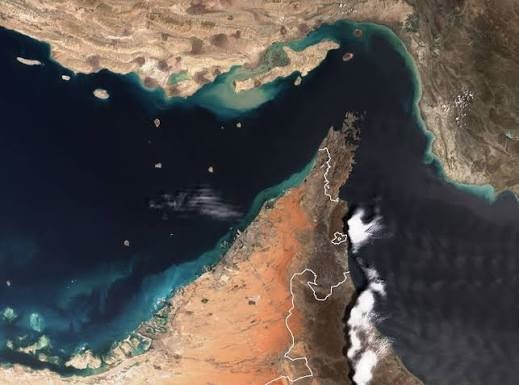
The Strait of Hormuz lies between Iran and Oman, connecting the Persian Gulf with the Gulf of Oman and the Arabian Sea. At its narrowest point, it is approximately 21 nautical miles wide.
It is one of the world’s most important energy shipping routes.
According to the International Energy Agency, around 20 million barrels of crude oil and petroleum products passed through the strait each day in 2025. That represented approximately one-quarter of global seaborne oil trade.
Around 80 per cent of the oil moving through the waterway was destined for Asian markets.
China, India and Japan are among the major destinations.
The route is equally important for natural gas. Around 93 per cent of Qatar’s LNG exports and 96 per cent of the UAE’s LNG exports pass through Hormuz, together accounting for approximately 19 per cent of global LNG trade.
This makes the waterway essential not only for oil-producing Gulf states but also for major energy-importing economies across Asia.
Saudi Arabia and the UAE have some alternative export routes that bypass the strait. But those alternatives cannot replace all the capacity normally moving through Hormuz. The IEA estimates that alternative pipeline routes have around 3.5 million to 5.5 million barrels per day of available capacity.
Countries such as Iraq, Kuwait, Qatar, Bahrain and Iran rely much more heavily on the waterway for their energy exports.
A prolonged disruption therefore affects both sides of the Gulf. Exporting countries lose revenue, while importing countries face higher prices, shipping costs and uncertainty over supplies.
Is the Strait completely closed? The shipping figures tell a more complicated story
Political statements often describe Hormuz as closed. The actual shipping situation is more complicated.
Commercial traffic has been severely disrupted, but vessels have continued to move through the waterway under difficult and sometimes dangerous conditions.
Reuters reported on November 11 that October was the busiest month for Gulf LNG exports since the war began on February 28. S&P Global Energy counted 31 LNG tankers carrying cargo out of the strait, compared with 23 in September.
UAE LNG traffic had returned to pre-war levels, according to an analyst cited by Reuters. Qatar’s LNG traffic, however, remained at only slightly more than 30 per cent of its pre-war level.
This is evidence that the strait is not completely sealed.
But the risks remain severe.
The Washington Institute for Near East Policy counted 37 vessels hit during October, making it the worst month of the conflict for attacks on ships. A Reuters review of International Maritime Organization data found that 130 incidents, mostly attacks, had been recorded since the conflict began. At least 25 seafarers had been killed.
The figures reveal the real problem. A shipping route can be technically open while remaining commercially unsafe.
Shipowners must consider the risk of missiles, drones, mines, damaged navigation systems, insurance costs and possible delays. Higher freight rates may encourage some operators to continue sailing, but they do not remove the danger to crews or cargo.
For Iran, this creates leverage. For the rest of the world, it creates uncertainty.
The objective of any meaningful agreement must therefore be more than announcing that the strait is open. It must restore predictable, safe and non-discriminatory navigation.
Iran and Oman want a different arrangement for managing the waterway
One of the most consequential parts of Ghalibaf’s latest statement concerns the future administration of the Strait of Hormuz.
He said Iran and Oman had reached an understanding on shipping routes and the traffic separation scheme, suggesting that the two coastal states would have a central role in managing navigation.
His statement that Hormuz would never return to its pre-war status indicates that Tehran wants a permanent change in the way vessels are routed, monitored and managed.
There is some official background to this proposal.
On August 25, the foreign ministries of Iran and Oman issued a joint statement describing discussions on a phased framework for restoring safe navigation. It included a temporary joint navigational corridor, a joint project to clear mines, and further technical negotiations on a permanent corridor and future maritime administration.
The statement also referred to information-sharing, traffic management, security services and consultations with other Gulf states.
However, there is a difference between an agreed framework for discussions and a fully operational maritime agreement.
Oman’s official statement described a proposed framework and continuing technical negotiations. It did not announce a completed permanent arrangement giving Iran and Oman unrestricted authority over international shipping.
This distinction matters because Hormuz is not simply a bilateral waterway.
Its passage is used by countries around the world, and decisions about commercial navigation affect the rights and interests of many states.
The international law dispute behind Iran’s claim
Ghalibaf has also challenged the idea that the Strait of Hormuz should be treated as an unrestricted international waterway.
He argued that the United Nations Convention on the Law of the Sea, or UNCLOS, does not apply to the strait and that its regulations should be determined by the two coastal states, Iran and Oman.
There is a legal complication here.
Neither Iran nor the United States is a party to UNCLOS, while Oman has ratified the convention. But international law experts have argued that the principle of transit passage through international straits has become part of customary international law and can therefore apply beyond the states formally party to the convention.
Under the transit-passage principle, ships and aircraft have a right to pass through international straits without being subjected to arbitrary restrictions by coastal states.
Iran disputes this interpretation and argues for a more limited system of innocent passage, under which coastal states have greater powers to regulate or restrict navigation.
The disagreement is not merely academic. It concerns whether Iran can require prior coordination, impose special routes or introduce restrictions on commercial vessels passing through the strait.
The GCC has taken a clear position against any attempt to make transit passage conditional on prior authorisation or imposed routes. Its October 18 communiqué called for freedom of navigation to be restored in accordance with international law.
This is where Iran’s proposal could face resistance beyond Washington.
Even if the United States and Iran reach a political understanding, other countries may challenge arrangements that appear to give two coastal states the power to restrict the rights of international shipping.
The nuclear issue remains the biggest obstacle to a wider agreement
The dispute over Hormuz cannot be separated from Iran’s nuclear programme.
Washington wants nuclear restrictions to be part of the initial negotiations. Iran, by contrast, wants the immediate focus to be the blockade, sanctions, frozen assets and regional ceasefire arrangements.
This difference has become more visible in recent statements.
Reuters reported on November 11 that Iranian security official Mohsen Rezaei said Tehran would not allow any enriched nuclear material to leave the country.
He argued that Iran needed the material for its nuclear energy ambitions, including proposed nuclear-powered ships and submarines. Russia had previously offered to remove enriched uranium from Iran as part of a possible agreement, but Tehran has rejected that option.
The nuclear stockpile remains a serious concern for Western governments.
The International Atomic Energy Agency had estimated that Iran possessed 440.9 kilograms of uranium enriched to 60 per cent before the US and Israeli attacks on nuclear facilities in June 2025. The amount that may have survived subsequent attacks is unclear.
Iran denies seeking nuclear weapons and says its nuclear activities are for peaceful purposes. The United States and Israel argue that the enrichment programme creates a serious proliferation risk.
The June Islamabad memorandum attempted to bridge this gap. It stated that Iran would not develop nuclear weapons and provided for negotiations over the disposition of enriched material and future enrichment arrangements under an agreed framework involving the IAEA.
But the current position is more difficult. Iran wants to retain control over its enriched material, while Washington insists that nuclear restrictions cannot simply be postponed until after the blockade and sanctions are lifted.
Washington’s response: Economic pressure instead of another major offensive
The Trump administration has not accepted Iran’s proposal.
Secretary of State Marco Rubio described Tehran’s demands as unacceptable, unrealistic and, in some cases, “outrageous and ridiculous”.
His comments suggest that Washington does not regard Iran’s conditions as a reasonable basis for an immediate agreement.
At the same time, the US administration has indicated that it does not currently need to resume large-scale combat operations.
Rubio said the economic pressure and military damage inflicted on Iran were working sufficiently well that the president had no immediate need for major combat operations.
This is a strategy of continued pressure rather than an unconditional move towards peace.
The United States wants to preserve the blockade and sanctions as negotiating leverage while demanding concessions on Iran’s nuclear programme and maritime conduct.
Washington is also seeking international support to protect shipping. At the G7 foreign ministers’ meeting in Paris on November 10, Rubio urged other countries to help defend commercial vessels from Iranian attacks.
He acknowledged that he had received no clear commitment from his G7 counterparts. France and some other allies have indicated that they would prefer fighting to stop before providing minesweepers or other assistance.
This creates a difficult situation for Washington. It wants international support for maritime security, but some of its allies do not want to become involved in a naval operation while the conflict remains active.
Gulf countries want peace, but they do not endorse Iran’s conditions
The Gulf states have strong reasons to prevent the conflict from expanding.
Saudi Arabia, the UAE, Qatar, Kuwait, Bahrain and Oman all have important economic and security interests connected to the Persian Gulf. Their ports, energy facilities, airports and shipping networks are exposed to the consequences of a prolonged confrontation.
But it would be inaccurate to suggest that the GCC simply supports Iran’s demands.
In its October 18 communiqué, the GCC condemned Iranian missile and drone attacks against member states and Jordan. It demanded an immediate end to such attacks and called for freedom of navigation through the Strait of Hormuz, the Bab el-Mandeb and the Red Sea.
It also rejected attempts to make transit passage dependent on prior authorisation or imposed shipping routes.
At the same time, the GCC called for a return to dialogue and diplomacy. It supported mediation efforts and said any future settlement must address Iran’s nuclear programme, missiles, drones and support for regional armed groups. It also insisted that Gulf states be involved in negotiations affecting their security.
The positions of individual countries are also important.
Qatar has played a central role in carrying messages between Washington and Tehran. Oman has been involved in discussions about the future maritime corridor because it shares the strait’s coastline with Iran. Saudi Arabia has its own concerns over Iranian attacks and Houthi operations, while the UAE is particularly exposed to shipping and energy disruption.
The Gulf position is therefore more complicated than a simple choice between Iran and the United States.
These governments want the conflict contained, but they also want their sovereignty protected and their shipping routes kept open.
What the Hormuz crisis means for India and Asia
For India, the dispute is directly connected to energy security.
The IEA estimates that around 80 per cent of the oil transported through the Strait of Hormuz is destined for Asian markets. India and China together received 44 per cent of the crude oil passing through the waterway in 2025.
This makes any prolonged disruption a serious concern for Asian economies.
India imports most of the crude oil it consumes. Although Indian refiners have diversified their suppliers and can obtain some oil through alternative routes, replacing large volumes of Gulf supplies quickly would be difficult.
A prolonged Hormuz crisis could raise the cost of crude imports, increase freight and insurance charges, put pressure on the rupee and contribute to inflation.
The impact would extend beyond petrol and diesel prices. Higher energy costs can affect transport, manufacturing, agriculture, aviation and the prices of everyday goods.
For South Asian countries with limited energy reserves and heavy import dependence, the situation is even more sensitive.
The issue also has a human dimension. Thousands of South Asian sailors and workers are employed across Gulf shipping, energy and logistics networks. A prolonged crisis can affect their safety, employment and ability to travel.
The Strait of Hormuz is therefore not just a Middle Eastern security issue. It is a major concern for India’s economic stability and the wider Asian energy market.
What happens next? Three possible outcomes
The immediate future will depend on whether Washington and Tehran can agree on the sequence of concessions.
A limited maritime agreement
The most practical short-term option may be a temporary shipping arrangement involving Iran, Oman and other Gulf states. It could include a monitored navigation corridor, mine clearance, information-sharing and safeguards for commercial vessels.
Such an arrangement could restore some confidence without requiring both sides to settle every political dispute immediately.
A prolonged economic standoff
If Washington refuses to lift the blockade and sanctions before nuclear negotiations, and Iran refuses to restore normal shipping without those concessions, the present situation could continue.
Some vessels may keep moving, but shipping companies would remain cautious. Insurance costs and freight rates could stay elevated, while oil and gas markets would continue reacting to every new incident.
A return to military escalation
The most dangerous possibility is the collapse of indirect diplomacy and a return to major military operations.
Iran has warned that renewed US or Israeli attacks would trigger retaliation. The United States has maintained that it will defend its forces and commercial shipping.
A new round of strikes could affect not only Iran and Israel but also Gulf states hosting US military facilities, commercial ports and energy infrastructure.
The consequences could spread rapidly across the region.
The real battle is over who makes the first concession
Iran’s seven-condition framework is more than a diplomatic demand. It is an attempt to use control over a strategically important waterway to secure economic relief, political guarantees and a different regional security arrangement.
Washington, meanwhile, wants to retain the pressure created by sanctions and the naval blockade while ensuring that Iran’s nuclear programme is addressed.
The Gulf states want the strait open, but they do not want a settlement that gives Iran unilateral control over international navigation.
These positions explain why a deal remains difficult even when all sides publicly express interest in avoiding another major war.
The central issue is no longer simply whether Iran can disrupt the Strait of Hormuz or whether the United States can maintain pressure on Tehran. It is whether both sides can agree on a system that restores commercial navigation without allowing either country to dictate the rules for everyone else.
For India and the wider world, the stakes are clear. A waterway carrying a substantial share of global oil and LNG supplies cannot remain a bargaining instrument in an open-ended confrontation.
A lasting settlement will require more than a declaration that the strait has reopened. It will need credible security guarantees, a workable maritime framework, clarity on nuclear commitments and the participation of the countries whose economies depend on safe passage.
Until those questions are answered, Hormuz will remain a source of uncertainty for energy markets, shipping companies and governments across the world.

