J&K Opens Higher Education to Private Universities, But Will Local Youth Get a Fair Share?
By: News Desk | 07 November 2026
The Jammu and Kashmir Private Universities Rules, 2026 promise 25% reservation in admissions and jobs, fee regulation and stronger oversight. The real test will be whether these safeguards translate into affordable education, meaningful employment and genuine academic investment, rather than another expensive market built around local families.
The Jammu and Kashmir Government has taken a significant policy step by notifying the Jammu and Kashmir Private Universities Rules, 2026, creating a formal framework for private universities to be established in the Union Territory. The notification, issued as S.O. 285 on November 2, 2026, sets out the conditions for new institutions, including a minimum 25 per cent share for J&K domiciles in student admissions and university employment.
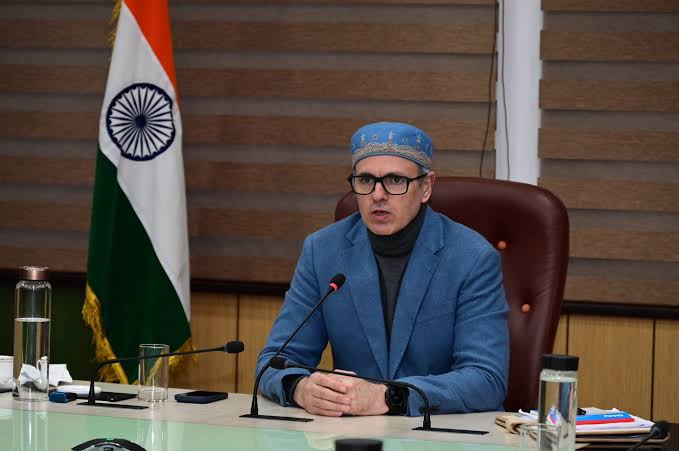
Chief Minister Omar Abdullah has presented the move as an opportunity to attract reputed national and international institutions, broaden academic choices and create new avenues for teaching, research and employment. That ambition is understandable. But a policy of this scale deserves more than a celebratory announcement. It raises difficult questions about affordability, local representation, regulatory independence and the kind of universities Jammu and Kashmir actually needs.
The central question is not simply whether private universities should be allowed into J&K. It is whether their arrival will strengthen the region’s education system or create another sector in which access depends largely on a family’s ability to pay.
A major change, but not an overnight transformation
For years, students from Jammu and Kashmir have travelled outside the Union Territory for professional and specialised education. Punjab, Delhi, Chandigarh, Bengaluru, Maharashtra and overseas destinations have become familiar choices for families seeking courses or institutions they believe are unavailable, insufficient or less competitive at home.
This movement carries a financial cost. Tuition fees are only one part of the expense. Accommodation, food, travel and other living costs add to the burden. Families often spend a substantial portion of their savings to educate their children outside J&K.
The arrival of private universities could help retain some of that expenditure within the local economy. It could also widen access to disciplines where students have limited choices.
But one important distinction must be made: the notification creates a legal route for establishing private universities. It does not mean that reputed universities are already preparing to open campuses in J&K, nor does it guarantee that students will immediately have more affordable options.
The quality of the sponsoring institutions, their financial capacity, proposed courses and actual investment will determine whether the policy delivers on its promise.
The 25 per cent domicile quota: protection or a starting point?
The most politically significant provision is the mandatory reservation for J&K domiciles.
Under the notified framework, private universities must reserve at least:
-
25 per cent of sanctioned student intake in each academic programme for J&K domiciles.
-
25 per cent of sanctioned teaching positions for J&K domiciles.
-
25 per cent of sanctioned non-teaching positions for J&K domiciles.
The employment provision is particularly important. A university is not merely a place where students attend lectures. It can generate jobs for teachers, researchers, administrators, laboratory staff, technical professionals and other workers.
However, the reservation provision needs to be read carefully.
The notification provides that seats and vacancies left unfilled under the domicile quota after the prescribed admission or selection process may be offered to other eligible candidates on merit. That provision may be necessary to prevent seats and posts from remaining vacant, but it also makes implementation crucial.
Consider a university with 1,000 sanctioned student places. At least 250 are initially earmarked for J&K domiciles. But if eligible local candidates do not fill all those places under the prescribed process, the remaining seats can be offered to other candidates.
The same principle applies to employment vacancies.
This raises practical questions. How will universities publicise vacancies? Will recruitment be conducted transparently? Will local applicants receive adequate information and time to apply? Will the government publish annual figures showing how many reserved seats and posts were actually filled by J&K residents?
The quota is a minimum requirement, not a maximum. Nothing in the phrase “at least 25 per cent” prevents a university from admitting or employing a larger proportion of local candidates.
That distinction matters. The government should encourage institutions to exceed the minimum wherever qualified local candidates are available.
Scholarships: a provision that needs public scrutiny
The framework also requires private universities to provide scholarships and freeships to at least 10 per cent of their students on a merit-cum-means basis.
This is an important safeguard because access to higher education is not determined by merit alone. A student may qualify academically but still be unable to afford tuition, accommodation and other expenses.
The underlying Act requires universities to place their scholarship criteria and procedures in the public domain.
But the effectiveness of this provision will depend on the details.
Will scholarships cover full tuition or only a portion of it? Will hostel and examination charges be included? What income limits will determine eligibility? Will students from rural and economically weaker families receive meaningful support?
The government must ensure that the scholarship requirement does not become a box-ticking exercise.
A university could technically meet a numerical target while offering assistance too small to make a meaningful difference to disadvantaged students. Public disclosure of the number of beneficiaries, scholarship amounts and eligibility criteria would help prevent that possibility.
Fee regulation: the real test of affordability
Perhaps the biggest concern for ordinary families will be the cost of studying at these institutions.
Private universities can bring better infrastructure, specialised laboratories, modern teaching methods and international academic partnerships. But these facilities are expensive to establish and maintain. The danger is that the cost will be passed on to students through high tuition fees and additional charges.
The Jammu and Kashmir Private Universities Act, 2026, provides that university fee structures must be transparent and reasonable. Fees are to be approved by the Governing Council and published on the university website. Institutions cannot charge fees outside the notified structure or demand capitation fees or donations as a condition for admission.
The notified rules also require programme-wise fee disclosures before the start of each academic session. Fees ordinarily cannot be increased during the duration of a programme for students already admitted.
These provisions are welcome. But they raise another question: who decides what is reasonable?
A fee may be legally disclosed and still remain beyond the reach of most local families.
The regulatory authority must therefore examine not only whether a university has published its charges, but also whether its fee structure is justified by the quality of education, faculty strength, infrastructure and facilities provided.
Hostel charges, examination fees, laboratory charges and other compulsory payments should also be examined. Otherwise, institutions could keep tuition fees relatively moderate while shifting costs into other heads.
The prohibition on hidden charges will have little meaning unless students have an accessible way to report violations and receive timely relief.
The regulatory authority: watchdog or another office on paper?
The rules provide for a dedicated Jammu and Kashmir Private Universities Regulatory Authority to oversee the functioning of private universities.
Its responsibilities include monitoring admissions, academic standards, examinations, internal assessments, evaluation procedures and declaration of results. It will also handle grievances from students, parents, faculty members, employees and members of the public.
The authority is also empowered to seek information, conduct inspections and examine university records. Depending on the nature of a violation, regulatory action may include fines, suspension or stoppage of admissions, withdrawal of programme recognition, restrictions on expansion and even proceedings for dissolution under the Act.
The financial penalties are not insignificant:
| Violation | Reported penalty |
|---|---|
| Admission in violation of prescribed provisions | Twice the actual fee charged |
| Collection of fees above the approved amount | Three times the excess collected |
| Appointment of an unqualified teacher | ₹20,000 per month per teacher |
| Awarding degrees without proper examination and evaluation | ₹5 lakh per student |
| Deficiencies in prescribed infrastructure | ₹2 lakh per month |
| Unauthorised distance education or extension centres | ₹5 lakh per month |
These penalties suggest that the government intends to establish more than a registration mechanism. It wants a system capable of intervening when institutions fail to meet their obligations.
But the real question is whether the authority will have the independence, expertise and administrative capacity to act against powerful institutions.
A regulator that exists only to process applications will not protect students. It must be capable of conducting surprise inspections, examining financial records, verifying faculty appointments and acting on complaints without political or commercial pressure.
Its annual reports should be publicly available. So should inspection findings, compliance records, fee-related decisions and details of penalties imposed.
Without transparency, the public will have little way of knowing whether the watchdog is actually watching.
Fast-track approvals: speed must not come at the cost of scrutiny
The government has also introduced a time-bound process for considering proposals to establish private universities.
The preliminary scrutiny is to be completed within 30 days. Applications will then be examined by an expert committee, with a decision by the Higher Education Minister within 30 days of receiving the committee’s recommendations. The wider statutory process also provides time for expert examination and consideration of deficiencies in applications.
The expert committee is expected to examine the sponsoring body’s credentials, financial strength, infrastructure, land arrangements and proposed academic programmes. Site inspections are also part of the scrutiny process.
This is important because opening a university should not become as simple as registering a business and putting up a campus signboard.
The sponsoring body must demonstrate that it has the capacity to run a credible institution over the long term. Its academic experience, financial resources and proposed investment should be examined before permission is granted.
The government must also guard against institutions that make ambitious promises at the application stage but fail to deliver after receiving approval.
Speedy approvals can encourage investment. Weak scrutiny can create long-term problems for students.
The non-profit requirement: where will the money go?
The framework has also been reported as requiring private universities to operate on a non-profit basis, with surplus funds reinvested in institutional development.
This provision deserves particular attention because the institutions will be self-financing. The Act states that private universities will not ordinarily receive government grants or financial assistance for their maintenance and development. They must meet their financial requirements through their sponsoring bodies and institutional resources.
The Act also requires annual accounts to be audited and submitted to the government and regulatory authority. Audited accounts and annual reports are to be placed on the university’s website.
These provisions create an important basis for financial accountability.
However, the public should not confuse a non-profit requirement with the absence of commercial interests. The practical question is how the institution’s finances will be structured, what payments can be made to service providers, how related-party transactions will be examined and whether surplus funds are genuinely used for academic development.
The government should make financial disclosure meaningful rather than technical. Students and parents should be able to understand where their fees go and whether the institution is investing adequately in teaching, research, libraries, laboratories and student welfare.
Will private universities weaken government colleges?
This is one of the most important questions that has received less attention in the public discussion.
Jammu and Kashmir already has government universities, degree colleges and other publicly funded higher-education institutions. Private investment could complement this system by introducing specialised programmes and bringing additional resources into the region.
But it could also create competition for students, teachers and public attention.
The Private Universities Act contains provisions that make this issue relevant to the approval process. The expert committee is expected to examine whether proposed courses substantially overlap with programmes already offered by government universities and degree colleges in the same geographical cluster.
The Act also assigns the regulatory authority a role in tracking enrolment trends, assessing possible displacement of students from government degree colleges and guiding the geographical distribution of private universities. It calls for priority to be given to disciplines and professional streams that are underserved by existing government institutions.
This is a significant safeguard.
The government should not encourage private institutions to duplicate conventional courses in areas where public colleges already have adequate capacity while leaving critical gaps in medical technology, advanced sciences, specialised engineering, research and other emerging fields unaddressed.
Private universities should add capacity where it is needed, not simply compete for students in already crowded segments.
The local employment question goes beyond a 25 per cent quota
The employment reservation is a welcome measure, but the government should think beyond the minimum number.
J&K has a pool of qualified postgraduate students, researchers, engineers, doctors, management graduates and academics. Many struggle to find suitable opportunities within the region. Some move elsewhere; others accept jobs that do not match their qualifications.
New universities could create a market for this talent.
But that will happen only if institutions recruit local professionals for meaningful academic and administrative positions rather than concentrating local appointments in lower-paid or non-academic roles.
The government should publish institution-wise employment data, including:
-
Total sanctioned teaching and non-teaching posts.
-
Number of J&K domicile candidates appointed.
-
Qualifications and designations of local recruits.
-
Recruitment advertisements and selection procedures.
-
Details of vacant posts and reasons for non-appointment.
The 25 per cent requirement should be treated as a legal minimum, not the government’s final employment ambition.
Jammu and Kashmir must not become two separate education markets
Another concern is geographical balance.
If private universities are established only around a few commercially attractive locations, the benefits could remain concentrated in limited urban pockets. Students from remote districts may continue to face long journeys, expensive accommodation and limited access.
The government should therefore publish a regional plan showing where new institutions are proposed, which disciplines are needed in different districts and how the new campuses will complement existing public institutions.
Jammu and Kashmir should not be treated as a single market in which investment automatically reaches every region.
A student in Kupwara, Kishtwar, Poonch, Rajouri, Doda or Bandipora should not be excluded from the benefits simply because a university finds it easier to establish itself near a major city.
What the government must do next
The notification is a beginning. The next phase will determine whether the policy becomes a genuine higher-education reform.
The government should take several practical steps:
1. Publish the complete approval framework. Every application, approval, deficiency notice and final decision should be accessible to the public, subject to legitimate confidentiality requirements.
2. Make fee regulation transparent. Programme-wise tuition, hostel, examination and other compulsory charges should be disclosed before admissions begin.
3. Publish domicile quota data. Annual reports should show how many local students and employees actually benefited from the 25 per cent provisions.
4. Monitor scholarship delivery. The regulator should publish the number of scholarships awarded, the value of assistance and the criteria used.
5. Protect public institutions. New universities should fill gaps in the existing system rather than weaken government colleges through unnecessary duplication.
6. Enforce academic standards. Faculty qualifications, student-teacher ratios, laboratory facilities, libraries, research output and accreditation must be independently assessed.
7. Ensure regional distribution. The approval process should consider the educational needs of both Jammu and Kashmir divisions and underserved districts.
8. Make grievance redressal accessible. Students and employees need a clear, time-bound mechanism to complain about fee violations, unfair recruitment, academic malpractice and other irregularities.
The bigger picture: an opportunity, but not a blank cheque
Chief Minister Omar Abdullah has described the notification as an important step towards attracting reputed national and international institutions and expanding opportunities in STEM, medicine, law, business studies and liberal arts. The government’s stated objective is to strengthen the region’s academic ecosystem and make quality higher education available closer to home.
There is a strong case for expanding higher-education choices in J&K. Students should not have to leave their homes simply because the region lacks adequate options in specialised disciplines. Local universities should be capable of attracting talented academics, supporting research and building partnerships with institutions outside the Union Territory.
But investment must not become the only measure of success.
A university that collects high fees, employs a limited number of local professionals and offers degrees without meaningful research or academic quality will not solve J&K’s education problem.
Nor should the government assume that the presence of a national or international brand automatically guarantees excellence. Institutional reputation must be supported by qualified faculty, proper infrastructure, recognised programmes and transparent governance.
The private sector can supplement public education. It cannot replace the government’s responsibility to ensure that quality education remains accessible to students from different economic backgrounds.
Our assessment: The 25 per cent promise must not become the 100 per cent ambition
The Jammu and Kashmir Private Universities Rules, 2026 are an important policy development. They create a formal pathway for private universities, provide a minimum domicile quota, require scholarships, regulate fees and establish a dedicated oversight mechanism.
That is a meaningful framework.
But the government must avoid treating the notification itself as proof that the problem of limited higher-education opportunities has been solved.
There is also a political question that deserves an honest public debate: if institutions are being invited to invest in J&K and benefit from its student market, land, workforce and economic opportunities, should the government aim for local participation substantially higher than the statutory minimum?
The answer should not be reduced to a debate over whether 25 per cent is fair or unfair. The more useful question is whether the government will create conditions in which local students and qualified professionals can compete for a much larger share of opportunities.
The domicile quota is a safeguard. It should not become a ceiling in public expectation.
Ultimately, the success of this reform will not be measured by the number of applications received or university campuses inaugurated. It will be measured by how many students from ordinary families can afford to study, how many qualified local professionals secure meaningful employment, how much research is conducted in J&K and whether the quality of education improves across the region.
Jammu and Kashmir needs universities, not just university buildings. It needs research, not merely degrees; opportunities, not expensive promises; and institutions that serve society, not simply institutions that operate within it.
The government has opened the door to private higher education. Now it must ensure that local students are not left standing outside.